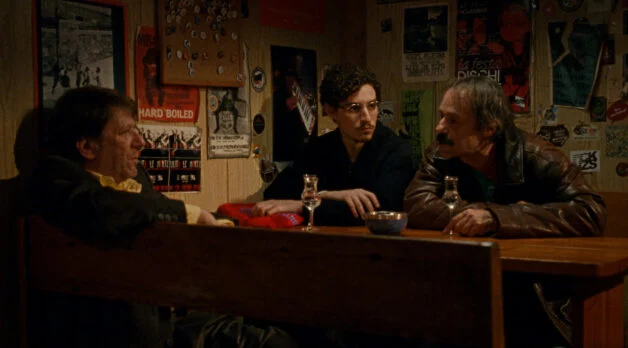
Filmmaker magazine is pleased to announce the trailer premiere for Italian director Francesco Sossai’s anticipated second feature, The Last One for the Road, a compelling narrative that delves into the intricacies of an unlikely camaraderie forged amidst the backdrop of a changing Italy. The film masterfully portrays the evolving relationship between two down-on-their-luck, alcoholic petty criminals, Carlobianchi, powerfully embodied by Sergio Romano, and Doriano, marking the notable film debut of Pierpaolo Capovilla, a prominent member of the band One Dimensional Man, and a reserved architecture student named Giulio, portrayed by Filippo Scotti. This narrative tapestry, woven with threads of personal inspiration and a deep reverence for Italy’s northern Veneto region, has garnered significant international attention since its premiere.
The film’s journey began last year, specifically in May 2023, when it debuted to critical acclaim in the prestigious Un Certain Regard section of the Cannes Film Festival. This selection underscored its artistic merit and unique perspective within the global cinematic landscape. Following its successful showing on the French Riviera, The Last One for the Road continued its impressive festival run in the fall of 2023, gracing the screens of the Toronto International Film Festival (TIFF) and the New York Film Festival (NYFF), further solidifying its reputation as a significant work in contemporary European cinema. North American audiences will soon have the opportunity to experience Sossai’s vision firsthand, as Music Box Films is set to release the film at the IFC Center and Film at Lincoln Center in New York City on May 1, 2024, with subsequent theatrical rollouts planned for other cities across the nation. For a comprehensive overview of the film, including additional information and showtimes, interested viewers are directed to the official Music Box Films website. The recently released trailer offers a captivating glimpse into the film’s distinctive atmosphere and character dynamics, accessible via the embedded YouTube player, providing an initial visual and thematic introduction to Sossai’s latest work.
A Journey Through Veneto’s Soul: The Film’s Premise and Inspiration
At its core, The Last One for the Road is a deeply personal project for Francesco Sossai, loosely inspired by his own experiences and profoundly rooted in his affection for the Veneto region. This personal connection imbues the film with an authentic sensibility, allowing it to transcend a mere plot-driven narrative and evolve into a meditative exploration of place, memory, and the human condition. The Veneto, a region renowned for its diverse landscapes ranging from the Dolomite mountains to the Adriatic coast, and historically a powerhouse of Italian industry, serves as more than just a setting; it acts as a silent, yet potent, character in the film. Sossai’s decision to anchor his story in this specific locale speaks to a broader cinematic trend of regional storytelling, where the specificities of local culture, economy, and social dynamics provide a rich backdrop for universal themes.
The film’s synopsis paints a vivid picture of its central characters: Carlobianchi and Doriano, two small-time Italian crooks whose lives have been in freefall since the devastating 2008 financial crisis. This economic downturn, which had a profound and lasting impact on Italy’s industrial heartland, is not merely a historical footnote but a living scar that defines their current existence. Their inability to execute a successful, "honest" scam since then highlights a pervasive sense of economic stagnation and lost opportunities that many faced in the wake of the crisis. As they navigate the impending mediocrity of middle age, a glimmer of hope appears with the return of an exiled partner-in-crime from Argentina, promising a chance at "long-buried riches." This quest, however, is fraught with challenges, primarily their struggle with alcohol, which threatens to derail their every effort. Their "slow motion, alcoholic grand tour of the Venetian countryside" becomes a metaphor for their aimless lives, a journey where each roadside tavern offers the deceptive promise of "one last drink," continually upping the ante in a cycle of self-destruction and fleeting hope.
Into this chaotic existence steps Giulio, a shy architecture student, a figure seemingly antithetical to the seasoned criminals. His reluctant warmth towards the sodden pair and his indulgence of their rants – which often touch upon the folly of globalization and the slow decline of local color – create an unexpected intergenerational dialogue. This interaction forms the heart of the film, exploring how different generations perceive and cope with the socio-economic shifts impacting their shared homeland. The film, therefore, is not easily pigeonholed; it is a complex blend of a road movie, a casual caper, a poignant tribute to a vanishing industrial Italy, a scruffy intergenerational odyssey, and a free-flowing bender through time and space. Each of these elements contributes to a rich, multi-layered narrative that invites viewers to reflect on themes of friendship, economic hardship, and the relentless march of progress.
The Creative Vision of Francesco Sossai: From Personal Experience to Universal Themes
Francesco Sossai’s trajectory as a filmmaker, culminating in The Last One for the Road as his sophomore feature, reveals an artist deeply engaged with the socio-economic landscapes of his native Italy. While details of his debut feature might be less widely publicized, the profound personal connection evident in his latest work suggests a consistent approach to storytelling that prioritizes authenticity and regional specificity. Sossai’s decision to draw from his "own experience" for the film’s narrative framework implies a semi-autobiographical or observational lens, allowing for a nuanced portrayal of characters and their environment. This method often results in films that resonate with a deeper truth, as the filmmaker acts as both storyteller and witness.
His "love for the northern Veneto region" is not merely aesthetic but thematic. Veneto, historically a region of robust industrial activity, particularly in textiles, machinery, and small-to-medium enterprises, experienced significant economic transformation in the late 20th and early 21st centuries. The "vanishing industrial Italy" that Sossai mourns through his characters’ rants is a tangible reality: many traditional industries faced competition from globalization, leading to factory closures, unemployment, and a shift in regional identity. The 2008 financial crisis exacerbated these trends, leaving a generation, like Carlobianchi and Doriano, struggling to adapt or find new purpose. Sossai’s film thus functions as a historical document, capturing the emotional and social fallout of these macro-economic shifts on individual lives.
The filmmaker’s craft extends beyond plot and setting; it encompasses the evocative power of atmosphere and character development. By presenting the protagonists’ journey as an "alcoholic grand tour," Sossai uses their impaired perception as a stylistic device, perhaps blurring the lines between reality and their alcohol-induced haze. This approach could be seen as a commentary on how escapism, whether through alcohol or nostalgia, distorts the perception of a harsh reality. The intergenerational dynamic, with Giulio representing a more contemporary, perhaps more globally aware, generation, provides a crucial counterpoint to the older men’s grievances. Sossai, through these interactions, explores the potential for understanding and connection across societal divides, even amidst significant differences in outlook and experience. His work positions itself within a lineage of Italian cinema that often blends social commentary with deeply human narratives, reminiscent of the neorealist tradition in its observational quality, yet distinctly modern in its stylistic execution and thematic concerns.
Casting the Ensemble: Veterans and Emerging Talents
The casting of The Last One for the Road is integral to its authenticity and thematic depth, bringing together a blend of seasoned performers and fresh faces that enhance the film’s intergenerational narrative. Sergio Romano, portraying Carlobianchi, likely draws upon a wealth of experience to depict the complexities of a middle-aged man grappling with economic despair and personal demons. His portrayal is crucial in grounding the film’s exploration of the 2008 financial crisis’s lingering effects and the psychological toll of unfulfilled potential.
Pierpaolo Capovilla’s film debut as Doriano is particularly noteworthy. As a member of the acclaimed Italian rock band One Dimensional Man, Capovilla brings a unique persona and intensity to the screen. His transition from music to acting is a testament to Sossai’s keen eye for unconventional talent. Musicians often possess a raw, performative energy that can translate powerfully into dramatic roles, and Capovilla’s background suggests he might infuse Doriano with a distinct, perhaps edgy, authenticity. His presence could lend an unexpected grit and a certain world-weariness to the character, aligning with the film’s depiction of individuals on the fringes of society.
Filippo Scotti, cast as Giulio, represents the younger generation in this cinematic triptych. Scotti, who has garnered attention in recent years for his nuanced performances in various Italian productions, brings a quiet strength to the role of the architecture student. His character acts as a foil to Carlobianchi and Doriano, embodying a different set of anxieties and aspirations, yet ultimately finding common ground with them. The dynamic between Scotti’s thoughtful, soft-spoken Giulio and the more boisterous, jaded criminals is central to the film’s exploration of generational divides and the unexpected bonds that can form across them. The successful interplay of these three actors is vital for conveying the film’s intricate themes of friendship, social commentary, and the search for meaning in a rapidly changing world.
Thematic Depths: Alcoholism, Economic Decline, and Generational Divides
The Last One for the Road is a tapestry woven with multiple thematic threads, each contributing to its profound commentary on contemporary Italian society. Alcoholism, prominently featured in the synopsis, is more than a character trait; it functions as a pervasive metaphor for escapism, societal decay, and the characters’ inability to confront their realities. For Carlobianchi and Doriano, alcohol is both a comfort and a curse, fueling their "grand tour" of the Venetian countryside while simultaneously clouding their judgment and hindering their pursuit of "long-buried riches." This addiction highlights the self-perpetuating cycle of their misfortune, suggesting that their external quest for wealth is intrinsically linked to an internal battle for sobriety and self-worth. The film subtly explores the socio-economic roots of such escapism, positing it as a coping mechanism for individuals marginalized by larger economic forces.
The shadow of the 2008 financial crisis looms large over the narrative, serving as a concrete historical marker for the protagonists’ decline. Its mention is not incidental but foundational, linking their personal struggles directly to a national and global economic downturn. The "vanishing industrial Italy" theme expands on this, lamenting the loss of traditional livelihoods and the cultural identity associated with them. The rants of Carlobianchi and Doriano about the "folly of globalization" are not just drunken ramblings but articulate a deep-seated resentment against forces perceived to have stripped them of their dignity and economic stability. This provides a poignant glimpse into the anxieties of a generation that has witnessed profound changes in their country’s economic landscape, often to their detriment.
The intergenerational dynamic between the two older criminals and Giulio, the architecture student, is perhaps the most nuanced thematic element. Giulio, as a representative of a younger, perhaps more adaptable, generation, offers a fresh perspective. His field, architecture, often symbolizes building and future-oriented thinking, contrasting sharply with the older men’s nostalgic laments and their destructive present. His "reluctant warmth" and willingness to "indulge their rants" suggest a bridge across the generational chasm, implying that while their experiences and coping mechanisms differ, a shared humanity and understanding can still emerge. This interaction explores how different age groups process societal change, economic hardship, and the search for identity, ultimately suggesting a complex dialogue between tradition and modernity, disillusionment and nascent hope. Sossai’s film, therefore, transcends a simple road movie to become a rich socio-cultural commentary on a nation grappling with its past, present, and uncertain future.
A Critical Acclaim: The Festival Circuit Journey
The journey of The Last One for the Road through the international film festival circuit speaks volumes about its artistic merit and universal appeal. Its premiere in the Un Certain Regard section of the Cannes Film Festival in May 2023 was a significant milestone. Un Certain Regard is renowned for showcasing original and daring works by emerging and established filmmakers, often featuring films with a strong authorial voice and an unconventional approach to storytelling. Its selection indicates that Sossai’s film was recognized for its distinctive narrative, compelling performances, and unique perspective on contemporary issues. For a sophomore feature, being selected for such a prestigious section at the world’s most acclaimed film festival is a powerful endorsement, signaling the arrival of a significant talent.
Following its successful Cannes debut, the film continued its critical trajectory, securing invitations to two of North America’s most influential festivals in the fall of 2023: the Toronto International Film Festival (TIFF) and the New York Film Festival (NYFF). TIFF, known for its vast program and its role as a key launchpad for films seeking North American distribution and Oscar buzz, provided The Last One for the Road with crucial exposure to a broad audience and industry professionals. Its inclusion in TIFF’s diverse lineup suggests its ability to resonate with a wide range of cinephiles, beyond the traditional arthouse circuit.
The New York Film Festival, curated by Film at Lincoln Center, is celebrated for its highly selective program, often featuring the year’s most significant and artistically ambitious films from around the globe. Its inclusion in the NYFF further cemented the film’s reputation as a work of considerable artistic importance. These festival selections are not merely ceremonial; they are critical junctures that validate a film’s quality, generate international buzz, and significantly contribute to its distribution prospects. The consistent positive reception across these diverse and esteemed platforms underscores The Last One for the Road‘s ability to captivate and provoke thought among discerning audiences and critics worldwide, establishing it as a noteworthy cinematic achievement of the past year.
Bringing European Arthouse to North America: Music Box Films and US Release Strategy
The acquisition of The Last One for the Road by Music Box Films for North American distribution underscores the film’s potential to resonate with an arthouse audience in the United States. Music Box Films has cultivated a strong reputation for its discerning selection of international and independent cinema, consistently bringing critically acclaimed foreign-language titles to American screens. Their decision to distribute Sossai’s film indicates a belief in its artistic quality, its thematic relevance, and its capacity to engage sophisticated viewers. This partnership is crucial for an Italian film of this nature, as specialized distributors play a vital role in navigating the complex American market for non-English language features.
The strategic choice to premiere the film in New York City on May 1, 2024, at two of the city’s most iconic arthouse venues—the IFC Center and Film at Lincoln Center—is a calculated move to target a core audience of cinephiles and cultural enthusiasts. The IFC Center is a renowned independent cinema known for its diverse programming, ranging from new releases to retrospectives and cult classics. Film at Lincoln Center, particularly through its Walter Reade Theater and Elinor Bunin Munroe Film Center, is a bastion of film culture, hosting the New York Film Festival and regularly showcasing the best of global cinema. Launching at these esteemed locations ensures that The Last One for the Road receives a high-profile introduction in a key cultural hub, attracting early critical attention and generating word-of-mouth among influential audiences.
Following its New York debut, the planned release in "other cities to follow" signifies a traditional platform release strategy, common for arthouse films. This approach allows distributors to build momentum gradually, leveraging positive reviews and audience buzz from the initial theatrical run to expand into new markets. It also caters to the specific demographics that seek out international cinema, typically concentrated in major metropolitan areas and university towns. Music Box Films’ robust online presence, including their dedicated website providing detailed information and showtimes, further supports this strategy by making the film accessible to a broader audience interested in exploring contemporary European cinema. This careful and deliberate distribution plan aims to maximize the film’s reach and impact, allowing American audiences to engage with Francesco Sossai’s unique vision and the poignant story he brings to the screen.
Broader Implications: Reflecting a Changing Italy on Screen
The Last One for the Road is more than just a character-driven drama; it functions as a compelling piece of cultural commentary, reflecting broader socio-economic shifts within Italy and, by extension, across parts of Europe. The film’s focus on "vanishing industrial Italy" and the lingering effects of the 2008 financial crisis speaks to a deep sense of loss and economic precarity that has reshaped many communities. This narrative offers a human-scale view of macro-economic forces, demonstrating how globalization and financial downturns impact individual lives, erode traditional industries, and contribute to feelings of disillusionment and nostalgia for a bygone era. For international audiences, the film provides a vital window into these specific Italian anxieties, yet its themes of economic struggle, the search for meaning in middle age, and intergenerational dialogue are universally resonant.
For director Francesco Sossai, The Last One for the Road represents a significant step in his filmmaking career. Its success on the festival circuit, particularly its selection for Cannes’ Un Certain Regard, positions him as a significant voice in contemporary Italian cinema. The film’s unique blend of genres—road movie, caper, social drama—showcases a versatile directorial style and a willingness to tackle complex themes with nuance. This critical recognition will undoubtedly open doors for future projects, allowing Sossai to further explore his artistic vision and continue telling stories rooted in his personal experiences and observations of Italian society.
The film’s exploration of the "road movie" genre, while drawing from established cinematic traditions, injects a distinctly Italian sensibility into it. Unlike the often optimistic or freedom-seeking American road trip, Sossai’s version appears more melancholic and aimless, reflecting the characters’ internal and external struggles. This reinterpretation adds to the genre’s rich tapestry, demonstrating its adaptability to different cultural contexts and thematic concerns. Ultimately, The Last One for the Road stands as a powerful artistic statement, inviting audiences to ponder not only the specific plight of its characters but also the broader implications of economic change, the resilience of the human spirit, and the enduring quest for connection and purpose in an ever-evolving world. It is a film that promises to spark conversations about Italy’s recent past and its uncertain future, solidifying its place as an important contribution to international cinema.