
The Chatterboxes, Ken Kawai’s highly anticipated third feature film, made its world premiere at the Tokyo International Film Festival (TIFF) 2025, captivating audiences and critics alike with its nuanced exploration of social miscommunications, the challenges stemming from simple ignorance, and the inherent human struggle for identity. The film’s enigmatic title itself carries multiple layers of meaning, referencing a traditional pyramid-shaped origami game that reveals colors or words, a form of speech and language therapy for children, and ultimately, the intricate web of human interaction it so deftly portrays. Kawai, known for his incisive yet empathetic narratives, delivers a powerful cinematic experience that challenges viewers to reconsider the very nature of understanding and connection in an increasingly complex global society.
A Multifaceted Title Unveiled
The concept of "Chatterboxes" as a children’s game, often used to predict fortunes or reveal secrets, serves as a poignant metaphor for the film’s central themes. Just as the origami toy unfolds to reveal hidden messages, Kawai’s narrative gradually uncovers the unspoken truths and concealed frustrations that lie beneath the surface of everyday interactions. The therapeutic association with speech and language development further underscores the film’s focus on communication, not merely as a mechanical exchange of words or signs, but as a deeply personal and often fraught journey towards mutual comprehension. This conceptual depth positions "The Chatterboxes" not just as a film about language barriers, but about the fundamental human need to be heard and understood, regardless of the medium.
Synopsis: A Clash of Worlds in Suburban Tokyo
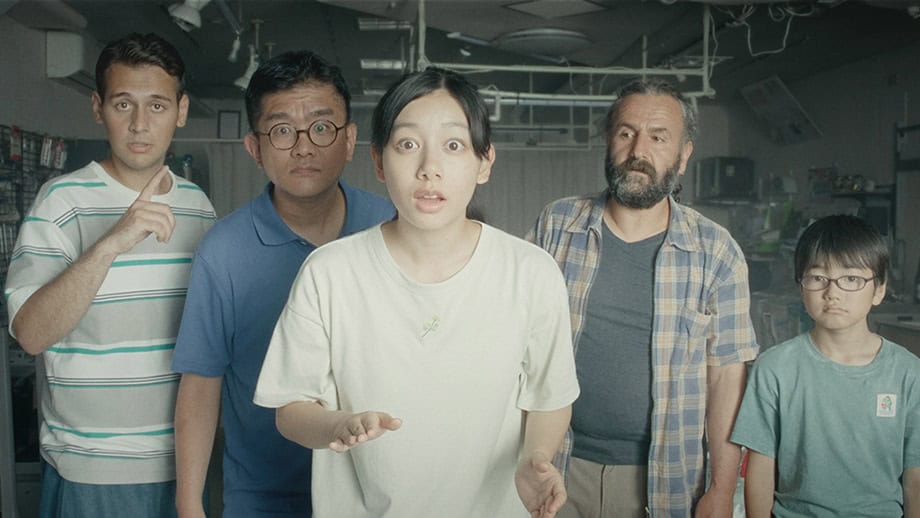
At the heart of "The Chatterboxes" is the Koga family, residing in a quiet Tokyo suburb. The patriarch, Kazuhiko (portrayed by Kazuyoshi Kezuka), is a deaf man who owns a local appliance shop, navigating his daily life with resilience and a quiet dignity. His daughter, Natsumi (Itsuki Nagasawa), is a CODA (Child of Deaf Adults), serving as the crucial bridge for communication and translation within the family and with the hearing world. Rounding out the family is Shun (Oki Fukuda), Kazuhiko’s deaf son, whose unique form of self-expression manifests in his refusal to adopt any established language, instead crafting his own idiosyncratic system of communication. Despite these internal complexities, the Koga family maintains a peaceful existence until a Kurdish family moves in across the street. This seemingly simple event ignites a chain reaction of linguistic and cultural misunderstandings, escalating rapidly due to profound barriers in both spoken and signed languages. The initial interactions, fraught with good intentions but lacking common ground, quickly unravel, highlighting how easily ignorance can breed suspicion and conflict.
The Director’s Vision: Ken Kawai’s Personal Lens
Ken Kawai, himself a CODA, brings an unparalleled authenticity and deeply personal perspective to "The Chatterboxes." His lived experience as the child of a deaf parent grants him an intimate understanding of the nuances of deaf culture, the challenges of navigating a predominantly hearing world, and the profound role of interpretation in daily life. This background is not merely an interesting biographical detail but forms the bedrock of his directorial approach, allowing him to craft a narrative that feels both universally resonant and intensely specific. His previous two features, while not explicitly detailed in the original brief, have consistently demonstrated a commitment to exploring human relationships under duress and the silent struggles of marginalized communities, often employing a naturalistic style that emphasizes raw emotion over overt drama. "The Chatterboxes" marks a significant evolution in his filmography, where he boldly experiments with narrative structure and cinematic techniques to immerse the audience directly into the characters’ experiences of miscommunication.
Innovative Storytelling: Subtitles as a Character
One of the most striking and innovative aspects of Kawai’s direction is his deliberate and artistic manipulation of subtitles. Rather than serving as a mere translation tool, subtitles become an integral narrative element, a character in their own right, designed to replicate the protagonists’ sense of uncertainty and exclusion. In the film’s initial half, the dialogue of the newly arrived Kurdish family remains untranslated for the audience. This bold choice forces viewers into Kazuhiko’s shoes, compelling them to experience the frustration and anxiety of waiting for interpretation. The translation process is layered: first, Hiwa (Yildrim Firat) translates from Kurdish and Turkish into spoken Japanese, and then Natsumi interprets into Japanese Sign Language (JSL). This deliberate delay in conveying meaning creates palpable tension, further heightened by Natsumi’s diplomatic, rather than literal, translations, an attempt to defuse escalating conflicts. This technique not only builds suspense but also fosters a profound empathy, making the audience active participants in the communication struggle rather than passive observers. It’s a masterclass in using a typically utilitarian element of filmmaking to drive narrative and emotional impact.
Beyond Dialogue: The Power of Non-Verbal Communication
As the plot thickens, Kawai takes an even more audacious step: discarding subtitles altogether at crucial junctures. At these moments, both characters and viewers are compelled to rely solely on body language, facial expressions, and contextual cues. This absence of explicit linguistic interpretation forces a deeper engagement with the film’s visual storytelling, underscoring the universal human capacity for understanding beyond words. The pervasive silence that often envelops the characters further amplifies their sense of isolation and the profound chasm of misunderstanding. This is juxtaposed with the persistent, often aggressive, presence of those who refuse to acknowledge or comprehend alternative points of view, creating a suffocating atmosphere. The camera work, often employing a handheld, observational style reminiscent of a reality show, intensifies this feeling of being constantly scrutinized and misunderstood, reinforcing the emotional vulnerability of the characters. This stylistic choice draws parallels to observational documentaries, lending an almost visceral authenticity to the struggles depicted.
Portraying Authenticity: A Cast of Conviction
A significant factor contributing to the film’s raw authenticity is its reliance on a cast composed predominantly of non-professional actors. This casting choice imbues the performances with a naturalism that might be elusive with seasoned professionals, particularly in a narrative so deeply rooted in specific cultural and linguistic experiences. Kazuyoshi Kezuka, as the deaf father Kazuhiko, delivers a compelling and deeply nuanced performance, conveying a spectrum of emotions through subtle expressions and gestures. Equally powerful is Murat Cicek as Rifat, the head of the Kurdish family. Their on-screen dynamic forms the emotional core of the film, depicting a relationship that remains fraught with tension yet gradually, almost imperceptibly, moves towards a fragile, non-verbal understanding. Both characters share a profound, unspoken desire: to express themselves authentically in their own language and be genuinely understood—Kazuhiko, free from the pressures to conform to a hearing norm, and Rifat, without the expectation to assimilate as an immigrant. The silent, almost telepathic understanding that slowly blossoms between them, despite their inability to communicate directly, offers a rare and deeply moving sense of resolution, underscoring the film’s central message of connection beyond conventional means. Itsuki Nagasawa as Natsumi and Oki Fukuda as Shun also deliver performances that are crucial to the film’s emotional landscape, embodying the complexities of interpreting not just words, but intentions and identities.
Thematic Depth: Navigating Identity and Belonging
"The Chatterboxes" is a profound meditation on identity and belonging, layered with socio-cultural commentary.
-
Deaf Culture and JSL in Japan: The film offers a rare and insightful glimpse into the lives of the deaf community in Japan. While exact statistics vary, it is estimated that hundreds of thousands of individuals in Japan are deaf or hard of hearing, with Japanese Sign Language (JSL) serving as a rich and distinct linguistic system. Despite growing awareness, deaf individuals often face systemic barriers in education, employment, and social integration. Kawai’s film poignantly illustrates the daily challenges of navigating a hearing-centric society, where the onus often falls on the deaf individual to adapt. The character of Shun, who invents his own language, symbolizes a radical assertion of individual identity and a rejection of imposed communication norms, sparking conversations about the spectrum of deaf identity and linguistic diversity within the community itself.
-
The Kurdish Experience in Japan: The inclusion of a Kurdish family introduces another critical layer of marginalization. The Kurdish community in Japan, though relatively small, faces significant challenges, particularly concerning their status as asylum seekers and refugees. Many experience difficulties in obtaining legal residency, accessing social services, and integrating into Japanese society, often encountering language barriers, cultural misunderstandings, and discrimination. The film subtly highlights the complexities of immigration in a largely homogenous society, portraying the Kurdish family’s struggle for acceptance and understanding not just through language, but through deeply ingrained cultural differences and societal perceptions. This narrative thread adds urgency to the theme of exclusion, broadening its scope beyond disability to encompass ethnic and national identity.
-
Universal Struggles: Misunderstanding and Exclusion: Ultimately, "The Chatterboxes" transcends its specific cultural contexts to address universal human struggles. The film builds a compelling sense of misunderstanding and exclusion that resonates with anyone who has felt like an outsider. It explores how ignorance, both wilful and unintentional, can lead to conflict and how the fight for one’s way of communicating is intrinsically linked to the fight for one’s place in society. By foregrounding these often-overlooked struggles, Kawai urges viewers to cultivate greater empathy and to critically examine the unseen barriers that divide us.
Tokyo International Film Festival 2025: A Global Stage
The premiere of "The Chatterboxes" at the Tokyo International Film Festival 2025 marks a significant milestone for the film and its creators. TIFF, one of Asia’s most prestigious film festivals, annually showcases a diverse selection of international and Japanese cinema, often serving as a launchpad for films with strong artistic merit and social relevance. A premiere at such a festival not only grants the film crucial visibility but also positions it within a global dialogue about contemporary filmmaking and pressing societal issues. The selection of "The Chatterboxes" underscores TIFF’s commitment to promoting diverse narratives and voices. Festival director statements, typically released around such premieres, likely highlighted Kawai’s innovative storytelling and the film’s timely exploration of communication and identity in a multicultural world. Early critical reception from the festival circuit suggests that the film was met with considerable praise for its originality, emotional depth, and courageous thematic explorations, garnering significant buzz among industry professionals and film enthusiasts alike.
Genre-Bending Narratives: Unexpected Turns
Beyond its profound social commentary, "The Chatterboxes" distinguishes itself as a genre-bending piece, surprising audiences with unexpected elements of comedy and even science fiction. These stylistic shifts are not mere distractions but serve to enrich the narrative, preventing it from becoming overly didactic or melancholic. The comedic moments, often born from absurd communication breakdowns, provide much-needed levity, highlighting the inherent humor in human interaction while simultaneously underscoring the challenges. The subtle infusion of science fiction elements, perhaps through metaphorical or symbolic means (such as Shun’s invented language feeling alien or the film’s exploration of non-traditional communication methods), elevates the narrative beyond mere realism, inviting viewers to consider speculative possibilities for future understanding. This genre fluidity demonstrates Kawai’s artistic courage and his ability to craft a story that is both deeply serious and playfully inventive, making complex themes more accessible and engaging.
Broader Implications: A Catalyst for Dialogue
"The Chatterboxes" is poised to have a significant impact beyond its cinematic artistry. It serves as a powerful catalyst for dialogue on several critical fronts. In Japan, it can foster greater awareness and understanding of both the deaf community’s experiences and the challenges faced by immigrant populations, potentially influencing policy discussions around accessibility, language education, and social integration. Globally, the film contributes to a growing body of cinema that explores multiculturalism, disability rights, and the universal human quest for connection in an increasingly interconnected yet fragmented world. Its innovative use of subtitles and visual storytelling may also inspire future filmmakers to experiment with narrative forms that challenge conventional cinematic language. By compelling audiences to actively participate in the characters’ struggles with communication, Kawai effectively breaks down the fourth wall, encouraging introspection and a re-evaluation of personal biases. The film’s message — that mutual understanding is achievable despite profound language barriers and even without the mediation of traditional subtitles — offers a hopeful vision, suggesting that empathy and persistence can indeed bridge the widest of divides.
Conclusion: A Path Towards Mutual Understanding
In "The Chatterboxes," Ken Kawai has crafted a film that is both intellectually stimulating and emotionally resonant. Through its compelling narrative, innovative cinematic techniques, and authentic performances, the film transcends cultural and linguistic specificities to address fundamental human experiences of communication, identity, and belonging. Its premiere at TIFF 2025 has firmly established it as a significant work, one that challenges viewers to look beyond surface-level interactions and seek deeper connections. As it moves beyond the festival circuit, "The Chatterboxes" is sure to spark crucial conversations and leave a lasting impression, reminding us that even in the absence of shared words, the human spirit’s capacity for understanding remains an enduring and powerful force.