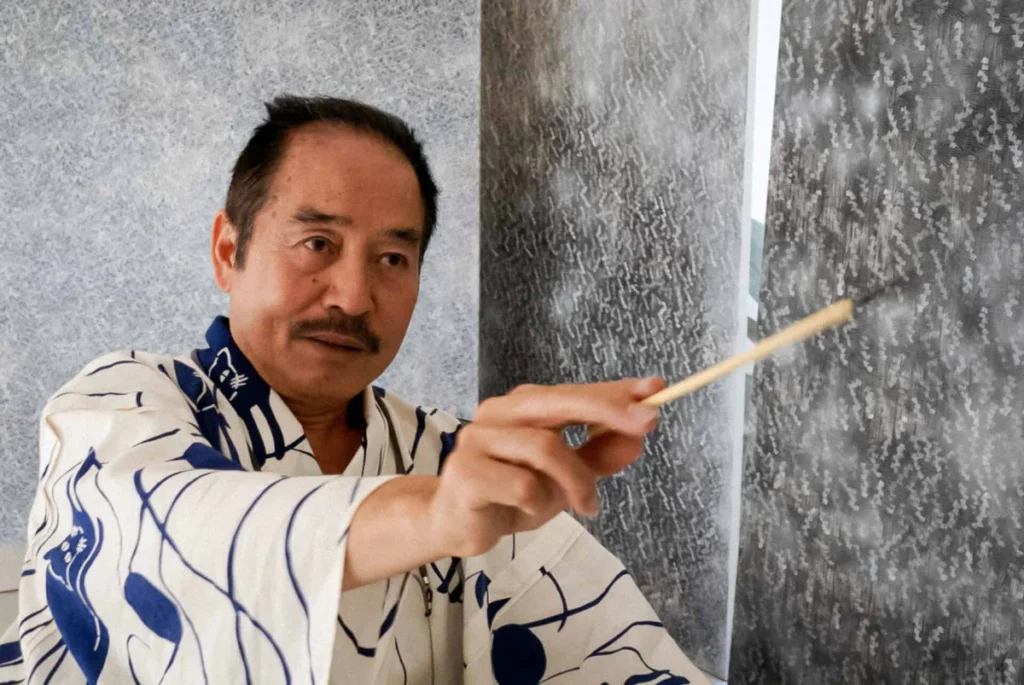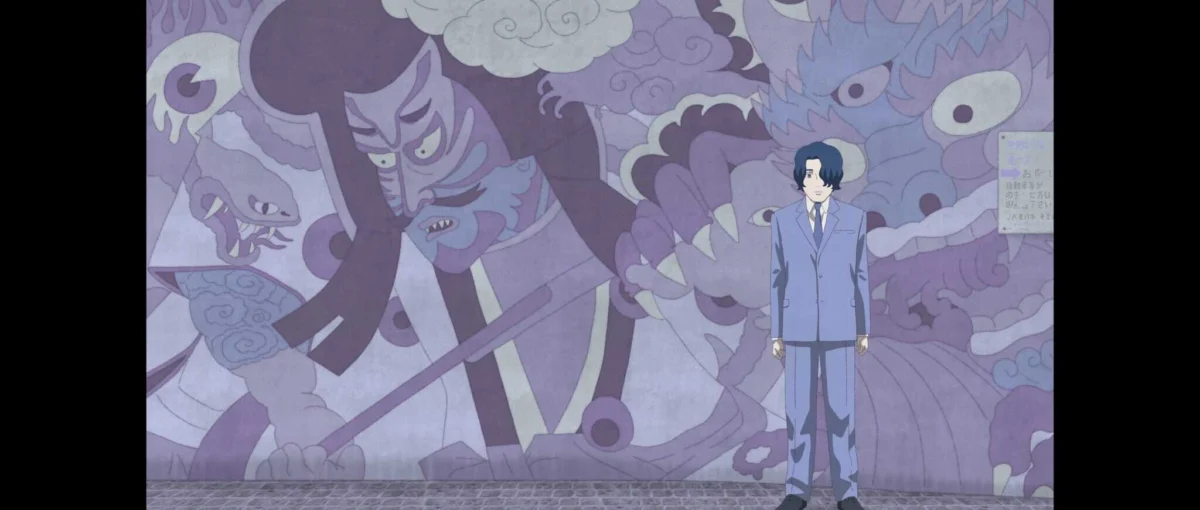
"Jinsei," the ambitious debut feature from filmmaker Suzuki Ryuya, a distinguished graduate of Tohoku University of Art and Design, has emerged as a significant work in independent animation, offering a stark alternative to the prevalent styles and narratives within the mainstream anime industry. Funded through a successful crowdfunding campaign, this meticulously hand-drawn film, crafted entirely by Suzuki over an intensive 18-month period, premiered to critical attention at the prestigious Annecy International Animation Film Festival, signaling a fresh, introspective voice in contemporary Japanese cinema. Its unique aesthetic and profound thematic explorations have positioned it as a compelling piece of art, reflecting both personal dedication and a sharp socio-cultural critique.
The Genesis of a Singular Vision: Production and Artistic Philosophy
The creation of "Jinsei" represents a monumental undertaking for a single artist. Suzuki Ryuya’s decision to hand-draw every frame over 18 months underscores a profound commitment to his artistic vision, a feat rarely attempted in an era dominated by digital animation studios and larger production teams. This solo endeavor immediately sets "Jinsei" apart from the highly industrialized and often committee-driven production pipelines of mainstream anime. While large studios might employ hundreds of animators, Suzuki’s solitary process imbues the film with an undeniable personal touch and a unified artistic sensibility, making it a testament to the power of independent filmmaking.
The choice of hand-drawn animation, a technique often perceived as labor-intensive and financially demanding, was enabled by a successful crowdfunding initiative. This funding model allowed Suzuki to bypass traditional studio backing, thereby retaining complete creative control and ensuring the integrity of his distinctive style. Crowdfunding platforms have become increasingly vital avenues for independent artists worldwide, offering direct engagement with potential audiences and fostering a community of supporters eager to champion unconventional projects. For "Jinsei," this support was crucial in bringing to life a film that deliberately eschews commercial tropes in favor of a deeply personal and often challenging narrative. The film’s premiere at the Annecy International Animation Film Festival, often regarded as the "Cannes of animation," further solidified its status as a significant global artistic achievement. Annecy is renowned for showcasing groundbreaking and artistically daring animation from around the world, and its selection of "Jinsei" for its debut highlights the film’s international appeal and its innovative contribution to the medium. This platform provided Suzuki’s work with immediate global visibility and critical validation, launching it into the global animation discourse.
A Century of Life: Unraveling the Protagonist’s Journey
"Jinsei" embarks on an expansive narrative journey, tracing the 100-year life of its unnamed protagonist across ten distinct chapters, beginning in the tumultuous 2000s. The story is set in motion by a tragic accident: a young boy witnesses his mother’s death, run down by an elderly driver, an incident that simultaneously plunges his father into a coma. Orphaned in all but name, the protagonist is left in the care of his stepfather, Hiroshi. From this somber beginning, the film establishes a pervasive sense of anonymity and a life marked by external forces rather than self-defined identity. The protagonist is notably never referred to by a real name by his caregivers or the narrative itself, an artistic choice that emphasizes his malleable identity and perhaps reflects a broader commentary on how individuals are shaped and labeled by society.
Residing quietly in a housing complex in the Tohoku region, a geographical setting often associated with resilience and understated beauty in Japan, the protagonist’s life takes an unexpected turn with the arrival of Kin, a transfer student. Inspired by the lingering memory of his comatose father, a figure whose absence becomes a guiding presence, the protagonist harbors an ambition to become an idol. This aspiration introduces a fascinating tension within the film’s melancholic framework, hinting at a desire for recognition and self-expression amidst a life of perceived insignificance.
Throughout his century-long existence, the protagonist’s identity is fluid, defined by a succession of appellations—from derogatory slurs that mark his early struggles to the carefully constructed stage names adopted during his foray into the entertainment industry. This chronological sweep allows "Jinsei" to explore profound themes of personal evolution, societal change, and the enduring human quest for meaning and identity against a backdrop of historical shifts. The fragmented yet interconnected chapters invite viewers to piece together the mosaic of a life lived through various roles and identities, each adding a layer to his complex, unnamed persona.
The Aesthetics of Melancholia: Visuals, Sound, and Narrative Structure
The most immediate and striking characteristic of "Jinsei" is its pervasive sense of melancholia, a sentiment that permeates every cinematic aspect. This emotional tone is meticulously crafted through a deliberate artistic approach. The visual style, characterized by desaturated colors and a dominant palette of grays, immediately sets a somber mood. Suzuki Ryuya’s hand-drawn characters and settings, while impressive in their artistic execution, often lean towards a sketch-like quality rather than the hyper-detailed rendering common in mainstream anime. This stylistic choice, far from being a limitation of its low-budget production, contributes significantly to the film’s otherworldly and introspective atmosphere. It suggests a focus on mood and emotional resonance over intricate visual realism, enhancing the film’s dreamlike and often bleak aesthetic.
The narrative itself reinforces this melancholic perspective. The story’s progression, the protagonist’s internal monologues, and even the deliberate pacing of his speech all converge to create a consistently bleak and pessimistic outlook. While flashes of color are introduced later in the film, they do not disrupt the underlying melancholy but rather provide nuanced variations within the established emotional landscape. This persistence of sentiment is not merely an artistic flourish but serves a crucial narrative function, acting as an emotional through-line that connects the film’s various segments. These segments, which do not always follow a strictly linear or logically sequential path, particularly as the film advances into its later chapters, are bound together by this enduring sense of introspection and quiet despair. The non-linear structure, a departure from conventional storytelling, demands active engagement from the audience, inviting them to connect the emotional dots across time and experience.
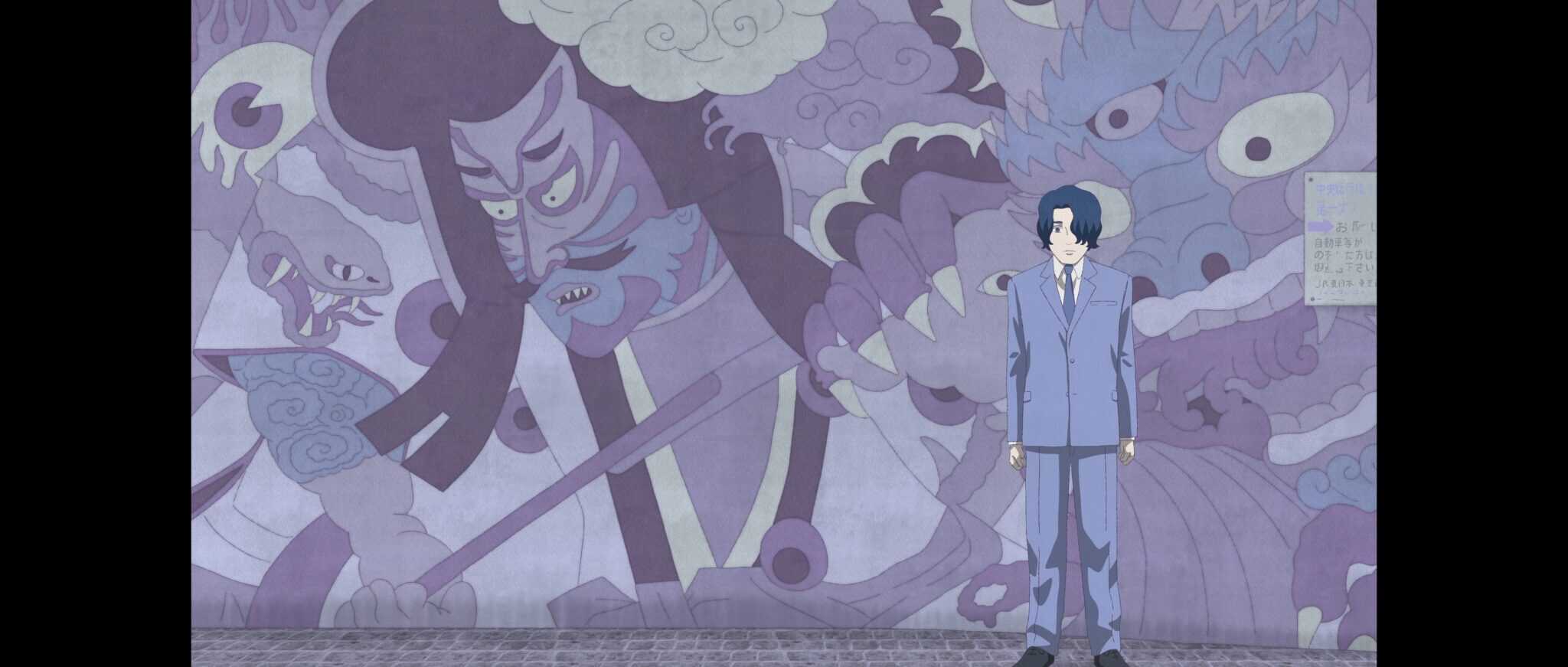
Presented in a letterbox format, the film’s cinematography further enhances its cinematic quality, giving it a grander scope despite its intimate artistic origins. While the animation, owing to its solo, low-budget production, may not boast the fluid motion of large-scale studio productions, Suzuki masterfully employs rapid cuts. This technique not only compensates for limited frame-by-frame movement but also amplifies the film’s distinctive aesthetic, contributing to its ethereal and melancholic mood. The accompanying music, far from being an overt emotional guide, is subtly fitting. It enhances the film’s atmosphere without overpowering the visuals or narrative, demonstrating a nuanced understanding of sound design’s power in independent cinema. This subtle integration of music allows the audience to immerse themselves fully in the film’s emotional landscape, letting the quiet melancholy resonate without distraction.
A Scathing Critique of the Entertainment Industry and Societal Power Dynamics
Beyond its unique aesthetics and ambitious narrative scope, "Jinsei" delivers a pointed and often scathing critique of the entertainment industry, portraying it as a "dog-eat-dog environment, filled with predators and violence coming from all sides." This thematic core is explored through various "side stories" that intertwine with the protagonist’s journey, revealing the dark underbelly of fame and ambition.
A particularly resonant and timely aspect of this critique emerges with the depiction of the boys’ group and their manager, Mr. Shiratori. The similarities to the notorious Johnny Kitagawa scandal, which rocked Japan’s entertainment world, are palpable and intentionally drawn. The Johnny & Associates talent agency (now renamed SMILE-UP.), founded by Johnny Kitagawa, was at the center of decades-long allegations of sexual abuse against its young male idols. The widespread public acknowledgment and official investigations into these allegations have forced a reckoning within the Japanese entertainment industry. "Jinsei"’s portrayal, therefore, is not merely a fictionalized account but a potent artistic commentary on real-world systemic abuses, power imbalances, and the exploitation inherent in certain facets of the idol industry. The film’s commentary on this sector is as harsh and unflinching as possible, reflecting a deep societal concern.
In a surprising and impactful narrative turn, however, "Jinsei" deviates from typical victim narratives by depicting the victims’ retaliation, and in a "most shocking way." This choice is profoundly significant. It moves beyond simply exposing abuse to exploring themes of agency, justice, and the consequences of prolonged suffering. By allowing the victims to reclaim power, the film challenges conventional portrayals of vulnerability and offers a cathartic, albeit disturbing, vision of retribution. This narrative decision elevates the critique from mere observation to an active exploration of justice, albeit through a lens that challenges comfortable societal norms.
The film’s exploration extends to broader societal power dynamics, particularly through the protagonist’s consistent treatment of "forceful authority." This element, woven throughout his 100-year life, adds a very interesting layer that is rarely encountered in cinema. It suggests an enduring struggle against oppressive structures, whether in personal relationships, the entertainment industry, or broader societal institutions. The "future arc" of the film, while perhaps less detailed in its specific references, maintains this consistent thematic thread, demonstrating that even as society evolves, certain patterns of authority and individual resistance persist. Similarly, the "Japan arc" continues this exploration, although its references become more vague, inviting viewers to draw their own conclusions about the socio-political landscape depicted. This deliberate ambiguity allows the film’s critique to transcend specific incidents and resonate on a more universal level, commenting on the enduring human condition under various forms of power.
Broader Impact and Implications for Independent Animation
"Jinsei" stands as a testament to the enduring power of independent animation to tackle complex themes with artistic integrity and a unique voice. Its critical success at Annecy and subsequent recognition establish it not just as a remarkable debut for Suzuki Ryuya but also as a significant entry in the landscape of global animation. The film’s commitment to a distinctive, hand-drawn aesthetic, even in the face of resource limitations, serves as an inspiration for aspiring animators who may feel constrained by the commercial demands of larger studios. It champions the idea that artistic vision, dedication, and a singular perspective can transcend technical limitations and resonate deeply with audiences.
The film’s sharp critique of the entertainment industry, particularly its pointed parallels to real-world scandals, positions it as an important piece of social commentary. It contributes to an ongoing cultural dialogue about exploitation, power, and accountability within industries that shape public perception and influence young lives. By offering a narrative where victims retaliate, "Jinsei" sparks crucial conversations about justice, agency, and the potential for collective pushback against systemic abuse, adding a layer of nuanced complexity to the discourse surrounding victimhood and empowerment.
Moreover, "Jinsei" boldly offers an alternative to the many clichés that often characterize mainstream anime. It eschews simplistic characterizations, formulaic plotlines, and overly polished aesthetics in favor of a raw, melancholic, and deeply introspective journey. This departure challenges audience expectations and broadens the definition of what Japanese animation can be, proving that there is a vibrant space for experimental, auteur-driven works alongside commercial blockbusters. For the broader animation community, "Jinsei" highlights the potential for narrative ambition and thematic depth within independent productions, encouraging a diversity of voices and artistic approaches.
In conclusion, "Jinsei" is a profoundly rewarding animation. It is rich in sentiment, presenting an interesting story imbued with pointed social comments, all while offering a refreshing and vital alternative to the well-trodden paths of commercial anime. Suzuki Ryuya’s debut feature is not merely a film; it is a meticulously crafted artistic statement, a powerful social critique, and a beacon for the future of independent animation, proving that a single vision, fueled by dedication and supported by a community, can leave an indelible mark on the global cinematic landscape.