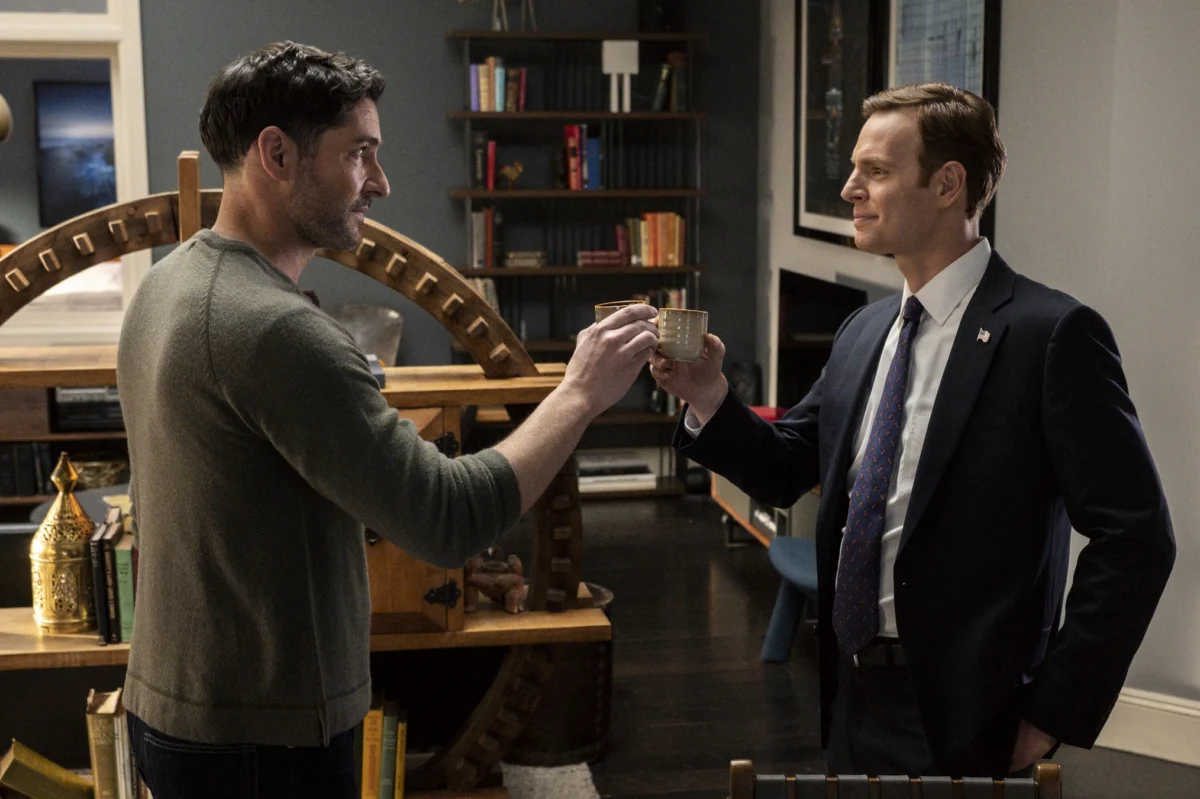
The Monday, April 13, episode of the CBS procedural CIA, titled "Elimination Game," marked a pivotal turning point for the freshman series, signaling a deepening of the professional and personal bonds between its lead protagonists while integrating the broader narrative architecture of the FBI franchise. As the seventh episode of the inaugural season, "Elimination Game" served as a high-stakes crossover event, bringing established characters from the flagship series FBI into the high-tension world of international espionage. The episode effectively utilized the guest appearances of Special Agent Maggie Bell (Missy Peregrym) and Special Agent in Charge Isobel Castille (Alana De La Garza) to bridge the gap between domestic law enforcement and foreign intelligence operations, providing a multifaceted look at the evolving partnership between CIA Case Officer Colin Glass (Tom Ellis) and FBI Special Agent Bill Goodman (Nick Gehlfuss).
The Strategic Architecture of the Crossover Event
The integration of Maggie Bell and Isobel Castille into the CIA narrative was more than a mere ratings vehicle; it served to ground the newer series within the established Dick Wolf universe. Isobel Castille’s introduction to the CIA’s inner workings highlighted the procedural friction that often exists between the Bureau’s domestic mandates and the Agency’s clandestine foreign interests. However, the emotional core of the crossover resided in the interaction between Maggie Bell and Bill Goodman. Their rapport suggested a pre-existing professional history, characterized by mutual respect and a shared understanding of the burdens of field work.
Maggie Bell’s presence also provided a fresh perspective on Colin Glass. Her reactions to Glass—a character defined by a blend of British charm and haunted professional history—added a layer of levity to an otherwise somber episode. This dynamic underscored the central theme of the series: the collision of two distinct institutional cultures and the personal sacrifices required to maintain national security. For viewers, these interactions validated Bill Goodman’s transition from a standard FBI operative to a key player in a joint task force, while humanizing the often-enigmatic Colin Glass.
Chronology of Betrayal: The Case of the North Korean Double Agent
The primary procedural plot of "Elimination Game" focused on a sensitive operation involving North Korean defectors. The investigation brought Colin Glass into contact with an old associate, Andy, an officer within the South Korean National Intelligence Service (NIS). The history between Glass and Andy was deeply rooted in shared trauma; both men were close to Glass’s former partner, Toni, who was killed in a devastating explosion during a previous mission.
The narrative tension escalated as the joint team sought to track down two high-value North Korean defectors. While Andy ostensibly provided the intelligence necessary to secure the defectors, Bill Goodman began to notice inconsistencies in Andy’s behavioral patterns and the tactical validity of his "intel." Goodman’s background in law and his keen observational skills allowed him to perceive what Glass, blinded by loyalty and shared grief, could not.
The betrayal was revealed in a sequence of high-stakes confrontations. It was disclosed that Andy had been compromised by North Korean interests following Toni’s death. According to the narrative reveal, Andy never fully processed the loss and remained in the field, making him vulnerable to recruitment by North Korean handlers who approached him when he felt he had "nothing left to lose." This revelation served as a dark mirror to Colin Glass’s own experience; while Glass chose to channel his grief into a new partnership with Goodman, Andy succumbed to the pressures of the "great game."
The Climax and the Apartment Confrontation
The episode reached its emotional and physical zenith at Colin Glass’s residence. In a moment of vulnerability, Andy and Glass reminisced about Toni, with Andy offering Glass a hollow absolution for the mission that claimed her life. Glass has long harbored a profound sense of survivor’s guilt, as Toni was meeting one of his assets when the fatal explosion occurred.
The tension broke when Andy’s true intentions were laid bare. Before the FBI and CIA team could fully intervene, Andy held a firearm to the back of Glass’s head, uttering the chilling phrase, “Say hi to Toni for me.” This moment underscored the lethal reality of intelligence work, where personal history is often weaponized. Bill Goodman’s timely intervention—physically neutralizing Andy before he could pull the trigger—solidified the trust between the two partners. The act of saving Glass’s life served as a functional baptism for their partnership, moving them beyond mere colleagues to a unit defined by mutual protection.
Character Analysis: Colin Glass and the Ghost of Toni
One of the most significant revelations in "Elimination Game" was the depth of Colin Glass’s relationship with his former partner. In the episode’s denouement, Glass admitted to Goodman that Toni was not merely a professional colleague but the "love of his life." This admission recontextualized Glass’s behavior throughout the first seven episodes, explaining his initial reluctance to form a bond with Goodman and his obsessive dedication to his work.
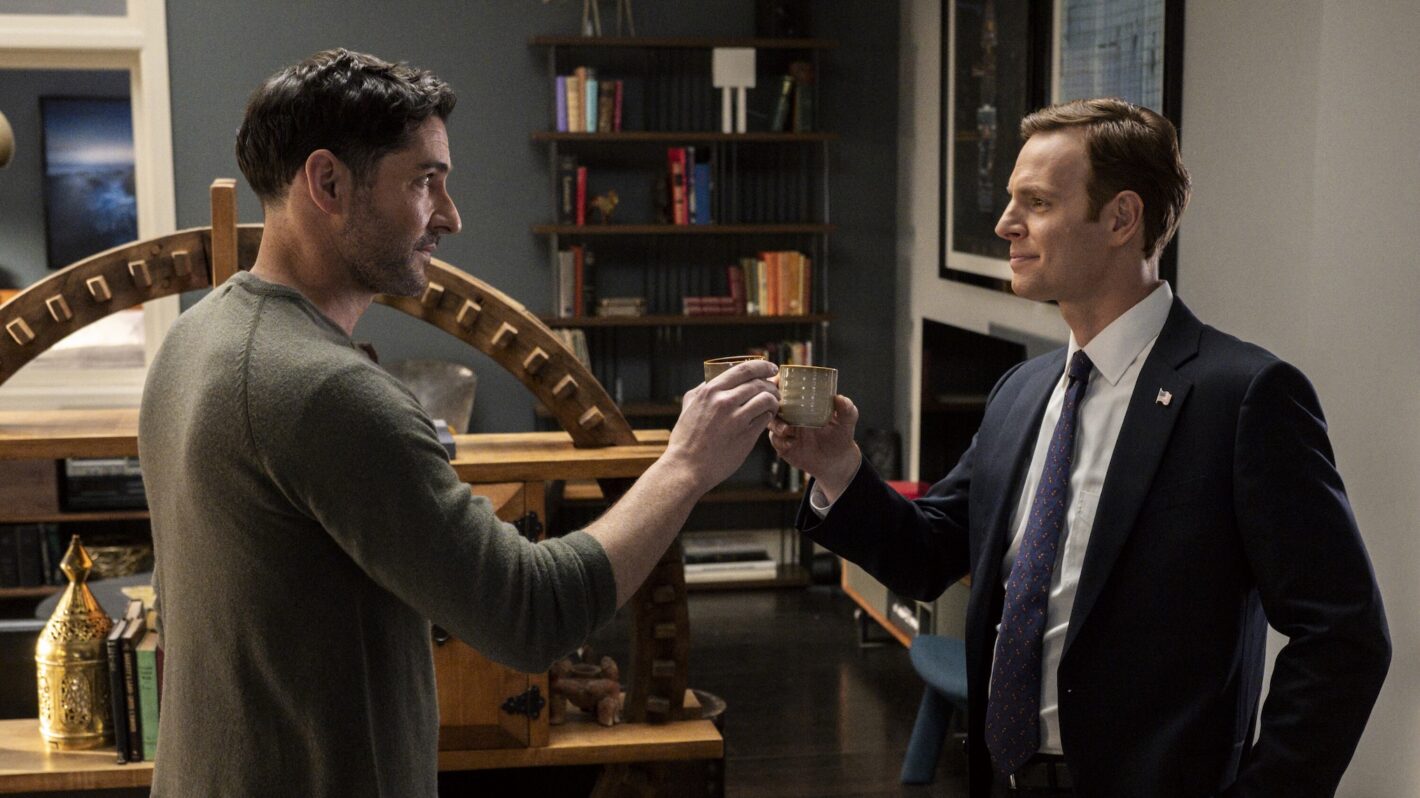
By sharing this information, Glass signaled a level of trust in Goodman that had been previously absent. However, this moment was underscored by a profound sense of dramatic irony. While Glass praised Goodman for his unwavering principles and loyalty, Goodman remained burdened by a significant secret: he is currently conducting a covert internal investigation to identify a mole within the CIA. The contrast between Glass’s burgeoning honesty and Goodman’s necessary deception creates a volatile foundation for the episodes to follow.
The Introduction of Lauren and "Wild Bill" Goodman
Parallel to the espionage plot, the episode expanded on Bill Goodman’s backstory through the introduction of Lauren, an Assistant U.S. Attorney and a former law school classmate of Goodman. Their encounter provided a rare glimpse into Goodman’s life prior to the FBI. Lauren’s references to "Wild Bill Goodman" suggested a past characterized by a more reckless or perhaps less disciplined persona, contrasting sharply with the "suit and tie" professional Goodman has become.
The interaction also introduced potential conflict regarding Goodman’s personal life. Despite Lauren’s invitation to reconnect over dinner, Goodman remained steadfast in his commitment to his fiancée, Katie, described as his high school sweetheart. However, the narrative framing of Lauren’s departure—telling him she would "see him around"—suggests that her presence will serve as a recurring complication. In procedural dramas of this nature, the reintroduction of a "flame" from the past often serves to test the stability of the protagonist’s current domestic life, providing a secondary layer of conflict to the primary mission-driven plots.
Institutional Implications and Franchise Impact
The success of the "Elimination Game" crossover demonstrates the continued viability of the multi-series universe model pioneered by executive producer Dick Wolf. By integrating the CIA into the established FBI framework, the network has created a platform for complex storytelling that spans domestic law enforcement and international intelligence.
Data from previous seasons of the FBI franchise indicates that crossover events typically result in a significant uptick in viewership, often ranging from 10% to 15% above the season average. These events serve as an entry point for viewers of the flagship series to engage with spin-off content. From a narrative standpoint, the crossover allows for a more nuanced exploration of how different agencies handle the same threat, emphasizing the "joint" nature of modern counter-terrorism and counter-intelligence operations.
Analysis of Future Trajectories
The conclusion of "Elimination Game" leaves several narrative threads dangling, most notably the hunt for the CIA mole. Goodman’s internal conflict—balancing his duty to find the traitor with his growing loyalty to Glass—is likely to reach a breaking point in the season finale. Furthermore, the revelation regarding Andy’s defection highlights the vulnerability of intelligence officers stationed abroad, a theme that the series is expected to revisit.
The episode also sets the stage for a deeper exploration of North Korean intelligence activities on American soil. By involving the NIS and the South Korean perspective, the show has signaled an intention to tackle sophisticated geopolitical issues beyond simple "villain of the week" tropes.
As CIA moves toward the conclusion of its first season, the stakes have been significantly elevated. The bond between Glass and Goodman, while strengthened by the events involving Andy, is built on a precarious foundation of secrets. The "Wild Bill" backstory and the specter of the "love of his life" Toni provide the emotional stakes necessary to sustain long-form character arcs. For the audience, "Elimination Game" was not just a crossover; it was a definitive statement on the series’ identity, blending the procedural efficiency of FBI with the psychological complexity of a modern spy thriller.
The series continues to air on Mondays at 10/9c on CBS, with the fallout from Andy’s betrayal and the looming threat of the internal mole expected to dominate the upcoming narrative arc. As the partners navigate the treacherous waters of international espionage, the question remains: can their partnership survive the truth that Goodman is currently hiding? In the world of the CIA, trust is the most valuable currency, and as Episode 7 proved, it is also the easiest to lose.