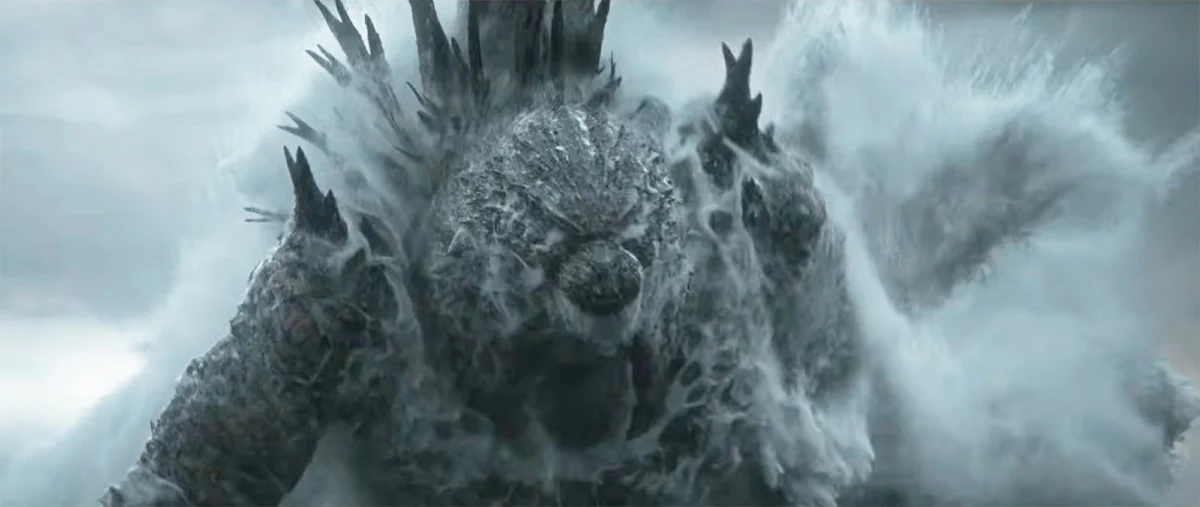
Toho Studios and Gkids have officially released the first teaser trailer for Godzilla Minus Zero, the highly anticipated direct sequel to the 2023 Academy Award-winning global phenomenon Godzilla Minus One. The announcement, which took place during a high-profile presentation at CinemaCon in Las Vegas, confirms that director Takashi Yamazaki has returned to helm the project, which is scheduled for a synchronized international release in November 2026. This sequel arrives as part of a renewed era for the iconic franchise, following the unprecedented critical and commercial success of its predecessor, which redefined the creative boundaries of the kaiju genre.
Set in 1949, exactly two years after the traumatic events of the previous film, Godzilla Minus Zero explores a Japan still in the throes of post-war reconstruction under the oversight of the American occupation. The narrative continues the story of the Shikishima family, with Ryunosuke Kamiki reprising his role as Koichi Shikishima and Minami Hamabe returning as Noriko Oishi. The teaser suggests a narrative expansion that moves beyond the borders of Japan, hinting at a global scale for the monster’s path of destruction while maintaining the deeply personal, character-driven focus that earned the first film widespread acclaim.
Historical and Narrative Context: The 1949 Setting
The decision to set Godzilla Minus Zero in 1949 is a significant creative choice that aligns with the "Minus" series’ commitment to historical groundedness. In the chronology of the franchise, Godzilla Minus One depicted a Japan at its absolute nadir—"Point Zero"—immediately following the surrender in 1945. By moving the clock forward to 1949, Yamazaki places the characters in the heart of the Shōwa era’s reconstruction period.
During this time, the General Headquarters (GHQ) of the Allied Powers, led by General Douglas MacArthur, exerted significant control over Japanese domestic policy and infrastructure. The presence of American military forces in the teaser—alluded to by dialogue regarding "operations" and "failed" maneuvers—suggests that the sequel will delve into the geopolitical tensions of the occupation. This era was characterized by the "Economic Miracle" beginning to take root, but it was also a time of extreme scarcity and psychological recovery from the war.

The title, stylized in Japan as Godzilla -0.0, implies a progression from the total devastation of the first film. If Godzilla Minus One represented Japan at its lowest point, the "Zero" in the sequel’s title may symbolize a fragile stabilization or the emergence of a new type of threat that challenges the very foundation of the rebuilding nation.
Production Evolution and the Yamazaki Vision
Takashi Yamazaki, who serves as writer, director, and visual effects supervisor, has become the primary architect of this modern Toho era. Yamazaki’s approach to Godzilla is rooted in a return to the character’s 1954 origins as a metaphor for nuclear trauma and national grief, a stark contrast to the more action-oriented "MonsterVerse" iterations produced by Legendary Pictures in the United States.
The production of Godzilla Minus Zero is once again a collaboration between Toho Studios and Robot Communications. Yamazaki’s dual role as director and VFX lead is a cornerstone of the production’s efficiency. The previous film was famously produced on a budget estimated at less than $15 million—a fraction of the cost of contemporary Hollywood blockbusters—yet it secured the Academy Award for Best Visual Effects. This feat was achieved through Yamazaki’s bespoke VFX pipeline, which emphasizes artistic precision over sheer computational volume.
The sequel aims to escalate the spectacle. Preliminary reports from the CinemaCon presentation indicate that the visual effects for Godzilla Minus Zero utilize updated rendering technologies to depict the creature in diverse environments. The teaser provides glimpses of the monster marching in territories outside of Tokyo, suggesting that the "all-new calamity" mentioned in the official synopsis may have international implications, potentially involving the American naval presence in the Pacific.
The Return of the Principal Cast
A major factor in the success of the 2023 film was the emotional weight carried by its human protagonists. The confirmation that Ryunosuke Kamiki and Minami Hamabe are returning provides narrative continuity that is rare in the long history of the Godzilla franchise, which often features anthology-style storytelling with rotating casts.

Ryunosuke Kamiki’s portrayal of Koichi Shikishima—a failed kamikaze pilot suffering from severe PTSD—was cited by critics as one of the most compelling human performances in the series’ 70-year history. In a statement released alongside the teaser, Kamiki expressed his dedication to the role: "I am beyond happy to be able to participate in a film set two years after Godzilla Minus One, which is one of the most important works of my life. The pressure of participating in a Godzilla work loved by so many people remains the same, but I have done my absolute best so that everyone who loves Godzilla can enjoy it."
Minami Hamabe’s return as Noriko Oishi is equally significant. The conclusion of the first film left her fate and physical condition in a state of ambiguity, hinting at a connection to Godzilla’s biology. Her survival and subsequent role in the 1949 setting are expected to be central to the sequel’s plot. Additionally, the film introduces Miou Tanaka in a key supporting role, though specific character details remain under wraps.
Box Office Legacy and Industry Impact
The greenlighting of Godzilla Minus Zero was a logistical certainty following the record-breaking performance of its predecessor. Godzilla Minus One earned over $115 million at the global box office, becoming the highest-grossing Japanese live-action film in North American history. It maintained an unprecedented "Certified Fresh" rating on Rotten Tomatoes and appeared on numerous "Best of the Year" lists, bridging the gap between niche genre fans and mainstream audiences.
The success of the first film signaled a shift in how international audiences consume non-English language cinema. Gkids, the distributor responsible for bringing high-profile Japanese titles like Hayao Miyazaki’s The Boy and the Heron to Western markets, has secured the North American rights for the sequel. The decision to set a firm release date of November 6, 2026, underscores the confidence the distributors have in the film’s "tentpole" status.
Industry analysts suggest that Godzilla Minus Zero will likely benefit from a larger marketing budget and a wider theatrical footprint than the first film. The "Yamazaki brand" has become a selling point in itself, representing a high-quality, philosophical approach to the monster movie that appeals to both older fans of the 1954 original and new viewers looking for substantive storytelling.

Technical Credits and Distribution Timeline
The technical team behind the sequel remains largely consistent with the Academy Award-winning group from the first installment.
- Director/Writer/VFX: Takashi Yamazaki
- Producer: Kazuaki Kishida
- Music: Naoki Satō (known for the haunting, orchestral themes that blended Akira Ifukube’s original motifs with modern sensibilities)
- Production Houses: Toho Studios & Robot Communications
The global rollout is planned as follows:
- Japan Release: Early November 2026.
- North American Release: November 6, 2026, distributed by Gkids.
- International Markets: Rolling releases throughout November 2026.
The teaser trailer, currently available on the official Toho and Gkids YouTube channels, has already garnered millions of views within its first 24 hours, indicating that the "Godzilla fever" sparked in 2023 has not diminished.
Analysis of Broader Implications
The existence of Godzilla Minus Zero marks a pivotal moment for Toho. Historically, Toho has alternated between periods of heavy production and long hiatuses for the Godzilla character. The rapid development of a direct sequel suggests that the studio is moving toward a more structured "cinematic universe" model, albeit one that prioritizes directorial vision over corporate formula.
Furthermore, the film’s focus on the 1949 occupation era allows for a sophisticated exploration of Japanese-American relations. By including the American military’s response to Godzilla, Yamazaki has the opportunity to comment on the transition from wartime enemies to Cold War allies. This historical layering adds a degree of intellectual depth that distinguishes the Japanese production from its Western counterparts.

As the film moves toward its November 2026 release, the industry will be watching to see if Yamazaki can repeat the "lightning in a bottle" success of Minus One. With the return of the original cast and a continuation of the grounded, gritty aesthetic that redefined the King of the Monsters for a new generation, Godzilla Minus Zero is positioned to be one of the most significant cinematic events of the decade.
Director Takashi Yamazaki’s closing remarks at CinemaCon served as a simple but effective reminder of the film’s primary goal: "See you at the movie theater." For a franchise that began as a somber reflection on national tragedy, the journey to Godzilla Minus Zero represents both a tribute to the past and a bold step into the future of global cinema.