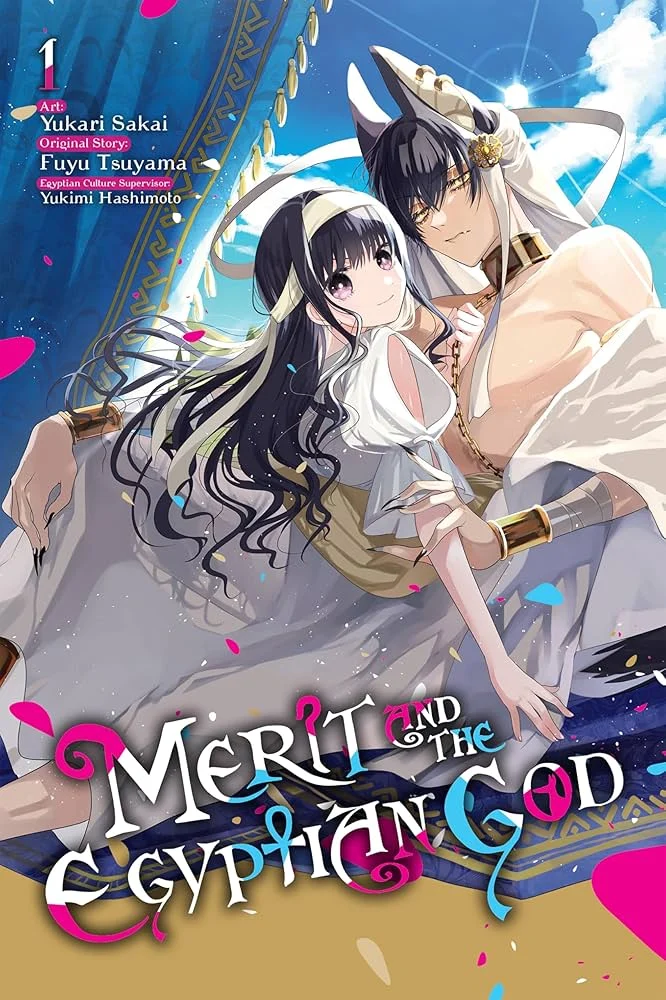
Hana to Yume, one of Japan’s most revered shoujo manga magazines, continues its tradition of captivating readers with fantastical and supernatural narratives. Among its latest offerings to capture significant attention is "Merit and the Egyptian God," a compelling series that intricately weaves Egyptian mythology into the fabric of a romantic comedy. Penned by Fuyu Tsuyama, brought to life through the distinctive artwork of Yukari Sakai, and meticulously overseen by Egyptian Culture Supervisor Yukimi Hashimoto, the title has rapidly emerged as a notable addition to the genre, sparking both acclaim for its imaginative premise and discussion regarding its cultural depictions.
The Legacy of Hana to Yume and the Enduring Appeal of Shoujo Fantasy
Established in 1974 by Hakusensha, Hana to Yume (literally "Flower and Dream") has been a cornerstone of the shoujo manga landscape for decades. The magazine is renowned for its consistent publication of series that blend romance with elements of fantasy, the supernatural, and historical settings, often featuring strong female protagonists. Iconic titles such as Natsuki Takaya’s Fruits Basket, Mizuho Kusanagi’s Yona of the Dawn (Akatsuki no Yona), and Julietta Suzuki’s Kamisama Kiss have cemented its reputation as a breeding ground for stories that resonate deeply with a predominantly young female audience seeking escapism, emotional depth, and empowering narratives.
The shoujo genre, which primarily targets girls and young women, often leverages fantasy elements to explore universal themes in imaginative ways. These settings provide fertile ground for unique romantic dynamics, the exploration of fate and destiny, and the development of characters who overcome extraordinary challenges. The global shoujo manga market continues to demonstrate robust growth, with titles frequently topping sales charts and inspiring successful anime adaptations, merchandise lines, and live-action productions. This consistent demand underscores the genre’s powerful appeal and its capacity to introduce diverse cultural contexts, albeit through a specific narrative lens. "Merit and the Egyptian God" thus enters a vibrant and competitive landscape, aiming to carve its own niche by drawing on the rich tapestry of ancient Egyptian lore.
Chronology of "Merit and the Egyptian God" Development and Publication
While specific dates for the manga’s conceptualization remain internal to the creative team and publisher, its emergence follows a discernible trend within Hana to Yume to regularly introduce new fantasy romance series. The collaboration between Fuyu Tsuyama, an experienced shoujo mangaka known for her ability to craft engaging character arcs and emotional depth, and Yukari Sakai, whose artistic style lends itself well to detailed fantastical settings, indicates a deliberate effort to produce a high-quality series. The crucial addition of Yukimi Hashimoto as the Egyptian Culture Supervisor highlights a contemporary emphasis on incorporating accurate cultural and historical details, a practice that has become increasingly valued in an interconnected global market where audiences are more discerning about representation.
The manga began its serialization in Hana to Yume, typically releasing chapters on a bi-weekly schedule, before being collected into tankōbon volumes. Its initial chapters quickly garnered attention, leveraging the magazine’s established readership and the burgeoning popularity of mythology-inspired narratives across various media. The first volume’s release, as indicated by promotional materials, marked its formal entry into the broader manga market, available both digitally and in print. This staggered release allows for reader feedback and editorial adjustments, a common practice in the serialized manga industry.
The Narrative Core: A Human in the Divine Underworld
The premise of "Merit and the Egyptian God" plunges readers into an immediate crisis, introducing its titular heroine, Merit, in an utterly bewildering predicament. The story opens with Merit suddenly finding herself transported to the Egyptian Underworld, a realm of divine judgment and eternal consequence, where she is inexplicably subjected to an afterlife trial. Her initial shock and terror at this surreal turn of events – not least the realization that she is still alive despite being in the land of the dead – propel her to attempt an escape. It is during this desperate flight that she experiences an accidental, yet pivotal, collision with Anubis, the revered jackal-headed god of mummification and the afterlife.
Contrary to Merit’s preconceived notions of a majestic and authoritative divine being, Anubis is depicted as a reclusive, indifferent deity who has largely abandoned his sacred duties. His immense authority over the Underworld is overshadowed by his apathy, a trait that has drawn the ire of the other gods. This divine displeasure culminated in a powerful curse, trapping Anubis in a mortal form, stripped of his full powers and divine majesty. The only known method to break this curse requires the direct intervention of a living human.
Recognizing that Anubis, despite his current predicament, remains her sole conduit back to the realm of the living, Merit makes a daring proposition: a deal with the indolent Lord of the Underworld. She pledges to assist him in rediscovering his appreciation for humanity and, in doing so, help him regain his original divine form. This pact forms the central conflict and driving force of the narrative, establishing a unique romantic comedy dynamic between an optimistic human girl and a jaded, cursed god.
Character Dynamics and Thematic Resonance
Fuyu Tsuyama’s expertise in crafting compelling shoujo narratives shines through in the characterization of Merit. The heroine embodies resilience, optimism, and a relentless spirit that refuses to be daunted by her extraordinary circumstances. She serves as a vital role model for the series’ target teen readership, demonstrating how to confront daunting challenges without succumbing to despair, always striving to perceive the brighter side of even the direst situations. Merit’s inherent kindness and steadfast determination make her a powerful foil to Anubis, whose default disposition is one of negativity and self-deprecating cynicism.
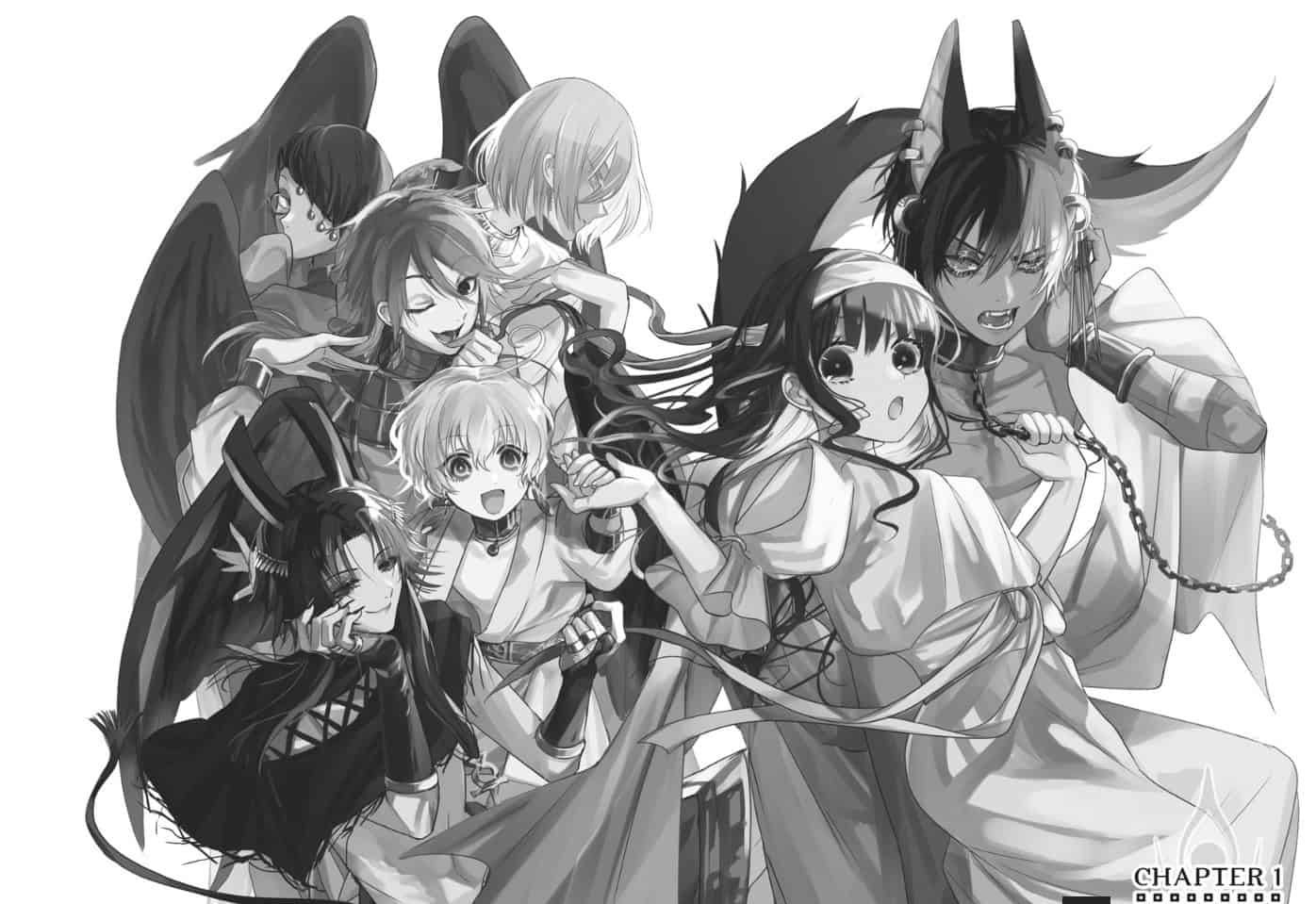
Despite her own tragic and bewildering displacement, Merit consistently projects an optimistic outlook. While she occasionally expresses irritation with Anubis’s aloofness or the often-capricious nature of the other deities, she consistently endeavors to maintain a mature and understanding demeanor. Her unwavering resolve is particularly evident during crises, such as a near-fatal encounter with Osiris, the formidable King of the Underworld, where she remains steadfast in her commitment to breaking Anubis’s curse. This unwavering spirit not only endears her to readers but also serves as the catalyst for Anubis’s gradual transformation. The story implicitly explores how genuine human connection, empathy, and selflessness can dismantle long-held prejudices and personal barriers, even those held by a divine being.
Artistic Excellence and Cultural Authenticity
The visual storytelling of "Merit and the Egyptian God" is a critical component of its appeal, with Yukari Sakai’s artwork skillfully blending shoujo aesthetics with intricate cultural details. The manga credits Yukimi Hashimoto as an Egyptian Culture Supervisor, a role indicative of the creative team’s commitment to portraying ancient Egyptian elements with a degree of authenticity. Hashimoto, known as a writer, illustrator, and researcher specializing in ancient Egypt, brings a wealth of knowledge to the project.
This meticulous supervision is evident in the visual design of the manga. Each scene depicting the temples and environments where the main cast resides is imbued with small, nuanced cultural details, from hieroglyphic-inspired patterns to architectural motifs that evoke ancient Egyptian structures. These authentic touches are often augmented by "sparkling effects," a common shoujo trope, which imbue the fantastical setting with an ethereal and magical quality, enhancing the overall immersive experience for the reader.
The designs of the gods themselves are also carefully considered, drawing loosely from traditional Egyptian iconography while adapting them to a shoujo art style. Anubis, for instance, is prominently depicted with distinctive jackal ears, a direct reference to his animalistic association. Similarly, Horus is illustrated with majestic hawk wings, mirroring his avian symbolism. The divine beings are frequently shown adorned with elaborate accessories, including intricate headdresses and ornate necklaces. In ancient Egypt, such adornments were not merely decorative; they were potent symbols of status, authority, and divine connection, typically reserved for royalty and supreme beings. In contrast, Merit is consistently portrayed in simple, everyday clothing and a modest headband, visually emphasizing her status as a common human navigating a world populated by powerful deities and otherworldly inhabitants. This visual distinction effectively highlights her "outsider" status and vulnerability within the divine realm.
Discussions on Cultural Representation and Historical Accuracy
Despite the commendable efforts in cultural supervision and the integration of authentic details, "Merit and the Egyptian God" has, like many internationally-distributed manga and anime, faced scrutiny regarding its depiction of characters’ physical appearance. A significant point of discussion centers on the portrayal of skin tone within the cast. The majority of the characters, particularly those depicted in human-like forms, are illustrated with light, pale skin, a common aesthetic convention in shoujo manga that often aligns with broader Japanese beauty standards.
The primary exception to this trend is Anubis, who, in his original divine form, is characterized as a black jackal, implicitly conveying a darker complexion for his animalistic guise. However, when he assumes his mortal, human-like form, he too is depicted with a lighter skin tone. This visual choice has prompted critical commentary, suggesting a potential "whitewashing" of the ancient Egyptian setting and its inhabitants.
Historically, ancient Egypt was a culturally and ethnically diverse civilization situated at the crossroads of Africa, the Middle East, and the Mediterranean. Its population would have exhibited a wide spectrum of skin tones, ranging from darker complexions, particularly in the southern regions and among Nubian populations, to lighter tones further north. Archaeological evidence, artistic representations from the period, and genetic studies consistently affirm this rich diversity.
The portrayal of predominantly pale-skinned characters in a narrative set in ancient Egypt, while common in popular media and often a stylistic choice within certain genres, carries implications. For audiences unfamiliar with the historical and ethnic realities of ancient Egypt, such depictions could inadvertently reinforce inaccurate or Eurocentric beliefs about how ancient Egyptians may have looked. This phenomenon is not unique to "Merit and the Egyptian God" but is part of a broader ongoing dialogue within the global entertainment industry about cultural authenticity, representation, and the responsibility of creators when adapting historical or mythological narratives for diverse audiences. While the artistic interpretation does not directly impede the narrative’s progression or core themes, it touches upon sensitive issues of cultural identity and historical accuracy, prompting important conversations about how global stories are visually translated.
Broader Impact and Future Outlook
"Merit and the Egyptian God" contributes to the growing trend of mythological narratives within shoujo manga, offering readers a unique blend of fantasy, romantic comedy, and an introduction to Egyptian mythology. While the manga takes creative liberties in its adaptation of deities and lore, as is standard for the genre, it provides an accessible entry point for young readers to become acquainted with figures like Anubis, Osiris, and Horus. This can spark further interest in ancient history and cultural studies, even if the initial exposure is through a fictionalized lens.
The series’ success will likely be measured not only by its ability to entertain but also by its capacity to evolve its characters and world. Early sales figures and reader reception suggest a strong start, positioning it as a potential long-runner for Hana to Yume. As the narrative progresses, anticipation builds for how Anubis’s strained relationships with the other gods will unfold, and how Merit’s unwavering optimism and selflessness will continue to mend divine rifts and personal prejudices. The inherent drama and romantic tension of a human-god pairing, combined with the fantastical backdrop, promise a compelling journey.
Should the manga continue its upward trajectory in popularity, it stands poised for potential expansion into other media, such as an anime adaptation, which would further amplify its reach and cultural impact. Such adaptations often lead to a surge in merchandise, further cementing the series’ place in popular culture. Ultimately, "Merit and the Egyptian God" serves as a testament to the enduring creativity of the shoujo manga genre, its ability to explore profound themes through engaging characters, and its ongoing engagement with the complexities of cultural representation in a globalized world.