Broken Rhythm: Bruce Lee’s Game of Death serves as a definitive cinematic investigation into the final, unfinished project of the 20th century’s most influential martial artist and cultural icon. Directed by Alan Canvan and produced under the Asymmetry Films banner, the documentary is scheduled to make its world premiere at the 2026 NYC Independent Film Festival. The film offers an exhaustive look at the 1972 production of Game of Death, a project that Lee intended to be his magnum opus—a philosophical and physical manifesto of his martial arts philosophy, Jeet Kune Do. The documentary arrives more than five decades after Lee’s untimely passing, seeking to untangle the complicated history of the footage he left behind and the controversial 1978 theatrical release that repurposed his vision.
The primary focus of Broken Rhythm: Bruce Lee’s Game of Death is the roughly 30 minutes of footage Lee successfully filmed in late 1972 before pausing production to star in the Warner Bros. co-production Enter the Dragon. Following Lee’s death in July 1973, the Game of Death footage became the subject of intense industry scrutiny and fan speculation. The documentary utilizes high-definition restorations of these sequences, alongside never-before-seen interviews and archival materials, to recontextualize Lee’s intent not just as an action star, but as a meticulous director and screenwriter.
Historical Context: The 1972 Vision and the 1978 Reconstruction
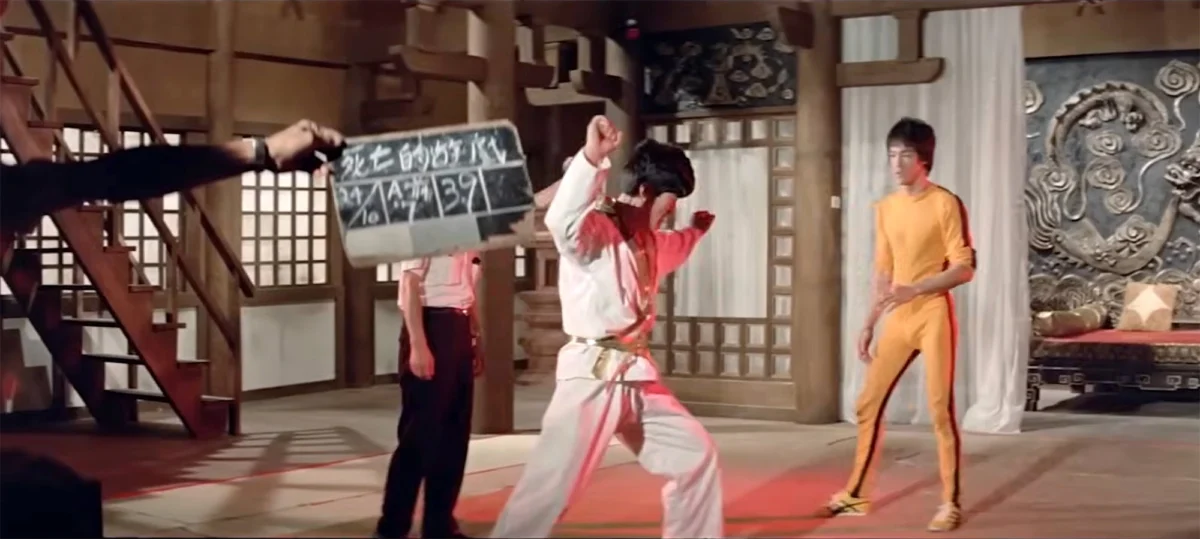
To understand the significance of Alan Canvan’s documentary, one must look at the fractured timeline of the original production. In 1972, Bruce Lee began filming Game of Death at Golden Harvest studios in Hong Kong. His concept was revolutionary: a protagonist, Hai Tien, must fight his way up a five-story wooden pagoda, with each level guarded by a master of a different martial arts discipline. This was intended to be a metaphor for Lee’s own "style of no style," demonstrating how a flexible, adaptable fighter could overcome the rigid limitations of traditional systems.
Lee successfully filmed the action sequences for the top three floors of the pagoda. These included his legendary encounters with Dan Inosanto (representing Escrima and Nunchaku), Ji Han-jae (representing Hapkido), and the 7-foot-2 NBA star Kareem Abdul-Jabbar (representing a style of fluid, "formless" combat). However, the project was shelved when Lee was offered the lead in Enter the Dragon. His sudden death at the age of 32 left the Game of Death footage in a state of limbo.

In 1978, five years after Lee’s death, Golden Harvest released a version of Game of Death directed by Robert Clouse. This version discarded Lee’s original philosophical plot, replacing it with a revenge story about a movie star faking his own death to hunt down a crime syndicate. To complete the film, the studio utilized body doubles (most notably Kim Tai-chung and Yuen Biao), cardboard cutouts of Lee’s face, and even actual footage from Lee’s real-life funeral. Only a fraction of the 1972 footage—approximately 11 minutes—was included in the final cut.
The Role of Producer André Morgan
A central figure in Broken Rhythm: Bruce Lee’s Game of Death is André Morgan, the veteran producer who worked closely with Lee at Golden Harvest and was instrumental in the 1978 reconstruction. Morgan provides the documentary with a first-hand account of the creative, financial, and logistical pressures that defined the post-1973 era.
"You don’t walk away from 30 minutes of footage, especially when the star is the director," Morgan notes in the film’s trailer. His testimony sheds light on the internal debates at Golden Harvest regarding how to handle Lee’s estate and his unfinished work. The documentary explores the "compromises that reshaped Lee’s original vision," moving beyond the simple narrative of "exploitation" to examine the complexities of film preservation and studio obligations during a period of transition for Hong Kong cinema.
Director Alan Canvan and the Redux Movement
Director Alan Canvan is no stranger to the Bruce Lee archives. He previously gained recognition within the film community for his work on The Game of Death Redux, a project that sought to edit the 1972 footage in a way that strictly adhered to Lee’s original scripts and notes. Canvan’s Redux was eventually included in the Criterion Collection’s 2020 box set "Bruce Lee: His Greatest Hits," earning praise for its technical precision and respect for the source material.
With Broken Rhythm: Bruce Lee’s Game of Death, Canvan moves from being an editor to a feature-length documentarian. His approach in this new film is more analytical, focusing on the "striking cinematic language and rich symbolic intent" found within the fragments of the 1972 shoot. The documentary posits that Game of Death was Lee’s attempt to break the "kung fu icon" mold and establish himself as a global visionary. By examining the "broken rhythm" of Lee’s movements and his directorial choices, Canvan argues that the footage reveals a man grappling with existential questions of identity and the pursuit of artistic immortality.

Technical Analysis and Supporting Data
The documentary provides a technical breakdown of the 1972 footage, which consists of over 100 minutes of raw rushes and multiple takes. Film historians interviewed in the documentary highlight several key data points regarding the production:
- The Footage Volume: While the 1978 film used only 11 minutes, Lee actually shot approximately 40 minutes of usable footage, including fight scenes and dialogue-heavy sequences meant to bridge the action.
- Choreography Innovation: The documentary analyzes the use of the yellow-and-black jumpsuit, which Lee chose specifically to contrast with the traditional uniforms of his opponents, symbolizing his break from tradition.
- Cinematography: The 1972 footage utilized long takes and wide shots, a departure from the quick-cutting "shaky cam" styles that would later dominate the genre. This allowed Lee to showcase the genuine speed and contact of the performers.
Asymmetry Films has confirmed that the documentary utilizes 4K scans of the original 35mm negatives, providing a level of clarity that was previously unavailable to the public. This visual fidelity is essential for the film’s argument that Lee’s directorial eye was as sharp as his physical prowess.
Official Responses and Cultural Impact
The announcement of Broken Rhythm: Bruce Lee’s Game of Death has generated significant interest from both the film industry and the martial arts community. Representatives from the NYC Independent Film Festival have stated that the documentary is one of the centerpiece selections for the 2026 season, citing its ability to bridge the gap between historical documentary and cinematic analysis.
Industry analysts suggest that the documentary’s release is timely, as interest in Bruce Lee’s legacy has seen a resurgence in the 2020s. The film addresses long-standing criticisms of the 1978 "patchwork" film, providing a platform for those involved to explain the decisions made during a chaotic period in cinema history. By giving André Morgan a prominent voice, the documentary moves away from sensationalism and toward a more nuanced understanding of film production.
Broader Implications and Existential Themes
Beyond the technicalities of filmmaking, Broken Rhythm: Bruce Lee’s Game of Death explores the mythic allure of the "unfinished work." In the world of art, unfinished projects—from Mozart’s Requiem to Orson Welles’ The Other Side of the Wind—often carry a weight that finished works do not. They represent a "pure" vision that has not been tempered by the realities of post-production or marketing.

The documentary argues that the 1972 footage represents the peak of Lee’s "artistic intent." In the pagoda sequences, Lee is not just fighting; he is teaching. Each level of the tower serves as a philosophical lesson. The "broken rhythm" mentioned in the title refers to Lee’s belief that a fighter should not have a set pattern, as a pattern can be predicted and exploited. The film suggests that this philosophy applied to Lee’s life as well—an attempt to constantly evolve and break through the barriers of race, genre, and physical limitation.
The NYC Independent Film Festival premiere this summer is expected to draw a diverse audience of historians, cinephiles, and martial arts practitioners. Tickets for the event have already seen high demand, reflecting the enduring power of Lee’s name. As the documentary concludes, it poses a final question to the audience: Is an artist truly gone if their unfinished vision continues to inspire and challenge decades later?
Broken Rhythm: Bruce Lee’s Game of Death does not merely look back at what was lost; it examines what remains. By recontextualizing the 1972 footage, Alan Canvan and Asymmetry Films provide a necessary correction to the historical record, ensuring that Bruce Lee’s final creative act is understood on his own terms. The film stands as a testament to the pursuit of artistic immortality, proving that even in a "broken" state, Lee’s rhythm remains as powerful as ever.