The recent release of the trailer for Netflix’s upcoming film, "Ladies First," has ignited discussions surrounding its premise: a satirical exploration of a world where gender roles are dramatically reversed. Starring Sacha Baron Cohen and Rosamund Pike, the film posits a scenario where a man, following a head injury, awakens to find women in positions of global power. This concept, while presented as a "playful satire," taps into a long-standing trope in storytelling – the inversion of societal norms to provoke thought and, often, humor. However, an examination of the trailer and its thematic underpinnings reveals a narrative that treads familiar ground, drawing parallels to earlier works that have explored similar gender-swapped dystopian futures.
The Premise of "Ladies First" and its Trailer’s Reception
The trailer for "Ladies First" offers a glimpse into a world reshaped by female dominance. Visual cues suggest a dramatic shift: a female Pope, the renaming of London’s King’s Cross station to Queen’s Cross, and the protagonist, played by Baron Cohen, finding himself in situations typically associated with female vulnerability and objectification. Scenes depicting him undergoing waxing treatments, wearing impractical undergarments, and facing objectifying gazes from female cab drivers underscore the film’s intention to invert patriarchal power structures for comedic effect. A particularly pointed exchange, where Baron Cohen’s character uses the phrase "If the board had any balls," is met with a sharp, demeaning retort from Pike’s character, highlighting the film’s direct engagement with gendered language and power dynamics.
The reception to the trailer suggests that "Ladies First" aims for a broad, accessible form of satire, potentially leaning into exaggerated scenarios to highlight its central thesis. The emphasis on physical comedy and pointed dialogue, as evidenced by the trailer’s snippets, indicates a commitment to a less nuanced, more overtly humorous approach to its subject matter. Critics and audiences alike will be observing whether this approach successfully lands its satirical punches or risks veering into predictable territory.
Echoes of the Past: "What Women Want" and "The Worm That Turned"
The thematic resonance of "Ladies First" is undeniable, particularly when considering its precursors. The film’s exploration of a male protagonist disoriented by a world dominated by female perspectives immediately brings to mind the 2000 film "What Women Want," starring Mel Gibson. In that film, a chauvinistic ad executive gains the ability to hear women’s thoughts after a head injury, leading him to a newfound understanding of the female psyche. While "What Women Want" focused on an individual’s internal shift, "Ladies First" appears to tackle a systemic societal transformation, moving from personal revelation to a global paradigm shift.
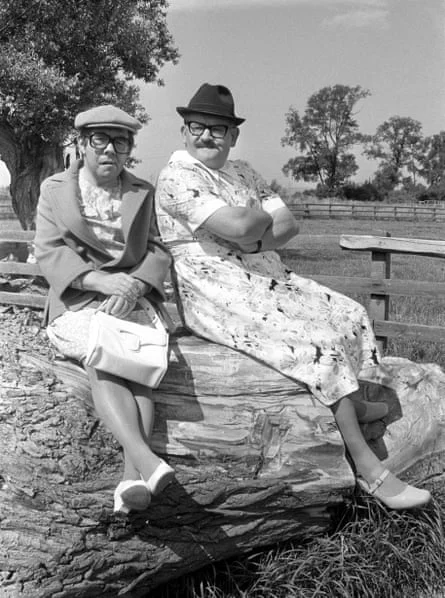
However, a more direct precursor to the grander societal inversion presented in "Ladies First" can be found in British comedy. The eighth series of "The Two Ronnies," a popular sketch comedy show from the late 20th century, featured a serialized segment titled "The Worm That Turned." This multi-part sketch, when viewed in its entirety, presents a dystopian vision of 2012 where women have seized control of society. Emerging as a reaction to Margaret Thatcher’s tenure as Prime Minister, the narrative depicted a Britain where women, emboldened by their leader, voted overwhelmingly for female representation, leading to the systematic exclusion of men from power.
"The Worm That Turned" painted a vivid picture of this reversed world: the closure of establishments like The Playboy Club, the renaming of iconic landmarks to reflect female figures (such as "Big Brenda" for Big Ben), and men being relegated to wearing dresses. The humor, in retrospect, was often rooted in the absurdity of these power shifts, culminating in a reveal of the female rulers’ singular weakness: a phobia of mice. While groundbreaking for its time in its direct commentary on gender politics, the sketch’s comedic approach and its reliance on dated stereotypes reveal how much societal perspectives on gender and power have evolved – or perhaps, in some ways, have remained stagnant.
The enduring fascination with "The Worm That Turned" is perhaps best illustrated by the comments sections of its online uploads. A significant portion of viewers express a concerning belief that the sketch’s fictional narrative is mirroring contemporary societal trends, with comments like "This storyline is becoming a reality" and "I never thought this would actually happen" suggesting a disconcerting level of anxiety about perceived shifts in gender power dynamics. This reaction highlights a cultural undercurrent where satirical inversions of power can be misinterpreted as prophetic warnings, underscoring the delicate balance between humor and genuine social commentary.

"I Am Not an Easy Man": A More Direct Influence
Beyond these thematic echoes, "Ladies First" has a much more direct cinematic inspiration: the 2018 French film "I Am Not an Easy Man" (Je ne suis pas un homme facile). Directed by Éléonore Pourriat, this film shares the exact same core premise as "Ladies First." It follows a self-proclaimed male chauvinist who, after a bump on the head, finds himself in a world where women hold patriarchal sway. He is subjected to the same kind of societal judgments and indignations that women typically face, including being objectified for his appearance and experiencing a reversal of traditional sexual dynamics.
"I Am Not an Easy Man" employed humor and relatable scenarios to make its challenging premise more palatable to a mainstream audience. However, the film itself was a remake of Pourriat’s own 2010 short film, "Majorité Opprimée" (Oppressed Majority). This original short, in the eyes of many critics and viewers, stands leagues above its subsequent iterations in terms of its raw impact and incisive social commentary.
"Majorité Opprimée": The Raw Power of a Short Film
"Majorité Opprimée" eschews the swaggering bigotry and cartoonish concussion tropes that can sometimes characterize gender-reversal narratives. In its concise 10-minute runtime, the short film plunges directly into the heart of its message. It depicts a stay-at-home father who is systematically undermined in his daily life by women in positions of authority. The narrative escalates to a harrowing street assault, where the police dismiss his account, and his wife suggests he was implicitly responsible due to his clothing choices. The protagonist is left isolated, terrified, and consumed by a justifiable anger stemming from his systematic marginalization by society.
The power of "Majorité Opprimée" lies in its visceral portrayal of the anger and frustration that arise from being systematically neglected and devalued. It feels deeply personal and authentic, offering a stark contrast to the more overtly comedic or satirical approaches of "I Am Not an Easy Man" and, presumably, "Ladies First." The short film’s courage to confront the premise without resorting to excessive laughter allows its message about systemic oppression to resonate more profoundly. For audiences anticipating "Ladies First," a viewing of "Majorité Opprimée" offers a potent 10-minute preview of the core themes, potentially saving hours of more lighthearted exploration.
Broader Implications and Societal Commentary
The recurring theme of gender-role reversal in cinema and television speaks to a persistent societal fascination with power structures and the potential for disruption. These narratives often serve as thought experiments, allowing audiences to experience the world from a different perspective and to question the ingrained assumptions of their own reality.
The potential implications of "Ladies First," like its predecessors, extend beyond mere entertainment. By inverting traditional power dynamics, such films can:
- Highlight Gender Inequality: The exaggerated scenarios can draw attention to the subtle and overt ways in which gender shapes power, opportunity, and societal expectations in our current world.
- Provoke Empathy: By placing male characters in traditionally female-dominated and often disempowering situations, these films can foster greater empathy for the experiences of women.
- Challenge Stereotypes: The inversion of roles can serve to deconstruct and challenge deeply ingrained gender stereotypes, demonstrating their arbitrary nature.
- Spark Dialogue: Such films can act as catalysts for important conversations about gender roles, patriarchy, feminism, and the ongoing pursuit of equality.
However, the success of these films in achieving their satirical and analytical goals hinges on their execution. As demonstrated by the evolution from "Majorité Opprimée" to "I Am Not an Easy Man" and now potentially "Ladies First," there is a risk of diluting the original impact through commercial considerations or a desire for broader comedic appeal. The challenge for "Ladies First" will be to navigate this fine line, offering a fresh perspective while acknowledging the rich cinematic and comedic history it draws upon. The enduring relevance of these themes suggests that the conversation around gender and power remains a vital and fertile ground for storytelling, and the upcoming Netflix release will undoubtedly add another chapter to this ongoing narrative.