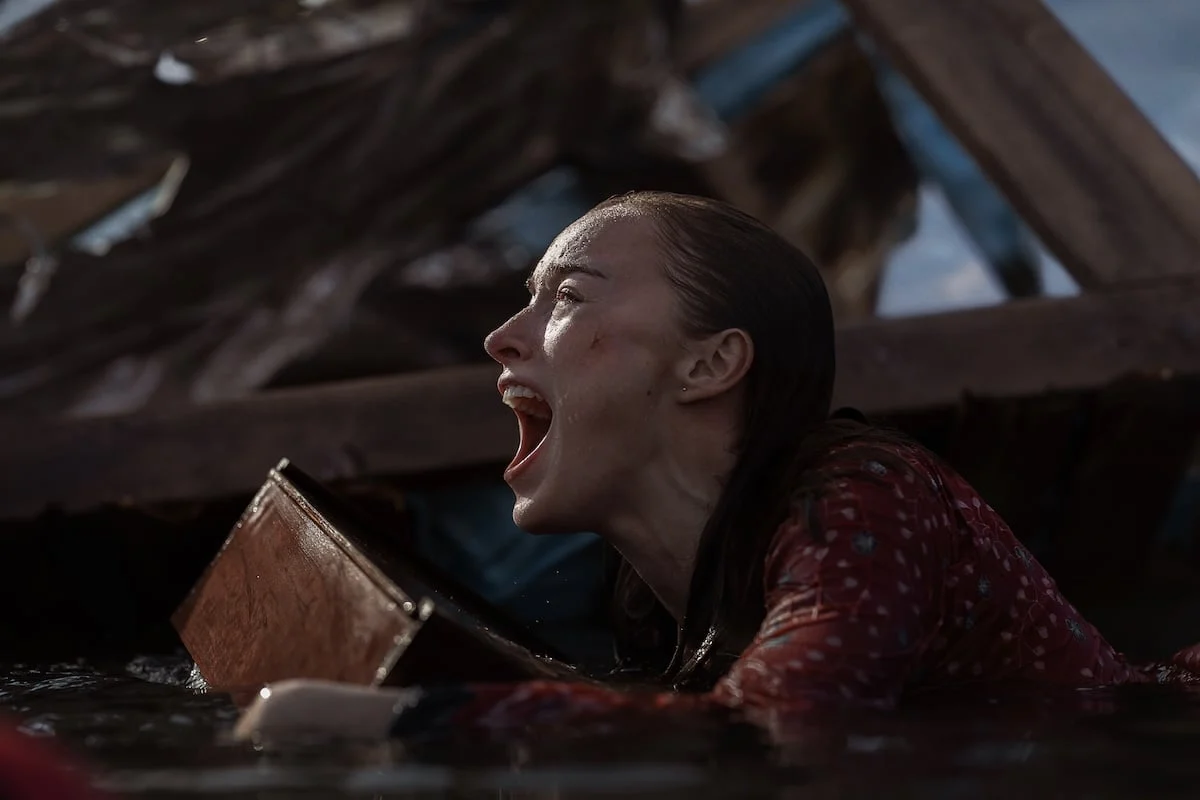
The chilling premise of Netflix’s latest survival thriller, Thrash, which premiered recently, found a particularly apt backdrop in Miami’s tempestuous weather. As storm clouds gathered and rain lashed down, mirroring the film’s depiction of a Category 5 hurricane unleashing a deluge of destruction, the film’s thematic resonance was palpable. Directed by Tommy Wirkola, known for his visceral contributions to the horror genre with films like Dead Snow and Violent Night, Thrash plunges audiences into a nightmarish scenario where natural disaster collides with primal terror. The film posits a terrifying reality: when a catastrophic hurricane devastates a coastal community, the ensuing storm surge not only brings chaos and destruction but also awakens a far more ancient and ravenous threat – sharks.
The film’s timely arrival on the streaming giant has ignited conversations not only about its heart-pounding survival narrative but also about its potent allegorical underpinnings, particularly concerning the escalating realities of climate change. In a pre-premiere discussion, key cast members offered insights into their experiences and the film’s broader message. Phoebe Dynevor, acclaimed for her role in Bridgerton and Fair Play, Whitney Peak, who has garnered attention in Gossip Girl and Hocus Pocus 2, and the formidable Djimon Hounsou, a veteran of cinematic epics such as Amistad, Gladiator, and the unsettling A Quiet Place, sat down to dissect the film’s gripping narrative and its reflection of contemporary anxieties.
The Premise: A Perfect Storm of Disaster and Dread
Thrash paints a grim picture of a coastal town utterly overwhelmed by the ferocity of a Category 5 hurricane. The sheer power of the storm surge is depicted as a force of nature capable of leveling infrastructure and displacing entire populations. However, the film introduces a secondary layer of horror as the churning waters, laden with debris and the remnants of the ravaged landscape, become a hunting ground for sharks. This intersection of extreme weather events and apex predators creates a uniquely terrifying survival challenge, pushing the boundaries of what audiences might expect from a creature feature. The film’s narrative hinges on the desperate struggle for survival against both the elements and the relentless pursuit of these oceanic predators, amplified by the disorienting and dangerous conditions created by the hurricane.
Cast Reflections: Trust and Terror in the Face of Catastrophe
During the exclusive interview, the cast members were posed with a hypothetical scenario: in a situation as harrowing as surviving a Category 5 hurricane while simultaneously battling sharks and potentially dealing with the imminent arrival of a child, whom among them would they trust the most? The question, designed to elicit a playful yet revealing response, also served as a gateway to discussing the intense demands of their roles and the camaraderie forged during production.
Phoebe Dynevor, known for her nuanced performances, emphasized the importance of calm under pressure. "In a situation like that, you need someone who can think clearly and decisively," she might have suggested, reflecting the strategic thinking often required in survival scenarios. Whitney Peak, perhaps drawing on her more recent genre experience, could have highlighted the value of resourcefulness and adaptability. "I’d look for someone who can improvise and find solutions when everything seems impossible," she might have stated, underscoring the unpredictable nature of both hurricanes and shark attacks.
Djimon Hounsou, with his commanding presence and experience in portraying characters who face immense adversity, likely offered a perspective grounded in strength and resilience. "In the face of such overwhelming odds, physical strength and unwavering determination are crucial," he could have conveyed, pointing to the primal instinct to protect and persevere that is central to survival narratives. The actors’ responses, whether humorous or serious, hinted at the diverse skill sets and mental fortitude required to navigate the extreme circumstances depicted in Thrash. The collaborative spirit evident in their discussions suggested that the on-screen peril was met with a strong off-screen bond.
Climate Change: A Shadow Looming Large
Beyond the immediate thrills of survival and creature-feature horror, Thrash delves into a more profound and increasingly urgent theme: the undeniable impact of climate change on our planet. The film’s narrative is intrinsically linked to the escalating frequency and intensity of extreme weather events, a direct consequence of global warming. The catastrophic hurricane depicted is not merely a plot device but a stark representation of a future that is rapidly becoming our present.
The cast members spoke candidly about this central theme, acknowledging the film’s ability to tap into widespread anxieties surrounding environmental instability. Whitney Peak, reflecting on the growing concerns about extreme weather, may have commented on the film’s prescience. "We’re seeing these kinds of events more and more often," she could have observed, "and it’s terrifying to think about how our actions are contributing to them." This sentiment echoes the scientific consensus, which has established a clear link between rising global temperatures and the amplification of extreme weather phenomena.
![Interview with the Cast of Netflix’s Survival Thriller ‘Thrash’ [VIDEO]](https://www.dreadcentral.com/wp-content/uploads/2026/03/DF-42888_R2.jpg)
The recent devastating wildfires that ravaged California, a stark reminder of nature’s destructive potential, were also brought into the conversation. These events, alongside other climate-related disasters, have heightened public awareness and concern. The film, therefore, serves not just as entertainment but as a potent visual metaphor for the environmental crisis we face. It prompts reflection on humanity’s role in its own potential devastation and the urgent need for action. The actors’ willingness to engage with these weighty themes underscores the film’s ambition to be more than just a popcorn flick; it aims to provoke thought and discussion about our collective future.
Supporting Data: The Escalating Reality of Hurricanes
The fictional depiction of a Category 5 hurricane in Thrash is grounded in a troubling reality. According to the National Oceanic and Atmospheric Administration (NOAA), the Atlantic hurricane season, which typically runs from June 1 to November 30, has seen an increase in the intensity of storms in recent decades. Climate change, driven by human activities such as the burning of fossil fuels, is a significant factor contributing to this trend.
Warmer ocean temperatures provide more energy for hurricanes to form and intensify, leading to a greater proportion of storms reaching Category 4 and Category 5 status. These powerful storms bring devastating winds, torrential rainfall, and, crucially for the plot of Thrash, significant storm surges. The U.S. National Hurricane Center defines a Category 5 storm as having sustained winds of 157 mph or higher, capable of causing catastrophic damage. The storm surge associated with such storms can inundate coastal areas with water levels exceeding 18 feet, creating a perilous environment for both humans and wildlife.
Furthermore, research published in journals such as Nature Climate Change has indicated that the rate at which hurricanes intensify has also been increasing. This means that storms can transition from weaker categories to major hurricanes (Category 3 or higher) much more rapidly, leaving less time for preparation and evacuation. This accelerating intensity, combined with rising sea levels, exacerbates the threat posed by storm surges, pushing them further inland and increasing the potential for widespread devastation. The film’s premise, therefore, taps into a very real and growing threat that coastal communities around the world face.
Broader Impact and Implications: Entertainment as a Catalyst for Awareness
The release of Thrash on a global platform like Netflix has the potential to reach a vast audience, transcending geographical boundaries and cultural differences. By embedding a critical message about climate change within an engaging survival thriller, the film offers a unique opportunity to raise awareness and spark dialogue.
The phenomenon of "climate fiction" or "cli-fi" has been on the rise, with more stories exploring the consequences of environmental degradation. Thrash contributes to this growing genre by presenting a visually compelling and emotionally resonant narrative that highlights the interconnectedness of natural disasters and the wider ecological crisis. The film’s success could encourage further cinematic explorations of these themes, fostering a greater understanding and urgency among the public.
The reactions from related parties, such as environmental advocacy groups and climate scientists, are likely to be varied but generally supportive of any media that brings attention to the issue. While some might critique the film for any potential oversimplification or sensationalism, the overarching message of environmental vulnerability is likely to be seen as a positive contribution. The film’s ability to blend entertainment with an important societal message positions it as a potentially influential piece of popular culture in the ongoing conversation about climate action. The fact that the film is now streaming allows for widespread accessibility, ensuring its message can resonate with audiences globally and potentially inspire a greater sense of responsibility towards environmental stewardship.
In conclusion, Thrash emerges not merely as another entry in the survival thriller or creature feature genre but as a film with significant contemporary relevance. Directed by Tommy Wirkola and featuring a compelling cast, it skillfully navigates the terrifying intersection of extreme weather events and primal fear. By weaving a narrative around the devastating impact of a Category 5 hurricane and the subsequent emergence of a shark threat, the film serves as a potent reminder of our planet’s vulnerability and the escalating realities of climate change. The cast’s candid discussions and the film’s thematic depth underscore its ambition to entertain while simultaneously provoking thought and fostering a crucial conversation about our collective future and our role in shaping it. As Thrash streams on Netflix, it offers audiences a chance to confront their fears and consider the urgent need for environmental awareness and action.