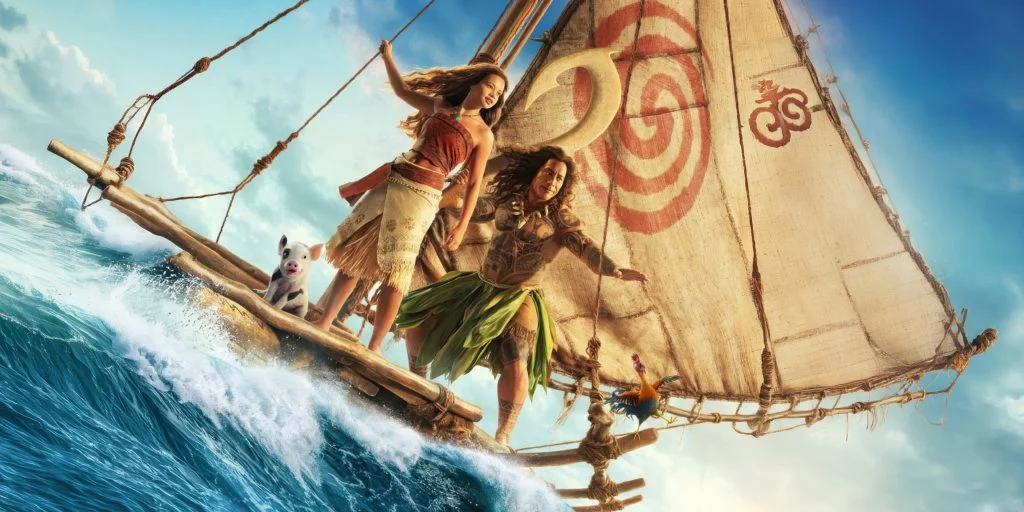
The Walt Disney Company has officially accelerated its production pipeline for the live-action reimagining of its 2016 animated hit, Moana, marking one of the fastest transitions from animation to live-action in the studio’s history. Scheduled for a theatrical release in the summer of 2026, the project serves as a cornerstone of Disney’s modern strategy to revitalize and monetize its most successful intellectual properties (IP) for a new generation of viewers. Directed by Thomas Kail, the Tony Award-winning director behind the Broadway sensation Hamilton, the film represents a high-stakes endeavor to blend the fantastical elements of Polynesian mythology with the grounded aesthetics of live-action cinematography. The production features a high-profile ensemble, including the return of Dwayne "The Rock" Johnson as the demigod Maui and the introduction of Catherine Laga’aia in the titular role of Moana.
Chronology of the Moana Franchise and Production Timeline
The trajectory of the Moana franchise highlights a rapid expansion that is nearly unprecedented in the Disney canon. The original animated film was released in November 2016 to critical acclaim and significant commercial success, grossing over $687 million worldwide. Its enduring popularity was further solidified through streaming metrics; since the launch of Disney+, the film has consistently remained among the most-watched titles on the platform, often appearing in Nielsen’s weekly Top 10 streaming charts years after its initial release.
In April 2023, Dwayne Johnson officially announced that a live-action adaptation was in development, a reveal that came less than seven years after the original film’s debut. This announcement was followed by a strategic pivot in early 2024, when Disney CEO Bob Iger revealed that what was originally intended to be a Moana television series for Disney+ had been retooled into a feature-length theatrical sequel, Moana 2, slated for November 2024. Consequently, the live-action Moana is positioned to arrive in theaters in July 2026, creating a unique situation where an animated sequel and a live-action remake of the original story will debut within less than two years of each other. This overlapping timeline underscores Disney’s intent to saturate the market with Moana-related content while the brand’s cultural equity is at its peak.
Casting and Creative Leadership
The live-action production is anchored by a mix of returning veterans and a new generation of talent intended to honor the Pacific Islander heritage central to the story. Catherine Laga’aia, a 17-year-old actress from Sydney, Australia, with Samoan roots, was cast as Moana after a global search. Laga’aia follows in the footsteps of Auliʻi Cravalho, who voiced the character in 2016 and serves as an executive producer on the live-action version. Joining Laga’aia is a robust supporting cast including John Tui as Chief Tui, Frankie Adams as Sina, and Rena Owen as the revered Gramma Tala.
Dwayne Johnson’s involvement is both a creative and commercial necessity for the project. As one of the world’s most recognizable stars, Johnson’s return as Maui ensures global box-office draw. Furthermore, Jemaine Clement is set to reprise his role as the treasure-hoarding crab Tamatoa, potentially utilizing a blend of practical prosthetics and high-end visual effects.
Behind the camera, the appointment of Thomas Kail signals a focus on musical precision and narrative rhythm. Kail’s long-standing collaboration with Lin-Manuel Miranda—who returns to produce and oversee the musical elements—suggests that the live-action film will lean heavily into its Broadway-style roots. Miranda’s original songs, such as "How Far I’ll Go" and "You’re Welcome," are expected to be reimagined for the live-action format, possibly supplemented by new compositions to expand the story’s emotional depth.
Supporting Data: The Economics of Disney’s Live-Action Remakes
Disney’s decision to prioritize a live-action Moana is supported by a decade of financial data demonstrating the immense profitability of the "remake" model. Since the release of Alice in Wonderland in 2010, Disney has systematically mined its animated catalog, resulting in several billion-dollar hits.
- The Lion King (2019): Grossed $1.66 billion worldwide, despite mixed reviews regarding its hyper-realistic animation style.
- Beauty and the Beast (2017): Grossed $1.26 billion, proving that musical adaptations could dominate the spring box office.
- Aladdin (2019): Grossed $1.05 billion, highlighting the star power of casting (Will Smith) in iconic roles.
- The Little Mermaid (2023): Grossed $569 million, demonstrating a steady, if slightly diminished, return on investment in a post-pandemic theatrical landscape.
The financial logic for Moana is particularly compelling because the property is currently "evergreen." Unlike Cinderella or Sleeping Beauty, which required decades of separation before a remake was considered viable, Moana remains a primary fixture in contemporary youth culture. By releasing a live-action version while the original audience is still in their formative years or entering young adulthood, Disney minimizes the risk of brand irrelevance.

Technical Transitions and Artistic Challenges
Translating Moana from animation to live-action presents significant technical hurdles, particularly regarding the depiction of the ocean and the character of Maui. In the 2016 film, the ocean was characterized as a sentient entity with its own personality—a feat achieved through advanced fluid dynamics and character animation. In a live-action environment, visual effects (VFX) teams must balance the realism of water physics with the "magical" movements required by the script.
Furthermore, the character of Maui poses a unique challenge. In the animated version, Maui’s tattoos, known as "Mini-Maui," were hand-drawn animations that moved across his body to act as a conscience. Replicating this in live-action requires seamless integration of 2D-style animation onto a 3D moving surface (Johnson’s skin), which risks falling into the "uncanny valley" if not executed with precision. The production will likely utilize the same "virtual production" technologies pioneered by Industrial Light & Magic (ILM) for The Mandalorian to create the lush, tropical environments of Motunui and the supernatural realm of Lalotai.
Official Responses and Cultural Implications
The announcement and subsequent production of the live-action Moana have elicited a range of reactions from industry analysts and cultural commentators. Proponents of the film argue that it provides an essential platform for Pacific Islander representation on a global scale. The casting of actors with genuine ties to the cultures depicted is seen as a necessary evolution from the Hollywood practices of previous decades.
However, industry skeptics—including critics from outlets like the Next Best Picture Podcast—have raised questions regarding the "beat-for-beat" nature of these remakes. During a recent panel review involving Matt Neglia, Katie Johnson, Daniel Howat, Ema Sasic, and Tom O’Brien, the discussion centered on whether the live-action format adds sufficient value to a story that many consider perfectly executed in its animated form. The term "cash-grab" is frequently invoked in industry circles to describe the rapid turnaround of these projects, suggesting that the primary motivation is corporate risk-aversion rather than artistic necessity.
Despite these criticisms, Disney’s official stance remains focused on the "reimagining" aspect. The studio maintains that live-action allows for a deeper exploration of character nuances and a more immersive world-building experience that animation cannot always capture.
Broader Impact and Industry Implications
The success or failure of the live-action Moana will likely dictate Disney’s strategy for the next decade. If a film less than ten years old can be successfully remade into a billion-dollar live-action hit, it opens the door for the "live-actionization" of other modern classics like Frozen, Tangled, or even Encanto.
This trend reflects a broader shift in the film industry toward "pre-sold" properties. As original mid-budget films struggle to find theatrical audiences, major studios are doubling down on titles with built-in recognition. Moana serves as the ultimate test case for this theory. Because the original film is still fresh in the public consciousness, the live-action version does not need to re-introduce the characters; it only needs to provide a new way to consume them.
The involvement of the Next Best Picture Podcast and other critical bodies highlights the tension between commercial dominance and critical reception. While critics may debate the creative merits of remaking recent hits, the data suggests that general audiences remain hungry for these familiar narratives. As the production moves toward its 2026 release date, the industry will be watching closely to see if Thomas Kail and Dwayne Johnson can capture the "lightning in a bottle" a second time, or if the rapid succession of Moana content will lead to brand fatigue.
In conclusion, the live-action Moana is more than just a film; it is a significant economic engine for the Disney corporation and a cultural touchstone for the Pacific Islander community. With a proven creative team, a massive budget, and a global superstar at the helm, the project is poised to be one of the most discussed and analyzed cinematic events of the mid-2020s. Whether it can transcend its status as a remake to become a standalone classic remains to be seen, but its impact on the landscape of modern blockbuster filmmaking is already undeniable.