The Writers Guild of America West (WGAW), an organization that recently celebrated a landmark victory in its negotiations with major Hollywood studios, is currently embroiled in an increasingly volatile internal labor dispute with its own employees. While the guild’s membership recently ratified a contract deal projected to inject approximately $321 million into the union’s health plan over the next four years—a figure negotiators describe as a record-breaking level of annual funding—the atmosphere within the guild’s own headquarters is far from celebratory. Instead, the WGAW leadership finds itself locked in a bitter standoff with the Writers Guild Staff Union (WGSU), whose members have been on strike for over eleven weeks. The conflict, which began as a protest against alleged unfair labor practices, has devolved into a series of public accusations involving harassment, physical intimidation, and a fundamental breakdown in the spirit of labor solidarity.
The Catalyst of the Internal Conflict
The friction between the WGAW and the WGSU comes at a time when the guild is transitionary, moving from the high-stakes environment of the 2023 industry-wide strikes into a period of implementation for its new film and television contracts. The WGSU, which is supported by the Pacific Northwest Staff Union (PNWSU), represents the very individuals who provided the administrative, legal, and logistical backbone for the WGA’s 148-day strike against the Alliance of Motion Picture and Television Producers (AMPTP) last year.
On Tuesday, WGAW leadership—including President Michele Mulroney, Executive Director Ellen Stutzman, Vice President Travis Donnelly, and Secretary-Treasurer Peter Murrieta—sent a comprehensive message to union members detailing the status of negotiations. The email outlined what the guild described as its “final offer” to the staff union. However, the communication was less a summary of economic terms and more a scathing critique of the WGSU’s conduct on the picket lines. According to the WGAW leadership, the behavior of the striking staffers has been “completely out of line” with the historical standards of conduct expected during Writers Guild strikes.
Allegations of Aggression and Harassment
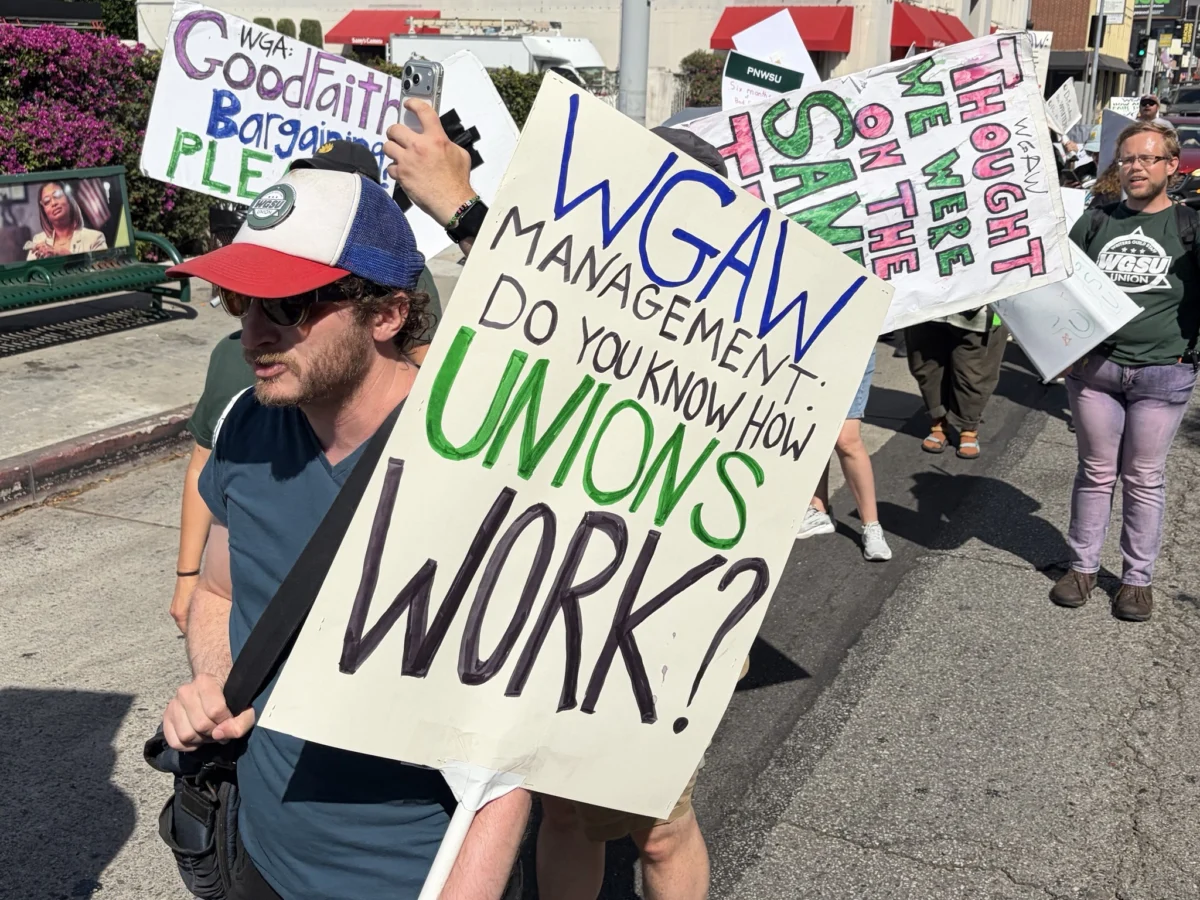
The accusations leveled by the WGAW leadership paint a picture of a strike that has transcended standard picketing and entered the realm of personal harassment. The leadership alleged that WGSU members have targeted writers and guild officials with aggressive tactics. Specifically, the email claimed that striking staffers called writers “scabs” as they attempted to enter buildings to negotiate the upcoming 2026 film and television deals. In the world of organized labor, the term "scab" is among the most derogatory labels possible, typically reserved for those who cross picket lines to work during a strike.
Further allegations include claims that WGSU members followed writers to their vehicles or waited for them in parking lots to shout epithets and abuse. The leadership also expressed significant concern over the targeting of Executive Director Ellen Stutzman. According to the guild, picketers appeared at Stutzman’s private residence, returning as many as five times in a single day.
The WGAW also reported instances of digital harassment. Members of the WGA East and West negotiating committees allegedly received an inundation of communication, with some individuals reportedly receiving 50 or more calls and texts per day over a period of several days. The guild’s leadership characterized these actions as “unprotected under federal labor law,” with some instances potentially crossing into illegal territory.
Physical Confrontations and Video Evidence
Perhaps the most serious allegations involve physical intimidation. The WGAW leadership claimed that a PNWSU officer shoved the guild’s outside counsel in an attempt to block his entry into a negotiation session. Additionally, the guild alleged that some picketers used their picket signs to hit guild staff members.
These claims of a hostile environment are partially supported by external evidence. In late March, a video leaked to Variety captured a tense moment where WGA negotiators were met with cries of “Shame!” and “Don’t cross the picket line!” as they entered a bargaining session with studios. In the footage, an unidentified individual can be heard shouting “fucking cowards” at the negotiators.
Conversely, the WGSU has presented its own accounts of hostility. On March 25, the staff union alleged that a passerby attacked a group of picketers and threatened to kill one individual while WGAW managers watched from a nearby vehicle. The WGSU claimed that the managers remained inside the car and failed to intervene or offer assistance, an allegation that underscores the deep-seated resentment currently defining the relationship between the guild’s management and its staff.
Chronology of the Dispute
To understand the current impasse, it is necessary to examine the timeline of the escalation:
- Late 2023: Following the successful conclusion of the 148-day WGA strike against the AMPTP, the WGAW staff began seeking their own inaugural contract under the WGSU banner.
- Early 2024: Negotiations between WGAW management and the WGSU reach a stalemate over wages, benefits, and workplace protections.
- February 2024: The WGSU officially commences its strike, citing unfair labor practices (ULPs) by WGAW management.
- March 25, 2024: The WGSU reports an attack by a passerby and accuses WGAW management of negligence.
- March 26, 2024: The WGSU submits what it calls a “strike-ending proposal” to management.
- Late March 2024: Video of the tense picket line confrontation at the studio negotiation site is leaked to the media.
- April 23, 2024: PNWSU President Brandon Tippy reaches out to Ellen Stutzman and WGAW negotiator Sean Graham, offering to involve California’s State Mediation and Conciliation Service to break the impasse.
- Late April 2024: The WGAW officially rejects the offer for mediation, citing that they have issued a “final offer” and that mediation would only provide “false hope” of further movement.
Economic Data and the "Final Offer"
The financial context of this dispute is particularly striking given the WGAW’s recent success in securing funds from the studios. The $321 million health plan infusion is a cornerstone of the new four-year deal with the AMPTP, yet the guild argues it cannot meet the specific demands of its own staff union without compromising its operational integrity.
The WGAW has dedicated a specific webpage to the conflict, where it outlines its stance on the “final offer.” The guild maintains that its proposal is fair and competitive within the landscape of non-profit and labor organization employment. By labeling the proposal as a "final offer," the WGAW is utilizing a high-pressure negotiating tactic common in labor law, signaling that no further concessions will be made and that the next phase could involve the permanent replacement of workers or a prolonged lockout, depending on the legal specifics of the strike’s classification.
The refusal to enter mediation is a notable departure from standard labor dispute resolution. The California State Mediation and Conciliation Service is frequently used to provide a neutral third party to bridge gaps in communication. The WGAW’s stance—that mediation would “prolong the strike” by suggesting a middle ground exists—indicates a leadership that is fully "dug in," mirroring the same hardline tactics the guild used against talent agencies in the late 2010s.
Broader Impact and Industry Implications
The ongoing conflict has significant implications for the broader labor movement and the reputation of the WGAW. For decades, the WGA has been viewed as a vanguard of worker rights in the entertainment industry. However, the spectacle of a labor union being accused of the very "union-busting" or "unfair" tactics it typically attributes to studios creates a narrative of hypocrisy that is difficult to shake.
Furthermore, the timing of the strike is precarious. As the WGAW begins the process of enforcing its new contract with the studios and preparing for the 2026 cycle, the absence of its core staff—and the animosity of those who remain on the picket line—could hamper the guild’s efficiency. The staffers currently on strike are the same individuals who helped navigate the complexities of the 2023 strike; their institutional knowledge and labor expertise are currently being directed against the guild rather than in support of it.
The conflict also highlights a growing trend of "internal labor movements" where the employees of social justice and labor organizations unionize to demand the same standards of treatment their employers advocate for publicly. If the WGAW continues its refusal to mediate, it may find itself alienated from other segments of the labor movement that prioritize inter-union solidarity.
Conclusion: A House Divided
As the WGSU strike enters its 12th week, there is no clear path to a resolution. The WGAW leadership remains steadfast in its "final offer," while the staff union maintains that its actions are protected concerted activity necessitated by management’s refusal to bargain in good faith. The aggressive rhetoric from both sides suggests that the "relative calm" expected after the studio deal has been permanently disrupted.
For the members of the Writers Guild of America West, the situation presents a troubling paradox: the leadership that successfully fought the combined might of Disney, Netflix, and Warner Bros. Discovery is now engaged in a war of attrition with its own office staff. Until one side "blinks," the guild remains a house divided, testing the limits of labor solidarity in an industry that is still reeling from a year of unprecedented upheaval.