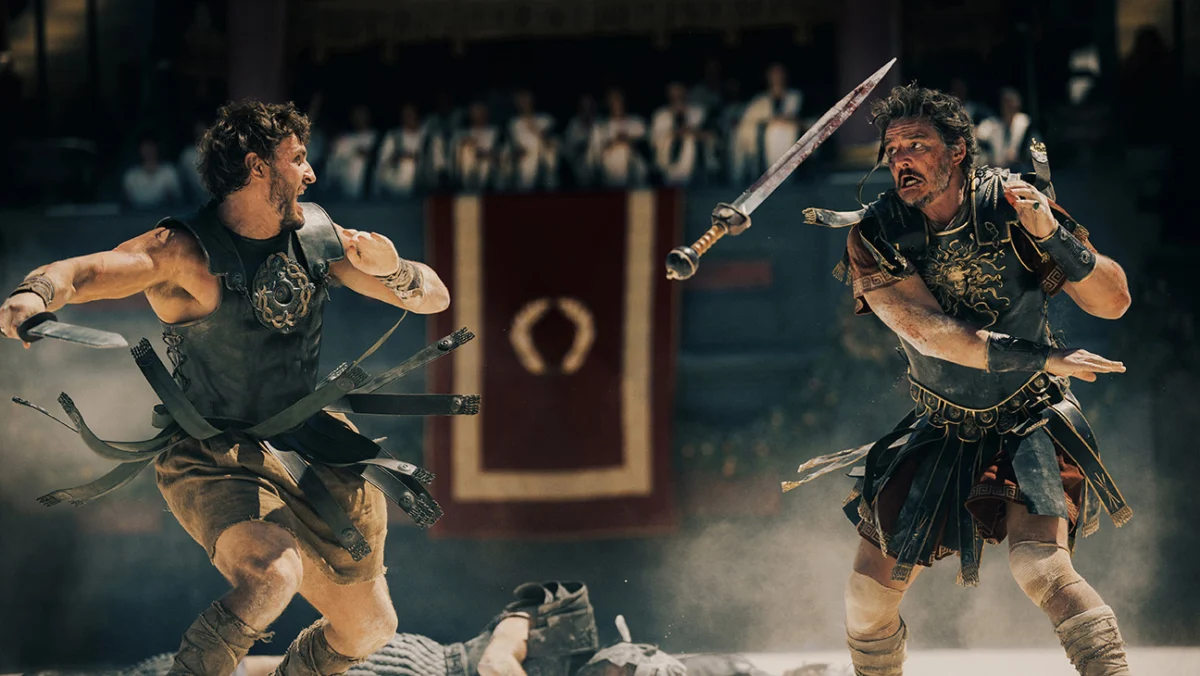
In February of this year, a stark pronouncement reverberated through Hollywood, capturing the anxieties of an industry grappling with the rapid ascent of artificial intelligence: "I hate to say it, but it’s likely over for us." This disquieting message came from Rhett Reese, the acclaimed screenwriter behind anticipated blockbusters like Wolverine & Deadpool, in response to a visually stunning, AI-generated video clip that quickly went viral across social media platforms. The video, crafted by Irish filmmaker Ruairi Robinson, depicted a hyper-realistic fight sequence featuring digital doppelgängers of Brad Pitt and Tom Cruise atop what appeared to be ancient Roman ruins, incongruously set against the iconic New York City skyline. The clip was not merely an impressive technical feat; it represented a significant leap forward in AI-driven video generation, sparking widespread debate about the future of human-led creative industries.
The Dawn of Hyper-Realistic AI Video and Industry Alarm
The viral AI video, which garnered millions of views and countless shares, showcased an unprecedented level of production value for AI-generated content. Observers noted the remarkably realistic facial expressions, fluid movement, and sophisticated cinematography, leading many to exclaim that it "looked like a movie"—an expensive one, at that. This marked a profound departure from earlier, often crude AI-generated videos, such as the famously unsettling clips of Will Smith eating spaghetti, which, while novel, lacked the polish and verisimilitude of Robinson’s creation. The qualitative leap suggested by the Brad Pitt/Tom Cruise video was not merely incremental; it represented a "quantum leap," prompting immediate extrapolation among industry professionals. Many concluded that if AI could achieve such fidelity in February, it would be only a matter of months, or even weeks, before anyone with a home computer could generate feature-film quality content—a process that historically demanded hundreds of millions of dollars and thousands of human hours. For screenwriters, actors, directors, and countless crew members, the implication was clear: the traditional model of film production, and perhaps their livelihoods, faced an existential threat.
A Historical Parallel: Garry Kasparov and Deep Blue
However, the question that quickly emerged from this initial wave of alarm was not solely about AI’s capabilities, but rather about audience reception: will people actually watch AI-generated content with the same engagement as human-created work? To explore this, many have drawn parallels to another pivotal moment in the history of human-machine interaction: the legendary chess match between Grandmaster Garry Kasparov and IBM’s Deep Blue supercomputer on May 11, 1997. At the time, Kasparov was widely regarded as the greatest chess player in human history, holding an unparalleled ELO rating of 2800. His eventual loss to Deep Blue was a watershed moment, symbolizing the point at which machines definitively surpassed human beings in a complex intellectual domain.
For many observers in 1997, it seemed that human chess, or at least competitive chess played by humans, might become obsolete. The logical conclusion was that the future of chess would involve increasingly powerful computers playing against each other, pushing the boundaries of strategy beyond human comprehension. Yet, this dystopian prediction for human chess never materialized. On the contrary, competitive human chess has experienced a remarkable resurgence and is thriving more than ever before. Global celebrities like Magnus Carlsen have emerged, achieving unprecedented levels of wealth and fame for chess players. Streaming platforms and social media have further amplified this trend, with YouTubers such as Hikaru Nakamura earning incomes comparable to top grandmasters. Chess has transformed into a robust industry, far exceeding its status in 1997, driven by massive online communities, educational content, and professional tournaments that captivate millions.
In stark contrast, while a smaller community exists for designing and pitting AI chess engines against each other—a fascinating subculture that one might liken to "Fight Club"-style intellectual contests—the broader public largely remains indifferent. Despite AI chess bots now being vastly superior to any human player who has ever lived, their matches rarely attract significant public interest. This dichotomy underscores a crucial insight: human beings, fundamentally social animals, are primarily invested in the actions and narratives of other human beings. We marvel at what machines can accomplish, often taking their superior capabilities as a given, but our deepest interest and emotional investment lie in the drama, struggle, and triumphs of our fellow humans.
The Irreplaceable Human Element: Drama, Connection, and Authenticity
This principle extends profoundly into the realm of entertainment. Consider the hypothetical scenario of a tennis fan presented with an endless stream of custom-designed, spectacular AI-generated matches between digital versions of Carlos Alcaraz and Novak Djokovic. While technically flawless and tailored to individual preferences, it is highly unlikely that such a channel would captivate audiences in the long term. The essence of sports fandom is not merely the spectacle of athleticism, but the compelling human drama inherent in it: the narrative of a young prodigy challenging an aging legend, the struggle against physical limits, the emotional highs and lows of competition. Fans feel a parasocial connection to these athletes, and the authenticity of their human struggle—testing real human limits—is paramount to that relationship. We care about the real Novak Djokovic, a 38-year-old man performing seemingly impossible feats, just as we care about the real Tom Cruise, a 63-year-old man executing his own breathtaking stunts. Their humanity, their vulnerability, and their tangible effort are what imbue their performances with meaning and resonance.
Similarly, in the cinematic arts, imagine a Netflix algorithm capable of generating a new Joachim Trier movie daily, perfectly tailored to a viewer’s preference for his acclaimed "Sentimental Value" style. Would audiences engage with this AI-generated content with the same fervor? Probably not. The appeal of a filmmaker like Trier lies in his unique artistic voice, his chosen themes, and his distinct methods of communication. Audiences are interested in what he has to say, how he chooses to say it, and the broader cultural conversation that his human-made works spark. Even when encountering a director’s work for the first time, there’s an implicit understanding of engaging with a human artist attempting to convey something meaningful. This human connection, this sense of shared experience and artistic intent, forms the bedrock of our engagement with art. When human beings are removed from the equation, a significant part of that intrinsic value and interest dissipates.
Niche Applications and the "Cultural Creep" of AI Content
While the core of human-centric entertainment remains robust, it is crucial to acknowledge that not all entertainment adheres to the same criteria of artistic authorship or demands deep human connection. Certain segments of the market may indeed be amenable to AI-generated content. For instance, a three-year-old watching Teletubbies is unlikely to discern or care whether the program was created by AI or humans. This has significant implications for children’s programming, where the primary objective might be simple engagement and mild educational content. Furthermore, future generations, dubbed "AI natives," who grow up consuming AI-generated content, may develop less discriminating tastes regarding the human origin of their entertainment.
There is also a substantial stratum of "commodity TV"—content consumed as background noise, where the primary demand is simply for something to be "on." In these areas, AI could fulfill a utility function, churning out endless variations of genre-specific programming. The concern, however, is the potential for "cultural creep," where AI-generated "slop"—low-cost, algorithmically optimized content—becomes increasingly pervasive and begins to ascend the entertainment food chain, potentially saturating the market and lowering overall creative standards. This presents a challenge for both creators and consumers, as discerning quality and originality amidst a sea of algorithmic mimicry could become increasingly difficult.
AI as a Medium for Unimagined Possibilities, Not Just Replication
Screenwriter Rhett Reese’s worry that "a person will be able to sit at a computer and create a movie indistinguishable from what Hollywood releases" highlights a crucial point, yet it also overlooks a historical precedent: animation. This medium has existed as long as cinema itself and has consistently demonstrated its ability to create photorealistic or highly stylized worlds. Yet, Pixar did not crowd out live-action filmmaking; instead, it carved its own distinct niche. Tellingly, great animation has rarely sought to perfectly replicate live-action; rather, it thrives by doing what live-action cannot. From the timeless genius of Chuck Jones and Hayao Miyazaki to the emotive power of Wall-E, the human touch—the intentionality, the distinct artistic voice, the painstaking craft—is palpable in every frame. Human audiences demand this authenticity, even in animated worlds.
Applying this logic to AI, the "AI filmmaker" of the future will face an immensely high bar. To rise above the inevitable "ocean of zero-cost AI slop," any AI-driven content hoping for critical or cultural resonance will need to be enormously original and distinctive. An "AI Chris Nolan," as Reese suggests, would not merely need to mimic Nolan’s style; it would need to possess such a profoundly unique and recognizable voice that it could not be instantly duplicated or cloned by legions of other AI agents. This suggests that the true frontier for AI video may not lie in creating "fake" Hollywood movies with synthetic stars, but in enabling the production of films that Hollywood, constrained by economics and conventional thinking, has never been able to make or even conceive. The merger of "real" live-action performance with advanced AI could unlock previously uneconomic or technically impossible projects, opening up entirely new genres and visual languages.
The Economic Revaluation of Creative Labor
The real significance of the Brad Pitt vs. Tom Cruise AI video, therefore, is not its potential to replace human creativity entirely, but rather its powerful illustration of a rapidly approaching future where the cost of producing "empty spectacle" approaches zero. Visual imagery that once commanded budgets of $250,000 per shot and demanded thousands of man-hours of CGI artist labor will soon be as abundant and accessible as air or water. We will effectively be swimming in such visual content, and its cultural and economic value will inevitably decline accordingly. This devaluation of purely visual grandeur will necessitate a reorientation of value within the entertainment industry.
In this new landscape, the supply of authentic human drama—conceived and executed by real writers, performed by real actors, and directed by real visionaries—will remain as scarce and, crucially, as valuable as ever. The unique ability of human beings to craft narratives that resonate deeply with shared experiences, to embody complex emotions, and to communicate profound truths through art will become the ultimate premium. David Scarpa, a leading voice in film and television for over two decades and the writer of highly anticipated historical epics like Gladiator II and Napoleon, represents this perspective from the heart of the industry. His work, like that of countless other creators, underscores the irreplaceable human element at the core of compelling storytelling.
In conclusion, while AI will undoubtedly transform the entertainment landscape, likely taking over the production of commoditized content and opening up new avenues for visual expression, it is unlikely to extinguish the fundamental human need for connection through human-created art. Just as chess adapted and thrived post-Deep Blue, Hollywood and its global counterparts are poised to navigate this paradigm shift not through outright replacement, but through adaptation, differentiation, and an even greater emphasis on the one element AI cannot replicate: the authentic, irreplaceable drama of the human spirit.