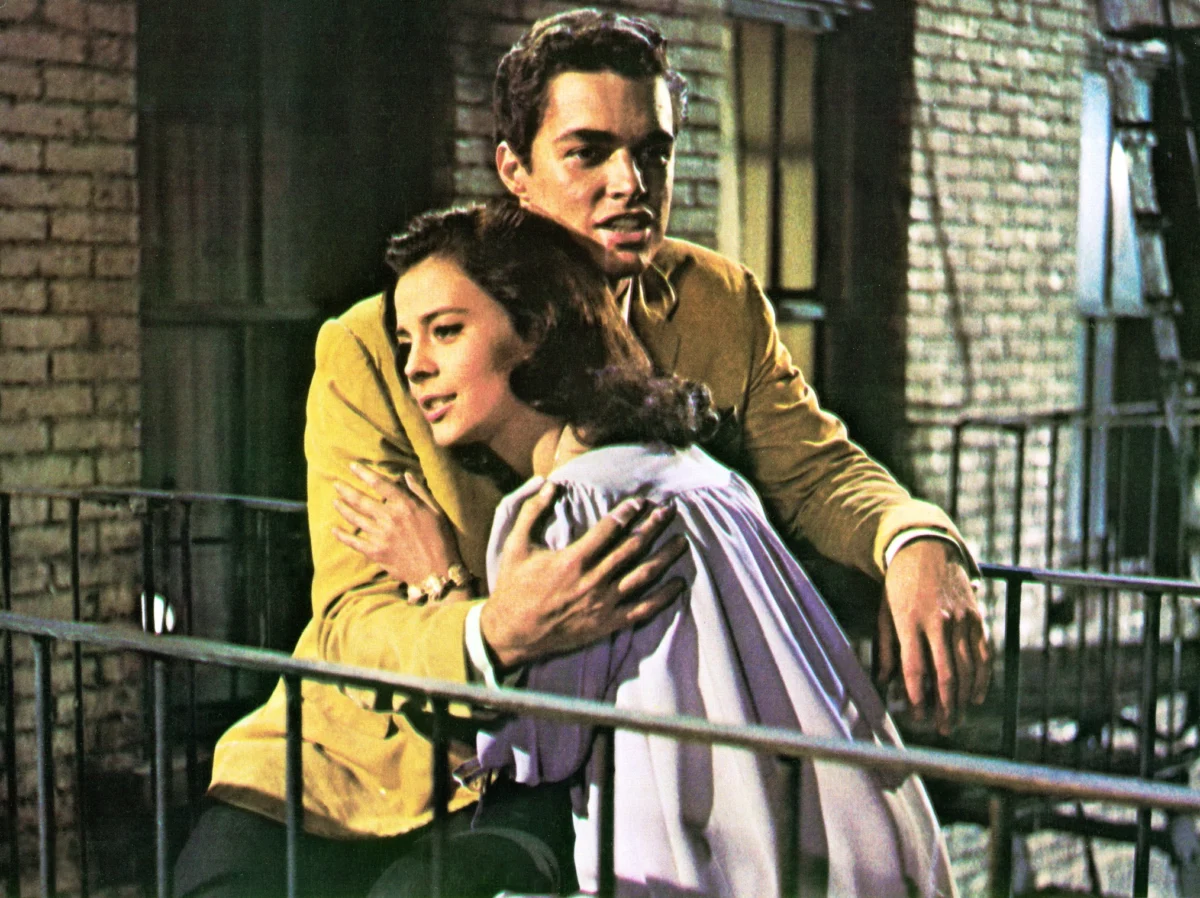
The release of West Side Story on October 18, 1961, marked a transformative moment in the history of American cinema, bridging the gap between the traditional Broadway musical and the gritty realism of mid-century filmmaking. Directed by Robert Wise and Jerome Robbins, the film was an adaptation of the 1957 Broadway stage production, which itself was a contemporary reimagining of William Shakespeare’s Romeo and Juliet. Set against the backdrop of New York City’s Upper West Side, the narrative replaced the warring families of Verona with two rival teenage gangs: the Jets, a group of white working-class youths, and the Sharks, a group of Puerto Rican immigrants. This cinematic endeavor did more than simply document a stage play; it redefined the visual language of the musical genre, utilizing expansive cinematography and innovative choreography to capture the social tensions of the era.
The Production Genesis and Technical Innovation
The transition of West Side Story from the stage to the silver screen was a complex logistical undertaking. While the Broadway production was lauded for its kinetic energy, bringing that same vitality to film required a departure from standard studio practices. Robert Wise, known for his disciplined directorial style, was paired with Jerome Robbins, the visionary choreographer who had conceived the original stage show. This partnership was intended to balance the demands of narrative storytelling with the rigor of dance.
Filming took place partly on location in Manhattan, specifically in the San Juan Hill neighborhood, which was in the process of being demolished to make way for the Lincoln Center for the Performing Arts. This choice provided an authentic, decaying urban environment that contrasted sharply with the vibrant colors of the costumes and the stylized movements of the actors. Technologically, the film was shot in Super Panavision 70, a large-format process that offered unparalleled clarity and depth, allowing the dance sequences to occupy a massive visual field. The integration of Leonard Bernstein’s complex, jazz-influenced score and Stephen Sondheim’s sophisticated lyrics required meticulous synchronization, particularly as many of the lead actors’ singing voices were dubbed by professional vocalists such as Marni Nixon and Jimmy Bryant.
A Chronology of Critical and Commercial Triumph
Upon its debut at the Rivoli Theatre in New York, West Side Story immediately established itself as a commercial powerhouse. It became the highest-grossing film of 1961, earning an estimated $44.1 million in its initial domestic release—a staggering figure for the time. Its success was not limited to the box office; the film’s reception by the Academy of Motion Picture Arts and Sciences remains one of the most dominant performances in Oscar history.
At the 34th Academy Awards in 1962, West Side Story was nominated for 11 awards and won 10, including:
- Best Picture (Robert Wise, Producer)
- Best Director (Robert Wise and Jerome Robbins)
- Best Supporting Actor (George Chakiris)
- Best Supporting Actress (Rita Moreno)
- Best Art Direction – Set Decoration, Color
- Best Cinematography, Color
- Best Costume Design, Color
- Best Film Editing
- Best Music, Scoring of a Musical Picture
- Best Sound
The dual win for Best Director was a historic first, reflecting the unique collaboration between Wise and Robbins, even though Robbins had been let go midway through production due to concerns over the filming schedule and budget. The film’s sweep solidified the musical as a prestigious and commercially viable genre for the 1960s.
The Principal Cast and Their Evolving Legacies
The enduring appeal of West Side Story is inextricably linked to the performances of its lead and supporting cast. Over six decades later, the trajectories of these actors provide a window into the evolution of the Hollywood industry.
Natalie Wood (Maria)
Natalie Wood was already a major star when she took the role of Maria. Her performance brought a fragile innocence to the character, though her casting as a Puerto Rican woman remains a point of modern critical discussion regarding "brownface" and authentic representation. Wood continued to be a dominant force in Hollywood until her tragic and mysterious death in 1981 at the age of 43. Her legacy is preserved through her iconic roles in films like Rebel Without a Cause and Splendor in the Grass.
Richard Beymer (Tony)
Richard Beymer portrayed the idealistic Tony, the former leader of the Jets who falls in love with Maria. While Beymer initially struggled with the pressures of stardom following the film’s success, he later found a second wave of acclaim for his work in television, most notably as Benjamin Horne in David Lynch’s Twin Peaks. Now in his 80s, Beymer has largely retired from acting to focus on filmmaking and photography.
Rita Moreno (Anita)
Rita Moreno’s portrayal of Anita remains one of the most celebrated performances in musical history. Her win for Best Supporting Actress made her the first Hispanic woman to win an Academy Award. Moreno’s career is a testament to longevity and resilience; she is one of the few performers to achieve EGOT status (winning an Emmy, Grammy, Oscar, and Tony). In 2021, she returned to the world of West Side Story in Steven Spielberg’s remake, serving as an executive producer and playing the newly created role of Valentina, further cementing her status as the living bridge between the two versions.
George Chakiris (Bernardo)
George Chakiris, who played the leader of the Sharks, brought a disciplined, athletic grace to the role of Bernardo. Having previously played the role of Riff in the London stage production, Chakiris possessed a deep understanding of the show’s mechanics. Following his Oscar win, he enjoyed a prolific career in international cinema and television. Today, Chakiris is retired from acting and has gained recognition as a jewelry designer.
Russ Tamblyn (Riff)
Russ Tamblyn’s background in gymnastics made him the perfect choice for Riff, the energetic leader of the Jets. Tamblyn’s performance in the "Jet Song" and the "Cool" sequence showcased a blend of toughness and acrobatic skill. Like Beymer, Tamblyn later became a fixture in the cult classic Twin Peaks. He remains an active figure in the film community, often participating in retrospectives regarding the 1961 film’s impact.
Socio-Political Impact and Evolving Perspectives
While West Side Story was hailed as a masterpiece in 1961, it has also become a subject of academic and social scrutiny in the 21st century. The film was a groundbreaking attempt to address racial prejudice and the immigrant experience in America, yet it did so within the constraints of its time. The use of dark makeup on white and even Latino actors to create a uniform "Puerto Rican" look is frequently cited as a problematic aspect of the production.
However, the film’s impact on the Puerto Rican community was multifaceted. For many, it was the first time their culture and struggles were presented on a grand cinematic scale. Rita Moreno has frequently spoken about the "Anita" character as a rare example of a strong, self-possessed Latina character in a landscape otherwise dominated by stereotypes. The film’s exploration of systemic poverty and the cycle of violence among disenfranchised youth remains relevant, providing a blueprint for later "urban" dramas.
Supporting Data and Cultural Recognition
The longevity of West Side Story is evidenced by its consistent ranking in cultural institutions. The American Film Institute (AFI) has recognized the film on multiple "100 Years" lists:
-
41 on the 10th Anniversary list of Greatest American Films.
-
2 on the list of Greatest Movie Musicals.
-
3 on the list of Greatest Movie Songs (for "Somewhere").
In 1997, the Library of Congress selected West Side Story for preservation in the United States National Film Registry, citing it as "culturally, historically, or aesthetically significant." This designation ensures that the original prints and production materials are maintained for future generations.
Broader Implications and the 2021 Reimagining
The shadow cast by the 1961 film was so significant that for 60 years, many believed a remake was unnecessary. However, Steven Spielberg’s 2021 adaptation demonstrated that the core themes of the story still resonate. Spielberg’s version sought to correct the historical inaccuracies of the original by casting Latino actors in all Shark roles and omitting subtitles for Spanish dialogue to equalize the two languages.
Despite the technical updates and more authentic casting of the 2021 version, the 1961 film remains the definitive cultural touchstone for most audiences. Its influence can be seen in everything from music videos (most notably Michael Jackson’s "Beat It") to modern stage choreography. The film’s ability to synthesize high art—through Bernstein’s operatic score and Robbins’ balletic movement—with a gritty social narrative created a standard that few musicals have since matched.
The ongoing interest in the surviving cast members and the reverent tributes to those who have passed—including the recent loss of lyricist Stephen Sondheim in 2021—underscore the film’s status as a living piece of history. West Side Story stands not just as a record of 1960s filmmaking, but as a timeless exploration of the human condition, the destructive nature of hate, and the persistent hope for a "somewhere" where social barriers no longer exist. As it enters its seventh decade, the film continues to be a subject of study, celebration, and essential viewing for anyone interested in the intersection of social commentary and cinematic excellence.