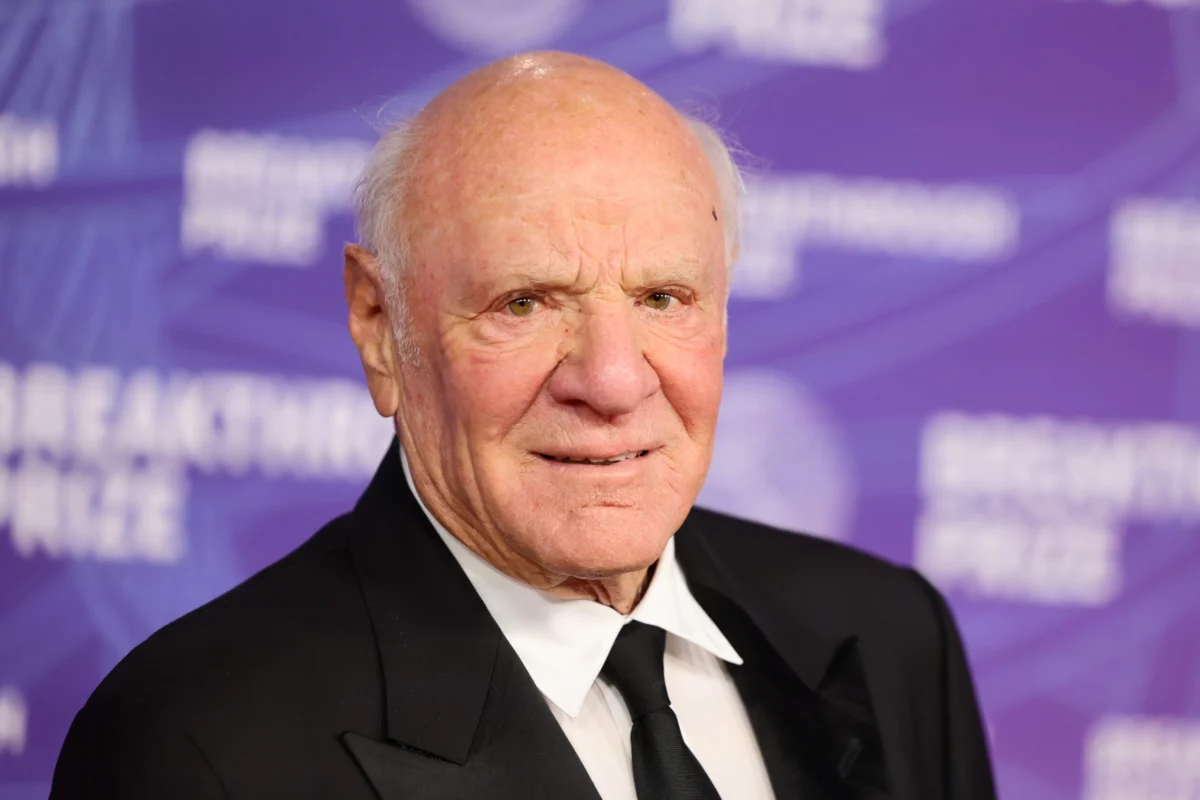
Media mogul Barry Diller, the veteran executive who recently transitioned his IAC holding company into a new era as People Incorporated, has publicly declared his readiness to acquire CNN should the news organization become available during the high-stakes consolidation of its parent company. Speaking at the Wall Street Journal’s Future of Everything summit in New York on Tuesday, Diller informed reporter Cara Lombardo that he would move to purchase the iconic news brand "tonight and tomorrow night" if given the opportunity. His comments arrive as Warner Bros. Discovery (WBD) is reportedly engaged in discussions regarding a massive $111 billion merger with Paramount Global, a move that would fundamentally reshape the American media landscape and potentially leave CNN as a divestiture candidate due to regulatory or financial pressures.
Diller’s interest is not merely opportunistic but appears to be driven by a belief that the network has suffered from a lack of clear vision and innovation over the past decade. During the summit, Diller characterized CNN as being "so ripe" for a transformation that it has not experienced in nearly ten years. He expressed a sense of urgency regarding the acquisition, stating that he would want to take control of the brand "before they ruin it any further" and "before it’s extinct," though he quickly clarified that he does not believe the network is actually on the verge of disappearing.
The Strategic Landscape of the Warner Bros. Discovery and Paramount Merger
The backdrop of Diller’s declaration is one of the most significant potential corporate marriages in the history of entertainment. Warner Bros. Discovery, formed only recently through the merger of AT&T’s WarnerMedia and Discovery Inc., is already facing the prospect of further consolidation with Paramount Global. The reported $111 billion valuation of such a deal reflects the massive scale of the assets involved, including film studios, sprawling cable networks, and burgeoning streaming platforms like Max and Paramount+.
However, the path to a successful merger is fraught with financial and logistical hurdles. Both WBD and Paramount carry significant debt loads—WBD specifically has been focused on aggressive deleveraging since its inception. Diller noted that the integration of these two giants would necessitate a "savage process" of cost-cutting to make the numbers work for shareholders. In such a scenario, CNN, which operates as a distinct and expensive global news gathering operation, could be viewed as a non-core asset or a complication for antitrust regulators, given Paramount’s ownership of CBS News.
Diller, who has a history of navigating complex media acquisitions, questioned how the combined entity would navigate the "savage process" while simultaneously attempting to run the surviving businesses effectively. His skepticism reflects a broader concern in the industry that the focus on "synergies" and cost-reduction often comes at the expense of the creative and journalistic integrity of the individual brands.
Historical Context: The Legacy of CNN and the Malone Connection
CNN occupies a unique place in the history of cable television. Founded by Ted Turner in 1980, it was the world’s first 24-hour news channel. Over the decades, it transitioned through several corporate owners, including Time Warner and later AT&T. Diller’s interest in the network is also colored by his personal and professional history. He noted that the brand was "saved" by John Malone, the Chairman of Liberty Media and a mentor to Diller. Malone currently sits on the board of Warner Bros. Discovery and has been vocal about his desire to see CNN return to "centrist, factual" reporting.
Diller’s assertion that CNN has lacked innovation for a decade points to a period of significant upheaval for the network. Since the departure of long-time president Jeff Zucker and the short-lived, controversial tenure of Chris Licht, CNN has struggled to find its footing in a rapidly changing media environment. The failed launch of the CNN+ streaming service in 2022, which was shuttered just weeks after its debut following the Discovery merger, serves as a primary example of the strategic missteps Diller likely aims to rectify.
Financial Data and Market Pressures on Cable News
The interest from a private buyer like Diller comes at a time when the cable news business model is under unprecedented strain. According to industry data from Nielsen, linear television viewership continues to decline as cord-cutting accelerates. While CNN remains a profitable entity—generating roughly $800 million to $1 billion in annual profit in recent years—its ratings have seen significant volatility.
In the key demographic of adults aged 25 to 54, CNN has frequently trailed behind competitors like Fox News and MSNBC. Furthermore, the shift in advertising dollars from traditional television to digital platforms has squeezed margins across the industry. For a potential owner like Diller, the value of CNN lies not in its current cable carriage fees alone, but in its potential to be transformed into a dominant, platform-agnostic global news brand. Diller’s IAC (now People Inc.) has a proven track record of managing digital transitions for legacy brands, most notably through its ownership of Dotdash Meredith.
Diller’s Broader Media Strategy and the Move to People Incorporated
The timing of Diller’s comments coincides with a major reorganization of his own business interests. Just last week, Diller announced he would step aside as CEO of IAC, rebranding the holding company as People Incorporated. This move is seen as a refinement of his focus toward consumer-facing media and digital services.
During the WSJ summit, Diller also revealed that he had looked "very deeply" at a potential deal for Vox Media. Vox, which owns brands such as New York Magazine, The Verge, and Eater, represents the type of high-quality digital content Diller values. However, reports suggest that Vox Media is currently headed toward an investment or acquisition by James Murdoch’s Lupa Systems. Diller’s interest in both CNN and Vox Media signals a clear intent to remain a dominant force in the "quality content" sector of the media economy, even as he steps back from day-to-day operations at his primary holding company.
The Decline of the Traditional Hollywood Studio Model
Diller’s perspective on CNN is part of a larger, more pessimistic view of the traditional Hollywood ecosystem. In previous interviews, including a notable discussion with The Hollywood Reporter regarding his memoir, Diller argued that the battle between legacy media and technology giants has already been decided.
"I don’t think Hollywood studios will go out of existence," Diller remarked. "But I think they’ll be much smaller operations than they have been in the past. Their days of dominating media have passed, and Hollywood will never recover from that."
Diller contends that the industry is now under the "dictatorial realm" of technology companies—namely Netflix, Amazon, Apple, and Alphabet (Google). These entities possess the capital and the direct-to-consumer data to outmaneuver traditional studios that are still reliant on decaying theatrical and linear television models. In Diller’s view, for a brand like CNN to survive, it must be decoupled from the "smaller piece of the pie" that the traditional studio system now represents and instead be treated as a tech-forward, global information utility.
Analysis of Potential Implications
If Diller were to successfully acquire CNN, the implications for the media industry would be profound. It would mark a return to the "mogul" era of news ownership, where an individual with deep pockets and a specific editorial or business philosophy controls a major journalistic institution, similar to Jeff Bezos’ acquisition of The Washington Post or Patrick Soon-Shiong’s purchase of the Los Angeles Times.
- Editorial Independence: A Diller-owned CNN would likely seek to distance itself from the corporate mandates of a larger entertainment conglomerate, potentially allowing for more aggressive investment in long-form journalism and international bureaus.
- Digital Innovation: Given Diller’s background with IAC, a primary focus would undoubtedly be the creation of a robust, sustainable digital subscription model that succeeds where CNN+ failed.
- Market Consolidation: A sale of CNN to Diller would ease the regulatory path for a WBD-Paramount merger by eliminating the "two newsrooms" problem, potentially satisfying the Federal Trade Commission (FTC) and the Department of Justice (DOJ).
Conclusion and Future Outlook
While Warner Bros. Discovery has not officially put CNN on the market, the financial realities of a $111 billion merger with Paramount may leave the company with little choice but to monetize its most valuable standalone assets. David Zaslav, CEO of WBD, has previously stated that CNN is not for sale, emphasizing its importance to the company’s global footprint. However, the pressure to reduce debt and satisfy investors in a consolidated market often overrides previous strategic commitments.
Barry Diller’s vocal interest serves as a reminder that despite the challenges facing cable news, the CNN brand remains one of the most prestigious and potentially lucrative assets in global media. Whether as part of a newly formed mega-conglomerate or as the centerpiece of Diller’s new People Incorporated, the future of CNN will serve as a bellwether for the survival of legacy journalism in the age of tech dominance. For now, the industry watches the ongoing negotiations between WBD and Paramount, knowing that a single deal could trigger a domino effect that finally brings CNN into Diller’s orbit.