The acclaimed global film distributor, streaming service, and production company Mubi has announced its acquisition of multi-territory rights for Coward, the highly anticipated new film from Belgian director Lukas Dhont, whose previous works include the Oscar-nominated Close and the critically lauded Girl. This significant move secures Mubi the distribution rights for Coward in key markets including the U.K., Germany, Australia/New Zealand, and across Latin America. Further expanding its reach, Mubi also obtained rights for Ireland, Austria, Italy, Spain, and Turkey, positioning the film for a comprehensive international rollout. While specific release strategies are slated to be unveiled by Mubi in the near future, the acquisition precedes the film’s prestigious world premiere in Competition at the Cannes Film Festival later this month, marking a pivotal moment for both the film and the distributor. Mubi’s film sales arm, The Match Factory, is concurrently managing the worldwide sales for the feature, underscoring Mubi’s integrated approach to film acquisition, sales, and distribution.
Lukas Dhont: A Visionary Voice in Contemporary Cinema
Lukas Dhont has rapidly established himself as one of contemporary cinema’s most compelling and empathetic voices, known for his sensitive portrayal of adolescence, identity, and profound human connection. His filmography, though relatively concise, is marked by critical acclaim and significant awards. Dhont first garnered international attention with his 2018 debut feature, Girl, a poignant drama about a transgender teenager aspiring to be a ballerina. The film premiered in the Un Certain Regard section at the Cannes Film Festival, where it won the Caméra d’Or for best first feature, the Queer Palm, and a standing ovation for its lead actor, Victor Polster. Girl tackled complex themes of gender identity, body dysphoria, and societal pressures with remarkable nuance and emotional depth, setting a high standard for Dhont’s subsequent work.
His follow-up, Close, released in 2022, solidified his reputation as a master storyteller. Close explored the intense, yet fragile, bond between two thirteen-year-old boys whose friendship is tragically fractured by a misunderstanding and societal expectations. The film captivated audiences and critics alike, earning the Grand Prix at the Cannes Film Festival – the festival’s second-highest honor – and going on to receive an Academy Award nomination for Best International Feature Film. Its exploration of grief, innocence, and the complexities of male friendship resonated globally, demonstrating Dhont’s exceptional ability to craft intimate narratives that speak to universal human experiences. The success of Close also marked a fruitful collaboration with Mubi, which handled its international distribution in multiple territories, excluding the U.S. where it was released by A24. This prior successful partnership undoubtedly played a role in Mubi’s early acquisition of Coward, reflecting a continued belief in Dhont’s artistic vision and commercial appeal in the arthouse market.
Coward: A Poignant Exploration of War and Resilience
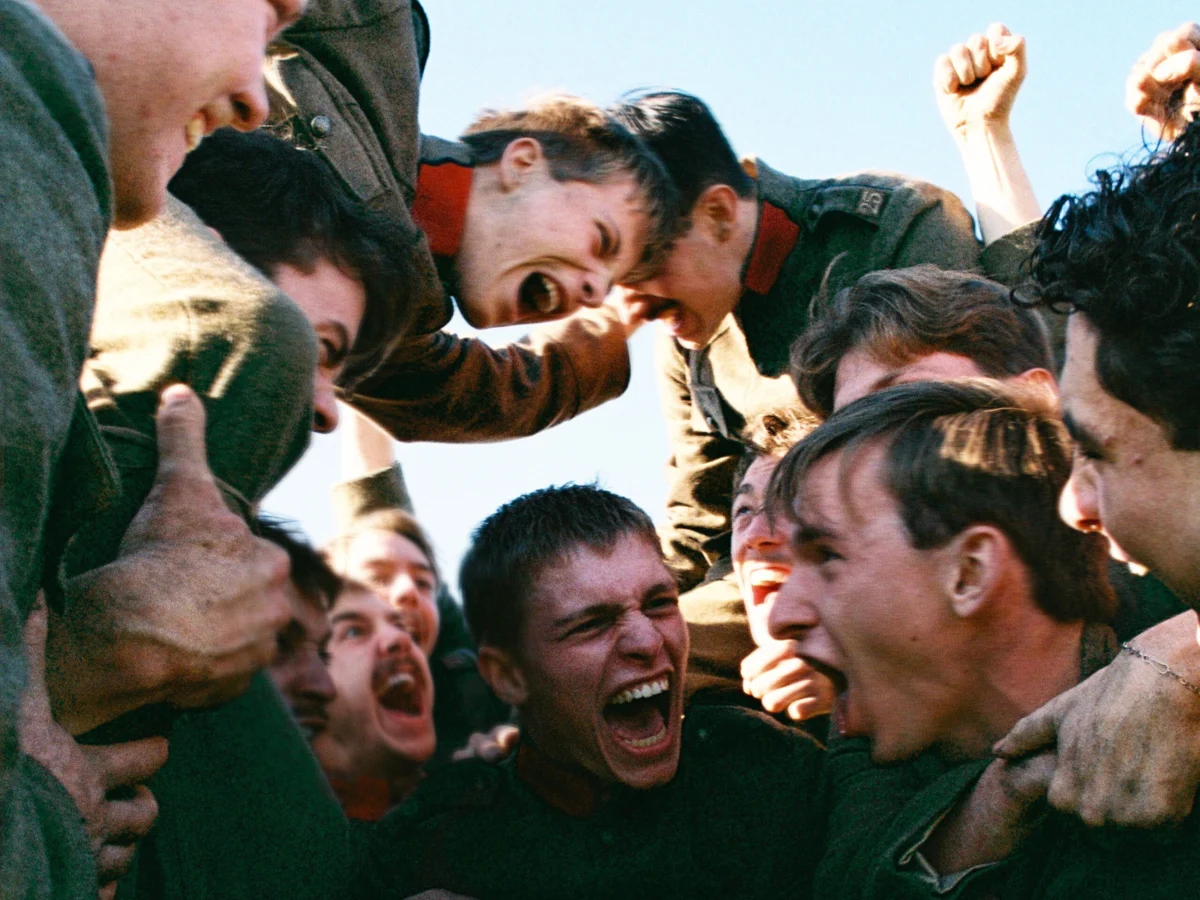
Coward represents a significant thematic and historical departure for Dhont, moving from contemporary coming-of-age narratives to a period drama set against the harrowing backdrop of World War I. This shift, however, is not expected to diminish Dhont’s signature focus on intimate human stories amidst challenging circumstances. The film introduces audiences to Pierre and Francis, two fresh-faced soldiers portrayed by Emmanuel Macchia and Valentin Campagne, who find themselves united on the brutal front lines. In a desperate bid to escape the psychological and physical horrors of the ongoing conflict, the two soldiers decide to stage a theatre show.
This premise suggests a powerful juxtaposition: the grim, destructive reality of trench warfare against the transformative, life-affirming power of art and human connection. Dhont’s previous films have delved into the vulnerability and resilience of youth, and Coward appears poised to explore these themes within a new, historically charged context. The act of creating a theatre show in such an environment is not merely an escape but a profound act of defiance and a testament to the enduring human spirit’s need for beauty, meaning, and camaraderie even in the face of unimaginable suffering. The film is expected to delve into the psychological toll of war, the bonds forged under extreme duress, and the ways in which individuals find solace and purpose when confronted with existential threats. Macchia and Campagne, while perhaps less globally recognized than Dhont’s previous leads, are poised to deliver performances that capture the raw emotion and understated heroism characteristic of Dhont’s protagonists.
The Collaborative Power Behind Coward
The creation of Coward sees Dhont reuniting with key collaborators who have been instrumental in shaping his distinctive cinematic voice. Angelo Tijssens, who co-wrote both Girl and Close, once again joins Dhont as co-writer, ensuring a consistent narrative sensibility and thematic depth. This ongoing partnership highlights a shared artistic vision and a streamlined creative process that has consistently yielded critically acclaimed results. Furthermore, Dhont’s brother, Michiel Dhont, serves as a producer on Coward, continuing a familial and professional collaboration that underscores the close-knit nature of their filmmaking endeavor. Michiel Dhont’s involvement as a producer on both Girl and Close indicates a deep understanding of Lukas’s creative needs and a commitment to nurturing his artistic projects from conception to completion.
The film boasts an impressive array of European production companies, reflecting the collaborative nature of independent cinema financing and production. Coward is produced by The Reunion, Lumen, Topkapi Films & Versus (Opus), in co-production with several prominent European broadcasters and funds including France 2 Cinéma, VTM, RTBF, Proximus, BeTV & Orange. This extensive list of co-producers from Belgium and France not only provides a robust financial framework for the film but also ensures a broad European market presence from its inception. Such co-production models are vital for funding ambitious independent films, particularly period dramas like Coward that require meticulous attention to historical detail and potentially larger budgets. This collaborative structure also facilitates wider distribution networks across the continent, an advantage that Mubi can further leverage with its global reach.
Mubi’s Expansive Presence at the Cannes Film Festival
Mubi’s acquisition of Coward is not an isolated event but rather a cornerstone of its comprehensive and ambitious strategy for the 2024 Cannes Film Festival, where the company has cemented its status as a major force in independent cinema. Beyond Coward, Mubi has made several high-profile moves demonstrating its commitment to curating a world-class selection of films for its global audience.
Adding to its Competition slate, Mubi also snatched up multi-territory rights for Hope, the highly anticipated sci-fi action thriller from acclaimed South Korean director Na Hong-Jin. Known for his intense and visually striking thrillers like The Wailing and The Yellow Sea, Na Hong-Jin’s foray into the sci-fi genre with Hope has generated considerable buzz. The film’s acquisition further diversifies Mubi’s portfolio, showcasing its interest in genre-bending international cinema. While Mubi secured rights for a broad range of international territories, Neon holds the North American, U.K., and Australian distribution rights for Hope, illustrating the complex web of global film rights and partnerships.
Moreover, Mubi is not merely a distributor at Cannes but also a significant producer. The company is credited as a producer on Paweł Pawlikowski’s Fatherland, another film set to premiere in Cannes Competition. Pawlikowski, an Oscar winner for Ida and director of the critically adored Cold War, brings immense prestige, and Mubi’s involvement as a producer on his latest work highlights its growing commitment to nurturing talent from the ground up. This strategic move aligns Mubi with some of the most celebrated auteurs in world cinema, allowing it to influence the creative process and secure premier content from an earlier stage.
Further underscoring its production prowess, Mubi is also a producer on Jane Schoenbrun’s hotly anticipated Teenage Sex and Death at Camp Miasma. This film has been selected as the opening film of the Un Certain Regard sidebar, a section dedicated to showcasing original and daring works. Schoenbrun, who garnered significant attention with I Saw the TV Glow, is an emerging voice known for her unique and often unsettling takes on contemporary youth culture. Mubi’s support for such an innovative and boundary-pushing filmmaker reaffirms its reputation as a champion of diverse and cutting-edge independent cinema.
Industry Implications and Mubi’s Evolving Model
Mubi’s robust activity at the Cannes Film Festival, particularly its multi-faceted role as an acquirer, distributor, and producer, signifies a critical evolution in the landscape of independent film. The company’s model, combining a curated streaming service with a distribution arm (Mubi Distribution) and a sales agency (The Match Factory), alongside its growing production slate, positions it as a vertically integrated powerhouse in the arthouse sector. This comprehensive approach allows Mubi to identify, acquire, finance, and distribute films globally, maximizing their reach and impact.
The early acquisition of Coward and other high-profile Cannes titles demonstrates Mubi’s aggressive strategy in a competitive market. Securing films before or during their festival premieres often involves substantial investment but offers the advantage of exclusivity and strong promotional opportunities tied to the festival’s prestige. For a film like Coward, premiering in the main Competition at Cannes provides an unparalleled global platform, generating significant buzz and critical attention that Mubi can then leverage in its marketing campaigns across its diverse territories.
The continued collaboration with celebrated directors like Lukas Dhont and Paweł Pawlikowski, alongside support for emerging talents like Jane Schoenbrun and Na Hong-Jin, solidifies Mubi’s brand as a discerning tastemaker. This curation not only attracts a dedicated audience seeking quality international and independent cinema but also reinforces Mubi’s standing within the industry as a trusted partner for filmmakers. The increasing trend of streaming platforms venturing into production and sales is reshaping traditional film distribution, and Mubi is at the forefront of this transformation, proving that a curated, niche approach can thrive by delivering unique and high-quality content to a global audience hungry for diverse cinematic experiences.
Looking ahead, Mubi’s strategic investments in films like Coward, Hope, Fatherland, and Teenage Sex and Death at Camp Miasma are likely to yield significant returns, both in terms of subscriber growth and critical acclaim. These films, with their compelling narratives and esteemed creative teams, are poised to not only enrich Mubi’s library but also to compete for major awards, further elevating the platform’s profile and influence in the global film ecosystem. The upcoming Cannes Film Festival will undoubtedly be a crucial stage for these films, and Mubi’s strategic maneuvering ensures that it will be a central figure in the festival’s narrative, shaping the future of international cinema for years to come.