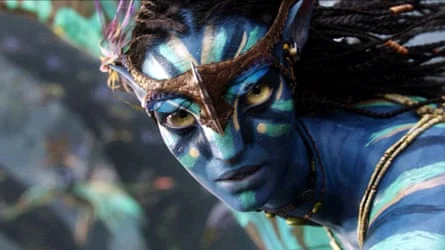
Director James Cameron and The Walt Disney Company are currently embroiled in a significant legal battle, facing a lawsuit that alleges the creator of the groundbreaking "Avatar" franchise based a central character on the likeness of a teenage actor without her explicit consent. The suit, initiated by actor Q’orianka Kilcher, asserts that Cameron "extracted her facial features" and subsequently "directed his design team" to model the pivotal character of Neytiri on her appearance. This alleged appropriation occurred after Cameron reportedly saw Kilcher in a Los Angeles Times advertisement for Terrence Malick’s 2005 film, "The New World." In this critically acclaimed historical drama, Kilcher, who is of Native Peruvian heritage, portrayed Pocahontas alongside a star-studded cast that included Colin Farrell and Christian Bale.
The legal filing, as detailed in official releases, paints a stark picture of alleged exploitation. It claims that "one of Hollywood’s most powerful filmmakers exploited a young Indigenous girl’s biometric identity and cultural heritage to create a record-breaking film franchise – without credit or compensation to her – through a series of deliberate, non-expressive commercial acts." This assertion directly challenges the narrative surrounding the creation of one of cinema’s most iconic alien characters.
The Genesis of the Allegation: A Timeline of Events
The core of the lawsuit revolves around a series of interactions and alleged decisions made by James Cameron. The timeline, as pieced together from the legal documents and public statements, suggests the following sequence of events:
- 2005: Q’orianka Kilcher stars as Pocahontas in Terrence Malick’s "The New World." Her performance garners critical attention, and a promotional advertisement for the film appears in the Los Angeles Times.
- Circa 2005-2009: James Cameron, while in the developmental stages of "Avatar," reportedly views the Los Angeles Times advertisement featuring Kilcher. The lawsuit contends that he is struck by her facial features and initiates the process of using them as inspiration for the Na’vi princess, Neytiri.
- 2009: "Avatar" is released to unprecedented global success, becoming the highest-grossing film of all time. The character of Neytiri, voiced and motion-captured by Zoe Saldaña, becomes an integral part of the franchise’s appeal.
- 2010: Approximately a year after the film’s release, Kilcher attends an event where she encounters James Cameron. According to the lawsuit, Cameron presents her with a framed sketch of Neytiri, personally drawn and signed by him. Accompanying the sketch is a note that reportedly reads, "Your beauty was my early inspiration for Neytiri. Too bad you were shooting another movie. Next time." This interaction, the lawsuit argues, serves as a key piece of evidence, suggesting Cameron’s prior intention to use her likeness.
- Post-2010 to Present: Kilcher’s legal team claims that despite her agent’s efforts to secure an audition or role for her in the "Avatar" project, Cameron never extended an offer or initiated discussions for her participation. This is presented as further evidence that the inspiration was never intended to translate into a professional opportunity for the actor.
- 2023 (circa): A video clip surfaces on social media, featuring James Cameron discussing the inspiration for Neytiri. In the clip, he is seen holding the sketch and states, "The actual source for this was a photo in the LA Times, a young actress named Q’orianka Kilcher. This is actually her… her lower face. She had a very interesting face." This resurfaced footage, according to Kilcher, is when she became fully aware of the extent to which her facial features were allegedly used.
- May 2026 (Filing Date): The lawsuit is formally filed against James Cameron and The Walt Disney Company, initiating the legal proceedings.
The Core of the Legal Claim: Biometric Data and Uncompensated Use
The lawsuit’s central argument rests on the premise that Cameron did not merely draw inspiration from Kilcher’s appearance but actively "extracted" her unique biometric facial features. This extraction, the legal team asserts, was then integrated into the "Avatar" production pipeline without Kilcher’s knowledge or consent. The term "biometric identity" is crucial here, suggesting the use of specific, measurable physical characteristics that are unique to an individual.
Kilcher herself has voiced her profound sense of betrayal. "Millions of people opened their hearts to Avatar because they believed in its message and I was one of them," she stated in a release. "I never imagined that someone I trusted would systematically use my face as part of an elaborate design process and integrate it into a production pipeline without my knowledge or consent. That crosses a major line. This act is deeply wrong."

Her lead counsel articulated the alleged transgression with strong language: "one of Hollywood’s most powerful film-makers exploited a young Indigenous girl’s biometric identity and cultural heritage to create a record-breaking film franchise – without credit or compensation to her – through a series of deliberate, non-expressive commercial acts." The counsel further emphasized, "His strategy was not inspiration, it was extraction… He took the unique biometric facial features of a 14-year-old Indigenous girl, ran them through an industrial production process and generated billions of dollars in profit without ever once asking her permission. That is not film-making. That is theft."
The "Avatar" Franchise: A Cultural and Financial Juggernaut
The "Avatar" franchise, since its initial release, has achieved unparalleled financial success. The first film, released in 2009, shattered box office records, grossing over $2.9 billion worldwide. Its sequel, "Avatar: The Way of Water," released in 2022, further cemented the franchise’s dominance, earning over $2.3 billion globally. These figures place the "Avatar" films among the highest-grossing cinematic achievements in history, underscoring the immense commercial value generated.
The lawsuit highlights the inherent irony in the franchise’s narrative. The "Avatar" films are renowned for their portrayal of the indigenous Na’vi people, their deep connection to nature, and their struggle against technologically advanced human colonizers. The legal filing states that the franchise "presented itself as sympathetic to Indigenous struggles, all while silently exploiting a real Indigenous youth behind the scenes." This alleged hypocrisy forms a significant part of the narrative presented by Kilcher’s legal team.
Analysis of Implications: Intellectual Property, Consent, and Ethical Boundaries
This lawsuit raises critical questions regarding intellectual property rights, the ethical boundaries of creative inspiration, and the legal ramifications of using an individual’s likeness in the digital age.
- Biometric Data and Ownership: The claim of "biometric extraction" moves beyond traditional copyright or defamation claims. It delves into the realm of personal data and the right of individuals to control the use of their unique physical characteristics, especially when these are translated into digital assets. As facial recognition technology and digital character creation become more sophisticated, the legal framework surrounding biometric data is increasingly being tested.
- Inspiration vs. Appropriation: The line between artistic inspiration and outright appropriation can be contentious. While artists have long drawn inspiration from real people and existing works, the lawsuit suggests that Cameron’s alleged actions crossed a threshold into unauthorized use of specific, identifiable biometric features. The note presented to Kilcher, coupled with Cameron’s later public statement, appears to be central to establishing intent and acknowledgement of the source.
- Consent and Exploitation: The legal team’s emphasis on the lack of consent and the alleged exploitation of a "young Indigenous girl" speaks to a broader concern about power dynamics in the entertainment industry. The claim that Kilcher, a minor at the time of the alleged inspiration, was not compensated or even consulted highlights potential ethical oversights in the creative process.
- Impact on the Franchise: Should Kilcher prevail, the implications for The Walt Disney Company and James Cameron could be substantial. This could range from significant financial damages, including a share of profits, to potential injunctions or mandated changes to character designs in future installments, though the latter is less likely given the established nature of the characters. The lawsuit could also prompt a broader re-evaluation of consent protocols and ethical guidelines within major film studios when using real individuals as the basis for fictional characters, particularly in the context of motion capture and digital rendering.
Representatives for James Cameron have been contacted for comment, but as of this report, no official statement has been released by his legal team or associated studios. The legal proceedings are expected to be complex, potentially setting important precedents in the evolving landscape of digital media and intellectual property law. The case is currently being heard in the U.S. District Court for the Central District of California.