The celebrated French film star Nathalie Baye, an iconic figure in French cinema whose career spanned over five decades and garnered numerous accolades, has died at the age of 77. Her family confirmed her passing on Saturday, stating that she died on Friday evening at her home in Paris after a battle with Lewy body dementia.
Baye was a formidable presence on screen, appearing in approximately 80 films and earning France’s highest film honor, the César Award for Best Actress, an astonishing four times. Her dominance at the César Awards was particularly notable, achieving a hat-trick of wins for Best Actress consecutively from 1981 to 1983, a rare feat that solidified her status as one of the nation’s most esteemed actresses.
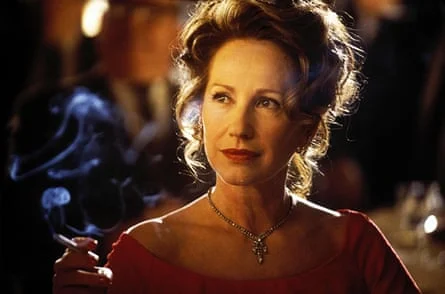
Her career, marked by consistent critical acclaim and a deep connection with French audiences, also saw a significant international resurgence in her later years. She captivated audiences worldwide with her role as Paula Abagnale, the mother of Leonardo DiCaprio’s character in Steven Spielberg’s acclaimed 2002 crime drama Catch Me If You Can. More recently, she portrayed a sophisticated French aristocrat in Downton Abbey: A New Era (2022), further demonstrating her enduring appeal and versatility on the global stage. Her collaborations with acclaimed Canadian filmmaker Xavier Dolan, in films such as Laurence Anyways (2012) and It’s Only the End of the World (2016), also underscored her commitment to auteur cinema and her ability to connect with a new generation of filmmakers.
A Life Dedicated to the Art of Acting
Born on July 14, 1948, in Le Neubourg, Normandy, Nathalie Baye hailed from a creative background. Her parents were both painters, fostering an early appreciation for the arts. However, Baye’s early life was not without its challenges. She struggled with dyslexia, which led her to leave formal schooling at the age of 14. This early departure, however, did not deter her artistic ambitions. She moved to Monaco to pursue dance, honing her discipline and stage presence, skills that would later serve her exceptionally well in her acting career.
Her entry into the world of cinema began to gain significant traction in the 1970s. She developed fruitful relationships with some of France’s most influential directors, becoming a favored collaborator for many. Her early work with François Truffaut, one of the key figures of the French New Wave, included a memorable role as a continuity supervisor in his 1973 film Day for Night, which earned an Academy Award for Best Foreign Language Film. This collaboration marked a significant early milestone, showcasing her talent to a broader audience.
A Reign at the César Awards
Baye’s consistent excellence was recognized by the French Academy of Cinema Arts and Techniques, culminating in her record-breaking four Best Actress César Awards. The sequence of wins from 1981 to 1983 remains a landmark achievement in the history of the awards.

Her first César for Best Actress came in 1981 for her role in Une semaine de vacances (A Week’s Vacation). This was followed by a triumphant win in 1982 for her powerful performance in Bob Swaim’s gritty thriller La Balance, where she played a sex worker entangled in a dangerous world. The film was a critical and commercial success, and Baye’s portrayal was widely lauded for its nuance and intensity, earning her immense critical acclaim. She secured her third consecutive Best Actress César in 1983 for L’Été meurtrier (One Deadly Summer), a drama that further showcased her dramatic range.
Her fourth and final Best Actress César was awarded in 1989 for her role in La Vie est un long fleuve tranquille (Life Is a Long, Quiet River), a darkly comedic satire that explored themes of class and identity. This collection of awards firmly established her as a national treasure and a benchmark for female performances in French cinema.
International Acclaim and Notable Roles
While Baye was a household name in France, her career also experienced significant international recognition, particularly in the latter part of her career. Her casting in Catch Me If You Can alongside Leonardo DiCaprio and Tom Hanks was a significant moment, introducing her to a global audience in a prominent role within a major Hollywood production. Her portrayal of Paula Abagnale, a mother grappling with her son’s deceptive exploits, was understated yet impactful, adding emotional depth to Spielberg’s stylish caper.
Her role in Downton Abbey: A New Era further solidified her international presence. As Madame de Rochemort, a French aristocrat, she brought an air of elegance and gravitas to the beloved period drama, seamlessly integrating into the established ensemble.
Beyond Hollywood blockbusters, Baye also engaged with contemporary European cinema, notably through her collaborations with Xavier Dolan. In Laurence Anyways, she played the mother of a transgender woman, delivering a performance of profound emotional complexity. Her work in Dolan’s It’s Only the End of the World, a tense family drama, further showcased her ability to convey deep-seated emotions with subtle power.
Personal Life and Legacy
Nathalie Baye had a notable personal relationship with the iconic French rock and roll singer Johnny Hallyday, often referred to as the "French Elvis." Their five-year relationship, which began in the late 1970s, produced a daughter, Laura Smet, who has also pursued a successful acting career. The passing of Johnny Hallyday in 2017 was a moment of national mourning in France, and Nathalie Baye remained a private figure regarding her personal life following his death. Her daughter, Laura Smet, has followed in her mother’s footsteps, becoming a respected actress in her own right, even sharing the screen with Baye in an episode of the popular French series Call My Agent!, playing fictionalized versions of themselves.
Baye’s early career also saw her work with other luminaries of French cinema. She played a pivotal role in Jean-Luc Godard’s 1980 film Every Man for Himself (Sauve qui peut (la vie)), earning her a César for Best Supporting Actress. This cemented her reputation for versatility and her ability to navigate diverse directorial visions.
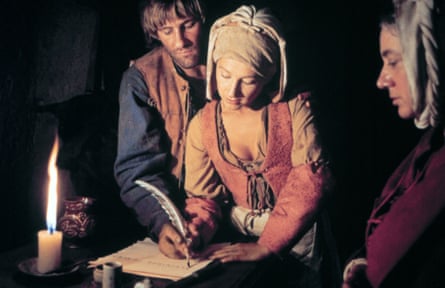
Her international breakthrough in the early 1980s was further propelled by her role as the wife of Gérard Depardieu in the historical drama The Return of Martin Guerre (1982). This film, a critical and commercial success, brought her to the attention of international critics and audiences alike.
A Career Defined by Depth and Resilience
Throughout her extensive career, Nathalie Baye demonstrated a remarkable ability to inhabit a wide range of characters, from the glamorous to the gritty, the vulnerable to the formidable. Her performances were consistently marked by a profound authenticity and an understated emotional power that resonated deeply with viewers. Her early struggles with dyslexia and her unconventional departure from formal education only serve to highlight her extraordinary determination and innate talent. She carved out a unique path in an industry that often demands rigid conformity, proving that resilience and a passionate commitment to her craft could lead to unparalleled success.
Her early work with directors like Maurice Pialat and Claude Sautet, alongside Truffaut, placed her at the heart of a golden era of French cinema, characterized by its artistic integrity and its commitment to exploring the complexities of human experience. These collaborations not only honed her acting skills but also contributed to the rich tapestry of French cinematic history.
Looking Ahead: The Enduring Impact of a Cinematic Icon
The passing of Nathalie Baye leaves a void in the French and international film landscape. Her legacy is one of exceptional talent, unwavering dedication, and a profound contribution to the art of cinema. Her ability to bridge the gap between arthouse cinema and mainstream appeal, and to command attention on both the French and international stages, speaks volumes about her enduring star power.
As tributes begin to pour in from colleagues, critics, and fans, the profound impact of her work will undoubtedly be a subject of continued reflection. Her performances will remain a testament to her artistry, inspiring future generations of actors and filmmakers. The news of her death, though met with sadness, also serves as an occasion to celebrate a remarkable life lived in pursuit of artistic excellence. The world of cinema has lost a true luminary, but Nathalie Baye’s indelible performances will continue to be cherished and discovered for years to come.