The cinematic landscape anticipates a compelling new voice with the world premiere of Shana, a French comedy-drama directed by Lila Pinell, set to debut in the prestigious Directors’ Fortnight (Quinzaine des cinéastes) program during the 2026 Cannes Film Festival. This highly anticipated film plunges audiences into the tumultuous life of its protagonist, Shana, as she navigates a series of escalating misfortunes while grappling with a profound desire for emancipation. The narrative unfolds against a backdrop of everyday trials, the unwavering support of a tight-knit group of friends, and the looming threat posed by the release of her toxic partner from prison. Central to her journey is an inherited ring, a family heirloom purported to offer protection from bad luck—a promise Shana desperately needs as her world teeters on the brink.
The Narrative Core: A Journey of Emancipation and Misfortune
At its heart, Shana is an intimate character study, exploring the resilience of a young woman confronting a barrage of challenges. The film introduces Shana at a pivotal moment: the death of her grandmother, an event that not only signifies loss but also triggers a chain of inherited responsibilities and symbolic legacies. The ring, passed down through generations, becomes more than just an object; it embodies hope, superstition, and perhaps, a tangible connection to her past that both anchors and complicates her present. As Shana grapples with this newfound inheritance, she is simultaneously trying to keep her head above water in the relentless current of daily life. These "trials and tribulations" are often subtle, yet cumulatively overwhelming—mundane frustrations, interpersonal dynamics, the quiet anxieties that permeate modern existence.
Her support system comes in the form of a vibrant group of friends, whose camaraderie and loyalty offer a crucial counterpoint to the escalating tension in Shana’s personal life. Their interactions are expected to inject moments of genuine comedy and warmth, illustrating the film’s "comedy-drama" designation. This blend of humor and pathos allows for a nuanced portrayal of struggle, suggesting that even in the darkest moments, levity and human connection can prevail. However, the narrative’s primary catalyst for dramatic tension is the impending release of Shana’s toxic partner from prison. This event transforms the abstract concept of "bad luck" into a concrete, menacing threat, forcing Shana to confront not only her past but also the very real dangers that lurk on her horizon. The nature of his toxicity—whether psychological, emotional, or potentially physical—is a central question that promises to drive much of the film’s dramatic arc, pushing Shana towards confrontational situations that, as director Lila Pinell notes, "seem to resolve nothing" in the short term, yet fuel her underlying quest for freedom.
Lila Pinell’s Vision: From Short Film to Feature Auteur
Shana marks a significant milestone in Lila Pinell’s burgeoning career. As her second feature film and her first as a solo director, it represents a definitive step into the spotlight as a singular artistic voice. Pinell’s journey to this point is rooted in her earlier work, notably the acclaimed short film Le Roi David, which she both wrote and directed. The decision to adapt Le Roi David into a feature-length narrative for Shana speaks volumes about Pinell’s conviction in the core themes and characters she initially explored. This continuity suggests a deep personal connection to the material and a belief that the story of Shana possessed the depth and complexity required for a more expansive cinematic treatment. It also highlights a methodical approach to filmmaking, where ideas are nurtured and developed, evolving from concise expressions to richer, more intricate narratives.
Pinell’s insights into her protagonist reveal a director deeply attuned to the nuances of character development. In a director’s statement, she describes Shana’s character as moving "around, like the ring, from one story, world or situation to the next," highlighting her as a "wonderful narrative engine." This metaphor of motion underscores Shana’s active role in shaping the narrative; she is not merely a passive recipient of events but an instigator, a force that disrupts stagnation. Pinell further elaborates, stating that Shana "gets everything around her moving and stops those worlds from closing in on themselves. She sticks her foot in the door, she knocks down fences. She is in her own right a principle of motion." This vivid description paints Shana as a character of immense agency and vitality, even amidst her struggles. Her inherent dynamism, her refusal to be confined by circumstances, positions her as a modern heroine grappling with universal desires.
The director also delves into Shana’s internal world, noting, "There is, in her, the desire for emancipation but she is not really able to put her finger on it. It leads her into confrontational situations and conflicts that seem to resolve nothing." This observation is crucial, as it portrays emancipation not as a sudden revelation but as an evolving, often messy process. Shana’s inability to fully articulate her desires, yet her instinctive drive towards freedom, makes her journey relatable and profoundly human. Her confrontations, while seemingly unresolved, are in fact vital steps in her self-discovery, each one chipping away at the constraints that bind her. Pinell’s directorial approach, therefore, promises a film that is both intellectually engaging and emotionally resonant, grounded in a protagonist whose complexities mirror the uncertainties of real life.
Cannes Directors’ Fortnight: A Platform for Artistic Discovery
The selection of Shana for the Directors’ Fortnight (Quinzaine des cinéastes) program at the 2026 Cannes Film Festival is a significant endorsement of Lila Pinell’s artistic vision and the film’s potential impact. The Cannes Film Festival, held annually in Cannes, France, stands as one of the most prestigious and widely publicized film festivals in the world. It serves as a crucial international platform for showcasing new films of all genres, including documentaries, from around the globe. Its competitive sections and parallel programs are renowned for identifying cinematic excellence and launching careers.
The Directors’ Fortnight, established in 1969 in the wake of the May 1968 protests, was created as a non-competitive section running parallel to the official Cannes selection. Its founding principle was to offer a more independent, unconventional, and artist-driven platform for filmmakers. Over the decades, it has earned a reputation as a launchpad for groundbreaking talent and an incubator for films that push boundaries and challenge cinematic norms. Directors like Werner Herzog, Martin Scorsese, Ken Loach, and the Dardenne brothers all gained early recognition at the Fortnight. Its mission is to "discover films and talents from all over the world, without any aesthetic or geographical limit, giving them a voice and an opportunity to meet their audience and critics." For a film like Shana, a second feature from an emerging solo director, a premiere at the Fortnight confers immediate international visibility, critical attention, and significant prestige. It signals that the film is not only artistically meritorious but also possesses a distinct voice and perspective that aligns with the Fortnight’s ethos of discovery and innovation. This exposure can be instrumental in securing further distribution deals, attracting critical acclaim, and establishing Pinell as a director to watch on the global stage. The 2026 edition of Cannes is already generating buzz, and the inclusion of Shana in such a curated and respected program positions it as one of the festival’s anticipated highlights.
Behind the Scenes: Production, Cast, and Global Reach
The production of Shana is a collaborative effort involving prominent names in French independent cinema. Produced by Ecce Films and CG Cinema, the film benefits from the expertise of companies known for supporting artistically ambitious projects. Ecce Films, for instance, has a track record of backing diverse and often challenging films, contributing to the vibrant landscape of contemporary French cinema. CG Cinema, another respected production house, further strengthens the film’s foundation, bringing its own experience in navigating the complexities of film production.
International sales for Shana are handled by Les Films du Losange, a venerable French distribution and sales company with a storied history. Founded in 1962 by iconic New Wave director Éric Rohmer and producer Barbet Schroeder, Les Films du Losange has been instrumental in bringing significant works of French and international auteur cinema to global audiences. Their catalog includes films by legends like Michael Haneke, Jacques Rivette, and François Ozon, signifying a commitment to films of artistic merit and international appeal. Their involvement with Shana not only underscores the film’s potential for critical acclaim but also ensures its reach extends far beyond France, positioning it for distribution in key territories worldwide. This partnership is a testament to the confidence in Pinell’s vision and the film’s universal themes.
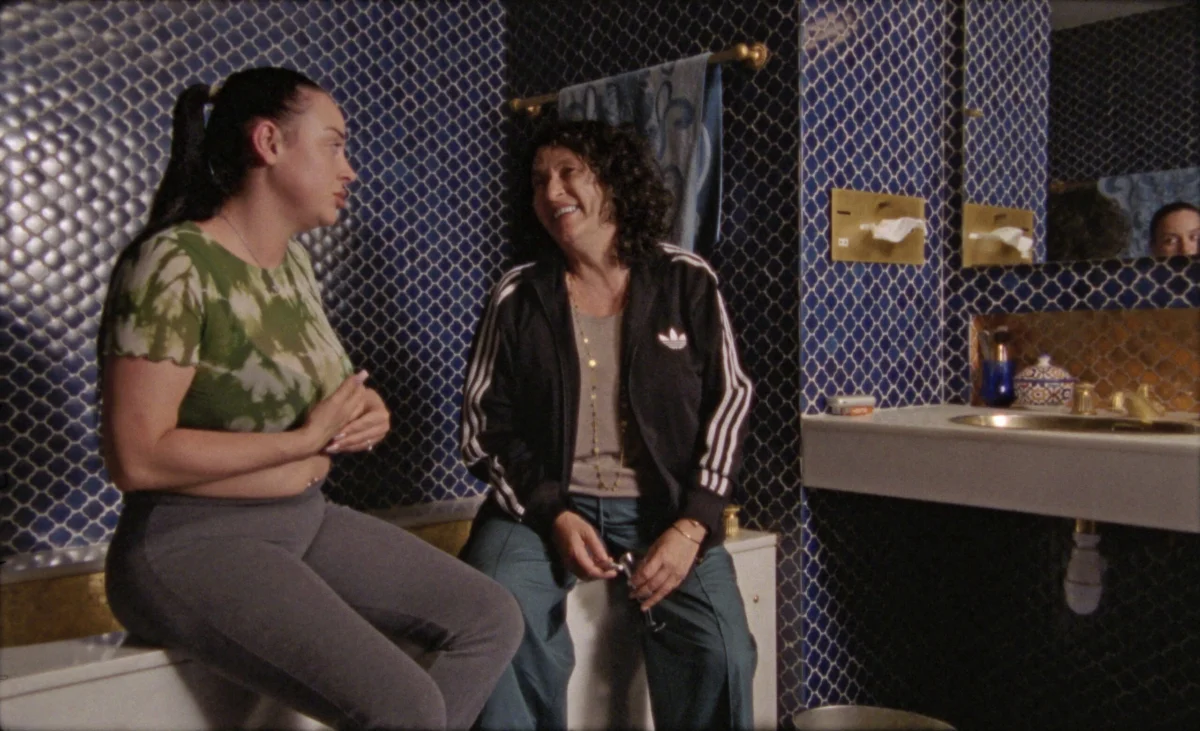
The casting further solidifies Shana‘s artistic integrity. Leading the cast is Eva Huault, who reprises her role from Lila Pinell’s original short film, Le Roi David. This continuity in casting is a deliberate choice, likely reflecting a deep understanding between the actress and the director, allowing Huault to inhabit the character of Shana with an established familiarity and nuanced performance. Her return suggests that she was integral to the initial development of the character and brings a layer of authenticity to the feature adaptation. Joining her is the esteemed Noémie Lvovsky, an acclaimed French actress and filmmaker. Lvovsky’s presence in the cast adds significant gravitas and experience. Known for her versatile performances across various genres, from comedies to dramas, and her own directorial work, Lvovsky brings a depth of talent that will undoubtedly enrich the film’s ensemble. Her role, while not fully detailed, is expected to provide a compelling dynamic within Shana’s challenging environment, whether as a friend, a mentor, or perhaps even an unexpected source of conflict. The combination of an emerging talent like Huault with an established figure like Lvovsky promises a powerful and engaging cinematic experience.
Exclusive Glimpse: Decoding the Trailer for Shana
The exclusive debut of the Shana trailer provides the first public glimpse into Lila Pinell’s cinematic world, offering tantalizing hints of the film’s tone, aesthetic, and emotional core. The trailer is designed to introduce audiences to the protagonist, her circle of friends, and the multitude of "headaches" that plague her life. Visually, the trailer appears to strike a delicate balance between gritty realism and moments of vibrant, almost defiant energy. The cinematography likely employs a style that feels intimate and immediate, drawing viewers into Shana’s lived experience. The scenes showcasing her friends suggest a dynamic and authentic portrayal of youthful camaraderie, filled with laughter, shared anxieties, and unwavering support, providing the comedic counterpoint to the dramatic tension.
Crucially, the trailer highlights Shana’s inherent energy and outspokenness. One particularly memorable scene, teased in the description, features her at a cemetery. This setting, traditionally associated with solemnity and grief, being a backdrop for Shana’s "outspokenness" implies a character who challenges conventions, confronts her emotions head-on, and perhaps even finds a peculiar form of strength in defiance. It hints at a protagonist who refuses to be silenced or defined by her misfortunes, even in moments of profound personal reflection or loss. The pacing of the trailer likely builds from moments of everyday interaction to escalating tension, culminating in glimpses of the conflicts and confrontations Shana faces. The juxtaposition of lighthearted exchanges with friends against the backdrop of her toxic partner’s release, or her internal struggles, effectively conveys the film’s comedy-drama genre. The trailer serves as an invitation to witness a journey of self-discovery marked by both external pressures and an internal drive for liberation, promising a narrative that is as emotionally complex as it is narratively engaging.
Thematic Resonance and Broader Implications
Shana is poised to resonate with audiences on multiple levels, tackling universal themes through the lens of a deeply personal story. The film’s exploration of emancipation is particularly timely, reflecting a broader societal conversation about personal autonomy, breaking free from toxic relationships, and defining one’s own path. Shana’s struggle to "put her finger on" her desire for freedom is a common human experience, making her journey relatable to anyone who has felt constrained by circumstances or relationships. The inherited ring adds a layer of magical realism or symbolic weight, prompting contemplation on the role of fate versus free will, and whether protective talismans truly alter destiny or merely serve as psychological anchors.
Within the context of contemporary French cinema, Shana contributes to a rich tradition of character-driven narratives that blend social commentary with intimate psychological portraits. Lila Pinell’s emergence as a solo director also highlights the growing visibility and importance of female filmmakers in an industry that continues to strive for greater diversity. Her ability to craft a story that is both specific in its cultural setting and universal in its emotional appeal positions her as a significant new voice. The film’s blend of comedy and drama also showcases the versatility of French storytelling, capable of navigating profound issues with nuance and an accessible tone.
Anticipation and Future Prospects
As Shana prepares for its world premiere at the 2026 Cannes Film Festival, anticipation within the industry and among cinephiles is steadily building. The combination of a compelling narrative, an intriguing protagonist, the backing of reputable production and sales companies, and its selection for the prestigious Directors’ Fortnight, all point towards a film destined for critical attention. Lila Pinell’s nuanced approach to storytelling and character development, as evidenced by her directorial statements and the initial trailer glimpse, suggests a cinematic experience that is both thought-provoking and emotionally engaging. Post-Cannes, Shana is expected to embark on a festival circuit, garnering further acclaim and securing distribution deals that will bring it to wider international audiences. The film’s potential to spark conversations about personal agency, the complexities of human relationships, and the enduring quest for freedom positions it as a significant cultural contribution, solidifying Lila Pinell’s place as an exciting new talent in global cinema.