The cultural landscape of television underwent a seismic shift in the early 2010s, largely propelled by the high-stakes political drama of Shonda Rhimes’ Scandal. Eight years after the series finale aired on ABC, the show remains a cornerstone of digital discourse, particularly regarding the central, tumultuous romance between Olivia Pope, a high-powered crisis manager, and Fitzgerald "Fitz" Grant, the President of the United States. While the "Olitz" pairing—as dubbed by a fervent fanbase—was once the pinnacle of romantic aspiration for many viewers, Kerry Washington recently shared a more nuanced perspective on the relationship’s legacy. Speaking with Swooon, Washington expressed a sense of professional and personal satisfaction regarding the audience’s growing recognition of the toxicity inherent in the couple’s dynamic, signaling a broader shift in how modern audiences consume and critique complex television narratives.
The Genesis and Evolution of the Olitz Phenomenon
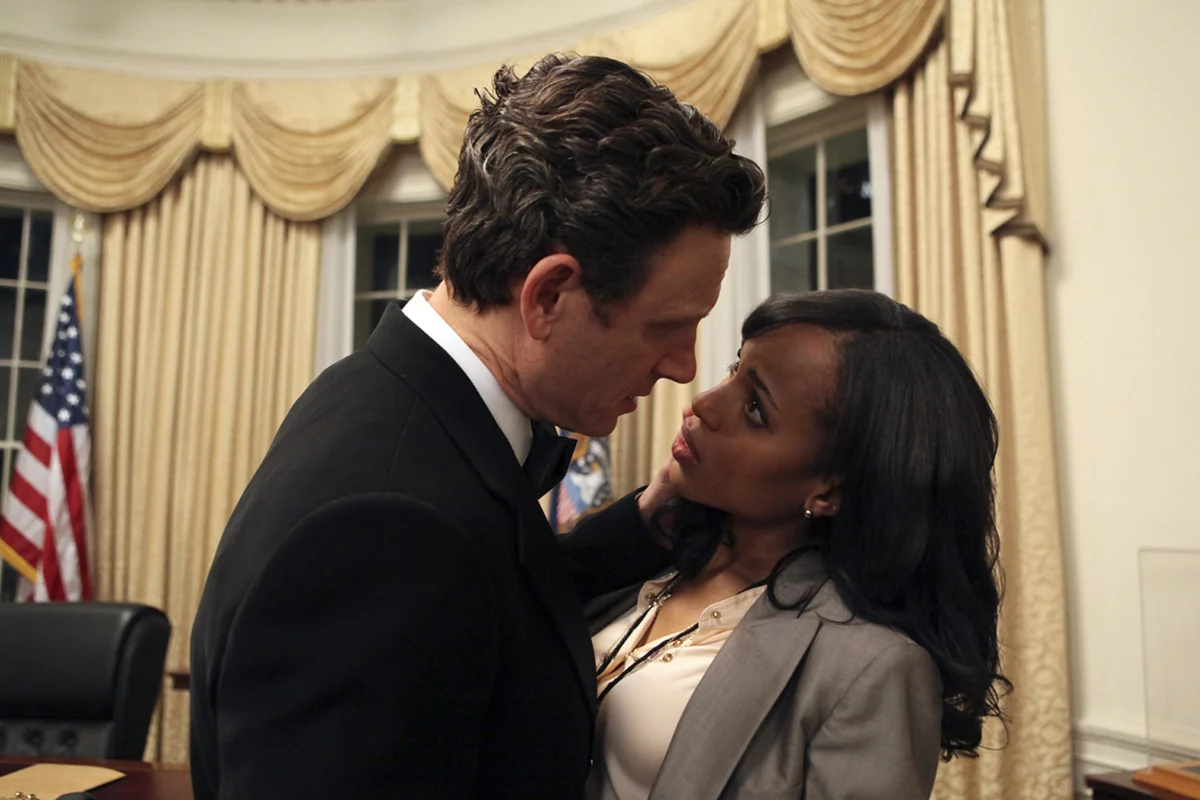
When Scandal premiered on April 5, 2012, it introduced a new kind of protagonist to network television. Olivia Pope, portrayed with clinical precision and emotional depth by Washington, was a "fixer" who navigated the murky waters of Washington, D.C., with an uncompromising "white hat" philosophy. However, the emotional core of the series was her illicit affair with President Fitzgerald Grant III, played by Tony Goldwyn. The chemistry between Washington and Goldwyn became the show’s primary engine, driving millions of viewers to tune in every Thursday night as part of ABC’s "Thank God It’s Thursday" (TGIT) programming block.
The relationship was defined by its impossibility. Bound by the constraints of the presidency, the scrutiny of the press, and the machinations of Fitz’s wife, Mellie Grant (Bellamy Young), Olivia and Fitz’s love was framed through a lens of tragic longing. Iconic motifs, such as the dream of a quiet life making jam in Vermont or the secret "60 seconds" they would steal in closets and hallways, became cultural touchstones. For years, the narrative was framed as a "star-crossed" romance, a framing that Washington now notes is being re-evaluated by the public through a more critical lens.
A Chronology of Scandal: From Secret Affair to Public Reckoning
To understand the evolution of the public’s perception, it is necessary to trace the trajectory of the show’s seven-season run.
- The Early Seasons (2012–2013): The focus remained on the "will-they-won’t-they" tension. The relationship was presented as an irresistible force of nature. Fans were captivated by the power dynamic—a Black woman at the height of her professional powers engaged in a passionate affair with the most powerful man in the world.
- The Middle Years (2014–2016): The stakes escalated from personal to geopolitical. Plotlines involving election rigging (Defiance), kidnappings, and the influence of B613 (a shadow government agency) complicated the romance. The power imbalance became more pronounced as Fitz’s possessiveness and Olivia’s trauma-informed responses began to surface.
- The Final Act (2017–2018): By the time the series concluded on April 19, 2018, the "white hat" had been significantly tarnished. Olivia’s ascent to Command and her willingness to sacrifice lives for political stability mirrored the very corruption she once fought. The series finale left the ultimate fate of Olivia and Fitz ambiguous, suggesting a potential future together while leaving the weight of their past actions hanging over the narrative.
In the years following the finale, the rise of streaming platforms like Netflix and Hulu allowed a new generation to binge-watch the series. This shift from weekly viewing to continuous consumption highlighted the repetitive cycles of emotional manipulation, gaslighting, and power struggles that defined the central couple, leading to the "realization" Washington referenced in her recent comments.
Supporting Data: The Scandal Effect on Television Metrics
The impact of Scandal was not merely anecdotal; it was backed by significant data that changed how networks approached social media and diversity.
- Social Media Dominance: Scandal was a pioneer in "live-tweeting." According to Nielsen Social, the show frequently topped the charts for the most-tweeted series. During its peak, it was not uncommon for a single episode to generate over 500,000 tweets. This real-time engagement fostered a community of "Gladiators" who dissected every look and line of dialogue, contributing to the intense emotional investment in the Olitz relationship.
- Viewership Peaks: At its height in Season 4, Scandal averaged over 12 million viewers per episode. It was a rare broadcast hit that maintained a high concentration of the coveted 18–49 demographic.
- Representation Metrics: Kerry Washington was the first Black woman to lead a network drama in nearly 40 years (since Teresa Graves in Get Christie Love! in 1974). The success of the show proved to network executives that diverse leads could command massive audiences and high advertising premiums.
Analyzing the Shift from Romance to Toxicity
The shift in perspective that Washington finds "happier" to see aligns with a broader cultural movement toward identifying unhealthy behaviors in media. In the early 2010s, "shipping"—the act of supporting a fictional romantic relationship—often overlooked the flaws of the male lead if he was charismatic and "in love." However, modern critiques of Fitz Grant often point to his entitlement, his frequent emotional outbursts when Olivia exerted independence, and the inherent imbalance of dating a subordinate who also manages his public image.
Washington’s gratitude for this shift suggests an awareness of the responsibility that comes with portraying such a dominant cultural figure. While she and Goldwyn maintain a close real-life friendship, often sharing selfies and supportive messages on social media to the delight of fans, Washington’s professional analysis separates the actors’ chemistry from the characters’ morality. By acknowledging the relationship as "toxic," she validates the viewers who have begun to question the romanticization of high-stakes, high-conflict partnerships.
Statements and Reactions from the Cast and Creator
While Shonda Rhimes has often described Scandal as a story about the "monsters" in Washington, D.C., she has also defended the complexity of her characters. In past interviews, Rhimes noted that Olivia Pope was never intended to be a traditional "good" character, but rather a woman with immense agency who makes difficult, often questionable choices.
Tony Goldwyn has also reflected on Fitz’s flaws over the years. In various press junkets, Goldwyn has described Fitz as a man "trapped by his own privilege," noting that his love for Olivia was both his greatest strength and his most destructive weakness. The cast’s ability to remain friends while acknowledging the dark themes of their work has helped maintain the show’s relevance. The frequent reunions between Washington, Goldwyn, and other cast members like Bellamy Young and Scott Foley (who played the other corner of the show’s love triangle, Jake Ballard) serve as a bridge between the show’s fictional intensity and the reality of its enduring production bond.
Broader Impact and Implications for Modern Storytelling
The re-evaluation of Scandal serves as a case study for how television reflects and shapes societal values. The transition from viewing Olivia and Fitz as "goals" to viewing them as a "cautionary tale" mirrors a decade of progress in the conversation around domestic dynamics, workplace ethics, and emotional intelligence.
- The Anti-Heroine Legacy: Olivia Pope paved the way for other complex Black female protagonists who are allowed to be flawed, such as Annalise Keating in How to Get Away with Murder or Issa Dee in Insecure. The acceptance of Olivia’s toxicity is, in a way, a form of progress; it allows a Black female character to be as messy and human as the Don Drapers or Tony Sopranos of the television world.
- Streaming and Retrospective Criticism: The "streaming era" allows for a more academic look at television. When viewers are not waiting a week between episodes, the patterns of behavior become more obvious. This has led to similar re-evaluations of shows like Sex and the City (Carrie and Mr. Big) or Gossip Girl (Chuck and Blair).
- The Role of the Actor in Character Discourse: Kerry Washington’s willingness to engage with the "toxic" label is significant. It moves the conversation beyond simple promotion and into the realm of media literacy. It encourages fans to enjoy the drama and the "fireworks" of the performance without necessarily endorsing the ethics of the characters.
Conclusion: The "White Hat" in the Rearview Mirror
As Scandal continues to live on through digital platforms and social media nostalgia, the conversation surrounding Olivia Pope and Fitzgerald Grant remains as vibrant as ever. Kerry Washington’s recent comments do not diminish the show’s impact; rather, they enrich it. By acknowledging the flaws in the "Olitz" romance, Washington highlights the show’s success in creating a world so vivid and characters so complex that they can be debated and deconstructed nearly a decade after their story concluded.
The legacy of Scandal is not found in a "happily ever after," but in its ability to provoke a lasting dialogue about power, race, and the often-blurred lines between love and obsession. For Washington, the fact that fans can now see the "jam in Vermont" for the fantasy it always was is perhaps the most rewarding "fix" of her career. The "white hat" may be retired, but the lessons of Olivia Pope’s complicated world continue to resonate in an era that increasingly values truth over optics.