The entertainment industry is closely monitoring advanced negotiations between Netflix and Goldman Sachs for the acquisition of the Radford Studio Center in Studio City, a move that could fundamentally alter the power dynamics of Hollywood real estate. While the streaming giant has long been the primary driver of leased space in Los Angeles, its transition toward an owned-and-operated model represents a strategic pivot with significant financial implications for current landlords and competitors alike. The deal, estimated to be in the $330 million range, follows a tumultuous period for the historic property, which has seen its valuation fluctuate wildly amid a shifting macroeconomic climate and a contraction in domestic television production.
The Financial Trajectory of Radford Studio Center
The Radford Studio Center, a 55-acre landmark in the San Fernando Valley, has undergone a dramatic financial journey over the last three years. In 2021, at the height of the "Peak TV" era and a period of record-low interest rates, Shari Redstone’s ViacomCBS (now Paramount Global) sold the lot for a staggering $1.85 billion. The buyers, a joint venture between Hackman Capital Partners and Square Mile Capital Management, bet heavily on the continued insatiable demand for soundstage space.
However, the market conditions of 2024 bear little resemblance to those of 2021. The industry-wide slowdown in content spending, coupled with the dual WGA and SAG-AFTRA strikes of 2023, left many Los Angeles facilities underutilized. At Radford, these pressures manifested in a high vacancy rate, with current tenants estimating that more than 50 percent of the lot remains dark. Faced with declining revenue and high debt service costs, Hackman Capital eventually defaulted on its mortgage, leading Goldman Sachs to take control of the asset.
The projected $330 million sale price to Netflix represents a fraction of the 2021 valuation. For Netflix, this "fire sale" pricing offers an opportunity to secure a premier production hub at a deep discount. For the broader real estate market, it serves as a stark reminder of the correction currently taking place in the valuation of entertainment-related assets.
The Hudson Pacific Connection and the Domino Effect
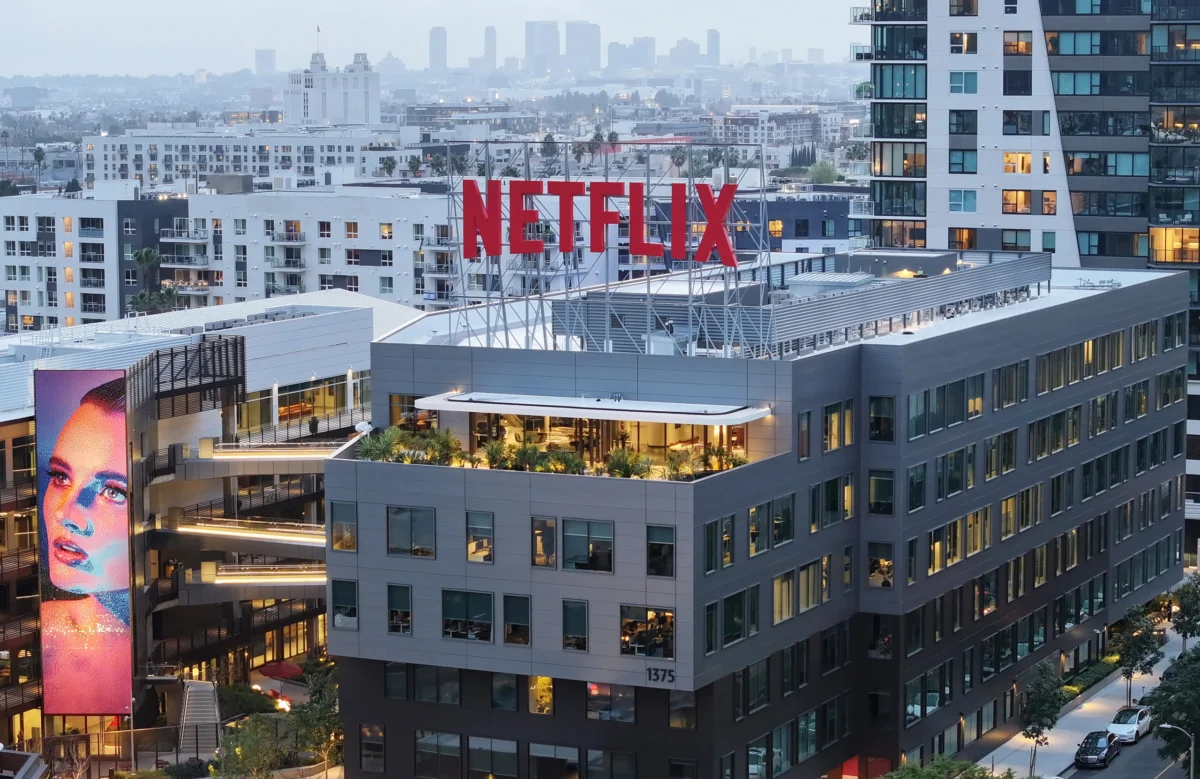
One of the most immediate concerns regarding Netflix’s potential acquisition of Radford is the impact on Hudson Pacific Properties (HPP), a leading real estate investment trust (REIT) that currently serves as Netflix’s primary landlord in Los Angeles. Netflix’s global headquarters is currently situated at HPP’s Sunset Bronson Studios on Sunset Boulevard.
The streaming giant occupies three marquee buildings at the Sunset Bronson complex: the ICON, the EPIC, and the CUE. Together, these facilities total more than 700,000 square feet of premium office and production space. Under the current agreement, Netflix pays approximately $27.3 million in annual rent, with a lease term extending through September 2031. Additionally, Netflix maintains a significant presence at Raleigh Studios Hollywood under a lease with Hackman Capital that also expires in 2031.
The prospect of Netflix owning a 55-acre campus in Studio City raises questions about its long-term commitment to these leased spaces. If Netflix consolidates its operations at Radford, it could leave a massive void in the Hollywood office market. However, Hudson Pacific CEO Victor Coleman addressed these concerns during a recent earnings call, suggesting a distinction between "office space" and "production space."
Coleman noted that Radford is primarily a soundstage facility with limited available office inventory. "There’s very little office [space] on that campus right now, and the office that is intact is leased to CBS for a long period of time," Coleman stated. This suggests that while Netflix might move its physical production—the filming and technical work—to Radford, it may still require its existing office footprint at Sunset Bronson to house its corporate and creative executive staff.
A Legacy of Production: The History of Radford
The Radford Studio Center is not merely a collection of buildings; it is a cornerstone of television history. Originally established in 1928 as Mack Sennett Studios, it later became Republic Pictures in 1935, serving as the home for countless Westerns and B-movies. In 1963, CBS entered into a lease agreement for the lot, eventually purchasing it and renaming it CBS Studio Center.
The lot’s 21 soundstages have hosted some of the most iconic programs in television history, including The Mary Tyler Moore Show, Seinfeld, Gilligan’s Island, and Will & Grace. Beyond the stages, the facility is renowned for its specialized backlot environments, which include a "residential street," a "Central Park" area, and a "New York Street." These pre-built sets allow for high-efficiency filming of diverse locations within the secure confines of the studio lot, a feature that is highly attractive to a high-volume producer like Netflix.
As part of the 2021 sale, CBS negotiated a long-term leaseback agreement, ensuring that it remains a major presence on the lot. This existing commitment complicates any immediate plans Netflix might have for wholesale redevelopment of the site, but it also provides a stable, long-term tenant for the property.
The Economic Context of the "Great Contraction"
The potential Radford deal comes at a time when the entertainment industry is grappling with what analysts have dubbed the "Great Contraction." After years of unrestrained spending to fuel the "streaming wars," major media companies are now prioritizing profitability and cost-efficiency.
According to data from FilmLA, the official film office for the City and County of Los Angeles, production activity has struggled to return to pre-strike levels. In the first quarter of 2024, television production in Los Angeles was down significantly compared to the five-year average. This decline is attributed to several factors:
- Reduced Volume: Streamers and networks are greenlighting fewer series.
- Production Runaway: A significant portion of production is moving to regions with more aggressive tax incentives, such as Georgia, the United Kingdom, and Canada.
- Budget Rationalization: Studios are cutting per-episode budgets and shortening season lengths.
For a soundstage operator, these trends are catastrophic. High-end facilities like Radford require high occupancy rates to cover the massive overhead costs of security, maintenance, and utilities. The reported 50 percent vacancy rate at Radford is emblematic of the broader struggle facing Los Angeles-based facilities that do not have a guaranteed stream of content from an "anchor tenant" or owner.
Netflix’s Global Infrastructure Strategy
The move to buy Radford aligns with Netflix’s broader global strategy of owning its production infrastructure. By owning rather than leasing, Netflix can insulate itself from rising rent costs, gain total control over scheduling, and customize facilities to meet its specific technological needs.
This strategy is already evident in other regions. In 2018, Netflix acquired ABQ Studios in New Mexico, which it has since expanded into a massive production hub. In 2022, the company announced plans to invest nearly $1 billion to build a state-of-the-art production facility at the former Fort Monmouth army base in New Jersey.
By adding Radford to its portfolio, Netflix would secure a permanent "home base" in the heart of the Los Angeles production ecosystem. This would provide the company with a vertically integrated solution, allowing it to move projects from script to screen within its own ecosystem, further consolidating its power within the industry.
Broader Implications for the Real Estate Market
The ripples of a Netflix-Radford deal will be felt across the real estate sector. For REITs like Hudson Pacific and Douglas Emmett, the deal underscores the volatility of the entertainment office market. If the industry’s largest player moves toward ownership, other major studios—such as Amazon (which currently leases space at Culver Studios) or Apple (which has a large footprint in Culver City)—might consider similar moves.
Furthermore, the price point of the Radford deal may reset the market for studio valuations. If a premier 55-acre lot in Studio City is valued at $330 million, it may force other owners to write down the value of their assets, potentially triggering a wave of refinancings or sales.
However, some analysts see a silver lining. A Netflix acquisition would bring much-needed stability to the Radford lot. As an owner-user, Netflix would likely fill the empty stages with its own productions, bringing thousands of jobs back to the Studio City area and stimulating the local economy, from catering companies to equipment rental houses.
Conclusion: A New Era for Studio City
The negotiations between Netflix and Goldman Sachs represent more than just a real estate transaction; they represent a maturation of the streaming era. Netflix is no longer a "disruptor" leasing space from the established guard; it is becoming the established guard, acquiring the historic grounds where the legends of television were once made.
While the deal remains in the "advanced negotiations" phase, its potential conclusion signals a shift in how Hollywood operates. In an era where content spend is being scrutinized and efficiency is paramount, owning the "means of production" may be the ultimate competitive advantage. For the Radford Studio Center, a transition to Netflix ownership could mean a move away from the uncertainty of the speculative leasing market and toward a new chapter as a central engine in the global streaming economy.