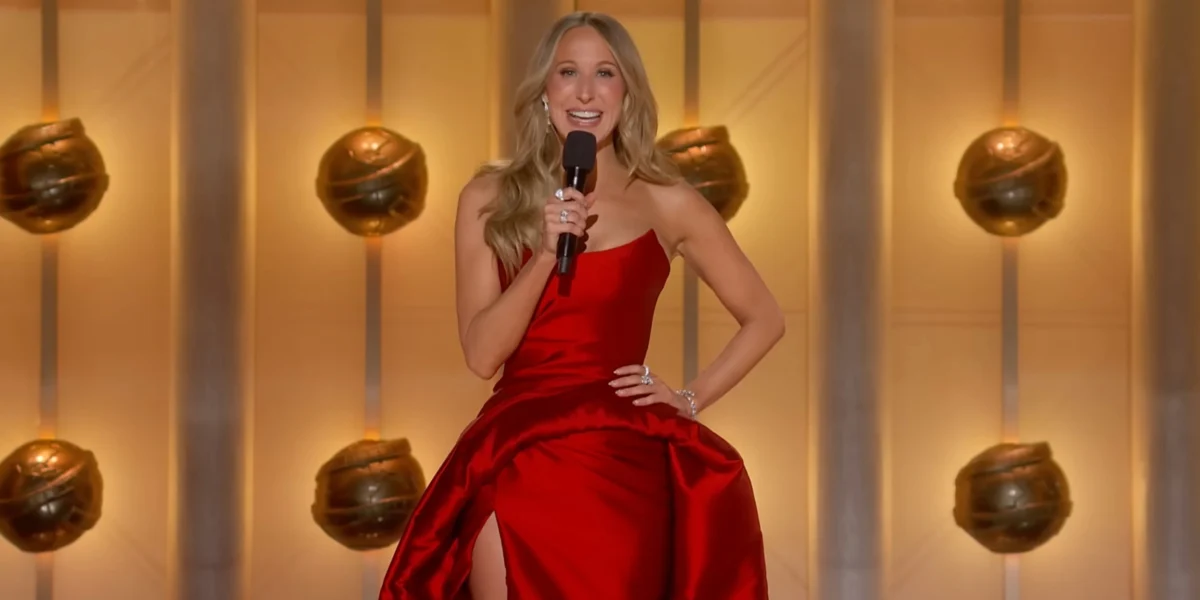
The landscape of the 2026-2027 awards season has officially begun to take form following the announcement of the 84th Annual Golden Globe Awards, which are scheduled to take place on Sunday, January 10, 2027. The ceremony will be broadcast live on CBS and made available for streaming to subscribers of Paramount+, continuing the multi-year partnership between the network and the awards body. In a move that signals a desire for continuity and brand stability, comedian Nikki Glaser has been confirmed to return as the host for the third consecutive year. Glaser, whose acerbic wit and sharp delivery have been credited with revitalizing the telecast’s ratings and social media engagement, expressed her enthusiasm for the upcoming assignment with her trademark humor, noting that the role provides her with professional parity within her family dynamic while remaining the "greatest gig" of her career.
The confirmation of the 84th ceremony comes at a pivotal moment for the Golden Globes, an institution that has undergone significant structural and ethical transformations over the last half-decade. Formerly under the purview of the Hollywood Foreign Press Association (HFPA), the awards are now owned and produced by Dick Clark Productions and Eldridge Industries. This transition has seen a concerted effort to professionalize the voting body, expand diversity, and modernize the rules governing eligibility in an increasingly complex media environment. The upcoming 2027 ceremony represents the latest step in this evolution, introducing comprehensive guidelines regarding the use of emerging technologies and refined criteria for international and independent productions.
Comprehensive Regulations on Artificial Intelligence
In a significant policy shift that mirrors recent actions taken by the Academy of Motion Picture Arts and Sciences, the Golden Globes have established rigorous new regulations regarding the use of Artificial Intelligence (AI) in film and television production. These updates come exactly one week after the Oscars rolled out their own stringent AI protocols, highlighting a unified front among major Hollywood institutions to protect human artistry in the face of rapid technological advancement.
The new Golden Globe rules do not implement an outright ban on AI but rather establish a "human-centric" threshold for eligibility. According to the updated guidelines, the use of AI tools does not automatically disqualify a project, provided that "human creative direction, artistic judgment, and authorship remain primary throughout the production process." This nuanced approach acknowledges the growing role of AI in visual effects and post-production while ensuring that the core creative decisions remain the product of human intellect.
However, the regulations are much more restrictive regarding acting and performance categories. The Globes have explicitly stated that performances "substantially generated or created by artificial intelligence" are ineligible for consideration. Furthermore, any unauthorized use of a performer’s digital likeness or voice replication is strictly prohibited. To enforce these rules, all submissions must now include a formal disclosure stating whether generative AI was utilized at any stage of the production. The Golden Globes’ eligibility committee has reserved the power to request additional documentation or "behind-the-scenes" materials to verify the extent of AI involvement, with the right to disqualify any submission that fails to provide such information in a timely manner.
Expanding the Podcast and International Film Categories
Beyond the technological safeguards, the Golden Globes are also refining their newer categories and eligibility pathways. The "Best Podcast" category, which was introduced during the previous cycle to reflect the burgeoning influence of digital audio media, will see an expansion in its selection process. In its inaugural year, the category saw "Good Hang With Amy Poehler" take home the trophy, selected from a pool of the top 25 podcasts as determined by data provider Luminate. For the 84th ceremony, this pool will expand to include the top 30 podcasts, allowing for a broader representation of the medium’s most successful and critically acclaimed entries.
Additionally, the Golden Globes have introduced a significant rule change for non-English-language and independent films. Under the previous framework, actors in these films often faced hurdles if their respective movies were not also submitted or eligible for the Best Motion Picture – Non-English Language or Best Motion Picture – Drama/Comedy categories. The new rules allow these films to be submitted for individual acting categories independently. This change is expected to significantly benefit international performers and independent artists who may be part of smaller productions that lack the massive campaign budgets required for a "Best Picture" push but whose individual performances are of award-winning caliber. This move aligns the Globes more closely with the Screen Actors Guild (SAG) and other critics’ groups that prioritize individual performance regardless of the film’s broader category status.

Official Timeline for the 84th Annual Golden Globes
To ensure a structured and transparent lead-up to the January 2027 broadcast, the Golden Globes have released a comprehensive timeline for the 84th awards cycle. This schedule provides studios, networks, and independent creators with the necessary deadlines for submissions and campaigning.
- June 1, 2026: Official submission website opens for all motion picture and television categories.
- October 30, 2026: Deadline for all submission entries. No late applications will be accepted after this date to ensure the eligibility committee has sufficient time for review.
- November 2026: Screening period and deliberative sessions for the voting body, which now consists of over 300 members representing 75 different countries.
- December 7, 2026: Official announcement of the nominations for the 84th Annual Golden Globe Awards.
- December 18, 2026: Final ballots are mailed to all eligible voters.
- January 2, 2027: Deadline for the return of final ballots.
- January 10, 2027: The 84th Annual Golden Globe Awards ceremony airs live on CBS and Paramount+.
This timeline places the Golden Globes in its traditional position as the "kick-off" to the major televised awards season, occurring just weeks before the Screen Actors Guild Awards and the Academy Awards.
Industry Impact and the Role of Nikki Glaser
The decision to retain Nikki Glaser as host for a third year is viewed by industry analysts as a strategic move to maintain the "must-watch" status of the ceremony. Following a period of turbulence for the Globes, Glaser’s tenure has been marked by a balance of reverent celebration and "roast-style" comedy that appeals to both the live audience of A-list celebrities and the viewers at home. Data from previous broadcasts indicates that Glaser’s hosting has particularly resonated with younger demographics and social media users, a key metric for CBS and Paramount+ as they seek to compete with digital streaming alternatives.
The hosting role is notoriously difficult, yet Glaser has managed to navigate the sensitivities of the industry while maintaining the "party" atmosphere that distinguishes the Golden Globes from the more formal Oscars. Her return suggests that the organizers are confident in her ability to handle the potential political and social complexities of the 2027 season, which will likely be influenced by the ongoing debates surrounding labor rights and the ethics of technology in the arts.
Broader Implications for the Awards Landscape
The Golden Globes’ proactive stance on AI is perhaps the most significant takeaway from this announcement. By requiring full disclosure of generative AI use, the Globes are setting a precedent for transparency that could soon become the industry standard. As AI tools become more sophisticated—moving from simple de-aging techniques to full-scale digital recreations—the need for clear boundaries between human performance and algorithmic generation has become a primary concern for labor unions like SAG-AFTRA and the Writers Guild of America (WGA).
The inclusion of the "human creative direction" clause serves as a safeguard for directors, cinematographers, and actors, ensuring that the "soul" of a production remains the deciding factor for excellence. Furthermore, the expansion of the podcast category and the easing of restrictions on international films suggest that the Golden Globes are attempting to position themselves as the most inclusive and modern of the "Big Three" awards (Oscars, Emmys, Globes).
As the submission window approaches in June 2026, the industry will be watching closely to see how these new rules affect the strategy of major studios like Disney, Netflix, and Warner Bros. Discovery. With the 84th Annual Golden Globes now firmly on the calendar, the race for one of Hollywood’s most coveted honors has officially begun, promising a season defined by a blend of traditional glamour and forward-thinking regulation.