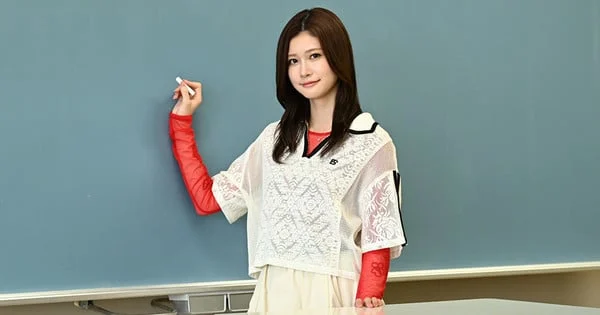
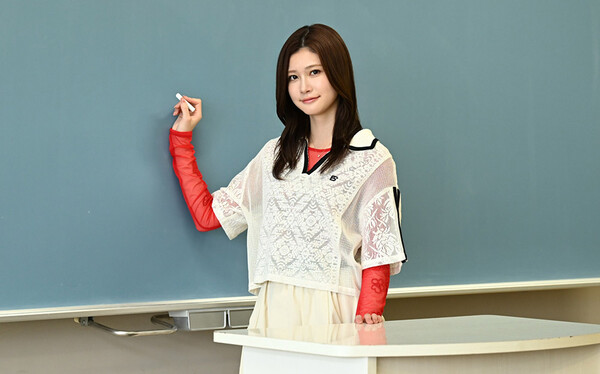
Kansai TV has announced that rising star Meru Nukumi has been cast as Mio Kashiwabara, the assistant homeroom teacher, in the upcoming live-action series based on Tohru Fujisawa’s iconic GTO: Great Teacher Onizuka manga. This marks a significant role for Nukumi, who was born after the original GTO live-action series first aired, and highlights the enduring legacy of the beloved franchise. Nukumi, known for her roles in My Hero Academia: You’re Next and the live-action Sexy Tanaka-san, will portray a character who, despite her pragmatic and efficient approach to teaching, will find herself confronting the core tenets of education when clashing with the unconventional methods of Eikichi Onizuka.
The new series, scheduled to premiere on Kansai TV, Fuji TV, and affiliated channels on July 20 at 10:00 p.m. (9:00 a.m. EDT), will see Takashi Sorimachi reprise his seminal role as Eikichi Onizuka, now 52 years old. This latest installment represents a contemporary reimagining of the GTO narrative, shifting the setting from the Heisei era to the modern Reiwa era, and explores the challenges of education in a digitally saturated and increasingly commercialized landscape. The production also reunites Satoru Nakajima as director and Kazuhiko Yukawa as scriptwriter, promising a continuation of the quality that has defined previous live-action adaptations.
A New Era for a Classic Character
Meru Nukumi’s character, Mio Kashiwabara, is depicted as a teacher who places a high premium on efficiency and proactive conflict resolution. Her professional demeanor, however, often leads her to maintain an emotional distance from both her students and colleagues. This carefully constructed facade is expected to be tested as she navigates the chaotic environment brought about by Onizuka’s presence. The narrative arc for Kashiwabara will likely involve a deep introspection into her own teaching philosophy and her understanding of the teacher-student relationship, particularly when her principles are challenged by Onizuka’s unique brand of pedagogy.
Nukumi herself has expressed a sense of wonder at her casting, recounting how, during her childhood, she would watch reruns of the original GTO series and fantasize about playing a student. The prospect of portraying a teacher, especially one in a series with such a rich history, represents a significant career milestone and a departure from her previous on-screen personas. Her performance will be crucial in establishing the dynamic between the new generation of educators and the ever-unpredictable Onizuka.

Onizuka Navigates the Modern Educational Landscape
The new GTO series finds Eikichi Onizuka at Seishin Academy, an institution ostensibly dedicated to cultivating future leaders. However, the academy operates within a complex ecosystem of digital dissemination of information, where students anonymously rank teachers through a "Teacher Feedback System." This system carries significant weight, with consistently low-ranked teachers facing the prospect of losing their homeroom status, creating an environment of constant pressure and superficial engagement. The pervasive use of tablets for communication between students and teachers, while facilitating information exchange, is portrayed as a space where genuine emotions are suppressed, fostering a sense of detachment.
Onizuka’s well-documented, direct, and often unconventional teaching methods, which have historically involved him personally intervening in student crises, are now viewed with suspicion and are considered problematic within this new educational framework. This has led to a string of teaching job losses prior to his arrival at Seishin Academy. The series will delve into Onizuka’s struggle to adapt his philosophy to an era defined by the commercialization of education, the anxieties of performance-based rankings, and a school environment that appears to prioritize conformity over genuine well-being, all while being heavily influenced by social media dynamics.
The Enduring Legacy of GTO
Tohru Fujisawa’s original GTO manga, serialized in Kodansha’s Weekly Shōnen Magazine from 1997 to 2002, has cemented its place as a cultural phenomenon in Japan and internationally. The franchise has spawned a multitude of successful adaptations across various media, underscoring its enduring appeal.
A Chronology of GTO Adaptations:
- 1997-2002: Original GTO manga serialized in Weekly Shōnen Magazine.
- 1998: First live-action GTO series adaptation airs, starring Takashi Sorimachi.
- 2000: A live-action film is released.
- 2001: Tokyopop licenses the GTO anime series for North American release.
- 1999: The GTO television anime adaptation airs in Japan.
- 2002: GTO: The Early Years manga concludes serialization.
- 2003: GTO: Shonan 14 Days manga begins serialization.
- 2004: GTO: The Early Years receives a live-action series adaptation.
- 2011: Vertical publishes GTO: The Early Years and GTO: Shonan 14 Days in North America.
- 2012: A remake live-action series, starring Exile member Akira, airs, followed by its own spin-offs.
- 2013: Discotek licenses and releases the GTO TV anime on home video.
- 2014: GTO: Paradise Lost manga launches in Weekly Young Magazine.
- 2020: GTO: The Early Years manga receives a new live-action series adaptation.
- 2023: GTO: Paradise Lost manga goes on hiatus.
- 2024 (April): GTO: Paradise Lost manga resumes publication on Magazine Pocket under the new title GTO: Paradise Lost Kai.
- 2024 (April): GTO Revival, a new live-action television special, premieres.
- 2024 (October): GTO: Paradise Lost Kai manga concludes.
- 2024 (July): New live-action GTO: Great Teacher Onizuka series set to premiere.
The franchise’s ability to resonate with audiences across different eras is a testament to Fujisawa’s creation of relatable characters and timeless themes concerning education, rebellion, and personal growth. The introduction of new technologies and societal pressures in the latest series suggests an attempt to keep the narrative relevant to contemporary youth while retaining the core spirit of Onizuka’s character.
Analysis of Implications
The casting of Meru Nukumi, a young actress who represents a new generation of talent, alongside Takashi Sorimachi, who embodies the original spirit of Onizuka, creates an interesting intergenerational dynamic. This pairing could serve to bridge the gap between long-time fans and a younger audience potentially discovering GTO for the first time. The contemporary setting of Seishin Academy, with its focus on digital feedback systems and the pressures of social media, offers a fertile ground for exploring the evolving challenges faced by educators and students today.
The series’ exploration of the commercialization of education and the impact of ranking systems on the teaching profession offers a critical lens on current educational trends. Onizuka’s inherent disdain for rigid structures and his commitment to genuine student well-being will likely be pitted against a system that rewards superficial engagement and conformity. This thematic conflict has the potential to spark discussions about the true purpose of education and the role of educators in fostering critical thinking and emotional intelligence in an increasingly complex world.
The return of Satoru Nakajima and Kazuhiko Yukawa to direct and script, respectively, suggests a commitment to maintaining the quality and thematic integrity of the GTO narrative. Their familiarity with the franchise will be instrumental in translating the spirit of the manga and previous adaptations into a modern context. The success of this new series could further solidify GTO‘s status as a cultural touchstone, influencing contemporary discussions on education and the enduring relevance of unconventional mentorship. The decision to set the series in the Reiwa era, rather than simply continuing the Heisei timeline, signals a deliberate effort to address the unique social and technological landscapes of the present day, making the challenges faced by Onizuka and his students particularly pertinent. The integration of social media and digital feedback systems into the core narrative reflects a keen awareness of how young people interact with information and authority in the 21st century.
The original GTO manga was published by Kodansha in Weekly Shōnen Magazine from 1997 to 2002. Its success led to numerous spin-offs and continuations, including GTO: Shonan 14 Days, the spin-off GT-R, and the prequel GTO: The Early Years. More recently, GTO: Paradise Lost began publication in Weekly Young Magazine in April 2014 and, after a hiatus, resumed on Kodansha’s Magazine Pocket website in April 2024 under the new title GTO: Paradise Lost Kai, concluding in October 2024. These diverse iterations underscore the franchise’s sustained popularity and its ability to adapt and evolve over decades.
The multimedia impact of GTO extends beyond manga and live-action. The 1999 anime adaptation, licensed by Tokyopop and later by Discotek, introduced the character of Onizuka to a global audience through animation. The various live-action adaptations, including the popular 1998 series, the 2012 remake, and the 2020 GTO: The Early Years series, have consistently captured the attention of television viewers, demonstrating the character’s broad appeal across different formats. The recent GTO Revival special in April 2024 further emphasizes the ongoing interest in the GTO universe and its iconic protagonist. The upcoming series, with its fresh cast and contemporary setting, is poised to add another significant chapter to this rich and enduring legacy.