The Next Best Picture Podcast has released a comprehensive review and discussion of Mortal Kombat II, the latest cinematic entry in the long-standing media franchise based on the iconic fighting games created by Ed Boon and John Tobias. This latest episode features a panel consisting of film critics Josh Parham, Cody Dericks, and Will Mavity, led by Matt Neglia, who provide an in-depth analysis of the sequel to the 2021 reboot. The discussion covers a wide range of topics, including the evolution of the action sequences, the introduction of fan-favorite characters from the video game lore, and the film’s position within the broader landscape of modern video game adaptations. As the fourth live-action installment in the overall Mortal Kombat film series, this sequel represents a significant expansion of the cinematic universe established by New Line Cinema and Warner Bros. Pictures.
Narrative Expansion and the Introduction of Johnny Cage
A central focus of the podcast review is the introduction of Karl Urban as Johnny Cage, a character whose absence in the 2021 film was a point of significant discussion among the fanbase. Mortal Kombat II picks up the narrative threads left by its predecessor, following the Earthrealm fighters as they recruit new allies to face the looming threat of the Outworld warriors. The story centers on an inter-dimensional tournament, a staple of the franchise’s mythology, where the stakes involve the survival of Earthrealm against the tyrannical ambitions of Emperor Shao Kahn.
The inclusion of Johnny Cage marks a shift in the franchise’s cinematic tone. Known in the games as a Hollywood action star with a penchant for self-promotion and comedic relief, Cage provides a different dynamic compared to the more stoic protagonists like Liu Kang or the newcomer Cole Young. The podcast panel evaluates how Karl Urban, known for his roles in The Boys and Star Trek, inhabits this role and whether the character’s transition from the arcade screen to the silver screen effectively balances the film’s high-stakes violence with necessary levity.
Furthermore, the sequel introduces Adeline Rudolph as the Edenian princess Kitana. Her character’s arrival brings a deeper exploration of the lore surrounding Outworld and the history of the realms. The review delves into the chemistry between the new cast members and the returning ensemble, analyzing how the script manages a burgeoning roster of characters while maintaining a coherent narrative arc.
The Ensemble Cast and Character Dynamics
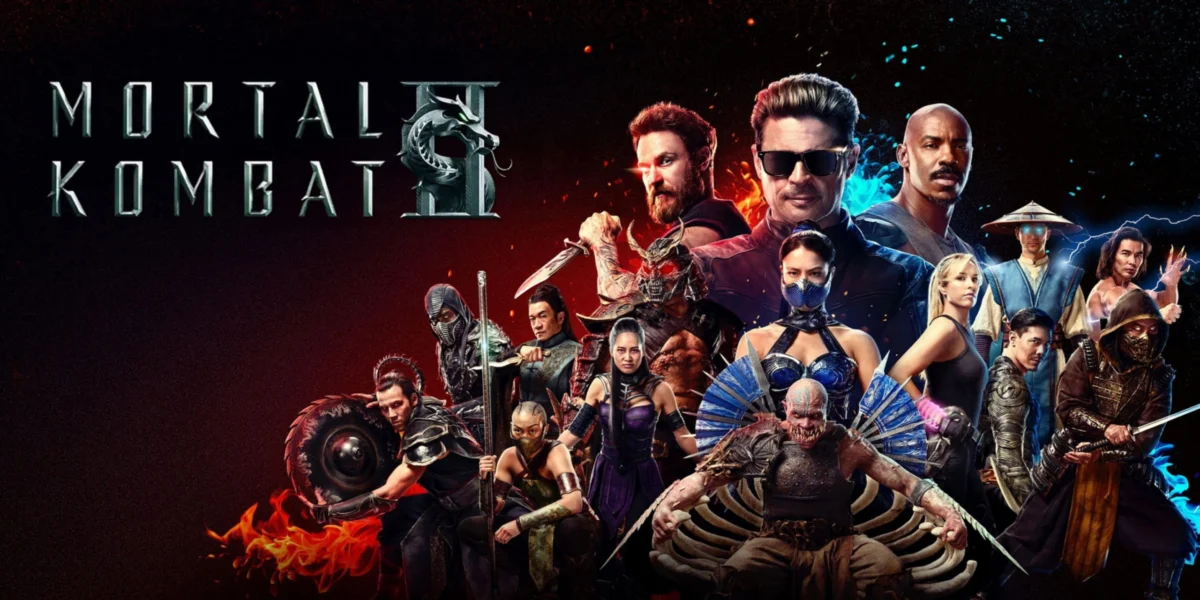
The film features an extensive ensemble cast that blends returning actors with high-profile newcomers. Returning to the fold are Lewis Tan as Cole Young, Jessica McNamee as Sonya Blade, Josh Lawson as Kano, Ludi Lin as Liu Kang, Mehcad Brooks as Jax, Tadanobu Asano as Lord Raiden, and Chin Han as the sorcerer Shang Tsung. The podcast highlights the performances of these returning actors, specifically noting how their characters have evolved following the events of the first film.
A significant point of interest for the reviewers is the return of Joe Taslim and Hiroyuki Sanada. In the 2021 film, their portrayal of the rivalry between Sub-Zero (Bi-Han) and Scorpion (Hanzo Hasashi) was widely cited as a highlight. The sequel continues to explore the supernatural and martial arts complexities of these characters, with Joe Taslim transitioning into the role of Noob Saibot, a development deeply rooted in the original game’s continuity. The panel discusses the technical execution of the fight choreography involving these characters, emphasizing the film’s commitment to the "Fatalities" and "Brutalities" that defined the video game series’ identity since its 1992 debut.
New additions discussed in the review also include Tati Gabrielle as Jade, Damon Herriman as the sorcerer Quan Chi, and the presence of the formidable Shao Kahn. The reviewers analyze how these antagonists serve to raise the stakes and whether the film successfully portrays the overwhelming power associated with the ruler of Outworld.
Production Background and Franchise Chronology
To understand the significance of Mortal Kombat II, it is essential to view it within the context of the franchise’s turbulent cinematic history. The first live-action attempt, directed by Paul W.S. Anderson in 1995, was a commercial success that remains a cult favorite. However, its 1997 sequel, Mortal Kombat: Annihilation, was critically panned and stalled the film franchise for over two decades.
The 2021 reboot, directed by Simon McQuoid, served as a "soft" reset. Released during a period of global box office recovery, the 2021 film took a hybrid release approach, debuting simultaneously in theaters and on the HBO Max streaming service. Despite the challenges of the pandemic-era market, it earned approximately $84 million worldwide against a production budget of $55 million and became one of the most-watched titles on HBO Max at the time. This commercial viability paved the way for the sequel, with McQuoid returning to the director’s chair to ensure visual and tonal consistency.

Filming for Mortal Kombat II took place primarily on the Gold Coast in Queensland, Australia. The production benefited from the region’s diverse landscapes and established film infrastructure. The podcast panel notes the visual upgrades in the sequel, discussing the use of practical sets versus digital environments and how the increased budget is reflected in the film’s grander scope and more complex visual effects.
Analysis of Action and the "R-Rated" Aesthetic
One of the defining characteristics of the Mortal Kombat brand is its uncompromising approach to violence. The 2021 film was noted for embracing an R-rating, allowing for the graphic "Fatalities" that the games are famous for. The Next Best Picture reviewers provide a spoiler-filled breakdown of the action sequences in the sequel, evaluating whether the creative team managed to innovate within the martial arts genre.
The discussion touches upon the choreography led by the film’s stunt department, analyzing the blend of traditional martial arts with supernatural abilities. The panel examines the "bloody kills" mentioned in the podcast description, debating whether the violence serves the story or functions primarily as fan service. The reviewers also weigh in on the pacing of the action, considering how the film balances the required "tournament" structure with character-driven moments.
Broader Implications for Video Game Adaptations
The release of Mortal Kombat II comes at a time when video game adaptations are experiencing a critical and commercial renaissance. Following the success of titles like The Last of Us, Fallout, and the Sonic the Hedgehog series, the "curse" of the video game movie is increasingly viewed as a thing of the past.
The podcast panel explores where Mortal Kombat II fits into this trend. Unlike more narrative-heavy adaptations like The Last of Us, Mortal Kombat relies on a lore-rich but fundamentally action-oriented foundation. The review analyzes whether the film manages to appeal to general audiences while remaining faithful to the dense mythology that has been built over 30 years of gaming history. The discussion also touches upon the potential for future installments, suggesting that the success of this sequel could lead to spin-offs or a broader "cinematic universe" involving other realms like Netherrealm or Orderrealm.
The Role of the Next Best Picture Podcast
The Next Best Picture Podcast, a member of the Evergreen Podcasts Network, has established itself as a prominent voice in film criticism, particularly regarding the Academy Awards and major studio releases. By providing a platform for detailed, spoiler-filled reviews, the podcast offers film enthusiasts a space to engage with the technical and narrative nuances of modern cinema.
In this episode, the chemistry between Matt Neglia, Josh Parham, Cody Dericks, and Will Mavity allows for a multi-faceted critique. Each reviewer brings a different perspective—some focusing on the fidelity to the source material, others on the film’s merits as a standalone action piece. The podcast encourages listener engagement through platforms like Apple Podcasts and Patreon, where subscribers can access ad-free content and exclusive reviews.
Conclusion and Future Outlook
As Mortal Kombat II makes its mark on the 2025 film calendar, the insights provided by the Next Best Picture team offer a roadmap for what audiences can expect from the sequel. The film represents a bold attempt to merge the visceral thrills of the fighting game genre with a high-stakes cinematic narrative.
Whether the film succeeds in surpassing its predecessor remains a subject of debate among critics and fans alike. However, the data suggests that the appetite for the franchise remains strong. With a cast that combines seasoned veterans and rising stars, and a production team dedicated to the source material’s "Kombat" roots, the film stands as a testament to the enduring legacy of the Mortal Kombat name. The podcast review serves as a vital resource for those looking to understand the intricacies of the film’s plot, its technical achievements, and its place in the history of the "Fatality."