April was a month marked by significant personal engagement and a curated exploration of literature for Ada Palmer, the acclaimed author and scholar. While her time was largely dedicated to a visit with fellow writer Ada Palmer in Chicago, punctuated by spirited sessions of the historical board game Papal Election of 1492, this period also saw the consumption of four distinct literary works. This selective reading output, as Palmer herself noted, is a direct consequence of prioritizing social interaction and immersive experiences over dedicated reading time. The author anticipates a more robust reading list for May, suggesting a return to more focused literary engagement in the coming weeks.
A Glimpse into Palmer’s April Reading List
Palmer’s April reading focused on a diverse array of genres, from speculative fiction anthologies to contemporary romance and historical reimaginings. Each selection offers a window into the thematic interests and narrative preferences that resonate with the author.
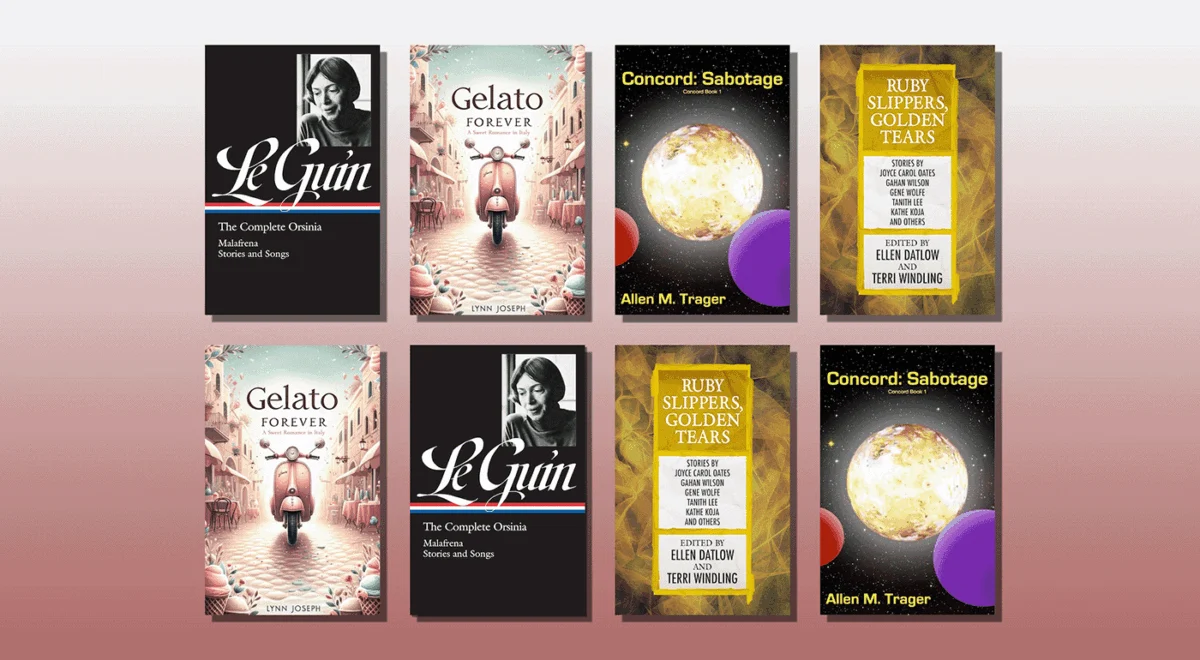
Ruby Slippers, Golden Tears (1995) – Edited by Ellen Datlow and Terri Windling
This anthology, a celebrated collection of retold fairy tales, features contributions from a wide spectrum of talented authors. Palmer specifically highlighted Delia Sherman’s "The Printer’s Daughter" as a standout, describing its impact as almost eclipsing the memory of the other stories. The story’s profound effect underscores the power of masterful storytelling in reimagining familiar narratives. Beyond Sherman’s contribution, Palmer noted the presence of exceptional works by Nancy Kress, Susan Palwick, Lisa Goldstein, and a particularly "creepy" piece by Anne Bishop. The anthology is recommended for enthusiasts of reimagined fairy tales, indicating a strong appreciation for how classic folklore can be reinterpreted for contemporary audiences. The collection’s enduring appeal, published in 1995, speaks to its quality and the timelessness of its themes.
Gelato Forever (2023) – By Lynn Joseph
Lynn Joseph’s contemporary romance novel, Gelato Forever, transports readers to Florence, Italy, a setting that Joseph navigates with commendable geographical accuracy. The narrative centers on Ava, the eldest of an African American family who, after the loss of her mother, stepped into a maternal role at a young age. The novel marks Ava’s long-awaited opportunity to pursue a personal dream: attending gelato school in Florence. A chance encounter on her flight to Italy with her high school crush, who mistakes her for her more popular sister, Bridget, sets in motion a chain of events that leads to unexpected romance. Ava embraces the mistaken identity, initially expecting it to be a fleeting deception, but the charade continues, leading to a blossoming love affair with a man grappling with trust issues.
Palmer’s assessment of Gelato Forever emphasizes its realistic portrayal of plot development, despite a highly wish-fulfillment-oriented ending. This balance between relatable character arcs and an idealized conclusion is a hallmark of successful romance fiction. The novel is lauded for its well-developed characters, authentic depiction of Italy, strong support systems of family and friends, and effective pacing. Notably, Palmer highlights Gelato Forever as a refreshing departure from typical U.S. romance novels set in Italy, which often lean heavily on themes of high-end luxury. Instead, Ava’s journey is grounded in her genuine pursuit of learning and working, offering an experience of Italy that feels more accessible and relatable to the average reader. This grounded approach to setting and character motivation contributes significantly to the novel’s appeal.
Concord: Sabotage (2024) – By Allen M. Trager
Allen M. Trager’s recent work, Concord: Sabotage, plunges into a science fiction universe where Emma is the sole human inhabitant aboard a colossal spaceship populated by aliens. The narrative kicks off with an assassination attempt on Emma, which escalates into a larger conspiracy to ban humans from Concord, an interspecies association of alien "tribes" who have existed in space for millennia. Palmer commends Trager’s well-developed background and the compelling characterizations of the predominantly alien cast. However, she notes that the investigative plot, while intriguing, experiences some pacing issues, with the mystery unfolding at a somewhat languid pace. Despite this critique, Palmer acknowledges the "very fun universe" and the believable depth of the ancient alien species, suggesting that the novel possesses strong world-building elements. The overall assessment indicates a solid science fiction offering with potential for improvement in narrative tightness.
The Complete Orsinia (2016) – By Ursula K. Le Guin
Ursula K. Le Guin’s The Complete Orsinia, a compilation of tales set in the fictional Central European country of Orsinia, garnered significant praise from Palmer. While the Library of America edition was published in 2016, encompassing two additional stories, the original Orsinian Tales dates back to the 1970s. Palmer expresses deep admiration for these stories, describing them as "just great." The tales span various periods between 1640 and 1989, with a predominant focus on the nineteenth and twentieth centuries. Palmer specifically notes her strong affinity for these stories, even more so than Malafrena, another work within the collection.
A key element of The Complete Orsinia‘s appeal for Palmer lies in its interconnectedness. Characters, places, and geographical details often reappear across different stories, creating a rich tapestry that lends a sense of lived reality to the fictional nation. These are characterized as "mimetic fiction stories," meaning they focus on realistic portrayals of human life rather than fantastical elements. This distinction is crucial for Palmer, who uses Le Guin’s work as a counterpoint to her previous commentary on Michael Chabon and Andrew Sean Greer. She argues that realistic fiction is not inherently limited in scope and can effectively explore diverse human experiences, from packing up a house at the end of summer to industrial accidents and life under oppressive regimes.
Palmer’s vivid description of Orsinia evokes a powerful sense of place: "I could draw a map of Orsinia; I would recognise the different cities; it feels like a place I could take the train to." This illustrates the immersive quality of Le Guin’s prose, making the fictional nation feel tangible and accessible. The presence of trains within the stories further enhances this sense of grounded reality, allowing readers to imagine themselves traversing the landscapes and experiencing the life of Orsinia firsthand.
Palmer also reflects on the concept of reading books "too old for me," a phenomenon she attributes to personal readiness rather than the book’s inherent quality. She recounts how, as a teenager, she could appreciate Le Guin’s more overtly fantastical works like The Dispossessed and The Lathe of Heaven, but Orsinia required a greater maturity. This read-through, however, brought a profound appreciation, leaving her with a sense of sadness upon finishing and a strong desire to reread the entire collection, particularly Malafrena. This personal growth and evolving understanding highlight the enduring power of literature to resonate differently with readers at various stages of their lives.
The Significance of Papal Election of 1492
While not a book, the mention of Papal Election of 1492 as a focal point of Palmer’s social engagements in Chicago warrants further consideration. This historical board game, simulating the complex and often contentious process of selecting a new Pope in 15th-century Rome, is more than just a pastime. Its engagement suggests a deeper interest in historical processes, power dynamics, and the intricate machinations of political and religious institutions. Such games often require strategic thinking, negotiation, and an understanding of historical context, mirroring the analytical skills employed in academic and literary pursuits. The fact that Palmer dedicated significant time to this activity underscores its intellectual and social value for her, contributing to a rich tapestry of experiences beyond solely literary consumption. The game’s theme, rooted in a pivotal moment of European history, likely resonates with Palmer’s broader intellectual interests in history, power, and societal structures, themes that frequently appear in her own speculative fiction.
Broader Implications for Reading and Engagement
Palmer’s reflections on her April reading habits offer valuable insights into the multifaceted nature of literary engagement. The deliberate choice to prioritize social interaction and experiential learning over solitary reading highlights the interconnectedness of personal well-being, intellectual curiosity, and creative output. The reduced reading list is not a sign of decline but rather a testament to a period of rich, non-literary experiences that undoubtedly fuel future creative endeavors.
The diverse selections—from fairy tale retellings to contemporary romance and intricate science fiction, alongside the immersive historical simulation—demonstrate a broad intellectual appetite. Palmer’s engagement with these works suggests a critical appreciation for narrative construction, thematic depth, and the evocative power of language across different genres. Her anticipation for a more robust reading list in May signals a balanced approach to her intellectual life, where periods of intense social engagement are followed by dedicated periods of literary exploration. This cyclical pattern is likely conducive to sustained creativity and a well-rounded perspective, informing her own writing with a rich understanding of human experience and narrative possibilities.