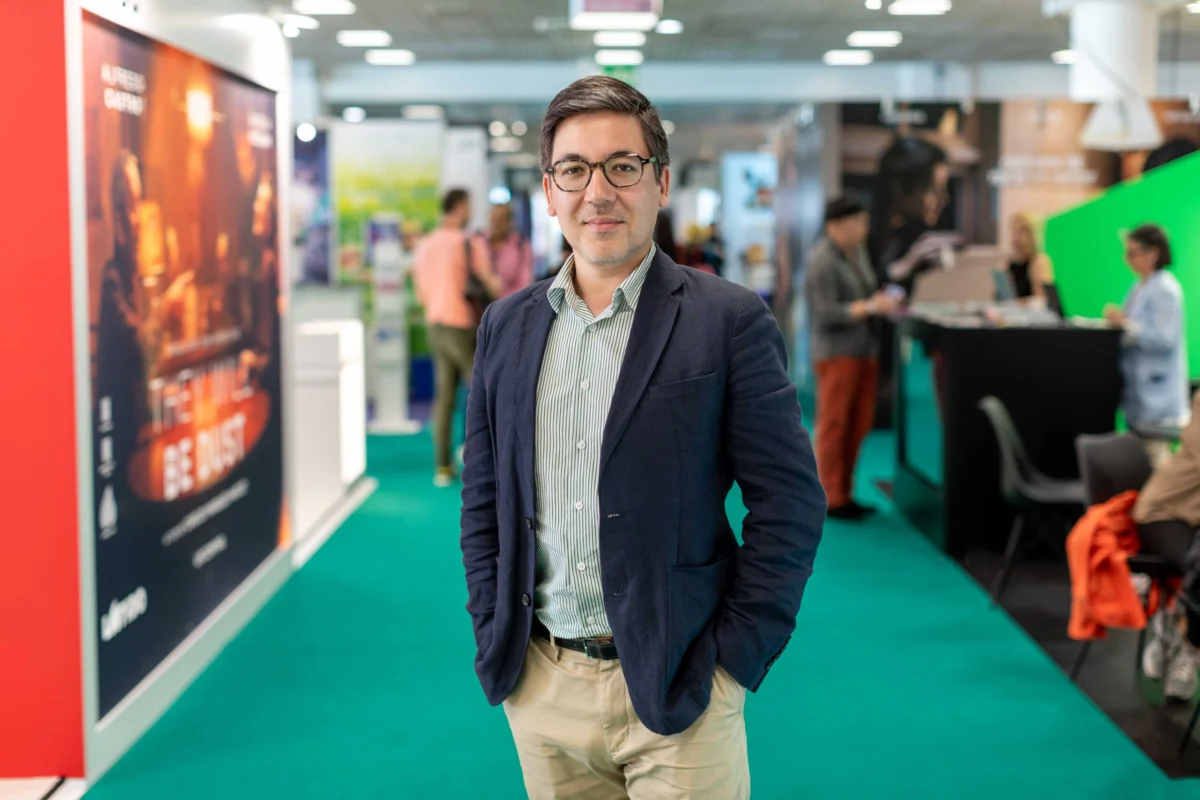
Guillaume Esmiol, the Executive Director of the Marché du Film, is orchestrating a fundamental shift in how the world’s most prestigious film market operates, moving away from a purely transactional trade show toward a comprehensive hub for innovation, technology, and cross-industry collaboration. Since assuming sole leadership of the market in 2023, following a transitional period as co-director with his predecessor Jérôme Paillard, Esmiol has leveraged his background in digital media and venture capital to modernize an institution that has been the bedrock of the international film trade since 1959. By integrating the "creator economy," artificial intelligence (AI), and private equity into the core of the Cannes experience, Esmiol is positioning the Marché du Film as a vital laboratory for the future of entertainment.
A New Leadership Paradigm: From Traditional Sales to Tech Innovation
The transition in leadership at the Marché du Film represents more than a change in personnel; it reflects a broader evolution in the global media landscape. Unlike many of his predecessors who climbed the ranks of traditional international film sales, Esmiol’s professional pedigree is rooted in business development and digital transformation. His early career at the French television network TF1 focused on digital media innovation, followed by a tenure at Wefound, a corporate startup studio. This experience in "start-up culture" and financial technology has directly influenced his stewardship of the market.
Under Esmiol’s direction, the Marché has been conceptualized as a tripartite ecosystem. The first pillar remains the traditional market of film sales, characterized by physical booths, screening rooms, and the high-stakes networking between sales agents and distributors. The second pillar focuses on the development and financing of new projects, providing a platform for producers to secure equity and international partners. The third, and perhaps most transformative pillar, is what Esmiol calls the "market of knowledge." This involves a massive expansion of the event’s programming, which now includes over 250 panels, conferences, and summits designed to address the most pressing technological and economic shifts in the industry.
The 2026 Strategic Focus: AI for Talent and Responsible Innovation
As the 2026 edition of the Marché du Film approaches, the integration of artificial intelligence remains the most significant and contentious topic on the agenda. Esmiol has adopted a pragmatic approach to the technology, acknowledging the widespread anxieties regarding intellectual property (IP) and job displacement while highlighting its potential as a creative tool. Rather than hosting a generic "AI Summit," the 2026 market will feature the "AI for Talent Summit," a branding choice intended to emphasize the technology’s role in enhancing, rather than replacing, human creativity.
Key highlights of this programming include a high-profile dialogue between James Manyika, Senior VP of Research, Technology & Society at Google-Alphabet, and acclaimed filmmaker Darren Aronofsky. This session is designed to showcase concrete use cases of AI in high-end film production, moving the conversation beyond theoretical debate toward practical application. The summit will also include representatives from leading tech firms such as Nvidia and OpenAI, as well as academic leaders like Guillaume Duchemin of La Fémis, France’s premier film school. By bringing together tech giants and creative purists, Esmiol aims to demystify the technology and foster a framework for "Responsible AI" that respects authorial rights.
Bridging the Gap: The Creator Economy and Traditional Distribution
A landmark addition to the Marché du Film under Esmiol’s tenure is the formal inclusion of the "creator economy." This sector, often viewed as separate from the world of prestige cinema, is increasingly overlapping with traditional theatrical distribution. Esmiol points to several recent success stories as evidence that digital-first creators can drive significant theatrical revenue and reach younger demographics that have been elusive for traditional distributors.
One such example is the French documentary Kaizen, which follows YouTube personality Inoxtag’s journey to climb Mount Everest. Distributed by MK2—a company known for its commitment to auteur cinema—the film achieved record-breaking numbers in French theaters, demonstrating the power of a creator’s community to translate into box office success. Similarly, the American creator Markiplier (Mark Fischbach) produced and self-distributed the film Iron Lung, which reportedly generated substantial global interest and revenue without the backing of a major studio. The Marché’s 2026 programming will explore these "bridges," focusing on how film producers can source talent from digital platforms and how creators can utilize their existing communities for film marketing and promotion.
Improving the "Net Promoter Score" and Market Fluidity
Beyond the thematic expansions, Esmiol has implemented a data-driven approach to measuring the success of the Marché du Film. Since his arrival, the organization has utilized the Net Promoter Score (NPS), a common business metric that measures participant satisfaction and loyalty. The results indicate a significant upward trajectory in the market’s perceived value: after Esmiol’s first year, the NPS stood at approximately 10. By 2025, that score had climbed to 33, reflecting a substantial improvement in the "user experience" of the market.
The physical and logistical experience of Cannes—a city that becomes notoriously congested during the festival—has been a primary focus of Esmiol’s operational reforms. Recognizing that "ten minutes lost can mean an opportunity missed," the Marché has worked to reduce "friction" in business operations. This includes:
- Streamlined Access: Improving the flow of attendees into the Palais des Festivals.
- Flexible Screenings: Modernizing the scheduling and organization of film screenings to accommodate a more fast-paced buying environment.
- Buyer-Centric Initiatives: Tailoring services specifically for high-level acquisitions executives to ensure they can navigate the 16,000 registered professionals and 40,000 total festival attendees with maximum efficiency.
Regulatory Debates and the Global Perspective
The Marché du Film also serves as a critical arena for international regulatory discussions. As different regions adopt varying approaches to AI and digital copyright, Cannes provides a neutral ground for these perspectives to collide. The 2026 edition will see a significant presence from the European Commission and the European Parliament, both of which are organizing events within the market to discuss the European Union’s robust regulatory framework for AI and IP protection.
Esmiol notes that the market is uniquely international, bringing together American, European, and Asian visions of the industry’s future. By hosting startups that are developing new technologies for defending authorial rights, the Marché is positioning itself not just as a place to sell films, but as a place to define the legal and ethical standards of the modern film industry.
Economic Context and the Post-COVID Landscape
The evolution of the Marché occurs against a backdrop of ongoing economic challenges for the global film industry. While the market has returned to record-breaking attendance levels, the global box office has not fully recovered to pre-COVID-19 levels in several key territories. This has created a bifurcated market where some distributors are operating with more caution, finding it difficult to pay the high premiums for independent films that were common a decade ago.
Esmiol’s strategy is to mitigate these economic headwinds by diversifying the revenue streams and partnership opportunities available at the market. By incorporating private equity and venture capital discussions, the Marché is helping producers find alternative financing models in a world where traditional pre-sales and distribution advances may be harder to secure.
Conclusion: The Laboratory of New Business Models
As Guillaume Esmiol looks toward the future, he envisions the Marché du Film as more than just a trade fair; he sees it as a "laboratory for new business models." Drawing inspiration from the history of computer-generated animation, he cites the example of Pixar. Before the success of Toy Story, many in the industry were skeptical of 3D animation’s creative and commercial viability. Esmiol suggests that the "Pixar of the AI era" may currently be a startup pitching in the basement of the Palais des Festivals.
The Marché du Film’s success under Esmiol’s watch will ultimately be judged by its ability to remain the undisputed leader in film sales while successfully navigating the disruptive forces of the 21st century. By embracing the "market of knowledge" and fostering a space where technology and tradition coexist, Esmiol is ensuring that Cannes remains the indispensable heart of the global film industry, regardless of how the medium is produced, distributed, or consumed.