The Narrative Convergence of History and Fantasy
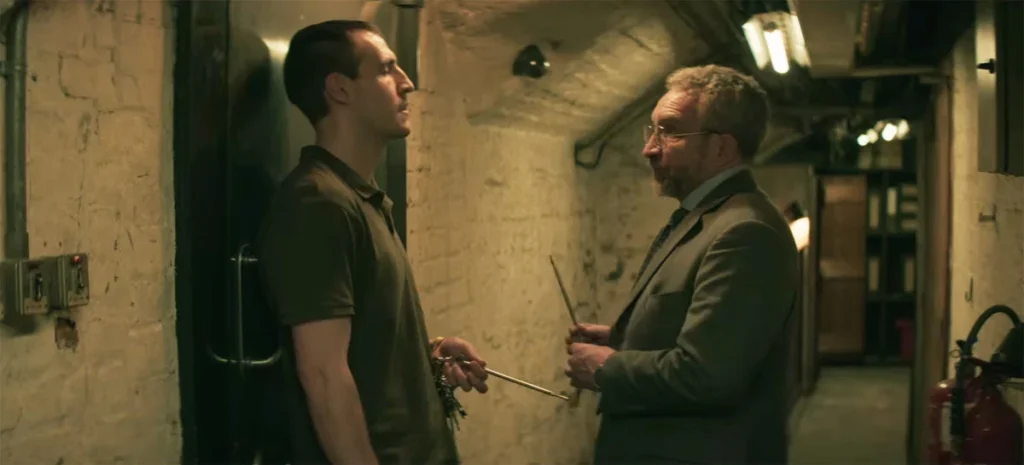
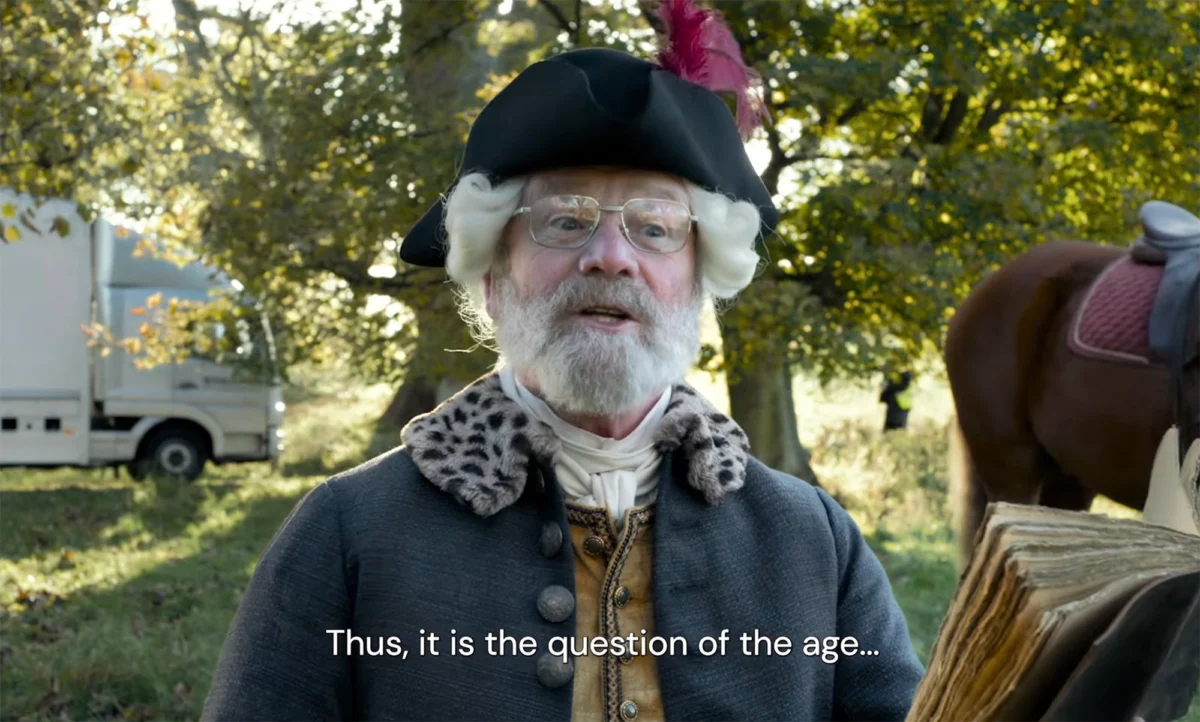
At the heart of the film is the character of Kenneth, portrayed by Peter Mullan, a BAFTA-nominated actor known for his gritty and deeply human performances. Kenneth serves as a tour guide in Arberloch, a quiet Scottish village that claims the 18th-century inventor and philosopher Sir Douglas Weatherford as its most famous resident. Kenneth’s dedication to the role goes beyond mere employment; he treats Weatherford as a direct ancestor, delivering flamboyant, theatrical tours that serve as the bedrock of his personal identity.
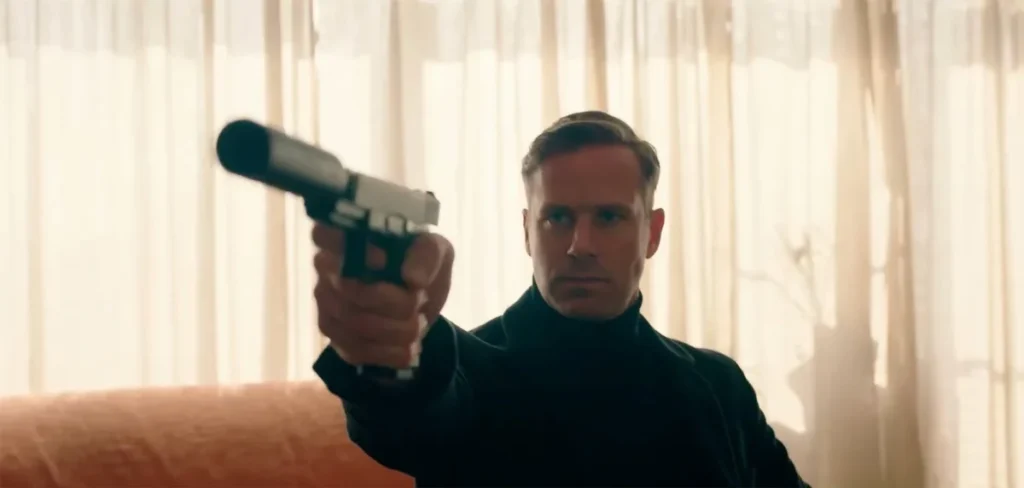
The stability of Kenneth’s world is shattered when a major television network selects Arberloch as the primary filming location for a big-budget fantasy series titled The White Stag of Emberfell. The show, a transparent riff on global phenomena like Game of Thrones or House of the Dragon, brings with it a wave of exuberant fans, high-tech production equipment, and a level of financial investment that the village has never seen. As the village pivots to accommodate the needs of the television crew, the actual history of Sir Douglas Weatherford is sidelined in favor of the fictional lore of Emberfell.
The conflict escalates as Kenneth develops an obsession with the show’s lead actor, leading to a psychological and social downward spiral. This collapse is observed through the eyes of his daughter, Anna (Gayle Rankin), providing a grounded, emotional counterpoint to Kenneth’s increasingly erratic behavior. The film effectively uses this premise to examine the friction between authentic historical preservation and the lucrative, yet often shallow, allure of pop-culture tourism.
Casting and Character Archetypes
The casting of Peter Mullan is central to the film’s gravitas. Mullan, whose career spans decades with highlights such as My Name is Joe, Tyrannosaur, and roles in major franchises like Westworld and Harry Potter, brings a blend of vulnerability and intensity to the role of Kenneth. His ability to navigate the line between comedy and tragedy is essential for a character study that risks becoming farcical without a strong emotional anchor.

Joining Mullan is Gayle Rankin, an actress who has gained international acclaim for her roles in GLOW and House of the Dragon. Her presence in a film that satirizes high-fantasy television is a meta-textual layer that adds depth to the production. The supporting cast includes Jakob Oftebro, a prominent Scandinavian actor known for Kon-Tiki and Hamilton, Sid Sagar, and Lewis MacDougall, the young breakout star of A Monster Calls. This ensemble represents a mix of established veteran talent and rising international stars, reflecting the film’s ambition to reach an audience beyond the Scottish borders.
A Critical Journey Through the 2026 Festival Circuit
The trajectory of The Fall of Sir Douglas Weatherford throughout 2026 has been marked by critical acclaim and strategic festival placements. The film made its world premiere at the Rotterdam International Film Festival (IFFR) in early 2026. Rotterdam is historically known for championing bold, auteur-driven cinema, making it an ideal launchpad for Seán Dunn’s feature debut.
Following its success in the Netherlands, the film traveled to the Göteborg Film Festival in Sweden, the leading film festival in the Nordic region. Its inclusion there highlighted the film’s appeal to Northern European sensibilities, which often appreciate the dry, dark humor inherent in Scottish cinema. Most recently, the film was screened at the San Francisco Film Festival, marking its introduction to North American critics. While a formal U.S. theatrical release date has yet to be finalized, the reception in San Francisco suggests a strong potential for domestic distribution in the coming months.
Socio-Economic Context: The ‘Screen Tourism’ Phenomenon in Scotland
To understand the stakes of the film, one must look at the real-world impact of "screen tourism" or "set-jetting" on the Scottish economy and culture. Over the last decade, Scotland has become a premier destination for major film and television productions, most notably the Starz series Outlander. According to data from VisitScotland, locations featured in prominent productions often see a dramatic surge in visitor numbers. For instance, Doune Castle reported a nearly 200% increase in visitors following its appearance as Castle Leoch in Outlander.
While this brings significant revenue to rural areas—estimated to be worth hundreds of millions of pounds annually to the Scottish economy—it also creates a "disneyfication" effect. Local historical narratives are often overshadowed by the fictional stories told on screen. The Fall of Sir Douglas Weatherford serves as a satirical response to this trend. It highlights the displacement of local residents and the psychological toll on those who feel their actual history is being erased by a more "marketable" version of the past.

The fictional show within the film, The White Stag of Emberfell, represents the generic high-fantasy aesthetic that has dominated the streaming landscape. By contrasting Kenneth’s meticulously researched (if slightly eccentric) tours with the garish costumes and artificial drama of the TV production, Dunn critiques a world where commercial viability is the ultimate arbiter of cultural value.
Mubi’s Strategic Distribution and Global Outlook
Mubi, the global distributor and streaming service known for its curated selection of independent and world cinema, has secured the UK rights for the film. Mubi’s involvement is a significant indicator of the film’s artistic quality. In recent years, Mubi has expanded from a streaming platform into a powerhouse of theatrical distribution, handling acclaimed titles such as Decision to Leave and Aftersun.
The decision to release The Fall of Sir Douglas Weatherford in UK cinemas on June 12, 2026, positions it as a sophisticated counter-programming option to the traditional summer blockbusters. Industry analysts suggest that Mubi is leveraging the "Scottish Noir" and dark comedy niches that have historically performed well both domestically and in the international arthouse market. The lack of a confirmed U.S. date is common for films of this scale, as distributors often wait to gauge the UK box office performance and additional festival feedback before committing to a North American rollout.
Production Background and Creative Pedigree
The film is the result of a collaborative effort between several prominent production entities. Seán Dunn, the writer and director, previously gained recognition for his short films, which showcased a penchant for uncomfortable humor and sharp social observation. His transition to feature films was supported by producers Alex Polunin, Scott Macaulay, and Jennifer Monks.
Scott Macaulay, in particular, is a well-known figure in the independent film world as the co-founder of Forensic Films and the editor of Filmmaker magazine. His involvement suggests a production that prioritizes creative integrity and a distinct directorial voice. The production values, as seen in the trailer, suggest a high level of craftsmanship, particularly in the costume design which must distinguish between the "authentic" 18th-century attire of Kenneth and the "exuberant" fantasy costumes of the Emberfell fans.

Timeline of Development and Release
The development of The Fall of Sir Douglas Weatherford follows a standard timeline for a high-profile independent production:
- 2024-2025: Principal photography took place on location in Scotland, capturing the authentic landscape that serves as the film’s backdrop.
- Late 2025: The film entered post-production, with Seán Dunn working alongside editors to fine-tune the film’s specific comedic timing.
- January 2026: World Premiere at the Rotterdam International Film Festival.
- February 2026: Nordic premiere at the Göteborg Film Festival.
- April 2026: North American premiere at the San Francisco Film Festival.
- May 14, 2026: Mubi officially unveils the first UK trailer, sparking widespread digital engagement.
- June 12, 2026: Scheduled theatrical release across the United Kingdom.
Broader Impact and Implications for Scottish Cinema
The release of The Fall of Sir Douglas Weatherford comes at a time when Scottish cinema is experiencing a period of introspection. Following the global success of films like Aftersun and the continued growth of the Scottish production sector, there is an increasing desire to tell stories that are uniquely Scottish but possess universal themes.
Dunn’s film contributes to this by moving away from the "kailyard" tradition—a sentimentalized version of Scottish life—and instead embracing a more cynical, modern reality. It addresses the identity crisis of a nation that is often viewed through a lens of myth and legend by outsiders. By centering the story on a man who is literally replaced by a fantasy, the film asks difficult questions about who owns history and what happens when the past is no longer profitable.
As June 12 approaches, the industry will be watching closely to see if Kenneth’s tragicomic downfall resonates with the public. If the festival reception is any indication, The Fall of Sir Douglas Weatherford is set to be a definitive entry in the 2026 cinematic calendar, offering a sharp, necessary look at the intersection of heritage, ego, and the modern entertainment machine.