The global animation community has turned its attention toward the 2026 Cannes Film Festival following the release of the first teaser trailer for Viva Carmen, the latest feature from acclaimed French filmmaker Sébastien Laudenbach. Known for his distinct visual language and hand-painted aesthetic, Laudenbach’s new project is scheduled to make its world premiere in the prestigious Directors’ Fortnight (Quinzaine des Cinéastes) sidebar. This selection underscores the film’s artistic merit, placing it among a curated group of works recognized for their visionary storytelling and formal innovation. Simultaneously, the film is slated for a high-profile screening at the Annecy International Animation Film Festival, further solidifying its status as one of the most anticipated European animated features of the year.
Set against the vibrant and gritty backdrop of Seville, Spain, in the mid-19th century, Viva Carmen reimagines the legendary figure of Carmen through a lens of youth, rebellion, and destiny. The film, also titled Carmen, l’oiseau rebelle in its native French, marks a significant collaboration between Laudenbach and co-writer Santiago Otheguy. Produced by a consortium of industry veterans including Damien Brunner and Sarah Delmas, the film is positioned as a cornerstone of French animation’s 2026 slate, with a domestic theatrical release scheduled for October 2026.
Narrative Architecture and Historical Context
The story of Viva Carmen unfolds in 1845 Seville, a city depicted as a "pulsating town of sailors and small-time crooks." At the center of the narrative is Salvador, a 13-year-old boy serving as an assistant to Antonio, a master knife grinder. The film introduces a mystical element to the historical setting: Antonio possesses the ability to glimpse the future within the reflections of the blades he sharpens. When Antonio foresees a tragic end for Carmen—a 20-year-old gypsy woman celebrated for her independent spirit and mesmerizing voice—Salvador takes it upon himself to intervene.

Returning to Seville after a three-year absence, Salvador is captivated by Carmen’s refusal to conform to the societal constraints of the era. Upon learning of the omen—which predicts her death at the hands of a soldier named José—Salvador recruits a band of "misfit street kids" to challenge the threads of fate. Led by the spirited Belén, this group of children navigates the dangerous back alleys of Andalusia to protect a woman who represents the ultimate ideal of freedom. By shifting the perspective of the classic Carmen myth to a group of children, Laudenbach explores themes of agency, the weight of destiny, and the innocence of those who refuse to accept the "inevitable."
The Artistic Legacy of Sébastien Laudenbach
Sébastien Laudenbach has established himself as a singular voice in contemporary animation, largely by eschewing the polished, standardized look of major studio CGI in favor of expressive, artisanal techniques. His 2016 feature, The Girl Without Hands (La Jeune Fille sans mains), was widely praised for its minimalist, calligraphic style, where characters were often rendered with incomplete lines, leaving the viewer’s imagination to fill in the gaps.
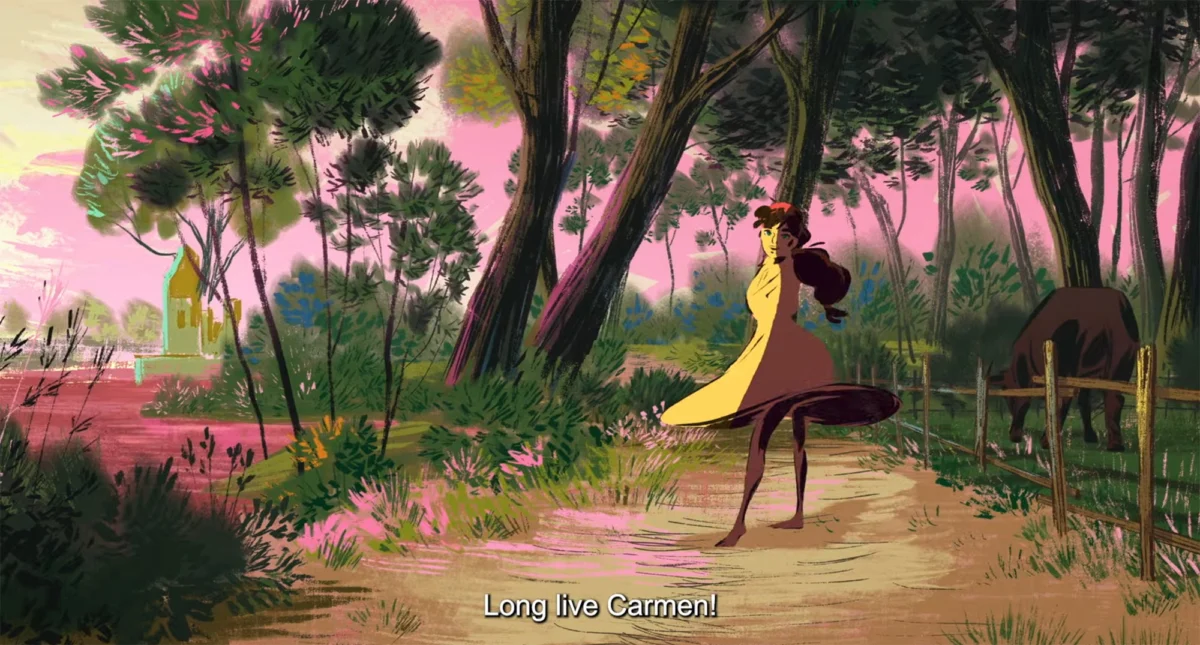
This trajectory continued with the award-winning Chicken for Linda! (Saules aveugles, femme endormie), a film that utilized bold color palettes and fluid movement to convey deep emotional resonance. Viva Carmen appears to be an evolution of this "hand-painted" philosophy. The teaser trailer reveals a world saturated with color, where the heat of Andalusia and the passion of the characters are reflected in the very texture of the frames. Critics and industry analysts note that Laudenbach’s work represents a broader movement in European animation toward "adult-leaning" or "all-ages artistic" features that prioritize visual poetry over commercial homogeneity.
Vocal Performances and Character Dynamics
The production has assembled a notable cast of French talent to bring the characters to life. Camélia Jordana, a celebrated singer and actress known for her roles in Love Affair(s) and The Things We Say, The Things We Do, provides the voice for Carmen. Jordana’s background in music is particularly relevant given the character’s operatic roots and the film’s emphasis on her "fascinating voice."

Joining her is Milo Machado-Graner, who gained international recognition for his breakout performance in the Academy Award-winning Anatomy of a Fall. His involvement highlights the film’s high profile within the French film industry. The supporting cast includes Soumaye Bocoum and Carl Malapa, providing a mix of established presence and rising talent. These performances are expected to anchor the film’s stylized visuals in grounded, emotional reality, particularly in the interactions between the street-wise children and the doomed protagonist.
Adaptation of Bizet’s Masterpiece
Viva Carmen is explicitly based on the opera by Georges Bizet, which itself was adapted from Prosper Mérimée’s 1845 novella. Bizet’s Carmen is one of the most performed works in the global operatic repertoire, famous for its themes of jealousy, passion, and the tragic intersection of different social classes. However, Laudenbach’s adaptation appears to diverge from traditional interpretations by centering the narrative on the children of Seville.
By focusing on the "street kids" as the primary agents of the plot, the film reframes Carmen not just as a femme fatale or a victim of romantic obsession, but as a symbol of liberty worth saving. This narrative pivot allows the film to engage with the source material’s darker themes—such as the omen of death and the violence of the soldier José—while maintaining a sense of adventure and camaraderie suitable for the animation medium.
Production Insights and Technical Execution
The film is produced by Folivari, a production company with a reputation for high-quality, artistically driven animation, including works like Ernest & Celestine and The Big Bad Fox and Other Tales. The involvement of producers Damien Brunner and Pablo Jordi suggests a robust production infrastructure capable of supporting Laudenbach’s demanding visual style.

The technical execution of Viva Carmen involves a sophisticated blend of traditional 2D techniques and modern digital compositing, designed to maintain the "painted" look of each frame. Unlike the rigid structures of 3D modeling, this approach allows for a more organic sense of movement, where the environment and the characters feel as though they are part of a singular, living canvas. This method is notoriously labor-intensive but results in a visual product that stands in stark contrast to the output of Hollywood’s major animation houses.
Festival Significance and Market Outlook
The selection of Viva Carmen for the Directors’ Fortnight at Cannes is a significant indicator of its quality. Historically, the Quinzaine has been a launching pad for filmmakers who challenge cinematic conventions. For an animated film to secure a spot in this section, it must demonstrate a level of directorial vision that transcends the "family entertainment" label.
Furthermore, the film’s presence at Annecy—the world’s premier animation festival—positions it for critical acclaim within the specialized animation community. The dual presence at Cannes and Annecy creates a powerful marketing "pincer movement," generating buzz among general cinephiles and animation enthusiasts alike.
Market analysts suggest that Viva Carmen is well-positioned for international distribution, particularly in territories with a strong appetite for independent cinema and high-end animation, such as Japan, South Korea, and North America. While a U.S. release date has not yet been finalized, the film’s pedigree makes it a likely candidate for acquisition by boutique distributors like GKIDS or Neon, who have a history of championing French animated features.

Chronology of Development and Release
The journey of Viva Carmen from concept to the Cannes screen reflects the typical multi-year cycle of high-end independent animation:
- 2023-2024: Script development and early visual development by Sébastien Laudenbach and Santiago Otheguy.
- Late 2024: Production begins at Folivari and partner studios, with a focus on the hand-painted background art and character animation.
- 2025: Vocal recording sessions with Camélia Jordana and the primary cast; integration of the musical score.
- May 2026: World premiere at the 79th Cannes Film Festival (Directors’ Fortnight).
- June 2026: Competitive screening at the Annecy International Animation Film Festival.
- October 2026: Wide theatrical release across France.
Broader Implications for the Animation Industry
The emergence of Viva Carmen is emblematic of a "Golden Age" of French animation. France currently stands as the leading producer of animation in Europe and the third-largest in the world. Films like Viva Carmen benefit from a sophisticated system of public subsidies (via the CNC) and a culture that views animation as a legitimate art form for all ages.
The success of Laudenbach’s previous films has proven that there is a global audience for non-traditional animation. By tackling a subject as weighty and culturally significant as Carmen, Laudenbach is pushing the boundaries of what the medium can achieve. If Viva Carmen meets the high expectations set by its teaser and festival placement, it could further pave the way for more experimental, director-driven animated features to find space in the global theatrical market.
The film’s focus on "warding off the threat hanging over Carmen" serves as a metaphor for the preservation of artistic freedom in an increasingly consolidated media landscape. As the industry watches the reception of Viva Carmen at Cannes, the film stands as a testament to the enduring power of hand-drawn storytelling and the timeless appeal of a rebellious spirit.