The film Altered States, released in 1980 and directed by Ken Russell, stands as a cinematic exploration of consciousness, drug-induced hallucinations, and the blurred lines between scientific inquiry and personal odyssey. While the film is credited to screenwriter Paddy Chayefsky under the pseudonym Sidney Aaron, its genesis is deeply rooted in the groundbreaking, and often controversial, research of Dr. John C. Lilly during the mid-20th century. Starring William Hurt as the obsessive scientist Edward Jessup, alongside Blair Brown, Bob Balaban, and Charles Haid, the film grapples with themes that resonate with the counterculture and scientific exploration of the 1960s and 1970s, particularly the pursuit of expanded consciousness through sensory deprivation and psychoactive substances.
The narrative of Altered States draws a direct parallel to the scientific endeavors of John C. Lilly, a neuroscientist and psychoanalyst who gained notoriety for his work with dolphins and his pioneering use of isolation tanks. Lilly’s research, much like Jessup’s fictionalized journey, delved into the potential of the human mind when freed from external stimuli and augmented by pharmacological agents. This pursuit of altered states of consciousness was not an isolated phenomenon; it emerged during a period of intense cultural and scientific ferment, marked by figures like Timothy Leary, who championed the exploration of psychedelics for personal and spiritual growth.
The Scientific Underpinnings: John C. Lilly and the Pursuit of Consciousness
John C. Lilly’s scientific career was characterized by an insatiable curiosity about the nature of consciousness, communication, and the potential for interspecies understanding. His early work at the National Institute of Mental Health (NIMH) in the 1950s focused on isolating the human brain from external sensory input. This led to the development of the first isolation tank, a flotation-REST (Restricted Environmental Stimulation Therapy) device that submerges an individual in a dark, silent, and temperature-controlled environment. Lilly himself was an early subject, reporting profound experiences of sensory dissolution and altered perceptions.
Lilly’s research later expanded to include cetaceans, most notably bottlenose dolphins. He was fascinated by their intelligence and vocalizations, believing they possessed a complex language that humans could potentially decipher. His experiments, often funded by grants from organizations like the NIMH and later through his own foundation, involved teaching dolphins English and attempting to learn their communication methods. A particularly infamous aspect of his research involved administering LSD to dolphins, a practice that raised significant ethical questions and contributed to his growing reputation as a maverick scientist.
One of Lilly’s most striking experiments involved enlisting Margaret Howe Lovatt to live in isolation with a dolphin named Alta for two and a half months in 1965. The goal was to foster a closer bond and facilitate communication. The experiment became notorious not only for its scientific ambition but also for the intimate nature of the human-dolphin interaction, which, as documented in later accounts, included sexual encounters between Lovatt and Alta. This aspect, while not directly depicted in Altered States, underscores the boundary-pushing and often ethically ambiguous nature of Lilly’s investigations into consciousness and interspecies relations.
The Counterculture and Psychedelic Exploration
Parallel to Lilly’s work, the 1960s witnessed a burgeoning counterculture movement that embraced psychoactive substances as tools for expanding consciousness and challenging societal norms. Timothy Leary, a Harvard psychologist, became a leading figure in this movement. His research into the therapeutic and consciousness-expanding properties of psilocybin mushrooms, initiated after a trip to Mexico in 1960, led to the controversial "Good Friday Experiment" in 1962. In this experiment, Leary and his colleague Richard Alpert (later Ram Dass) administered psilocybin to divinity students, observing its effects on religious and mystical experiences.
The Harvard psilocybin research was eventually shut down due to a confluence of factors, including concerns about research methodology, potential coercion of student participants, and a broader societal panic surrounding drug use. This period culminated in the Controlled Substances Act of 1970 and the initiation of the War on Drugs, which led to the widespread criminalization of psychedelics. However, in recent years, there has been a resurgence of interest in the therapeutic potential of psilocybin, leading to decriminalization efforts and further scientific investigation.
Paddy Chayefsky’s Vision: From Screenwriter to Novelist to Disavowed Film
The screenplay for Altered States was penned by Paddy Chayefsky, a highly respected screenwriter known for his incisive social commentary and complex characters. His previous work, Network (1976), a scathing satire of the television industry, had earned him his third Academy Award and cemented his reputation for tackling profound societal and psychological themes. It was during the development of Network that Chayefsky began to immerse himself in the research and cultural milieu of figures like Lilly and Leary.
Chayefsky’s interest in their work led him to conceptualize Altered States. He first developed the narrative into a novel, published in 1978, which served as a precursor to the screenplay. The novel provided a detailed canvas for his exploration of Jessup’s descent into extreme states of consciousness. Chayefsky was known for demanding significant creative control over his projects, a stance that continued with Altered States. This included stipulations that directors could not alter his dialogue and that he would be present on set during filming.
The Tumultuous Production: Director Disputes and Creative Clashes
The path to bringing Altered States to the screen was fraught with creative conflict. Sidney Lumet, the director of Network, was initially considered for Altered States but declined the offer. Arthur Penn, acclaimed for Bonnie and Clyde, was then brought on board. Penn cast the then-unknown William Hurt in the pivotal role of Edward Jessup. However, significant disagreements between Penn and Chayefsky over creative direction led to Penn’s departure from the project. Penn expressed frustration with Chayefsky’s intervention in areas beyond the script, stating, "for him to veto what I was doing, or to intervene in areas where he wasn’t knowledgeable or even competent, was wrong."
Following Penn’s exit, a series of directors were approached before Ken Russell, a British director known for his flamboyant and often controversial style, was ultimately chosen. Russell’s filmography included the critically lauded Women in Love (1969), the banned religious thriller The Devils (1971), and the rock opera adaptation Tommy (1975). On paper, Russell’s penchant for the surreal and visually striking seemed a suitable match for a film featuring psychedelic sequences and dense academic dialogue.
However, the collaboration between Russell and Chayefsky proved disastrous. From their initial meetings, it was clear they were fundamentally at odds. Russell reportedly called his wife immediately after meeting Chayefsky, declaring, "I can’t work with this man. He’s a complete egomaniac." His wife’s sardonic reply, "Then you should get on just fine," hinted at the stormy production to come.
Chayefsky’s friends largely blamed Russell for the on-set strife, particularly after Chayefsky’s death in 1981. However, accounts from those involved in the production suggest a more complex dynamic. Russell claimed Chayefsky was excessively controlling and nitpicky, citing disputes over paint colors for the isolation tank, lighting, and even the actors’ portrayal of mild intoxication. Chayefsky, in declining health at the time, eventually became so frustrated that Russell banned him from the set. Chayefsky attempted to have another director brought in, but the studio, unwilling to restart the lengthy search, refused.
Disavowal and Pseudonym: The Final Chapter of Chayefsky’s Career
The intense conflict led Chayefsky to disavow the film. This profound dissatisfaction is reflected in the screenplay credit: "Sidney Aaron," an alias derived from Chayefsky’s first and middle names. In early 1981, shortly after the film’s release, Chayefsky stated, "I haven’t seen the picture and I intend to go on not seeing the picture so that when people ask me what I think about it I can tell them I haven’t seen it." Altered States marked the final film Chayefsky wrote, and he passed away later that year.
The Plot: A Descent into Primal Existence
Despite the behind-the-scenes turmoil, Altered States presents a compelling narrative about Dr. Edward Jessup, a brilliant but egocentric scientist consumed by the desire to understand the fundamental nature of consciousness. Jessup’s research, mirroring Lilly’s and Leary’s explorations, involves prolonged sessions in a sensory deprivation tank, augmented by the use of psychoactive mushrooms, particularly following a ritualistic experience in Mexico. His relentless pursuit of self-discovery and expanded awareness strains his relationship with his wife, Emily (Blair Brown), and raises concerns among his colleagues, Arthur (Bob Balaban) and Mason (Charles Haid).
The film depicts Jessup’s increasing detachment from reality as his experiments begin to manifest physically and behaviorally. He experiences visions of primordial ancestral states, leading to a profound regression. The climax of his journey involves a transformation into a more primitive, ape-like creature, leading to a chaotic and violent night terrorizing the city of Boston. This transformation, notably, is portrayed by dancer Miguel Godreau, who dons the ape-man makeup, rather than William Hurt.
Two interesting casting notes add further layers to the film’s context: Blair Brown, who plays Emily Jessup, would later appear in the science fiction series Fringe, another show that explored consciousness and parallel realities. Furthermore, the film features a brief appearance by a young Drew Barrymore, marking her debut in the film industry.
Thematic Resonance: The Academic Psyche and the Search for Meaning
Chayefsky’s script masterfully captures and satirizes the self-important, jargon-laden discourse prevalent among academics deeply engrossed in their specialized fields. Edward Jessup is portrayed as an insufferable narcissist, perpetually turning conversations back to his own research and asserting his perceived higher level of awareness. His inability to truly listen to those around him, his casual infidelity with students, and his tantrum when his Mexican ritual fails to yield the expected revelations all contribute to his deeply flawed character.
This insufferability, however, makes Jessup a compelling figure. His scientifically unsound, medically unwise, and ethically questionable decisions stem from a genuine, albeit misguided, quest for the "origin of human consciousness." The film effectively visualizes his internal journeys, which gradually bleed into the external world, culminating in his ape-man rampage through Boston, a city purportedly teeming with wild dogs in the 1970s, a detail that adds a surreal, almost mythical, quality to the narrative.
Visual Spectacle and Philosophical Undercurrents
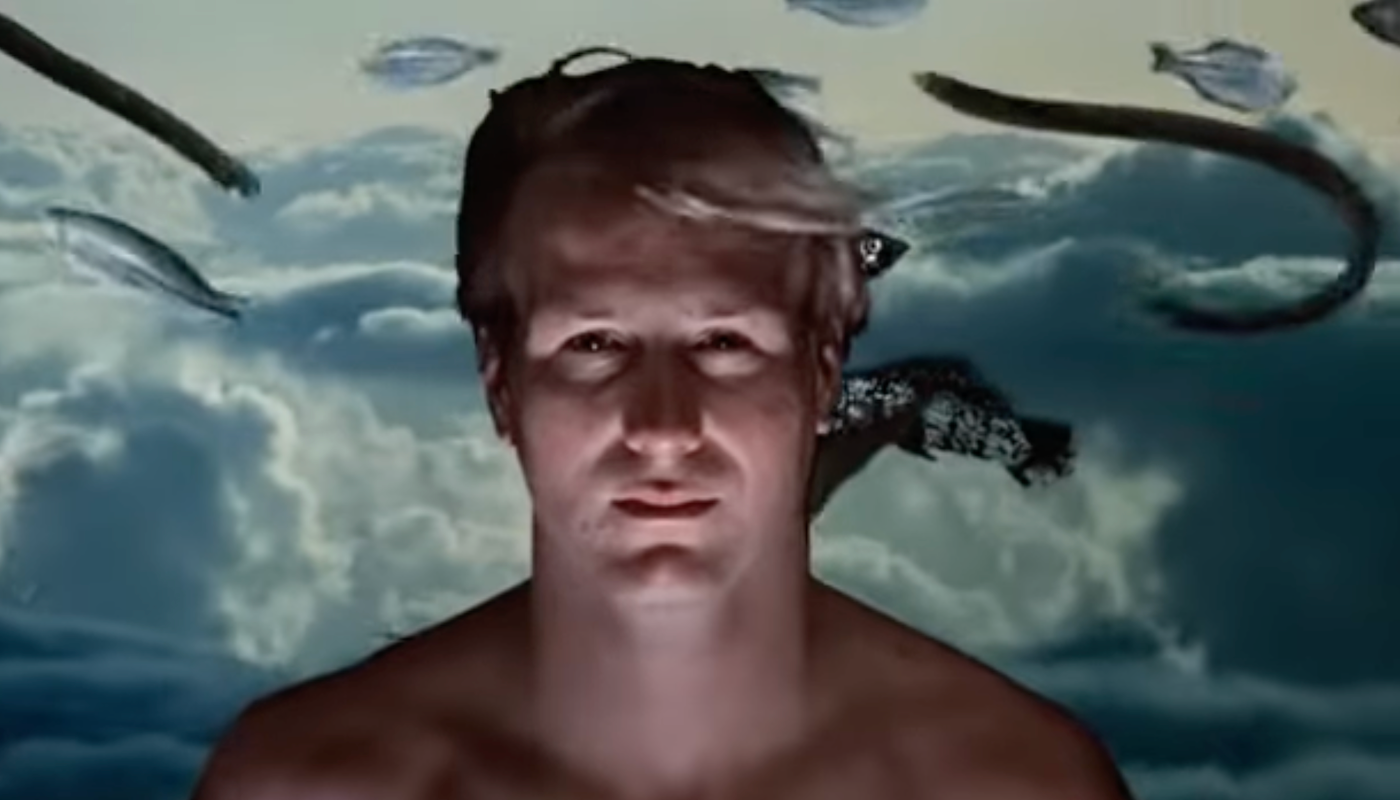
The visual representation of Jessup’s drug-induced hallucinations was a point of contention between Russell and Chayefsky. Russell, in his distinctive style, opted for highly imaginative and often disturbing imagery, including the now-iconic seven-eyed Jesus goat, a visual metaphor for the transgression and spiritual upheaval Jessup experiences. While Chayefsky may have envisioned more abstract representations, Russell’s visceral approach effectively translated the intangible into tangible, albeit unsettling, cinematic moments.
Film critic Jessica Kiang, in a 2025 essay for the Criterion Collection, described Altered States as "a dippy, delirious Rube Goldberg machine" that "walks a tightrope between pretentious self-seriousness and outrageous flippancy." This duality captures the film’s essence: it is simultaneously deeply serious in its philosophical inquiries and wildly, almost comically, unhinged in its execution. The clash of Chayefsky’s dense, intellectual script with Russell’s maximalist visual style creates a unique cinematic experience.
While the film is visually striking and undeniably weird, its exploration of consciousness can sometimes feel overly "dippy," and the resolution, wherein Jessup learns to say "I love you," is arguably too neat. The trope of devolution, particularly the character devolving into more primordial forms, often evokes less profound comparisons, such as the infamous Star Trek: Voyager episode "Threshold," which can detract from the film’s intended gravitas.
Ultimately, Altered States leaves the audience contemplating the elusive nature of truth and the human drive for meaning. As Emily Jessup wisely observes early in the film, "You’d sell your soul to find the great truth. Well, human life doesn’t have great truths." Yet, the film posits that human life does offer peculiar and thought-provoking cinematic experiences, and in its own bizarre way, Altered States provides just that.
The Legacy and Broader Implications
The story behind Altered States is as fascinating as the film itself, highlighting the complex interplay between scientific ambition, cultural shifts, and the often-fraught process of filmmaking. John C. Lilly’s pioneering, albeit controversial, research into consciousness and communication laid the groundwork for a narrative that explored the depths of the human mind. Paddy Chayefsky’s intellectual rigor and Ken Russell’s visual audacity, despite their personal animosity, coalesced into a film that remains a singular entry in the science fiction and psychological thriller genres.
The film’s enduring appeal lies in its willingness to confront uncomfortable questions about the nature of reality, the limits of scientific inquiry, and the potentially perilous quest for ultimate truth. Altered States serves as a potent reminder of a period when the boundaries of human consciousness were being actively explored, both in laboratories and on the silver screen, leaving a legacy that continues to provoke discussion and analysis.
Looking Ahead: From Consciousness to the Uncanny
Next week, the exploration of the human psyche takes a darker turn with a shift from consciousness-expanding pharmaceuticals to mind-controlling hypnotism. We will delve into Robert Wiene’s Expressionist classic, The Cabinet of Dr. Caligari. This seminal film, over a century old and in the public domain in the U.S., can be readily found online, including numerous uploads on YouTube and the Internet Archive.