Red River Métis director Tim Riedel’s debut feature, Ancestral Beasts, which garnered attention with its World Premiere at the 2026 Fantasia Film Festival following its earlier appearance at the 2025 Cannes Film Festival as a Frontières Platform Project, presents a compelling yet ultimately unfulfilled promise. The film, which delves into the complexities of intergenerational trauma within Indigenous communities in rural Canada, benefits from a talented production team and an undeniably singular thematic approach. However, despite its laudable intentions and the clear personal connection director Riedel has to the subject matter, Ancestral Beasts struggles to transcend the well-worn tropes of the haunted house genre, leaving a lingering sense of missed opportunity.
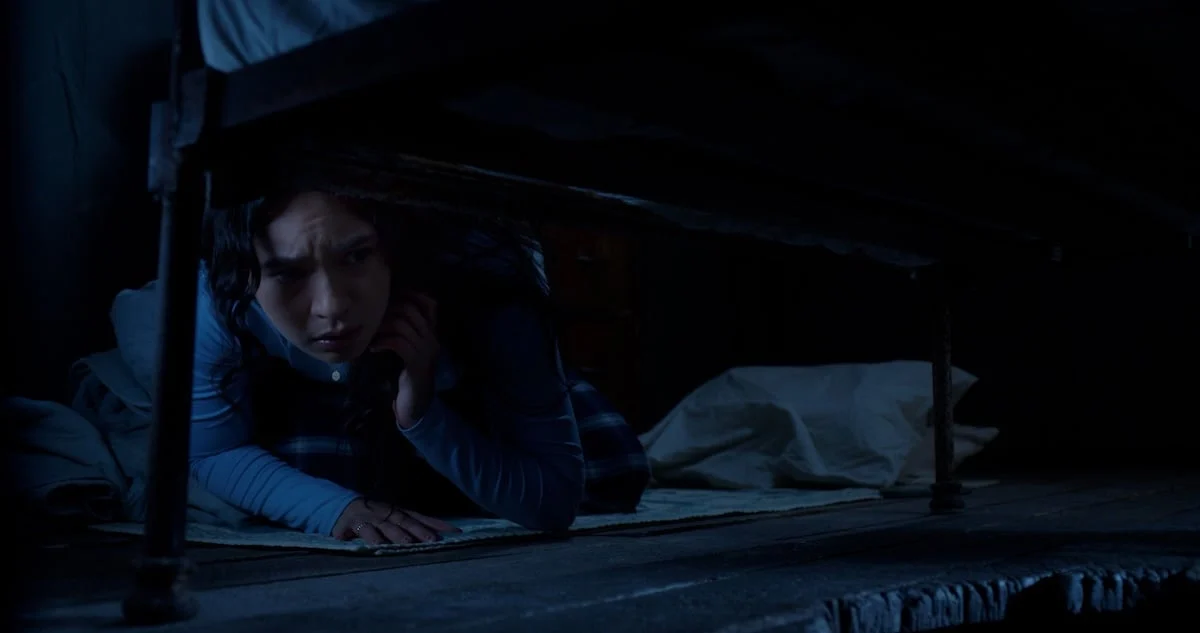
The film centers on Elyse, portrayed by Morgon Homstrom, a young woman grappling with profound grief and mental distress following the off-screen death of her mother. Seeking solace and a respite from her struggles, Elyse retreats to her aunt’s secluded rural cabin. It is here, amidst the quiet isolation, that she begins to experience increasingly disturbing supernatural phenomena, suggesting a sinister presence has taken root within the very walls of the home. This premise, while familiar, offers a fertile ground for exploring the psychological and spiritual burdens that can be passed down through generations.
Thematic Resonance and Genre Conventions
Ancestral Beasts endeavors to weave a narrative that speaks to the enduring impact of historical injustices and the challenges faced by Indigenous peoples in confronting their past. The film’s opening prologue, a stark and bloody depiction of Elyse’s mother’s demise, immediately establishes a tone of dread and hints at the supernatural forces at play. As Elyse navigates her grief and the unsettling occurrences in the cabin, the film attempts to connect these personal struggles with broader themes of ancestral trauma.
However, the execution of these themes is where the film falters. While Riedel demonstrates a genuine passion for the material, evidenced by his personal connection to the subject, the narrative often feels constrained by conventional horror filmmaking. The film’s unique elements, which could have offered a fresh perspective on the genre, are frequently subsumed by a predictable haunted house structure. This results in a disjointed viewing experience where moments of genuine thematic depth are diluted by formulaic scares and underdeveloped plot points.
The character of Elyse, while given a central role, often serves more as a conduit for the film’s thematic exploration than a fully realized individual. Homstrom’s performance, while earnest, is frequently hampered by dialogue that is overtly focused on trauma, leading to a character who feels more like a symbolic representation of historical suffering than a relatable human being. The film’s insistence on literalizing certain emotional arcs, such as the strained dynamic between Elyse and her sister Nikki (Darla Contois), further detracts from the potential for nuanced character development. Nikki’s nickname, “She Devil,” and the explicit depiction of her maternal support for Elyse, while intended to underscore their familial bond, are presented in a manner that lacks subtlety, leaving little room for audience interpretation.
Narrative Inconsistencies and Pacing Issues
The pacing of Ancestral Beasts proves to be another significant hurdle. The horror elements are introduced gradually, but the film struggles to build sustained tension. Instead, it opts for a scattershot approach, introducing a multitude of disparate genre elements that fail to coalesce into a cohesive whole. The inclusion of various family members, a gym owner with romantic intentions, and a stereotypical creepy neighbor, culled from the playbook of classic horror filmmakers like Tobe Hooper, adds to the sense of narrative clutter.
The film’s eventual shift towards an Indigenous interpretation of The Babadook is perhaps its most ambitious, yet ultimately most disappointing, pivot. While The Babadook succeeded in its visceral and psychological portrayal of grief and depression through a tangible monster, Ancestral Beasts replaces that tactile horror with a digital representation of mental illness. This choice, while intended to be innovative, results in a less impactful and less resonant portrayal of the film’s central themes.
The Weight of Representation and the Future of Indigenous Horror
![‘Ancestral Beasts’ Review: Promising Debut That Never Takes Off [Fantasia]](https://www.dreadcentral.com/wp-content/uploads/2026/05/ANCESTRAL-BEASTS.jpg)
Horror, as a genre, has a long-standing tradition of exploring the darker aspects of human history and the psyche. Ancestral Beasts attempts to leverage this tradition by incorporating elements of Indigenous storytelling and acknowledging the profound historical context of its setting. The deliberate inclusion of a land acknowledgment at the beginning of Elyse’s podcast, which is featured throughout the film, underscores this intention.
However, the film’s reliance on tired trauma-horror tropes, which felt dated even at the start of the decade, undermines its potential for groundbreaking commentary. While the centering of mental health within horror is a valid and important endeavor, Ancestral Beasts often resorts to an overly didactic approach. The inclusion of an “unbelievably stilted” therapy scene, as described by critics, further exemplifies this issue, opting for exposition over emotional resonance.
The film’s cinematography, by Joey Forte, is noted for its washed-out aesthetic, which, while perhaps intended to evoke a sense of melancholy, ultimately contributes to a visually uninspired presentation. Similarly, Justine Delorme’s score is described as nondescript, failing to elevate the film’s emotional impact or enhance its atmospheric dread.
Critical Reception and Future Prospects
Despite its shortcomings, Ancestral Beasts is not entirely without merit. The film’s well-intentioned exploration of Indigenous trauma and its ambition to tell a story deeply rooted in cultural experience deserve recognition. The presence of a strong ensemble cast, including Homstrom and Contois, who strive to bring depth to their roles despite the script’s limitations, is a testament to the talent involved.
The film’s journey from the Frontières Platform at Cannes to the Fantasia Film Festival highlights the growing interest in diverse voices and narratives within the horror landscape. However, the critical consensus suggests that Ancestral Beasts falls short of its potential, offering a familiar haunted house narrative that overshadows its more unique thematic elements.
Analysis of Implications
The reception of Ancestral Beasts raises important questions about the future of Indigenous horror filmmaking. While there is a clear appetite for stories that explore the intersection of Indigenous culture, history, and the supernatural, the challenge lies in finding innovative ways to present these narratives that move beyond established genre conventions. The film’s struggles suggest that a deep understanding of cultural context must be coupled with a bold and original approach to storytelling to truly resonate with audiences.
The film’s reliance on what are described as “dusty old cobwebs of horror’s seminal haunted houses” indicates a need for filmmakers to critically examine how historical trauma is depicted within genre frameworks. The effectiveness of such portrayals often hinges on authenticity, nuance, and a departure from cliché.
Furthermore, the film’s performance issues, attributed to stilted dialogue and a lack of emotional depth, underscore the importance of strong screenwriting in bringing complex themes to life. Even with a talented cast and a compelling premise, a weak script can ultimately undermine a film’s impact.
The broader implications of Ancestral Beasts point to a crucial juncture for Indigenous filmmakers within the horror genre. There is immense potential for these voices to offer fresh perspectives and challenge existing tropes. However, achieving this requires a delicate balance between honoring tradition, engaging with contemporary issues, and pushing the boundaries of cinematic expression. The hope, as expressed by many in the film community, is that directors like Tim Riedel will continue to refine their craft and, in future projects, tap into their unique storytelling voices without recourse to the genre’s more familiar, and at times tiresome, conventions. The current landscape of horror is indeed a fertile ground for experimentation and diverse storytelling, and the success of future Indigenous horror films will depend on their ability to navigate this space with both authenticity and innovation.