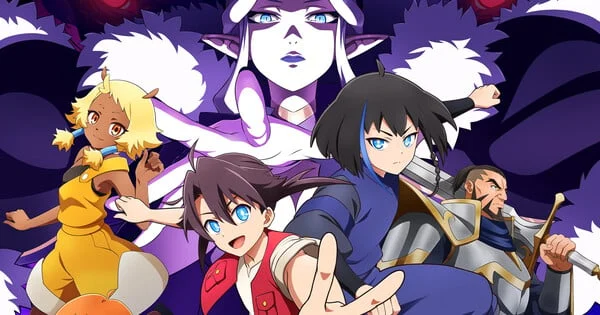
The production, which bridges the creative sensibilities of European animation and the technical prowess of the Japanese industry, has been building steady momentum since its initial unveiling. By securing a prime-time slot on Tokyo MX, Ankama is positioning this fantasy epic to compete within the crowded autumn anime season, leveraging both its unique international pedigree and a seasoned veteran production team.
New Character Additions and Visual Reveals
In a midweek update, the project’s official website confirmed that voice actress Risa Hayamizu has joined the cast to portray Mama Caroni. Within the narrative framework, Mama Caroni serves as the adoptive mother and foundational culinary mentor to the protagonist, Welsh. This casting choice is expected to add a layer of emotional grounding to the series, as the relationship between Welsh and his mentor is pivotal to his personal growth before his departure into the wider world.
Alongside the new casting announcement, the studio provided high-resolution character visuals for two previously confirmed roles. Wataru Takagi will voice Khan Karkass, described as a hero hailing from Bonta who functions as a vital companion to Welsh and his party. The visual design for Khan Karkass emphasizes his rugged, adventurous archetype, fitting for a character tasked with guiding the protagonists through their perilous journey.

Additionally, the production released the character design for Azalar, portrayed by veteran voice actor Show Hayami. Azalar is depicted as the most formidable dragon in the series, serving as a primary looming antagonist. The character design for Azalar suggests a significant level of menace and scale, aligning with the narrative stakes established by the show’s central conflict.
Narrative Context and World-Building
The story of Aoki Densho Welsh & Shedar is a classic tale of converging destinies. It follows two youths from disparate backgrounds: Welsh, a simple country boy, and Shedar, a prince destined for the throne. Despite their differing social standing, their paths are drawn together by a singular, urgent mission: to dismantle a tyrant’s expansive plot to conquer their world.
The thematic core of the series appears to revolve around the juxtaposition of the "commoner" experience versus the "royal" burden. By focusing on the interplay between these two characters, Ankama aims to provide a commentary on leadership and societal duty, framed within a high-fantasy aesthetic that has become a hallmark of the studio’s previous digital and gaming ventures.
Production and Creative Leadership
The anime is being helmed by director Naoki Horiuchi, a professional with an extensive portfolio of episode direction for notable titles such as Kingdom (Season 2), Black Clover, and the critically acclaimed Vivy -Fluorite Eye’s Song-. Horiuchi is working under the banner of Studio Massket, which is managing both the animation production and the background art design.

The creative team includes several industry veterans tasked with establishing the show’s visual and auditory identity:
- Character Design and Chief Animation Direction: Saori Nakashiki, known for her work on Sasaki and Peeps and Tales of Wedding Rings, is leading the character design department. She is supported by chief animation directors Yoshiaki Tsubata and Yuki Ikeda.
- Artistic Direction: Eri Suzuki serves as the color key artist, while Lucas Cisterne, who gained recognition for his 3D CG work on The Weakest Tamer Began a Journey to Pick Up Trash, is overseeing the art setting.
- Audio Production: Sound direction is under the supervision of Jun Watanabe at TO Books. The musical score is a collaboration between composers Pierre-Jean Beaudoin and Jose Pavli, promising a distinct auditory landscape for the series.
- Scripting and Storytelling: The original story outline and scripts are credited to Tot, with Kenichi Yamashita handling the series scripts for the Japanese version. Takuya Imakado, recognized for his monster designs in The Weakest Tamer Began a Journey to Pick Up Trash, serves as the series’ monster designer.
Music and Promotional Strategy
A major component of the show’s promotional strategy involves its musical identity. The theme song, "Bokura no Mirai e" (To Our Future), will be performed by the celebrated duo of Hironobu Kageyama and Masami Okui. Kageyama, a titan of the anime music industry, will also perform the ending theme, titled "Omelette." Furthermore, the insert song "I’m in you" will feature a collaboration between Kageyama and KUKO. The inclusion of such high-profile musical talent suggests that Ankama is aiming for a broad demographic reach, tapping into the nostalgia and popularity of these performers to anchor the show’s reception.
Chronology and Broadcasting Details
The journey toward the October 2 premiere has been calculated and methodical. Ankama first introduced the project to the public in September 2026, followed by a series of incremental updates regarding the staff and cast. The release of the main trailer on September 24 provided the first substantial look at the animation quality and the tone of the series, which helped drive significant engagement across social media platforms.
The series is set to premiere on Tokyo MX at 9:25 p.m. JST (8:25 a.m. EDT). This time slot is traditionally reserved for high-priority late-night programming, signaling that the network and the producers have high expectations for the show’s performance among domestic Japanese audiences.

Broader Impact and Industry Implications
The emergence of Ankama—a company primarily known for the DOFUS tactical MMORPG and its diverse publishing arm—as a producer of original Japanese television anime is a notable development in the globalization of the medium. Ankama’s history as a French independent entertainment group provides them with a unique perspective, often blending Western narrative structures with the visual language of Japanese animation.
By publishing works like Atsushi Kaneko’s SOIL and Suguro Chayamachi’s Togainu no Chi in French, the company has long acted as a conduit between the Japanese manga industry and the European market. With Aoki Densho Welsh & Shedar, they are reversing this flow, establishing themselves as a primary creator rather than just a distributor.
The success of this project could serve as a case study for future international collaborations. As the global demand for anime continues to grow, studios are increasingly looking for ways to integrate talent from across borders without diluting the core elements that define the medium. If Aoki Densho Welsh & Shedar manages to capture a significant share of the audience, it may encourage other international companies to invest in domestic Japanese production pipelines.
From a production standpoint, the reliance on Studio Massket, combined with the seasoned expertise of Horiuchi and the veteran status of the voice cast, indicates that Ankama is taking a risk-mitigation approach to their first major original anime. By surrounding a fresh narrative concept with proven industry hands, they are creating a product that fits comfortably within the aesthetic expectations of current fans while attempting to offer a distinct, international flair.

As the industry moves toward a more interconnected global market, the performance of this series will likely be analyzed for its ability to transcend cultural barriers. The integration of high-stakes fantasy, a robust supporting cast of characters, and an established production team provides the necessary framework for a successful long-term franchise. Whether or not the series can sustain its momentum beyond the initial premiere will depend on the strength of its narrative arc and its ability to distinguish itself in an increasingly competitive landscape.