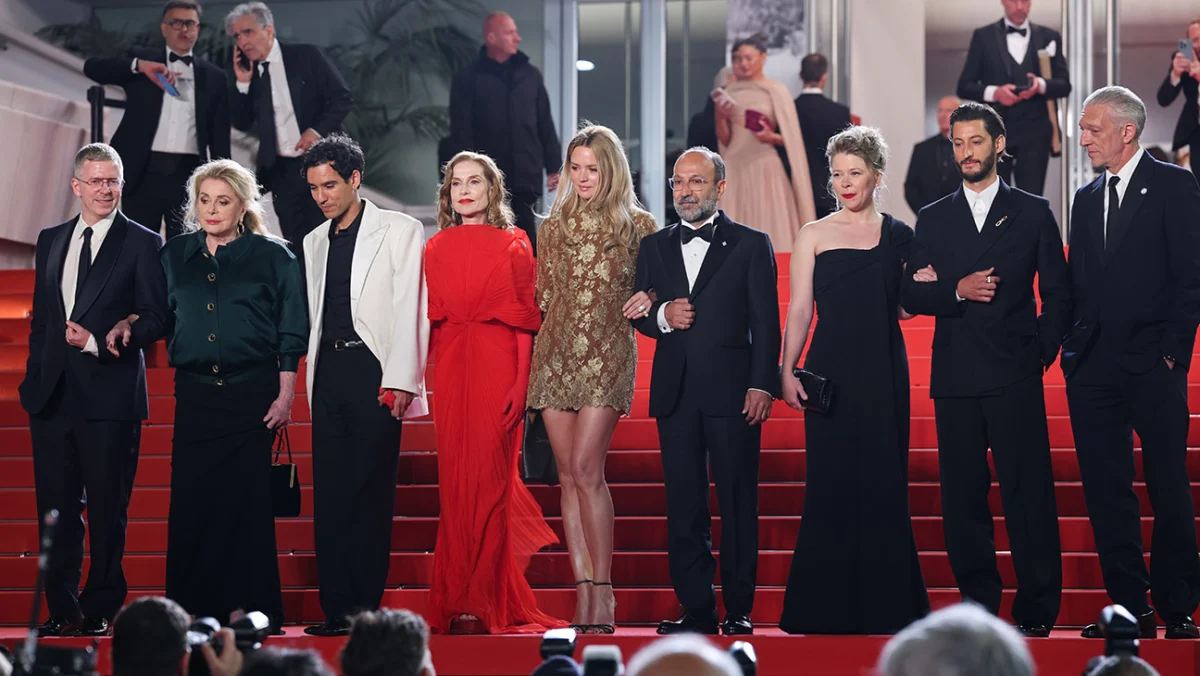
The illustrious Grand Théâtre Lumière at the Cannes Film Festival bore witness on Thursday night to the world premiere of Parallel Tales, the latest cinematic endeavor from Iranian auteur Asghar Farhadi. Known globally for his intricate dramas and profound explorations of human morality, Farhadi is a two-time recipient of the Best International Feature Oscar for A Separation (2011) and The Salesman (2016), and a two-time laureate at Cannes, securing prizes for The Salesman (Best Screenplay, Best Actor) and A Hero (Grand Prix in 2021). His new French-language drama, positioned within the highly competitive official selection at this year’s festival, emerged from its inaugural screening to a five-minute standing ovation – a response that, by Cannes’s often effusive standards, was generally perceived as polite rather than overwhelmingly enthusiastic.
The Cannes Premiere and Initial Critical Response
The anticipation surrounding a new Farhadi film at Cannes is invariably high. The festival, a global epicenter for arthouse cinema, often serves as a crucial launchpad for films seeking international recognition and distribution. For a director of Farhadi’s stature, a premiere in the Grand Théâtre Lumière, the festival’s most prestigious venue, signifies a major event on the cinematic calendar. The Thursday night screening, concluding around 11 p.m. local time, marked Parallel Tales‘s formal introduction to the global film community. While a five-minute ovation might seem substantial in many contexts, the specific ecosystem of Cannes premieres often sees films lauded with significantly longer, sometimes ten to fifteen-minute, standing ovations, particularly for highly anticipated works or those that resonate deeply with the initial audience. This measured applause for Parallel Tales suggested a more nuanced reception, a sentiment that was soon echoed in early critical assessments. David Rooney, chief film critic for The Hollywood Reporter, in his immediate review, pointed to a narrative that became "meandering and arduous" over its two-hour-and-twenty-minute runtime, leading to a palpable sense of exhaustion among many attendees by the time the credits rolled.
Asghar Farhadi: An Evolving Master’s Journey
Asghar Farhadi has carved a distinct and revered niche in contemporary world cinema. His films are characterized by their deeply moralistic undertones, exploring complex ethical dilemmas within the fabric of everyday life, often centered on domestic conflicts that expose broader societal tensions. His meticulous crafting of narratives, which frequently employ multiple perspectives and withhold crucial information to challenge audience perception, has earned him comparisons to cinematic masters who delve into the human condition with unflinching honesty.
His breakthrough came with A Separation in 2011, a film that garnered universal critical acclaim and secured the Academy Award for Best International Feature, making history as the first Iranian film to win the coveted prize. This powerful drama, examining the breakdown of a marriage amidst a custody dispute and a legal battle, resonated globally for its nuanced portrayal of class, religion, and justice. Five years later, Farhadi repeated this triumph with The Salesman (2016), a film that also won Best Screenplay and Best Actor (for Shahab Hosseini) at the Cannes Film Festival before its Oscar victory. The Salesman‘s win was particularly notable, occurring during a period of heightened geopolitical tension and serving as a symbolic statement against discriminatory policies. More recently, A Hero (2021), a compelling story of a man imprisoned for debt and the viral media frenzy that ensues around his apparent act of kindness, further solidified Farhadi’s standing by earning the Grand Prix at Cannes, the festival’s second-highest honor.
Parallel Tales represents a continuation, and perhaps an evolution, of Farhadi’s exploration of human nature, but also a strategic shift in his creative output. While he has previously ventured into French-language cinema with The Past (2013), a critically acclaimed drama starring Bérénice Bejo and Tahar Rahim, and an international co-production with Everybody Knows (2018) starring Penélope Cruz and Javier Bardem, this new project signals a deeper immersion into European narrative traditions through adaptation. This transition to a French-language production, featuring a prominent European cast, demonstrates Farhadi’s ambition to transcend national cinematic boundaries and engage with a wider array of cultural and artistic influences, while still imbuing his work with his signature thematic concerns.
The Genesis of Parallel Tales: Adapting a Masterpiece
The most intriguing aspect of Parallel Tales lies in its source material: an adaptation by Farhadi and his brother, Saeed Farhadi, from a chapter of Krzysztof Kieślowski’s monumental 10-part project for Polish television, Dekalog (1989-1990). Kieślowski’s Dekalog is widely regarded as one of the most significant achievements in television and cinematic history. Comprising ten one-hour films, each loosely inspired by one of the Ten Commandments, it delves into the moral and ethical dilemmas faced by residents of a Warsaw housing estate. Kieślowski’s series is celebrated for its profound philosophical depth, psychological realism, and its ability to explore universal questions of fate, free will, guilt, and love with remarkable subtlety and humanism. The series established Kieślowski as a master of moral inquiry, influencing generations of filmmakers with its contemplative style and rich thematic tapestry.
To adapt a work of such revered status presents both an immense opportunity and a significant challenge. Farhadi’s decision to tackle a segment of Dekalog speaks to his admiration for Kieślowski and a perceived thematic alignment between their artistic sensibilities. Both directors are renowned for dissecting the complexities of human behavior, the consequences of choices, and the often-blurry lines between right and wrong. The original article highlights that Parallel Tales is "a study in voyeurism and the sometimes blurry line between fantasy and reality," themes that are not only central to Kieślowski’s Dekalog but also frequently appear in Farhadi’s own filmography. For instance, the way truth is perceived and manipulated, or the subjective nature of reality, are recurring motifs in films like A Separation and A Hero. This adaptation, therefore, represents a fascinating cross-cultural and cross-generational dialogue between two cinematic giants, each grappling with the enduring questions of human existence. The collaborative writing process with his brother, Saeed, likely facilitated a rigorous approach to translating Kieślowski’s profound narrative into a contemporary French context, while preserving the ethical core of the original.
The All-Star French Ensemble
Adding considerable weight and artistic credibility to Parallel Tales is its distinguished French-language cast, featuring some of Europe’s most celebrated actors. The ensemble includes Isabelle Huppert, Virginie Efira, Vincent Cassel, and a cameo from the legendary Catherine Deneuve.
Isabelle Huppert is an icon of French cinema, known for her fearless performances and extraordinary range. With over 120 film credits, she has cultivated a career marked by collaborations with visionary directors from around the world, earning numerous accolades including two César Awards for Best Actress, a BAFTA Award, and nominations for an Academy Award. Her frequent presence at Cannes, often with multiple films in competition, solidifies her status as a festival favorite and a standard-bearer for European arthouse cinema. Her involvement in Parallel Tales immediately signals a film of significant artistic ambition.
Virginie Efira, while a more recent entrant into the pantheon of leading French dramatic actresses, has rapidly ascended to prominence. Her performances in films like Sibyl (2019) and Benedetta (2021) have showcased her versatility and powerful screen presence, earning her a César Award for Best Actress. Her inclusion alongside more established names speaks to her growing influence and critical acclaim.
Vincent Cassel is another internationally recognized French actor, renowned for his intense performances and charismatic screen presence. With a career spanning decades and roles in both French and Hollywood productions (e.g., La Haine, Ocean’s Twelve, Black Swan), Cassel brings a compelling gravitas to any project. His ability to embody complex, often morally ambiguous characters makes him a natural fit for Farhadi’s thematic landscape.
Even in a "small role," the presence of Catherine Deneuve, a living legend of French cinema, is a significant draw. Her career, spanning over six decades, includes collaborations with masters like Luis Buñuel and Jacques Demy, and her iconic status lends an undeniable prestige to the film. The collective talent of this cast ensures that, regardless of narrative pacing, the performances themselves would be of the highest caliber, a point affirmed by the initial review noting that "all of whom do fine work." The ability to attract such a caliber of talent underscores the enduring international respect for Asghar Farhadi’s directorial vision.
Critical Appraisal and Audience Experience
While the initial reception at Cannes was polite, the critical appraisal from The Hollywood Reporter highlights potential areas of concern for Parallel Tales. David Rooney’s description of the film becoming "meandering and arduous" over its two-hour-and-twenty-minute runtime suggests issues with pacing and narrative cohesion. Farhadi’s films are typically taut and meticulously structured, with every plot point serving a purpose in unraveling moral dilemmas. A criticism of meandering indicates a departure from this established strength, potentially leading to a diluted impact of the film’s core themes.
The experience of a late-night premiere at Cannes further amplifies the effects of such narrative pacing. After a long day of screenings, press conferences, and industry events, audience fatigue can set in. If a film struggles to maintain engagement, particularly one exploring complex psychological and moral terrain, the impact of its duration becomes more pronounced. The observation that "many audience members were drained" by the 11 p.m. conclusion is a telling indicator of the film’s ability to sustain its grip. In the high-stakes environment of Cannes, where films are often vying for awards and lucrative distribution deals, the initial critical buzz plays a crucial role. A mixed reception, even for a director of Farhadi’s stature, can temper expectations and influence its trajectory in the global market. While critical opinions can vary widely across different outlets, The Hollywood Reporter‘s review provides an early barometer of the film’s initial impact.
Distribution Challenges and Market Implications
Adding to the nuanced picture of Parallel Tales‘s launch is its distribution strategy. The film was released concurrently in French theaters with its Cannes unveiling, a common tactic designed to capitalize on the immediate buzz generated by a major festival premiere. This "day-and-date" release in the film’s primary production territory allows distributors to leverage the media attention and critical discussion while the film is fresh in the public consciousness, potentially boosting early box office returns in France.
However, the film’s journey beyond its home market faces a significant hurdle: it is "still seeking U.S. distribution." The American market presents unique challenges for foreign-language films. Despite a growing appetite for international cinema among discerning audiences, securing widespread theatrical release and significant commercial success often requires strong critical acclaim, major festival awards, and a dedicated distributor willing to invest heavily in marketing and promotion. Films that receive a less-than-rapturous reception at prestigious festivals like Cannes may find it more difficult to attract robust U.S. distribution deals, especially if the critical consensus suggests narrative or pacing issues.
The absence of a U.S. distributor at the time of its Cannes premiere could impact Parallel Tales‘s potential awards season run in the United States, including eligibility for the Best International Feature Oscar. While a director of Farhadi’s pedigree certainly commands attention, a distributor is crucial for navigating the complex campaigns required for awards consideration. The film’s commercial viability outside of France will heavily depend on how subsequent international reviews balance the weight of Farhadi’s name and the acclaimed cast against the initial criticisms regarding its narrative flow. Its ability to secure a U.S. release will be a key indicator of its broader market appeal and critical endurance.
In conclusion, Asghar Farhadi’s Parallel Tales arrives at Cannes as a highly anticipated entry from a celebrated director, featuring an impressive international cast and a compelling literary lineage. Its premiere, while respectful, has been met with a more reserved critical reception than some of Farhadi’s previous triumphs. The film’s thematic depth, its bold adaptation of Kieślowski, and the caliber of its performers remain undeniable strengths. However, the early feedback on its pacing and the ongoing search for U.S. distribution suggest that Parallel Tales faces a complex path ahead as it navigates the competitive landscape of international cinema, prompting a wider discussion on the evolving nature of critical reception and market dynamics for esteemed foreign-language films.