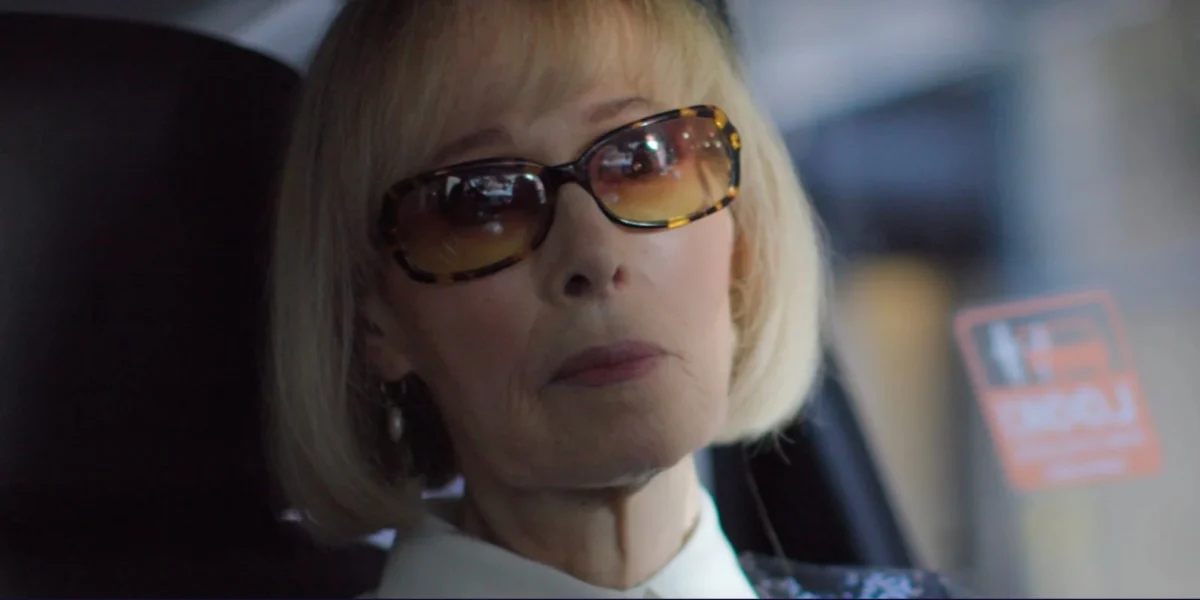
The documentary film Ask E. Jean, directed by Ivy Meeropol, offers a comprehensive yet nuanced examination of Elizabeth Jean Carroll, the long-standing Elle magazine advice columnist who transitioned from a prominent media figure to a central protagonist in one of the most high-profile legal battles in modern American history. While Carroll has become a household name due to her successful litigation against former President Donald Trump, Meeropol’s film seeks to contextualize Carroll’s recent legal victories within the broader framework of her decades-long career in "gonzo" journalism and her evolution as a public intellectual. The 91-minute documentary, written by Meeropol alongside Leah Goudsmit and Ferne Pearlstein, navigates the complexities of a woman who spent years advising others on their lives before being forced to defend the integrity of her own.
The Professional Evolution of E. Jean Carroll
Before her name was synonymous with legal precedents, E. Jean Carroll established herself as a formidable force in the New York media landscape. Emerging in the 1970s and 80s, Carroll adopted a "gonzo" style of journalism—a subjective, immersive approach popularized by figures like Hunter S. Thompson. The documentary highlights Carroll’s fearless pursuit of stories, which often saw her inserting herself into unconventional environments to provide readers with visceral, first-person accounts of the American experience.
Among the archival highlights featured in the film are Carroll’s dispatches from her time spent with Hunter S. Thompson and a notable segment where she persuaded the notoriously urban-centric writer Fran Lebowitz to go camping. These anecdotes serve as a testament to Carroll’s persuasive personality and her willingness to challenge the social norms of the era. Her career was defined by a restless curiosity, leading her to diverse assignments ranging from writing for Saturday Night Live to investigating the social dynamics of Ivy League fraternities.
In 1993, Carroll launched her "Ask E. Jean" column in Elle magazine, which would run for 27 years, becoming the longest-running advice column in American publishing history. The documentary explores how Carroll used this platform to champion female independence, encouraging women to prioritize their education, careers, and personal autonomy over traditional societal expectations. However, Meeropol does not shy away from the contradictions in Carroll’s earlier work, noting that her brand of empowerment often carried a "tough love" edge that, in retrospect, mirrored the less empathetic attitudes of the late 20th century regarding victims of harassment and assault.
Chronology of the Legal Proceedings Against Donald Trump
The latter half of the documentary focuses heavily on the events following June 2019, when Carroll published an excerpt from her book, What Do We Need Men For? A Modest Proposal, in New York magazine. In the excerpt, she alleged that Donald Trump had sexually assaulted her in a dressing room at the Bergdorf Goodman department store in the mid-1990s. The ensuing legal battle is presented not just as a news event, but as a transformative period for Carroll herself.
The legal timeline, as detailed through court records and the film’s narrative, includes several key milestones:
- November 2019: Carroll filed her first defamation lawsuit against Trump after he denied her allegations, stating she was "not his type" and accusing her of inventing the story to sell books.
- November 2022: Following the passage of the New York Adult Survivors Act—which created a one-year window for survivors of sexual assault to file civil suits regardless of the statute of limitations—Carroll filed a second lawsuit. This suit included a claim for battery as well as a new claim for defamation.
- May 2023: A federal jury in Manhattan found Trump liable for the sexual abuse and defamation of E. Jean Carroll, awarding her $5 million in damages.
- January 2024: A second jury trial focused on the original 2019 defamatory statements. This jury awarded Carroll a staggering $83.3 million in damages, consisting of $18.3 million in compensatory damages and $65 million in punitive damages.
The documentary provides a sobering look at the deposition process, where Carroll was subjected to aggressive questioning by Trump’s legal team. Meeropol uses these moments to illustrate the psychological toll of the "victim-blaming" rhetoric often employed in sexual assault cases, such as inquiries into what the victim was wearing or why they did not scream.
Statistical Data and Legal Significance
The financial judgments in Carroll’s favor represent some of the most significant awards in the history of American defamation law involving a public official. The $83.3 million award, in particular, was designed by the jury to serve as a deterrent, reflecting the scale of the disparagement Carroll faced on social media and international television.
Data regarding the impact of the Adult Survivors Act (ASA) shows that Carroll’s case was one of over 2,500 lawsuits filed during the one-year lookback window in New York. The success of her litigation has been cited by legal analysts as a landmark moment for the #MeToo movement, demonstrating that civil courts can provide a pathway for justice when criminal statutes of limitations have expired.
| Trial Phase | Verdict Date | Finding | Damages Awarded |
|---|---|---|---|
| Carroll II (Battery/Defamation) | May 9, 2023 | Liable for Sexual Abuse & Defamation | $5,000,000 |
| Carroll I (Defamation) | January 26, 2024 | Liable for Defamation | $83,300,000 |
| Total | $88,300,000 |
Official Responses and Public Reaction
The reaction to Carroll’s legal victories has been deeply polarized, reflecting the broader political divisions in the United States. Donald Trump has consistently maintained his innocence, frequently using his Truth Social platform to characterize the trials as "witch hunts" and "political hit jobs." His legal team continues to appeal the judgments, arguing that the damages are excessive and that the trials were conducted with judicial bias.
Conversely, Carroll’s legal team, led by attorney Roberta Kaplan, has framed the victories as a triumph of the rule of law. In public statements, Kaplan emphasized that "no one is above the law, not even a former president." Carroll herself has remained steadfast, stating in interviews that her goal was never purely financial but was instead focused on "getting her reputation back."
The documentary captures Carroll’s internal response to the public’s perception of her. She acknowledges her own past failings, specifically her previous dismissiveness toward other women who came forward with allegations of misconduct, such as Anita Hill and Paula Jones. This self-reflection is portrayed as a critical component of her growth, as she admits to the camera that she has had to unlearn the "suck it up" mentality that she once preached to her readers.
Analysis of Implications and Broader Impact
The implications of Ask E. Jean extend beyond the biography of a single journalist. The film serves as a case study on the changing nature of journalism and the shifting societal standards regarding sexual consent and accountability. By documenting Carroll’s transition from a writer who observed the world to a litigant who changed it, Meeropol highlights the power of the individual within the American judicial system.
One of the most significant takeaways from the documentary is the planned use of the settlement funds. Carroll has publicly stated her intention to use a portion of the $88.3 million—should it survive the appeals process—to establish a foundation dedicated to supporting women who have survived sexual assault and defamation. This move aligns with her career-long mission of advising and empowering women, albeit through a more direct and institutionalized method than her previous magazine columns.
From a technical standpoint, while the documentary has been criticized for its non-linear structure and occasional "jumpy" transitions—particularly regarding Carroll’s brief tenure at Saturday Night Live and her two marriages—it succeeds in humanizing a figure who has been largely reduced to a headline in recent years. By including footage of her cheerleading days in Indiana and her early television appearances, the film reminds viewers that Carroll’s identity was fully formed long before her encounter with Donald Trump.
Conclusion
Ask E. Jean is a vital document for understanding the intersection of celebrity, law, and gender politics in the 21st century. It portrays E. Jean Carroll not as a victim, but as a sophisticated and resilient professional who leveraged her own history to challenge one of the most powerful men in the world. As the legal appeals continue and the political landscape shifts, the film stands as a record of a pivotal moment in American culture, where the voice of an advice columnist was loud enough to hold a president accountable. For audiences, it provides a window into the life of a woman who, at the age of 80, continues to redefine what it means to be a "firecracker" in the public eye.