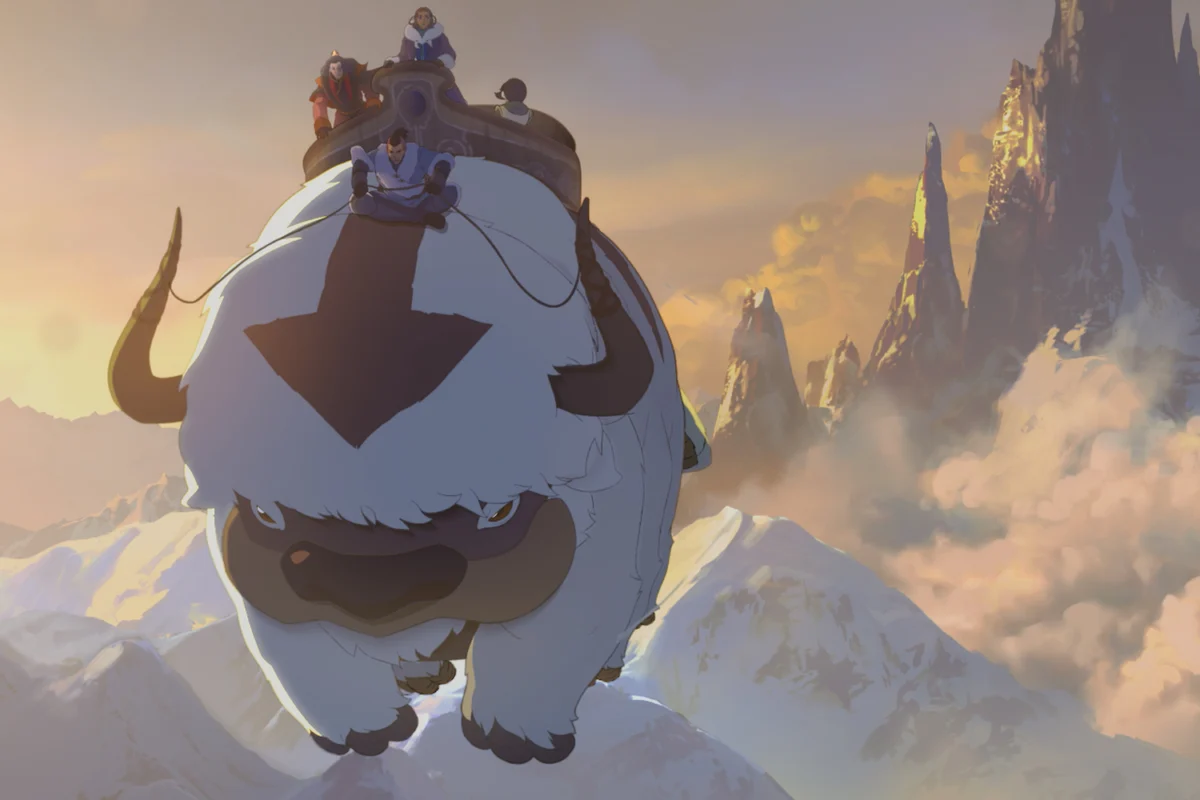
Fans of the beloved animated series Avatar: The Last Airbender in New York and Los Angeles have been granted a unique opportunity to experience the upcoming animated film, Avatar Aang: The Last Airbender, on the big screen. Paramount has announced a limited, one-week theatrical run for the film in select cinemas across these two major cities, commencing on July 24th and concluding on July 30th. This exclusive engagement will feature three daily showings at the AMC Burbank Town Center 6 in Los Angeles and the AMC Empire 25 in Manhattan. For attendees of the San Diego Comic-Con, an additional special screening is scheduled for July 24th, offering them an early chance to witness the film.
The strategic decision to hold a limited theatrical release is not merely a gesture of goodwill towards the dedicated fanbase. Industry observers note that this move strongly suggests Paramount’s intent to position Avatar Aang: The Last Airbender as a contender for prestigious accolades, including the Academy Award for Best Animated Feature and other significant industry awards. Such campaigns typically involve showcasing a film in a theatrical setting to eligible voters and generating critical buzz.
A Narrative Bridge Between Beloved Series
Avatar Aang: The Last Airbender is set to continue the rich narrative tapestry woven by its predecessor, the critically acclaimed Avatar: The Last Airbender. The film serves a dual purpose within the franchise’s established canon: it functions as a direct sequel to the original series, while simultaneously acting as a prequel to the equally popular follow-up, The Legend of Korra. This narrative placement is significant, bridging a critical period in the Avatar universe and potentially shedding light on events that shaped the world of Korra.
The official synopsis reveals a compelling storyline centered on Avatar Aang, the last surviving Airbender. The narrative follows Aang as he uncovers an ancient and potent power. This discovery is framed as crucial for the preservation of his culture, which faces the threat of extinction. Aang’s quest to secure this power before it falls into the wrong hands will be a global undertaking, supported by his loyal friends. The stakes are exceptionally high, as the misuse of this ancient energy could destabilize the peace that the characters and their allies sacrificed immensely to achieve. This narrative arc promises to explore themes of responsibility, cultural preservation, and the enduring struggle to maintain balance in a world still recovering from past conflicts.
A Star-Studded Voice Cast and Creative Team
The film boasts an impressive ensemble of voice actors, bringing to life the iconic characters of the Avatar world. Eric Nam takes on the pivotal role of Aang, the young Avatar. Dave Bautista lends his voice to Tagah, while Jessica Matten portrays Katara and Román Zaragoza voices Sokka, Aang’s loyal companions. Steven Yeun steps into the role of Zuko, the conflicted Fire Nation prince, and Dionne Quan voices the fiercely independent Toph Beifong, the blind Earthbending master.
Adding further depth to the cast are Freida Pinto, Ke Huy Quan, Taika Waititi, Geraldine Viswanathan, Ronny Chieng, and Ken Jeong, who contribute their vocal talents to various characters. The beloved characters Appa and Momo, the Sky Bison and winged Lemur respectively, will once again be voiced by the talented Dee Bradley Baker, who reprises his role from the original series.
The film is helmed by director Lauren Montgomery, known for her work on animated series within the Avatar and DC Animated Universe franchises. She is joined by co-directors Steve Ahn and William Mata, bringing a wealth of experience in animated storytelling and visual execution to the project. This creative team is expected to deliver a film that honors the spirit and visual style of the original series while pushing the boundaries of animated feature filmmaking.
Accessibility and Streaming Release
For fans unable to attend the limited theatrical screenings, the film will be widely available for streaming on Paramount Plus beginning July 25th. This dual release strategy ensures that the film reaches both the dedicated audience eager for a cinematic experience and a broader viewership through the streaming platform. Tickets for the theatrical engagements are currently on sale, and given the limited nature of the run and the anticipation surrounding the film, they are expected to sell out quickly.
Background and Franchise Significance
The Avatar franchise, created by Michael Dante DiMartino and Bryan Konietzko, first captivated audiences with Avatar: The Last Airbender on Nickelodeon from 2005 to 2008. The series garnered widespread critical acclaim for its complex characters, intricate world-building, mature storytelling, and its exploration of philosophical and ethical themes. Its success led to a sequel series, The Legend of Korra (2012-2014), which continued the saga of the Avatar cycle in a new era, featuring Korra, the successor to Aang.
The universe established by DiMartino and Konietzko is rich with a unique magic system based on elemental bending, a detailed history of conflict and peace, and a diverse cast of characters representing different nations and cultures. The success of the original series has cemented its place as a modern classic in animation, influencing a generation of storytellers and fans. The franchise has since expanded into other media, including comic books, novels, and live-action adaptations, demonstrating its enduring popularity and cultural impact.
The Strategic Importance of an Oscar Campaign
Paramount’s decision to pursue Oscar consideration for Avatar Aang: The Last Airbender underscores the evolving landscape of animated filmmaking and the increasing recognition of animated features as serious artistic endeavors. The Best Animated Feature category at the Academy Awards has seen a rise in diverse and critically acclaimed films, moving beyond purely children’s entertainment to encompass narratives with broad appeal and sophisticated themes.
A successful Oscar campaign can significantly boost a film’s visibility, critical reception, and commercial performance, especially in the long term. For animated films, such recognition can also help to elevate the perceived artistic merit of the medium itself, encouraging further investment and innovation. Paramount’s strategy indicates confidence in the film’s quality and its ability to compete against other major animated releases from studios like Disney, Pixar, and Sony Animation.
The limited theatrical release serves multiple purposes in this context. It allows the film to be "seen" by Academy voters in a manner that simulates traditional film releases, which is often preferred by older voters. It also generates a sense of exclusivity and importance around the film, creating buzz that can carry through the awards season. Furthermore, a theatrical run, even a limited one, provides a benchmark for critical reviews and audience reception that can be leveraged in promotional materials.
Analysis of Implications
The announcement also highlights the continuing creative output from the Avatar universe. The franchise’s ability to generate new stories that resonate with both long-time fans and new audiences is a testament to its strong foundation. By positioning Avatar Aang: The Last Airbender as a narrative bridge, Paramount is not only capitalizing on the existing fanbase but also potentially expanding the franchise’s reach by introducing elements that connect the original series to the newer, technologically advanced world of The Legend of Korra.
The inclusion of prominent voice actors such as Eric Nam, Dave Bautista, and Steven Yeun also signals a strategy to attract a wider audience beyond the existing Avatar fanbase. These actors have significant followings across various media platforms, which can translate into increased awareness and interest in the animated film. The return of Dee Bradley Baker as Appa and Momo is a welcome nod to the original series, providing a sense of continuity and comfort for long-time fans.
The dual release strategy—limited theatrical and streaming—is a modern approach to film distribution that acknowledges the changing viewing habits of audiences. While the theatrical release aims to generate awards buzz and a premium cinematic experience, the immediate availability on Paramount Plus ensures accessibility for a global audience. This model allows Paramount to maximize viewership and revenue streams while simultaneously pursuing prestigious awards.
The success of Avatar Aang: The Last Airbender could pave the way for further exploration of the Avatar universe through animated features. The franchise’s rich lore and compelling characters offer ample material for numerous stories, and a strong performance, both critically and commercially, would undoubtedly encourage more such ventures. The creative team’s experience and the star-studded cast suggest a high level of production value and storytelling quality, which are essential for meeting the expectations of a dedicated and discerning audience.
The limited theatrical run is a calculated risk, but one that aligns with the strategic goals of a major studio aiming for awards recognition. It allows Avatar Aang: The Last Airbender to be positioned as a significant cinematic event, even as it prepares for its broader digital release. The coming weeks will be crucial in observing the public’s reaction to these early screenings and the subsequent critical discourse that will shape its awards season prospects.