Kane Parsons’ feature film, Backrooms (2026), transcends its origins as a cult YouTube series and internet lore to encapsulate a profound paradox of embodiment and time, reflecting a hypermodern digital creativity predicated on the surreal anachronism of physical spaces. The cinematic adaptation delves into the unsettling aesthetic of "liminal spaces" and "creepypasta," exploring how these digital phenomena resonate with anxieties surrounding technological acceleration, fractured identity, and a yearning for a less mediated past.
The Genesis of an Internet Phenomenon
The "Backrooms" phenomenon began with a single, unassuming photograph. Taken in 2003, the image depicted a nondescript, dimly lit hallway within a former furniture store undergoing renovations in Oshkosh, Wisconsin. This seemingly innocuous snapshot lay dormant for over a decade until its upload to 4chan in 2019. What followed was an explosion of collective, anonymous myth-making. Users on the infamous imageboard quickly imbued the image with an unsettling narrative, describing it as a space one "noclips out of reality" into – an infinite, inescapable labyrinth of yellowed walls, damp carpets, and buzzing fluorescent lights. This original concept, known as "Level 0," became the foundation for a sprawling, Lovecraftian latticework of horror stories and detailed lore, quickly migrating to Reddit where it bifurcated into communities dedicated to "originalist" interpretations and "revisionist" expansions.
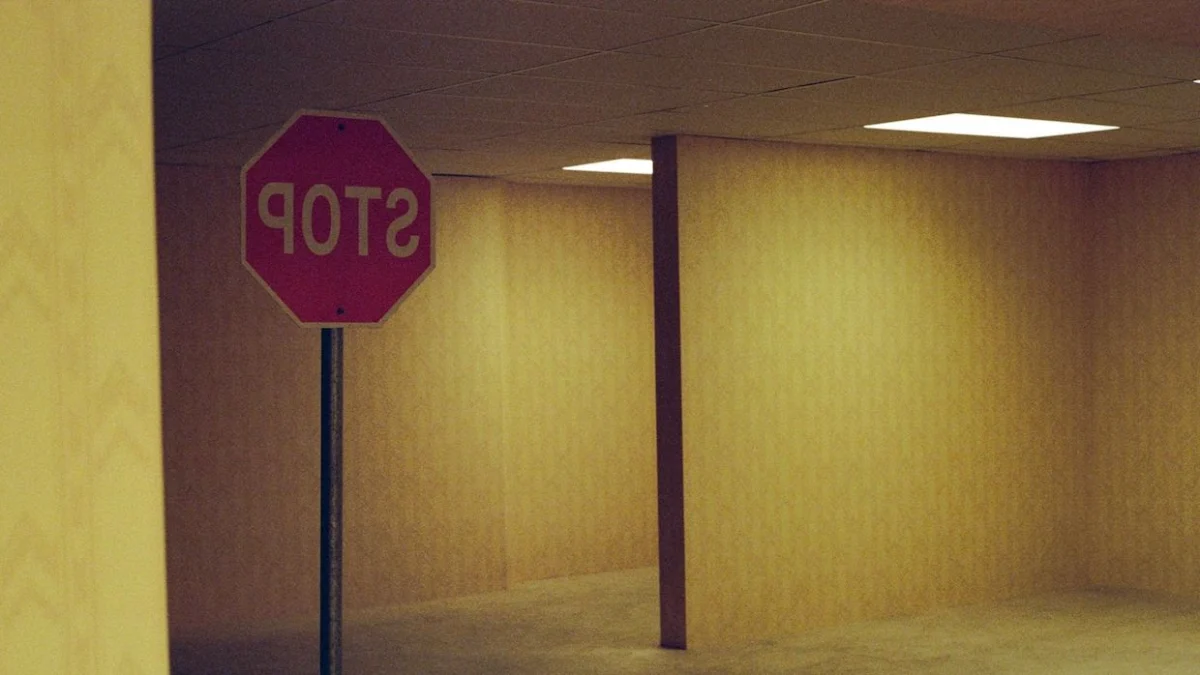
The appeal of the Backrooms lies in its immediate familiarity combined with an overwhelming sense of dread. The visual language—drop ceilings, stained or unfinished walls, sodium-vapor fluorescents, cheap linoleum tile—evokes the forgotten corners of early-aughts retail and domestic architecture. These spaces, often found in abandoned malls, defunct offices, or undergoing renovations, possess an eerie emptiness, an Escheresque quality that invites exploration while simultaneously warning of peril. They are places of transition, designed for utility rather than habitation, and their vacant state transforms them into unsettling mirrors of psychological unease.
From YouTube Sensation to Feature Film
Kane Parsons, then a seventeen-year-old filmmaker, emerged as a pivotal figure in popularizing the Backrooms concept. His YouTube series, launched in 2022, brought the abstract dread of the internet lore to life through meticulously crafted short films. Parsons’ work skillfully translated the digital aesthetic into a tangible, terrifying experience, garnering millions of views and critical acclaim for its innovative use of found footage, unsettling sound design, and effective world-building on a shoestring budget. The success of the YouTube series demonstrated the potent narrative potential of the Backrooms, paving the way for a feature film adaptation.
Backrooms (2026) extends Parsons’ vision, charting the transformation of 20th-century analog agoraphobia into 21st-century cyber-dissociation. The film positions these endless nooks and crannies as uneasy hosts for the ghosts of technologies past, alongside the latest versions of our own technodystopian anxiety. It operates like an episode of The Twilight Zone set within the uncanny valley of the present, where familiar environments are subtly distorted into sources of existential dread.
A Deep Dive into Liminality and Nostalgia
The film’s setting—an anonymous stretch of suburban sprawl in Santa Clara, California, in June 1990—is deliberately chosen to evoke a specific, bygone era. Clear blue skies, slightly cracked tree-lined streets, and vast, low-slung strip malls paint a picture of idyllic Americana on the cusp of significant change. Inside, heavy curtains, cushy brocade armchairs atop off-white wall-to-wall carpets, and cheap blonde wood fixtures will feel immediately familiar to many American millennials. However, these environments also resonate deeply with a younger generation that never experienced them firsthand.
For Gen Z, these sites are the stuff of viral TikTok and Instagram trends, often tagged with #nostalgiacore and #liminalcore. These hashtags have surged in popularity, particularly since the COVID-19 pandemic disrupted collective perceptions of time and safety in common spaces. Social media users now grapple with the algorithmic hegemony of the present by expressing a profound yearning for an "unplugged" past, frequently through meticulously curated—and sometimes deceptively generated—"retrobait" content or AI-generated imagery. While often tinged with sentimentalism, these videos frequently carry a subtle undercurrent of unease. The paradoxical mash-up of technologies and time periods evident in the creation and dissemination of these videos is central to their aesthetic and the emotional weight they carry. Young people, including Parsons, are digital natives who instinctively understand and inhabit these "Backrooms," experiencing nostalgia as a double-edged sword of comfort and anxiety. This generation wields this emotional tool relentlessly in their media creation.
The Entropic Solipsism of Digital Memory
Academic and amateur observers alike have noted that the entropic solipsism inherent in this kind of media is predicated on a deep sense of loss, often motivated by the modern internet itself. The common refrain, "I want to go there," in response to these videos underscores a desire for a perceived simpler time. However, for every ostensibly positive piece of #nostalgiacore (e.g., unsupervised kids at play outside, "grandma’s house in 2003"), many more portray the "90s" or "Y2K" in states of decay: Blockbuster stores overgrown with weeds, low-resolution shots of parking lots with tipped-over shopping carts, faded Toys "R" Us signs, and vacant malls, novelty restaurants, and teenage bedrooms. This duality highlights how nostalgia can be both comfortingly narcoticizing and profoundly disquieting.
As the literary adage by L. P. Hartley goes, "The past is a foreign country." Digital excursions "back" to it highlight the impossibility of returning to "simpler times"—a sentiment most poignantly felt by those born after the idealized moment has passed. These digital pilgrimages also augment the accelerationist instability of the present. Colette Shade, in her 2025 book Y2K: How the 2000s Became Everything, posits that "Nostalgia is a surrender to the world as it is." This perspective uncovers a worrisomely metastatic duality within this media: nostalgia-bait acting as a carcinogen, mutating the present into something brittle, passive, and self-annihilating. Backrooms, a vibe piece by design, provides a surprisingly nuanced understanding of this paradox, asserting that the past was never simpler, and its digital pursuit is ultimately futile.
Narrative and Thematic Underpinnings
The film’s quiet ambiance of despair, born of futility, permeates Parsons’ narrative, presenting 1990 as a technological and cultural point of no return. The protagonist, Clarke (Chiwetel Ejiofor), runs a furniture store named Ottoman Empire, which is on the verge of liquidation, symbolizing the decay of a past economic model. His therapist, Mary (Renate Reinsve), is haunted by the demolition of her childhood home, replaced by prefab condos—a stark representation of physical memory being erased by rapid development. She clings to a chunk of sidewalk embedded with her youthful handprints as a talisman against further dislocation, embodying a struggle to preserve tangible connections to a disappearing past.
Cybertechnological progress looms as a pressing specter. The film opens with Blair Witch-style DV-cam found footage of the Backrooms’ impossible byways, before shifting to a shot of floppy disks and a chunky old computer monitor on a desk, accompanied by offscreen screams of terror. Consciously outdated low-budget cable TV ads and self-help cassettes duel for attention on clunky TV sets, with announcers posing questions like, “Are you still using paper folders?” The characters who explore these interdimensional lacunae have similarly adapted to shifting production demands: “We used to build MRI machines,” one explains. “Now we do this.” This dialogue subtly highlights the rapid obsolescence of skills and industries in the face of relentless technological advancement, forcing individuals into new, often less fulfilling, roles.
A central theme is the overwhelming sense of uncertainty and rapid change. “No one has any idea what’s going on. Things are changing too fast, getting too big to understand, and it’s almost impossible not to get lost in this cultural dead end, a labyrinth that’s constantly remaking itself.” Mary’s observation to her patients, “We all have our loops,” refers to the repetitive patterns of anxiety. The rooms Clarke believes are windows into his own mind are, in fact, a backdated representation of internet-enabled collective intelligence. Backrooms poignantly highlights how technology forces us to share these loops—to doomscroll through each other’s anxieties—even as it fosters a paradoxical sense of disconnection. The film’s sharpest intervention into technoskepticism is the ambivalence built into its premise: the world these characters inhabit, on the eve of today’s technological regime, wasn’t viable either. Under such circumstances, the film suggests, the only recourse is to embrace the unknown, to "go through the looking glass," and become a "glitch" within the system.
A Meta-Hauntological Tone-Poem
While the actual narrative of Parsons’ film, with its horror trauma-plotting and therapeutic psychobabble, might appear somewhat conventional on the surface, its strength lies in its meta-commentary. Writer Will Soodik (known for Ash vs Evil Dead and Westworld) is credited for committing to a highly calibrated ambiguity. The reason for the Backrooms’ existence is never explicitly explained, which is a deliberate and effective choice. Their appearance at the precise moment when history is about to "end"—before new media irrevocably reshapes the world—transforms the film into a ghost story for the non-cybernetic individual self.
In this sense, Backrooms functions as a meta-hauntological tone-poem on the ambivalent nature of our engagement with online nostalgia and the internet itself from our current vantage point. Both artificial intelligence (AI) and the Backrooms are predicated on predictive models of iteration. Multiple characters in the film articulate this concept by saying, “It’s like describing a dog to someone who’s never seen a dog and then asking them to draw it.” This analogy perfectly describes the generative void’s distorted "memory" for people, places, and things as it mutates ad infinitum. Ejiofor’s Clarke, fundamentally devoid of human connection, financial stability, or a viable future as the country transforms around him, succumbs to the false comfort of his own personal form of AI hallucination. He becomes just another creepypasta on a Reddit subthread, made briefly tangible on film before returning to the liminal space of internet discourse once more.
Broader Implications and Cultural Impact
The film’s exploration of the Backrooms phenomenon serves as a powerful commentary on contemporary digital culture. The rapid growth of online communities dedicated to liminal spaces and digital nostalgia underscores a collective yearning for stability and meaning in an increasingly chaotic world. According to a 2023 survey by the Pew Research Center, nearly 70% of Gen Z adults report feeling anxious about the future, with many turning to online communities that offer a sense of shared experience, even if that experience is rooted in a wistful or unsettling past.
The economic implications of "retrobait" are also significant. The resurgence of Y2K fashion, music, and aesthetics has fueled a multi-billion-dollar industry, with brands capitalizing on nostalgic sentiments. However, Backrooms warns against the potential pitfalls of this relentless looking backward. It suggests that while nostalgia can provide fleeting comfort, it can also lead to a paralysis, preventing individuals and societies from confronting present-day challenges. The film subtly critiques the passive consumption of idealized pasts, especially when these pasts are re-fabricated or reimagined through algorithms and AI, creating a distorted reality that offers escape rather than engagement.
Furthermore, the film touches upon the societal impact of disappearing physical spaces. The closure of malls, the demolition of old homes, and the homogenization of urban landscapes contribute to a collective sense of displacement. Backrooms taps into this anxiety, portraying these forgotten or transitional spaces as manifestations of a cultural subconscious grappling with rapid modernization. The film’s narrative arc, wherein Clarke descends into a personal form of "AI hallucination," reflects a broader concern about the blurring lines between human consciousness and artificial intelligence, and the potential for individuals to become lost within their own digitally constructed realities.
Ultimately, Backrooms is more than just a horror film; it is a profound cultural artifact that dissects the anxieties of a generation navigating an era of unprecedented technological change. It asks critical questions about memory, identity, and the elusive nature of reality in an age where digital echoes of the past constantly intersect with the accelerating pace of the present. By bringing the internet’s most unsettling aesthetic to the big screen, Kane Parsons offers a chillingly prescient glimpse into the collective subconscious of our hyper-connected, yet increasingly dislocated, world.