As the winter theatrical window approaches, distributor Bleecker Street has released the second official trailer for Tender Loving Care, the poignant and deeply humanistic new feature directed by acclaimed British auteur Mike Leigh. Scheduled to open in select United States theaters this December, the film arrives carrying immense cinematic weight. Widely reported to be the final directorial effort of Leigh’s storied career, the project follows his recent 2024 drama Hard Truths and serves as a cumulative statement from a filmmaker who has spent decades chronicling the triumphs and quiet agonies of ordinary working-class individuals.
The newly unveiled preview offers a deeper look into the intricate emotional landscape of the narrative, highlighting characters grappling with familial expectations, institutional pressures, and the pursuit of everyday joy. Featuring lines that balance the domestic tension with heartfelt sentiment—such as a poignant exchange questioning a character’s future and parental desires—the footage underscores Leigh’s signature blend of heavy social realism and enduring human connection. Following its celebrated international festival run throughout the autumn of 2026, Tender Loving Care is poised to become one of the most closely analyzed and discussed releases of the year.
Main Narrative and Character Dynamics
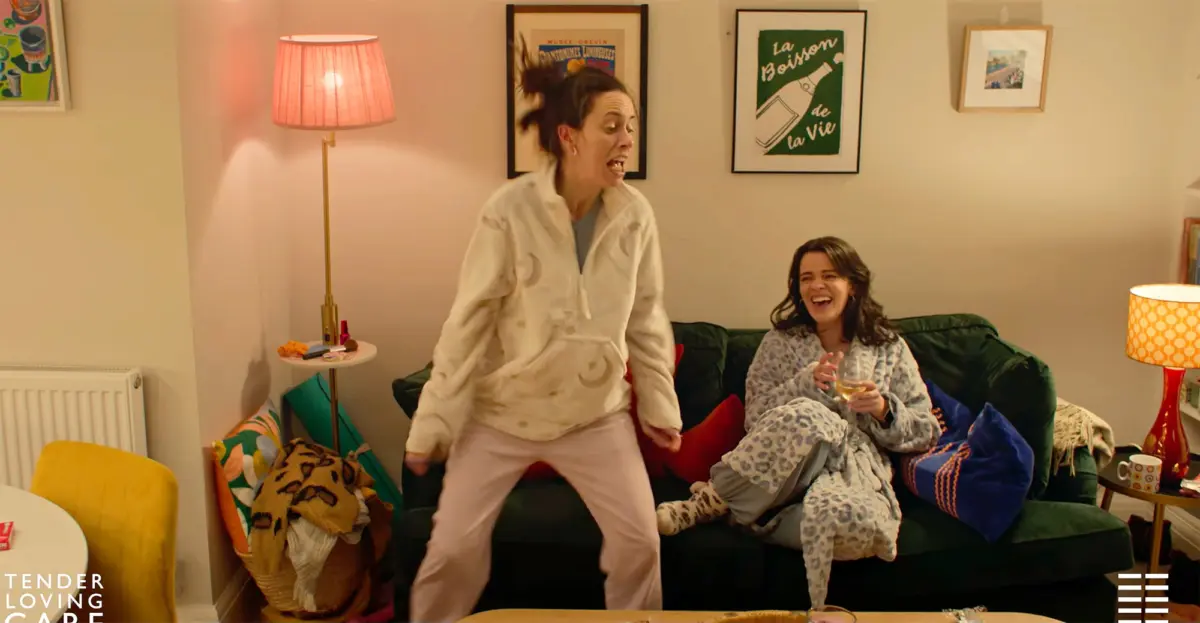
At the narrative core of Tender Loving Care is Amy, a dedicated government child protection worker who makes the decision to move back in with her upbeat best friend, Rosie. Rosie serves as a social services officer navigating the relentless daily friction, anger, and bureaucratic hurdles inherent to her profession. Concurrently, Amy’s aging parents find themselves consumed by their own burgeoning personal crises while simultaneously fretting over their daughter’s long-term happiness and stability.
Against the backdrop of post-Brexit England, the film examines the complex dynamics of support systems under strain. Amy and Rosie’s household becomes a microcosm of modern societal fatigue, where individuals are routinely asked to shoulder burdens far beyond their nominal job descriptions. Yet, true to Leigh’s directorial ethos, the film resists cynicism. Instead, it offers a richly observed portrait of resilience, punctuated by humor, spontaneous moments of song and dance, and the small, sustaining comforts found in enduring friendships.

The stellar ensemble cast is led by Kate O’Flynn, known for her compelling work in Widow’s Bay, who steps into the role of Amy. She is joined by veteran performers Marion Bailey and Paul Jesson, whose decades of experience on stage and screen bring profound gravity to the roles of Amy’s aging parents. Alice Bailey Johnson rounds out the central roster, contributing to the lived-in authenticity that has long been a hallmark of Mike Leigh’s collaborative rehearsal and casting process.
A Storied Festival Run and Chronology of Release
The journey of Tender Loving Care from production to distribution has followed a prestigious trajectory typical of major arthouse cinema. The film held its world premiere earlier in the autumn of 2026 at the Telluride Film Festival, an event renowned for launching critical darlings ahead of the Academy Awards and year-end accolades.
Following its reception in Colorado, the film embarked on a high-profile international festival tour. It made significant stops at the Toronto International Film Festival (TIFF), the New York Film Festival (NYFF), the Vancouver International Film Festival, the London Film Festival, and the San Sebastian International Film Festival. At each stop, critics praised the film’s unflinching gaze at contemporary British life and its ability to unearth humor amidst systemic struggle.
Recognizing the cultural and cinematic importance of the release, Bleecker Street secured distribution rights for the North American market. The studio has slated Tender Loving Care for a theatrical rollout beginning on December 4, 2026. This strategic release window positions the film squarely in the sights of critics’ associations and year-end top-ten lists, capitalizing on the prestige associated with Leigh’s potential swan song.
The Illustrious Career of Mike Leigh

To understand the cultural significance of Tender Loving Care, one must contextualize the extraordinary career of its creator. Born in 1943, Mike Leigh is currently 83 years old. Over a career spanning more than five decades, he has established himself as one of the preeminent voices in British social realism, celebrated internationally for his unique filmmaking methodology. Rather than relying on traditional scriptwriting alone, Leigh develops his projects through extensive, months-long improvisational workshops with his actors, building characters from the ground up before penning a definitive screenplay.
This meticulous process has yielded some of the most enduring works in modern cinema. Leigh’s filmography includes groundbreaking and critically lauded features such as Bleak Moments (1971), Meantime (1983), High Hopes (1988), Life Is Sweet (1990), and the searing, Palme d’Or-winning drama Naked (1993). He achieved widespread mainstream and critical acclaim with Secrets & Lies (1996), which earned five Academy Award nominations, including Best Director and Best Original Screenplay.
His subsequent filmography reads as a masterclass in historical and contemporary observation: Career Girls (1997), the lavish theatrical biopic Topsy-Turvy (1999), All or Nothing (2002), the harrowing abortion drama Vera Drake (2004)—which earned him a Golden Lion at the Venice Film Festival—the joyous Happy-Go-Lucky (2008), Another Year (2010), the J.M.W. Turner biopic Mr. Turner (2014), the historical epic Peterloo (2018), and his 2024 collaboration with Marianne Jean-Baptiste, Hard Truths.
Produced by longtime collaborator Georgina Lowe, Tender Loving Care represents the culmination of this immense body of work. If industry expectations hold true and this proves to be Leigh’s final cinematic statement, it encapsulates the themes he has chased for a lifetime: the difficulty of asking for help, the grace required to accept it, and the quiet dignity of working-class survival.
Industry Implications and Critical Reception
The arrival of Tender Loving Care carries distinct implications for both the independent film landscape and the cultural conversation surrounding aging masters of cinema. As major studios increasingly pivot toward intellectual property and franchise-driven content, distributors like Bleecker Street continue to carve out vital space for character-driven, humanistic storytelling.

Early critical assessments from the festival circuit suggest that Leigh has lost none of his razor-sharp observational skills. Reviewers have highlighted the film’s leveling sense of humor, noting that Leigh avoids the trap of miserabilism. Instead, the narrative acknowledges the harsh economic and emotional realities of post-Brexit Britain while simultaneously celebrating the indomitable spirit of its characters.
Furthermore, the performances—particularly that of Kate O’Flynn as an overwhelmed yet steadfast protector, and the supporting work of Marion Bailey and Paul Jesson—have drawn early awards buzz. In an era where cinematic depictions of family caregiving and working-class stress are frequently sensationalized, Leigh’s grounded, empathetic approach offers a refreshing antidote.
Broader Social and Cultural Context
Tender Loving Care arrives at a time of acute social anxiety within the United Kingdom and the broader Western world. The public sector, particularly social services and child protection agencies, faces unprecedented strain, staff shortages, and burnout. By centering characters who navigate these broken institutional gears on a daily basis, Leigh anchors his fiction in urgent socio-political reality.
Yet, the film’s resonance extends beyond politics into the universal domain of family dynamics. The tensions between aging parents fearing for their children’s futures, and adult children struggling to maintain their own emotional equilibrium while caring for others, reflect a universal generational friction. The emphasis on communal living, shared cups of tea, and micro-moments of joy serves as a reminder of the resilience inherent in human connection when formal systems fail.
As audiences prepare to experience Tender Loving Care in theaters this December, they are invited to bear witness not merely to another film in a distinguishedography, but potentially to the final cinematic bow of a director who has spent a lifetime holding up a mirror to society with honesty, compassion, and uncompromising artistic integrity.