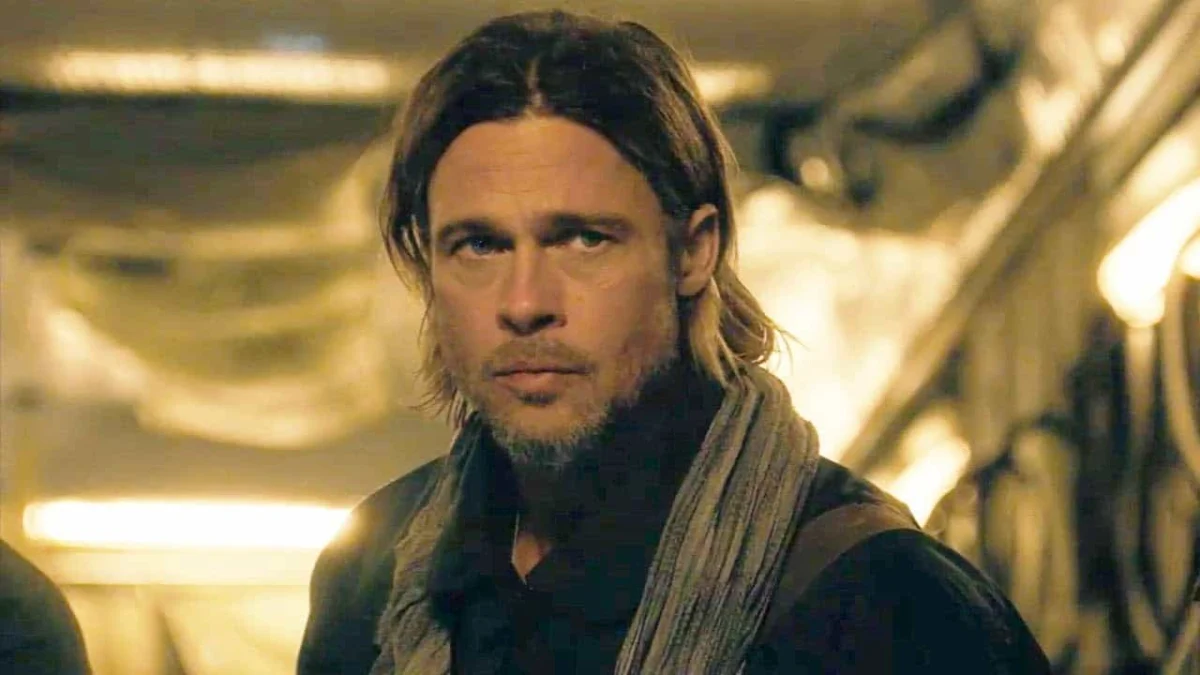
The long-dormant plans for a follow-up to the 2013 blockbuster World War Z have finally materialized, with reports confirming that Brad Pitt will return to headline the project. Paramount Pictures has officially tapped filmmaker Edward Berger to direct the sequel, marking a significant development for a franchise that has spent over a decade in development limbo. The collaboration reunites Pitt with Berger, who recently directed the actor in The Riders, signaling a strategic shift in the studio’s approach to expanding the intellectual property.
A Decade of Development Turbulence
The path to a World War Z sequel has been one of the most protracted development cycles in modern Hollywood history. Following the 2013 film’s success, which saw it gross over $540 million against a production budget of approximately $190 million, Paramount immediately began discussing a follow-up. In 2014, screenwriter Steven Knight was brought on board to draft a script, and by 2016, J.A. Bayona was attached to direct. However, creative differences and scheduling conflicts led to Bayona’s departure.
Perhaps the most notable chapter in the sequel’s history was the involvement of David Fincher. Brad Pitt, who holds a strong professional relationship with the director, spent years attempting to shepherd a version of the film through development with Fincher at the helm. Despite high expectations, the project was officially shelved in early 2019, reportedly due to budgetary concerns and the complexity of the script. The decision to move forward with Edward Berger signifies a renewed commitment from both Paramount and Pitt’s production company, Plan B Entertainment, to finally bring this narrative expansion to the screen.
The Creative Force Behind the Lens
The selection of Edward Berger to lead the project is widely viewed as a signal of intent for the sequel’s tone. Berger rose to international prominence with his masterful 2022 adaptation of All Quiet on the Western Front, which garnered multiple Academy Awards, including Best International Feature Film. His ability to balance large-scale action sequences with intimate, character-driven storytelling—a skill further demonstrated in his recent work on the thriller Conclave—suggests that the World War Z sequel may lean into a more grounded, visceral aesthetic than its predecessor.
Dennis Kelly has been tasked with writing the screenplay. Kelly is known for his work on the original British version of the television series Utopia, which was lauded for its bleak, high-stakes atmosphere and complex plotting. By pairing a director known for technical precision and emotional weight with a writer experienced in sharp, suspenseful narratives, Paramount appears to be aiming for a more critically robust entry than the first film, which, while commercially successful, faced criticism for its departure from the source material.
The Source Material: Max Brooks’ Vision
To understand the scale of the challenge in adapting World War Z, one must look at the 2006 novel by Max Brooks, World War Z: An Oral History of the Zombie War. The book is structured as a post-war collection of interviews, offering a global, geopolitical, and sociological look at a zombie apocalypse. It explores how different nations and cultures—from the survivalism of Cuba to the technological collapse of the United States—dealt with the threat.

The 2013 film adaptation took a significantly different route, focusing almost exclusively on the journey of a single protagonist, Gerry Lane (played by Pitt), as he traveled the globe seeking the origin of the outbreak. While the film was praised for its intense, high-energy sequences—most notably the "swarming" zombie mechanics that redefined the visual language of the genre—it bypassed much of the novel’s nuance. The inclusion of Dennis Kelly and the current creative team may suggest a desire to bridge the gap between the film’s action-oriented DNA and the book’s broader, more thematic scope.
Production and Financial Context
The project is being shepherded by Plan B Entertainment, with Brad Pitt, Dede Gardner, and Jeremy Kleiner producing. This trio has been the backbone of the company’s success, producing award-winning features such as 12 Years a Slave, Moonlight, and The Big Short. Their involvement ensures that the project will likely maintain a high level of prestige and creative oversight. Edward Berger will also serve as an executive producer, providing him with a seat at the table regarding the film’s creative direction and logistical execution.
Financially, the stakes remain high. The original film’s $540 million global haul made it the highest-grossing zombie movie of all time at the date of its release. However, the costs associated with the 2013 production were famously high due to extensive reshoots. With the current economic climate in Hollywood, where mid-budget films are struggling and tentpole blockbusters face increased scrutiny regarding return on investment, the studio is expected to focus on a more disciplined budget while maintaining the visual spectacle that audiences expect from the franchise.
Industry Implications and Market Trends
The return of World War Z comes at a time when the zombie sub-genre is experiencing a state of flux. While classic horror remains a staple of the box office, the "zombie epic" has seen fewer high-budget entries in recent years, with audiences favoring more contained, character-focused horror. The decision to bring back Pitt—one of the few remaining "movie stars" capable of opening a film on the strength of his name alone—is a calculated move to secure a global audience.
Furthermore, the involvement of a director of Berger’s stature suggests a shift in how studios are handling franchise sequels. Rather than relying solely on established action tropes, there is a clear trend toward hiring auteur-leaning directors to revitalize dormant series. This "prestige-ification" of genre films has proven successful for other franchises, and Paramount likely hopes that Berger can provide a similar level of critical legitimacy to the World War Z universe.
Future Outlook
As of September 2026, no plot details have been released, and the casting of supporting roles remains in the early stages. The primary focus for the studio in the coming months will be finalizing the script and securing the shooting schedule. Given Berger’s current trajectory and the high-profile nature of the production, the project is expected to become one of the focal points of Paramount’s upcoming release slate.
For fans of the original novel, the hope remains that the sequel will incorporate more of the geopolitical complexity that made the book a cultural touchstone. For the industry, the film serves as a test case for whether a long-dormant franchise can be successfully resurrected with a new creative vision. With Brad Pitt’s unwavering dedication to the project and Edward Berger’s proven track record, the World War Z sequel is positioned as a potential cornerstone of the next cycle of global blockbusters. The industry will be watching closely to see if the production can avoid the pitfalls that plagued its initial development and deliver a film that resonates with both fans of the 2013 hit and the wider audience base.