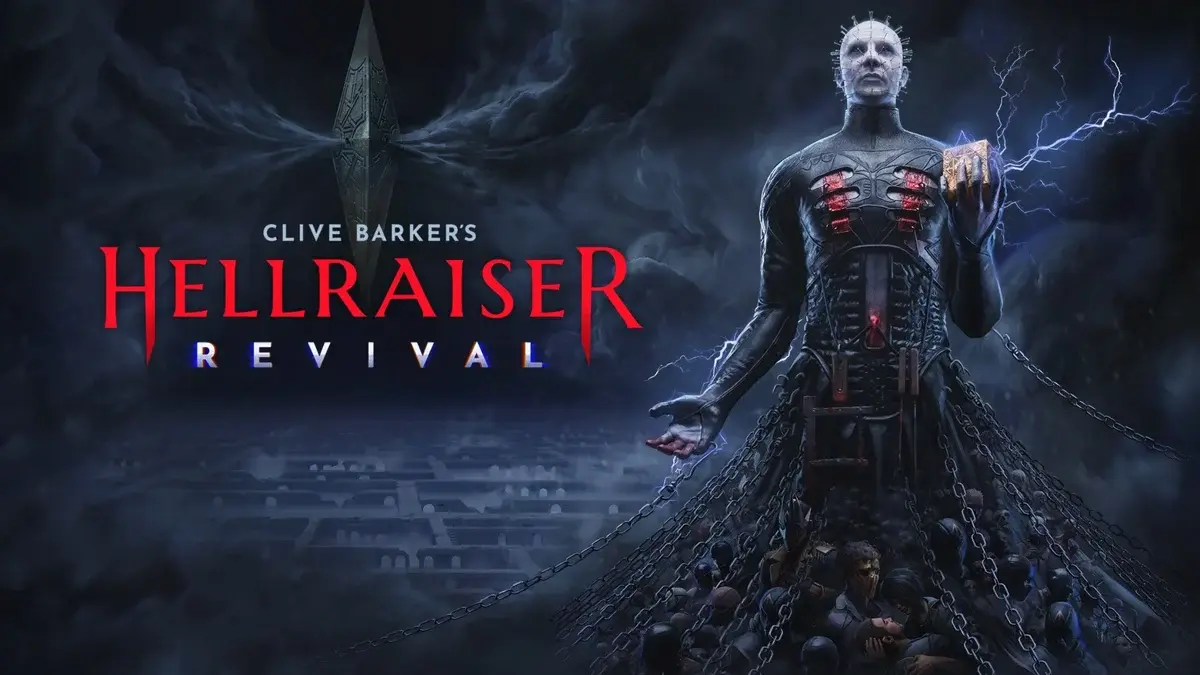
The release of Clive Barker’s Hellraiser: Revival marks a significant milestone in the evolution of interactive horror media, serving as a visceral, uncompromising expansion of a franchise that has defined the dark fantasy genre for nearly four decades. Developed by Boss Team Games, the title has received the rare and unequivocal endorsement of its creator, Clive Barker. Following a period of uncertainty regarding whether the project would maintain the transgressive nature of the source material or succumb to the sanitization often associated with modern licensed media, Barker confirmed in an exclusive interview that the developers successfully preserved the franchise’s core tenets of pain, pleasure, and existential dread.
A Legacy Reimagined: The Development Timeline
The journey to Hellraiser: Revival began years prior to its 2026 launch, rooted in a desire to return the franchise to its literary and cinematic origins. Unlike previous iterations that struggled to capture the atmosphere of the 1987 original, this project was conceived as a deep dive into the mythology of the Lament Configuration. Boss Team Games, known for their focus on atmospheric fidelity, approached the project with the explicit intent of honoring Barker’s vision.
The timeline of the project’s development reflects a meticulous focus on creative integrity. Following initial conceptualization, the production team engaged in a collaborative dialogue with Barker to ensure that the game’s narrative architecture aligned with the established lore. This partnership proved vital, as Barker had previously expressed concerns regarding potential censorship. The final product serves as a testament to this collaborative effort, successfully navigating the complexities of modern rating systems while retaining the graphic, surrealist horror that serves as the hallmark of the series.

The Return of an Icon: Doug Bradley as Pinhead
Central to the project’s critical and fan-driven success is the involvement of Doug Bradley, the original actor who defined the role of Pinhead. The return of Bradley is not merely a casting decision but a fundamental element of the game’s authenticity. Barker emphasized that the relationship between himself and Bradley extends back to their shared formative years in theater, long before the inception of the Hellraiser universe.
Their professional history, characterized by a mutual lack of formal training and a shared pursuit of artistic discovery, provided the foundation for the character’s iconic, detached menace. According to Barker, Pinhead’s effectiveness as a villain relies on restraint—a principle that Bradley consistently applied throughout the game’s production. By choosing to play the role with gravitas rather than performative aggression, Bradley captures the quintessential nature of the Cenobites, ensuring the character remains a figure of chilling, intellectual dread rather than a standard horror antagonist.
Critical Reception and Market Impact
Upon its release, Hellraiser: Revival was met with a positive critical response, evidenced by a 4-out-of-5 rating from outlets such as Dread Central. The game has been lauded for its ability to transport players directly into the claustrophobic, nightmarish environments characteristic of the franchise. By avoiding the common pitfall of over-simplification, the game creates a cohesive experience that resonates with long-term fans and newcomers alike.
The market impact of the title is bolstered by its availability across major platforms, including the PlayStation 5, Xbox Series X|S, PC, and the Nintendo Switch 2. This multi-platform accessibility, combined with the successful integration of fan-centric "Easter eggs"—such as the tributes to music legends Ozzy Osbourne and Lemmy—has cemented the game’s status as a comprehensive tribute to the broader culture surrounding the Hellraiser mythos.

Analyzing the Creative Philosophy
The success of Hellraiser: Revival offers a compelling case study for the adaptation of legacy horror properties. The primary factor behind its reception is the adherence to Barker’s original creative philosophy: the idea that horror should be confronting. By allowing the game to explore themes of depravity and grotesque imagery without dilution, the developers have validated the assumption that contemporary audiences are seeking high-fidelity, uncompromising horror experiences.
Barker’s commentary on the production process reveals a significant shift in how intellectual property owners are engaging with the gaming medium. By maintaining an active, consultative role, Barker ensured that the "defiance" of his original work was not scrubbed away. This approach suggests that the future of licensed horror media lies in the hands of creators who prioritize atmospheric integrity over broader market appeal.
Future Prospects and Franchise Expansion
The collaboration between Clive Barker and Boss Team Games appears to be only the beginning. With the successful launch of Revival, both parties have hinted at the potential for future endeavors. Barker’s expressed interest in continuing this partnership signifies a potential shift toward a new era of Hellraiser media, one characterized by consistent creative vision and technical excellence.
The implications for the franchise are substantial. Should this partnership continue, it could lead to an expanded, interconnected universe of digital narratives that explore corners of the Hellraiser mythology that have previously been relegated to prose. This potential expansion would not only solidify the legacy of the franchise but also establish a new benchmark for how horror IPs can be effectively translated into interactive formats.

Industry Context: Horror in Gaming
To understand the significance of Hellraiser: Revival, one must look at the current landscape of the horror gaming genre. Over the last decade, there has been a resurgence in "old-school" horror, where player vulnerability and environmental storytelling are prioritized over combat mechanics. This trend aligns perfectly with the ethos of the Hellraiser series, which has always favored psychological and visceral terror over mere jump scares or action-oriented gameplay.
Statistical trends in the gaming industry show that single-player, narrative-driven horror games are currently seeing a high engagement rate. By tapping into this market with an established, cult-classic property, the developers of Hellraiser: Revival have successfully leveraged both nostalgic appeal and modern technical capabilities. The integration of high-fidelity graphics with the classic, understated terror perfected by Doug Bradley creates an experience that stands out in an increasingly crowded market.
Conclusion: A Benchmark for Adaptation
Clive Barker’s assertion that he is "proud as fuck" regarding the final product serves as an ultimate endorsement of the creative team’s labor. By prioritizing the spirit of the original material, Boss Team Games has succeeded where others have faltered, proving that the grotesque and the beautiful can exist in perfect harmony within an interactive, digital space. As the gaming industry continues to evolve, the methodologies employed in the creation of Hellraiser: Revival—the deep collaboration between original creators and developers, the commitment to atmospheric restraint, and the respect for legacy performers—will likely serve as a blueprint for future adaptations.
The narrative of Hellraiser: Revival is not just one of a game release; it is a story of artistic preservation in an age of commercial consolidation. For fans who have followed the puzzle box’s journey from the page to the screen and now into the digital void, this project represents the most faithful iteration of Barker’s vision to date. As the industry looks toward future collaborations, the success of this title suggests that when creators are given the space to fully realize their vision, the results can be both commercially viable and artistically profound. Whether through future projects or the continued success of the current title, the influence of this collaboration will undoubtedly resonate throughout the horror community for years to come.