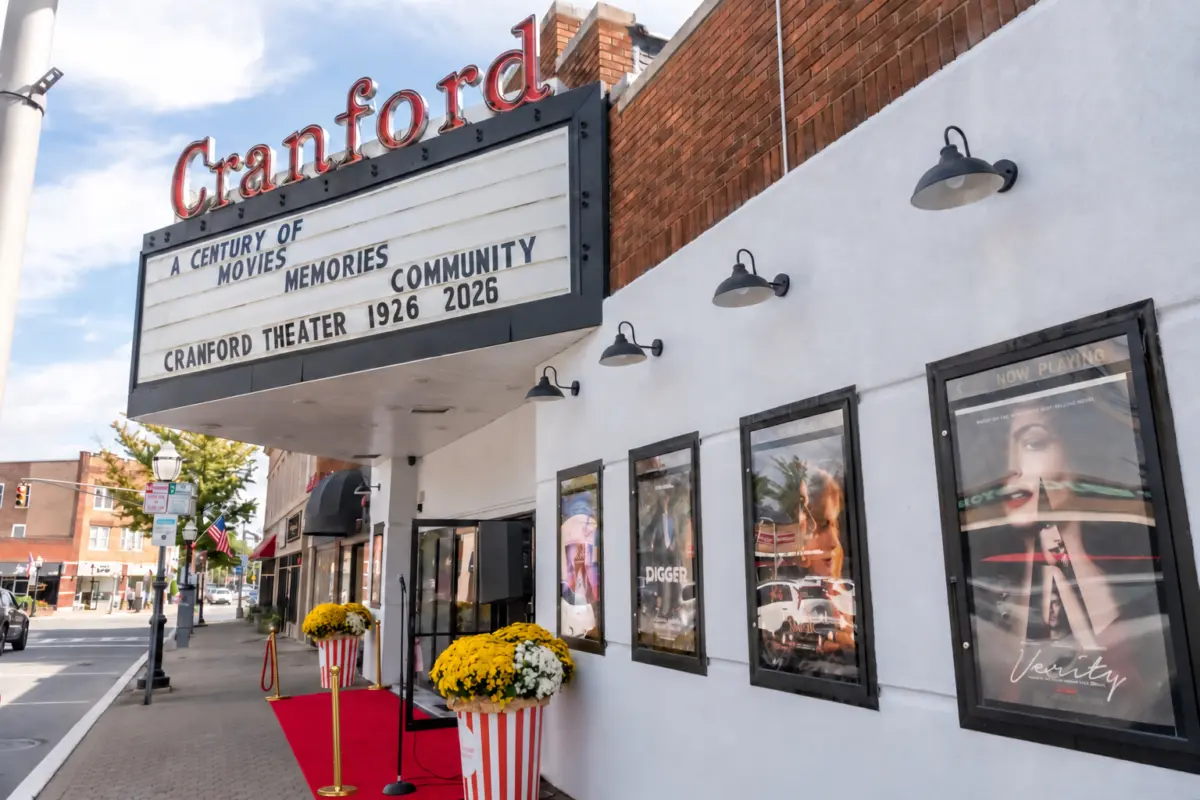
The Cranford Theater, a cornerstone of Union County’s cultural landscape and the last remaining independent, family-operated cinema in the region, is rapidly approaching a milestone that few businesses achieve: its 100th anniversary. Located in the heart of Cranford, New Jersey, the venue has served as a social anchor since its inception in 1926. As the theater prepares for its centennial on November 29, 2026, owner Doreen Sayegh is orchestrating a celebration that honors the past while positioning the historic venue for a second century of operation. The festivities will be anchored by a commemorative screening of the silent film Padlocked—the same production that inaugurated the theater’s screens a century ago—complete with live organ accompaniment to replicate the original experience.
A Century of Cinematic Evolution: A Chronological Overview
The history of the Cranford Theater is a microcosm of the American motion picture industry. When it opened its doors on November 29, 1926, the theater was a singular grand hall designed to transport audiences into the burgeoning world of film. Throughout the 20th century, the venue weathered the transition from silent films to "talkies," the rise of suburban multiplexes, and the eventual consolidation of the exhibition industry.
In 1997, the property was acquired by Jesse Y. Sayegh, an industry veteran who had long operated independent circuits across the Garden State. Recognizing the potential for a community-centric space, the elder Sayegh transitioned the venue from a two-screen configuration to its current five-screen layout in 1998. The theater remained under his stewardship until 2010, when the business was sold to Digiplex Destinations. However, the theater’s identity remained deeply tied to the Sayegh family. By 2019, following a period of shifting ownership, Doreen Sayegh—who had been raised in the projection booths and concession stands of her father’s theaters—made the pivotal decision to reclaim the venue. Following extensive renovations, she reopened the theater in November 2019, just months before the global COVID-19 pandemic necessitated the indefinite suspension of indoor gatherings.
Navigating the Pandemic and Industry Disruption
The forced closure of the Cranford Theater in March 2020 presented an existential threat to the business. At the time, the industry was already grappling with the rapid expansion of streaming services, which had begun to cannibalize theatrical attendance. Sayegh’s response to these dual crises serves as a case study in entrepreneurial agility.
When indoor operations were halted, Sayegh pivoted to community-focused survival strategies. She launched a pop-up drive-in theater in a local parking lot, an initiative that proved to be an immediate cultural and financial success. The operation, which featured classic cinema, saw its inaugural ticket allotment sell out in 90 seconds—a testament to the community’s pent-up demand for shared experiences. Beyond the drive-in, Sayegh implemented "curbside concession" programs, providing families with theater-style snacks, thereby maintaining the brand’s presence in the lives of local residents while the physical theater remained dark.
The Challenge of Infrastructure and Modernization
The road to the centennial has not been without significant structural setbacks. In April 2025, the theater faced a critical emergency when a portion of the interior ceiling collapsed. While the building was occupied at the time, the rapid and safe evacuation of all patrons and staff prevented injury. The incident, however, forced a seven-month closure, necessitating extensive structural repairs and safety retrofits.
The theater’s reopening in November 2025 signaled more than just a return to business; it represented a commitment to the preservation of local historic architecture. The restoration of the neon signage and marquee lights served as a symbolic re-lighting of the downtown Cranford area. Industry analysts note that such venues are increasingly vital as "third places"—spaces distinct from home and the workplace that foster community cohesion. By diversifying programming to include comedy performances, film festivals, and recitals, the Cranford Theater has successfully transitioned from a traditional cinema to a multi-purpose cultural hub.

The Garden State Production Boom
The Cranford Theater’s recent success is bolstered by a broader economic shift within New Jersey. The state’s aggressive expansion of film tax credits and production incentives has triggered a significant influx of film and television projects, transforming the region into a production-friendly environment. Sayegh has leveraged this "Hollywood East" trend by hosting advance screenings of locally produced films, such as Steven Soderbergh’s Presence, which was filmed in Cranford, and Mother’s Instinct, featuring Anne Hathaway and Jessica Chastain.
This integration of local production into the theater’s programming serves two purposes: it reinforces the theater’s connection to the local economy and provides a "premium" experience that streaming services cannot replicate. According to local business leaders, the presence of film crews in the downtown area provides a measurable boost to nearby restaurants and retail establishments, creating a symbiotic relationship between the theater and the community it serves.
Analysis of the Independent Exhibition Model
The survival of the Cranford Theater, while many small-town cinemas have shuttered, can be attributed to a departure from the "volume-only" business model. In the modern era, independent theaters are increasingly operating as event spaces rather than mere content delivery systems. By prioritizing community engagement and curated film selections, Sayegh has tapped into a demographic that values the communal experience of the theater over the convenience of home viewing.
Financial experts following the theatrical exhibition sector suggest that the "boutique" or "community-centered" cinema model is one of the few sustainable paths for independent operators. By moving away from a reliance on blockbuster distribution—which often dictates high rental fees and unfavorable terms for small venues—the Cranford Theater has maintained its autonomy. This strategy allows the theater to pivot to niche programming that aligns with the specific interests of its local audience, thereby ensuring a consistent, albeit smaller, revenue stream.
Looking Toward the Next Century
As the theater approaches its 100th anniversary, the focus is shifting toward the future of the venue. The inclusion of the next generation—Sayegh’s five-year-old daughter, Natalia—in the theater’s daily operations underscores the intergenerational nature of the business. For Sayegh, the theater is not merely a commercial venture but a legacy that encompasses the values of service, resilience, and community stewardship.
The upcoming screening of I Play Rocky—a drama centered on the production of the 1976 classic—is viewed by Sayegh as a poignant metaphor for the theater’s journey. Much like the titular character, the venue has faced repeated challenges, from the economic volatility of the 1990s to the global disruption of the 2020s and the structural failure of 2025. Each time, the theater has managed to recover and adapt.
The long-term sustainability of the Cranford Theater will likely depend on its ability to continue this cycle of adaptation. As digital technology continues to evolve, the demand for high-quality, in-person experiences remains a constant. By preserving the historic character of the building while integrating modern, community-driven programming, the Cranford Theater stands as a testament to the enduring relevance of the big-screen experience in the 21st century.
Whether the theater will look significantly different in another 100 years remains an open question, but for the present, its survival is secured by the dedication of a community that views the flickering lights of the marquee as an essential component of their town’s identity. The centennial celebration in November 2026 will serve as both a retrospective of a storied past and a launchpad for a future that remains, in Sayegh’s words, a story still being written.