The reimagining of legendary cinematic icons is a high-stakes endeavor, particularly when dealing with a franchise as entrenched in pop culture as Friday the 13th. With the release of the penultimate episode of the Peacock series Crystal Lake, titled “Friday…,” creator Brad Caleb Kane has fundamentally altered the established mythology of the Voorhees family. By shifting the timeline and introducing a narrative framework grounded in corporate malfeasance and the decay of the 1970s American Dream, the series has moved away from traditional supernatural slasher tropes toward a more grounded, albeit disturbing, exploration of systemic trauma.

A Chronological Shift in the Voorhees Legacy
In the original 1980 film directed by Sean S. Cunningham, the legend of Jason Voorhees was established as a localized tragedy—a young boy who drowned in 1957 due to the negligence of camp counselors, leading his mother, Pamela Voorhees, on a vengeful killing spree. Crystal Lake, however, has taken a radical departure from this established canon.
By pushing the timeline forward by approximately 15 years, the series places the pivotal drowning of Jason in the early 1970s. This adjustment is not merely cosmetic; it is a structural decision that allows the writers to anchor the horror in a specific era of American history defined by institutional distrust and economic shifts. By aligning the birth of the “slasher” archetype with the post-Watergate era of disillusionment, the series reframes Jason not as a purely paranormal entity, but as a byproduct of a society that had begun to prioritize corporate gain over human welfare.

The Corporate Hand in the Origin of Evil
Central to the series’ narrative is the introduction of “Project Argonaut,” a clandestine initiative run by Bellflower Chemical. In the series, Elias Voorhees—previously a nebulous, often off-screen figure in franchise lore—is depicted as a mid-level corporate operative. Unlike previous iterations that painted him as a boorish or physically abusive patriarch, the series presents him as a man deeply embedded in a corporate culture that encourages the sacrifice of personal morality for professional advancement.
This pivot toward corporate-driven horror mirrors the anxieties of the 1970s, a decade marked by the rise of unchecked industrial expansion and the beginning of the pharmaceutical and chemical industries’ deep integration into public health. The character of Elias, portrayed by Hamish Linklater, serves as the series’ moral anchor—or lack thereof. His descent from a “company man” who believes in the promise of the American Dream to a broken instrument of a larger, colder machine provides a bleak context for the tragedy that eventually befalls his wife, Pamela (Linda Cardellini), and their son.

Analyzing the Scientific and Cultural Implications
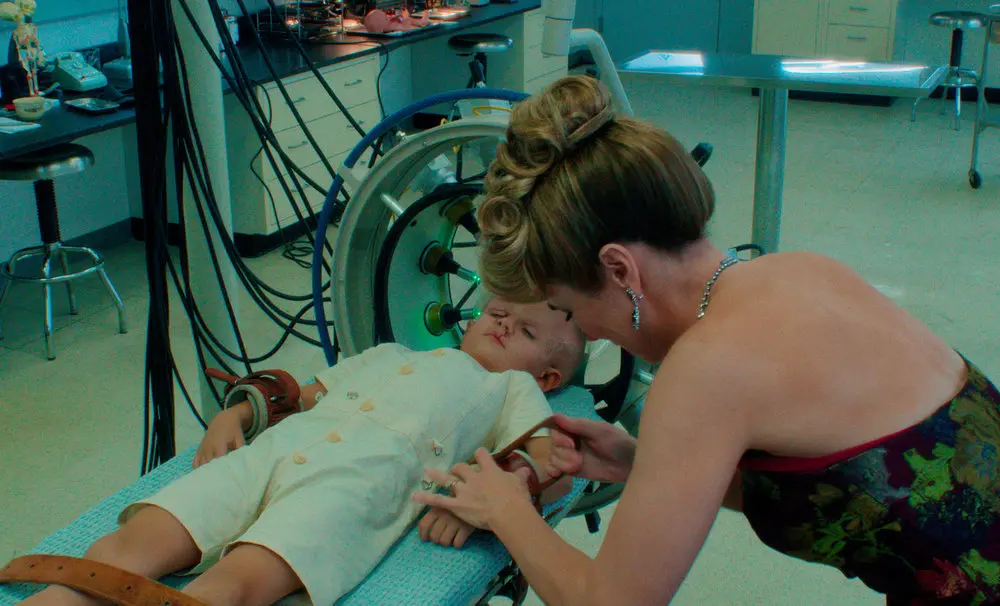
The series suggests that Jason’s physical and mental evolution, which eventually facilitates his status as a relentless, near-indestructible force, is the result of experimental human trials conducted by Bellflower Chemical. Pamela Voorhees’s unintended exposure to these trials is presented as the primary catalyst for the horror that follows.
From a critical perspective, this narrative choice shifts the genre from supernatural slasher to a “science-fact” cautionary tale. Brad Caleb Kane has noted in public discussions that the intent was to ground the series in historical reality rather than science fiction. By linking the Voorhees tragedy to pharmaceutical exploitation, the show taps into the contemporary fear of institutional overreach. This is a departure from the 1980s slasher films, which often relied on the “sinful” behavior of teenagers to justify their slaughter. Here, the blame is placed squarely on the shoulders of the power structures that govern the characters’ lives.

Performance and Production: A Study in Contrast
The production design within the episode “Friday…” reflects this thematic divide. Scenes involving the Argonaut procedure are intentionally sterile, cold, and devoid of the vibrant, nostalgic hues associated with the camp setting. This visual dichotomy underscores the loss of innocence. Linda Cardellini’s performance as Pamela highlights the slow erosion of a mother’s agency, turning her into a victim of both corporate manipulation and the societal pressures placed upon women to maintain a “perfect” domestic facade.
The use of this “Stepford-coded” narrative serves as a bridge between the intimate tragedy of a single family and the broader, more abstract horror of the 1970s identity crisis. It posits that the true monster in the Friday the 13th universe is not merely the masked killer, but the systems that created the conditions for his existence.

Industry Reaction and Audience Engagement
The decision to de-mystify one of horror’s most enigmatic villains has met with a complex reception. Hardcore fans of the original films often prioritize the supernatural, “revenant” aspect of Jason Voorhees—a figure who defies death through dark, unexplainable means. By introducing a scientific origin, the series risks alienating those who prefer the character to remain a purely visceral, non-rational force of nature.
However, from an industry standpoint, the series is being praised for its narrative ambition. In a landscape saturated with franchise reboots, the attempt to provide a cohesive, sociopolitical rationale for the existence of an iconic slasher is viewed as a bold, if risky, creative choice. It aligns with the current trend of “elevated horror,” where the scares are secondary to the exploration of trauma, social decay, and the consequences of progress.

Historical Context of the Slasher Genre
The Friday the 13th franchise has, since its inception, been an outlier in the horror genre. While films like Halloween focused on the concept of “pure evil,” Friday the 13th was initially rooted in the personal grief of a mother. By returning to this origin, Crystal Lake acknowledges that the franchise’s strength lies in the human element.
The 1970s, as a backdrop, provides a unique opportunity to comment on the shift in American values. The era saw the decline of the traditional nuclear family and the rise of the “Me Generation,” alongside a growing suspicion toward government and corporate entities. By placing the Voorhees family in the crosshairs of a faceless corporation like Bellflower, the series effectively updates the mythos for a modern audience that is arguably more skeptical of authority than any generation prior.

Conclusion: The Future of the Franchise
The implications of this series for the future of the Friday the 13th brand are significant. Should this origin story become the new canon, it fundamentally alters how audiences perceive every subsequent film in the series. The mask, the machete, and the camp are no longer just tools of a supernatural force; they are the final products of a long, sustained campaign of institutional abuse.
While the series acknowledges the tropes of the genre—the camp setting, the impending violence, the tragic mother figure—it successfully subverts them to create a narrative that is as much a critique of corporate American history as it is a horror story. As the series moves toward its conclusion, the focus remains on whether this “angry, reactionary evolution” will satisfy the long-time devotees of the franchise or if the deviation from the established supernatural lore will prove to be a point of permanent contention.

Regardless of the audience’s reception to the scientific explanation of Jason’s nature, the achievement of Crystal Lake lies in its refusal to be a simple, rote retelling of a decades-old story. By opting to peel back the layers of the Voorhees legacy and inspect the machinery beneath, it has provided a framework for understanding why the tragedy of Crystal Lake remains one of the most resonant stories in horror history. The transition from the “innocence” of the 1950s to the “deception” of the 1970s acts as a microcosm for the American experience, proving that even in the realm of slashers, the most terrifying stories are those that feel rooted in the reality of the world we live in today.