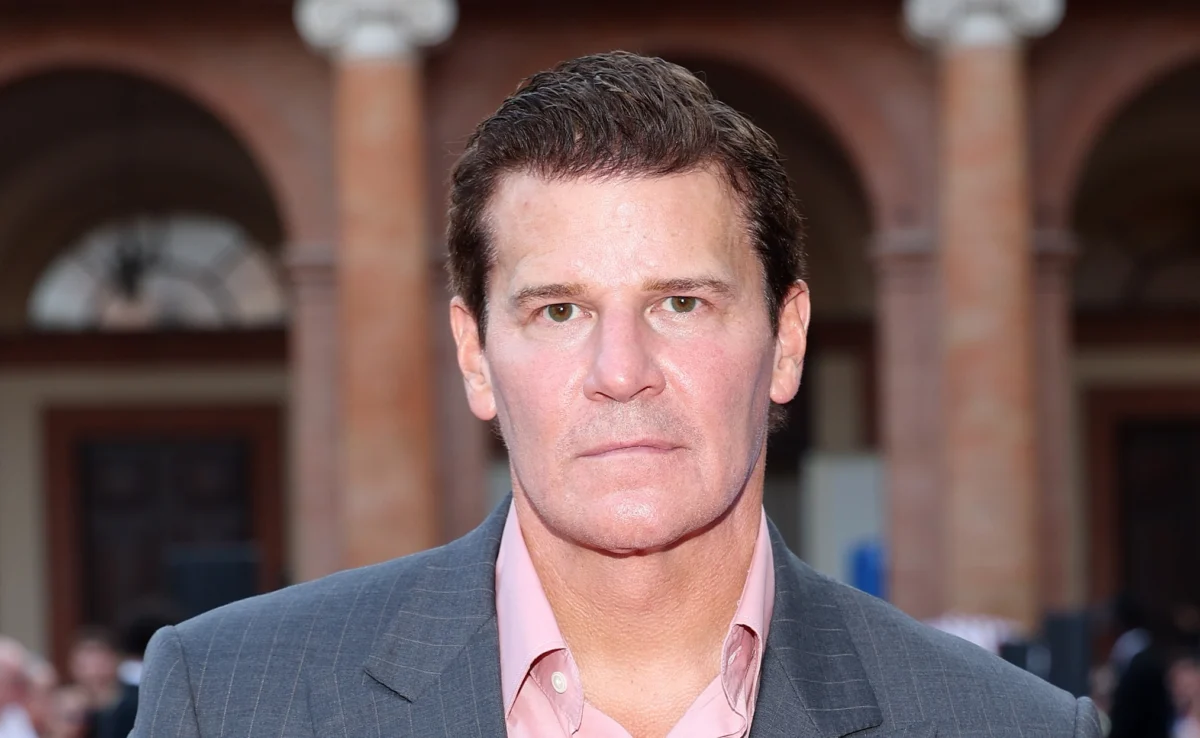
David Boreanaz, the veteran television actor who portrayed Special Agent Seeley Booth for twelve seasons on the Fox hit series Bones, has publicly signaled a willingness to revisit the role that defined a significant portion of his career. In a recent interview with ScreenRant, Boreanaz reflected on the legacy of the forensic procedural drama, which concluded its original run nearly a decade ago. While the actor has historically been known for his "look forward, not backward" approach to his filmography, his latest comments suggest that the unique chemistry and narrative flexibility of Bones make it a prime candidate for a modern-day continuation or a special reunion project.
During the conversation, Boreanaz highlighted the enduring appeal of the series, noting that the show’s structure allows for a seamless transition back into the lives of its protagonists. "What’s great about Bones is you can go in and out," Boreanaz stated. "I always said that was the one show that I would definitely revisit, as far as going back, because it would be going back and seeing where these characters are now." This openness marks a shift from his typical stance on revivals, a point he admitted is often a source of friendly contention between him and his former co-star, Emily Deschanel, who played Dr. Temperance "Bones" Brennan.
The Historical Context and Evolution of the Series
Bones premiered on Fox on September 13, 2005, during an era when the television landscape was dominated by procedural dramas. However, the show distinguished itself by blending gruesome forensic investigations with a central "will-they, won’t-they" romantic tension between a stoic FBI agent and a socially detached forensic anthropologist. Inspired by the real-life work of forensic anthropologist and novelist Kathy Reichs, the series focused on the Jeffersonian Institute’s Medico-Legal Lab and its partnership with the Federal Bureau of Investigation.
Over its 246 episodes, Bones became a cornerstone of Fox’s programming. Despite frequent shifts in its time slot—a phenomenon that led fans to dub it "the little engine that could"—the show maintained a loyal viewership. Its ability to survive the dreaded "Friday night death slot" and multiple leadership changes at the network cemented its status as a resilient franchise. When the series finally concluded on March 28, 2017, with the episode "The End in the End," it left behind a legacy of character-driven storytelling that balanced dark criminal cases with lighthearted ensemble comedy.
The Dynamics of a Potential Reunion
The primary hurdle for a Bones revival, as identified by Boreanaz, remains the logistical complexity of coordinating an ensemble cast that has moved on to various high-profile projects. Since the show’s conclusion, the core cast members have remained active in the industry. Boreanaz himself transitioned immediately into the lead role of Jason Hayes on the military drama SEAL Team, which recently concluded its seventh and final season. Emily Deschanel has appeared in projects such as Animal Kingdom and the Netflix limited series Devil in Ohio.
"Getting everybody involved would be tricky," Boreanaz acknowledged, referencing the busy schedules of his former colleagues. The ensemble included Michaela Conlin (Angela Montenegro), T.J. Thyne (Dr. Jack Hodgins), Tamara Taylor (Dr. Camille Saroyan), and John Boyd (James Aubrey). The show also famously featured a rotating cast of "squinterns," many of whom, like Joel David Moore and Pej Vahdat, have established successful careers elsewhere.

Despite these challenges, the creative foundation for a revival appears solid. Boreanaz confirmed that he maintains a close relationship with the show’s creator, Hart Hanson. "I love Hart Hanson, the creator, and I talk to him a lot," Boreanaz said. "So, never say never." This line of communication is vital, as any successful revival would likely require Hanson’s involvement to maintain the specific tone—a mix of "gross-out" forensics and heartfelt interpersonal drama—that fans expect.
Analyzing the "Streaming Effect" and Procedural Popularity
The renewed interest in a Bones reunion is not happening in a vacuum. The television industry is currently experiencing a significant trend of "procedural nostalgia." The massive success of older series on streaming platforms—most notably the record-breaking streaming numbers for Suits on Netflix and Peacock—has prompted networks and streaming giants to reconsider the value of established procedural brands.
Bones currently enjoys a robust life in syndication and on streaming platforms such as Hulu, Disney+, and Amazon Prime Video. Data from various streaming analytics firms suggests that "comfort TV"—shows with high episode counts and familiar character dynamics—continues to outperform many high-budget original series in terms of total minutes viewed. For a platform like Disney+ (which now owns the 20th Century Fox library), a Bones limited series or a television movie would serve as a low-risk, high-reward strategy to retain subscribers who are already binge-watching the original 12 seasons.
Furthermore, the "revival" model has already been proven successful for other procedurals. Series like CSI: Vegas and Criminal Minds: Evolution have demonstrated that audiences are eager to see how characters evolve in a more modern, often darker, television environment. A Bones revival could theoretically move away from the "case-of-the-week" format in favor of a serialized narrative, exploring the long-term psychological effects of the characters’ careers or the evolution of forensic technology in the decade since they were last on screen.
Legal and Production Considerations
While the creative desire for a reunion may exist, the path to production was previously complicated by a high-profile legal dispute. In 2015, Boreanaz, Deschanel, Hart Hanson, and executive producer Barry Josephson filed a lawsuit against 21st Century Fox, alleging that the studio had engaged in "self-dealing" to cheat them out of tens of millions of dollars in profits. The case resulted in a staggering $179 million arbitration award in 2019, which was later settled for an undisclosed amount.
Industry analysts suggest that the resolution of this litigation was a necessary precursor to any future collaboration. With the legal hurdles cleared and the ownership of the franchise now under the Disney umbrella following the acquisition of 21st Century Fox, the administrative barriers to a revival have been significantly lowered. The settlement effectively "reset" the relationship between the creative talent and the studio, making a professional reunion more feasible than it was five years ago.
The Enduring Chemistry of Booth and Brennan
Central to the possibility of a return is the relationship between Boreanaz and Deschanel. Their on-screen chemistry was the engine that drove the series for over a decade. Boreanaz touched upon this during his interview, noting that Deschanel often teases him about his reluctance to engage in reunions.

"She’s like, ‘David, you never like reunions,’" Boreanaz recalled. "There’s a reason. I just don’t go back, and I stay really present. We always had this running joke about that for some reason. I think of Emily in regards to that all the time, because the two of us had such a great working relationship, and I adore her."
This mutual respect is a critical component for a revival. Unlike many long-running shows where lead actors experience "burnout" or interpersonal friction, the Bones leads have remained vocal supporters of one another. For fans, the draw of a reunion would not just be the solving of a new skeletal mystery, but the opportunity to witness the domestic life of Seeley Booth and Temperance Brennan as they navigate the challenges of parenthood and the natural progression of their careers.
Broader Implications for the Procedural Genre
The potential return of Bones also raises questions about the future of the forensic drama. In the years since the show ended, the genre has shifted toward more realistic and somber portrayals of criminal justice. Bones was unique for its "blue-sky" aesthetic—a term used to describe the optimistic, character-heavy dramas that flourished in the mid-2000s.
A revival would face the challenge of updating the show’s sensibilities for a 2024 audience while maintaining the "magic" that made it a hit. This would likely involve addressing contemporary issues in law enforcement and science, as well as acknowledging the passage of time in the characters’ lives. The series finale saw the Jeffersonian undergo a massive explosion and subsequent rebuilding, a metaphor for the show’s own resilience. A new chapter could explore how the institution and its members have adapted to a world that looks very different from the one they inhabited in 2005.
As Boreanaz concludes his run on SEAL Team, his schedule has opened up for the first time in seven years, providing the most realistic window for a Bones project since 2017. While no official development has been announced by 20th Television or Disney, Boreanaz’s "never say never" stance has provided the strongest signal yet that the files of the Jeffersonian may not be permanently closed. For the millions of "Bones-heads" worldwide, the prospect of seeing Booth and Brennan back in action is no longer a matter of "if," but a hopeful "when."