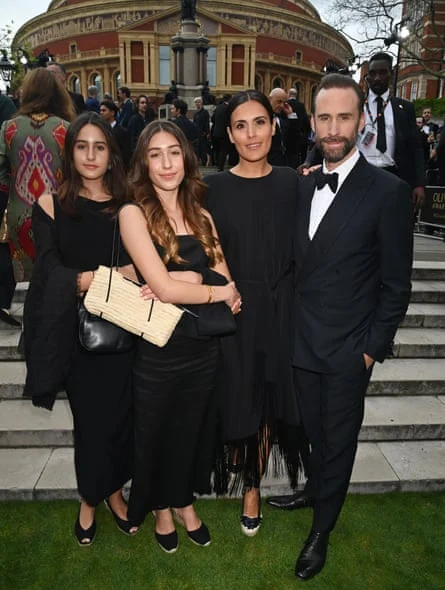
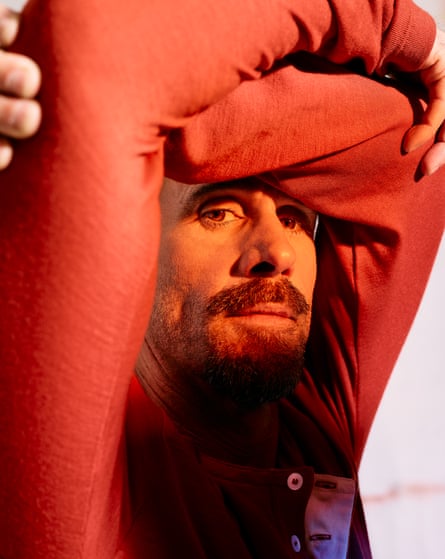
Joseph Fiennes, a figure whose career has been marked by both iconic portrayals and a quiet defiance, sat down for an interview that would reveal a man deeply engaged with the complexities of his craft, his heritage, and the world around him. The setting was a Chelsea breakfast spot, a far cry from the dramatic stages and global platforms he often inhabits, yet it provided a surprisingly intimate backdrop for a conversation that delved into the nuances of his latest project, Dear England, and the personal philosophies that have shaped his remarkable journey.

Fiennes, accompanied by his Jack Russell terrier, Noa, exuded a calm, observant presence. His apology for Noa’s slightly dishevelled state, a consequence of an extended park visit, set a tone of unassuming wholesomeness that underscored his personal connection to nature. "Nature is where he’s at his best," Fiennes reflected, his sentences often carrying a lyrical quality, "where he feels cleansed, connected, observant." This affinity for the natural world, he explained, translates into a deep appreciation for rugged landscapes, ideally spent on "hours-long, rain-drenched walks," a sentiment that speaks volumes about his grounded perspective.
From Bard to Manager: The Evolution of a Career
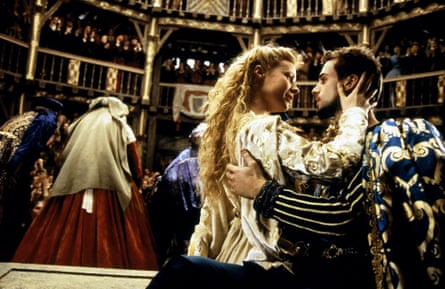
Launched into national consciousness as the young, soulful Shakespeare in Shakespeare in Love, Fiennes has navigated a career that he often describes with a self-deprecating charm. He has openly discussed the initial post-Shakespeare period, where he felt pigeonholed into roles that often involved period costumes and equestrian pursuits. "I was pretty much a supporting actor for an actress throughout," he remarked, a statement that belies a career studded with powerful performances alongside formidable actresses such as Cate Blanchett, Helen Mirren, Elisabeth Moss, Rachel Weisz, and Eva Green.
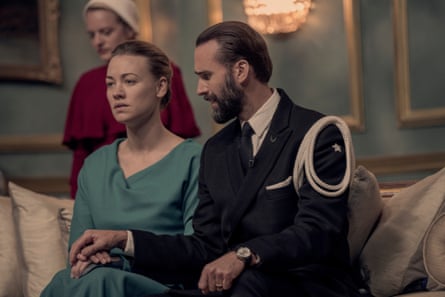
His portrayal of the chilling Commander Waterford in The Handmaid’s Tale earned critical acclaim for its insidious portrayal of a patriarchal figure. Now, at 55, Fiennes finds himself frequently cast in paternal roles. This includes playing the father of his real-life nephew, Hero Fiennes Tiffin, in the Amazon series Young Sherlock, and a particularly poignant turn as Richard Ratcliffe, the husband of Nazanin Zaghari-Ratcliffe, in the BBC drama Prisoner 951. This role, depicting the agonizing six-year ordeal of Zaghari-Ratcliffe’s captivity in Iran, highlighted Fiennes’s ability to convey profound emotional depth and the quiet resilience of individuals facing unimaginable circumstances.
Dear England: A Nation’s Psyche on Display
The conversation naturally gravitated towards Dear England, the acclaimed stage production that has been adapted into a four-part series for the BBC. Fiennes reprises his role as Gareth Southgate, the England football manager whose tenure has been defined by a "quiet revolution." The narrative, penned by James Graham and directed by Rupert Goold, delves into the profound impact of Southgate’s missed penalty in Euro 96, an event that became a catalyst for a personal transformation that rippled through the England squad.

The series meticulously explores themes of mental health, the pervasive issue of racism within sport, the immense pressure of national expectation, and the complex interplay between "national pain versus performance." Southgate’s innovative approach, which included integrating a performance psychologist, encouraging journaling, and implementing commando-style boot camp training, aimed to break the historical curse of missed penalties and the often-cited "two world wars and one World Cup" narrative that has shadowed English football.
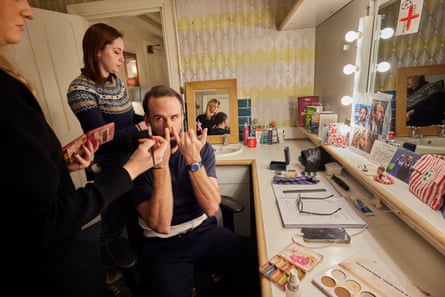
Initially conceived against a backdrop of evolving "English" identity, with Graham continuously updating the script to reflect rising nationalism, the television adaptation has been further refined. Fiennes noted that the screen version is "framed much more as a drama," allowing for a deeper exploration of the characters’ internal struggles. His own preparation for the role was rigorous. Each morning, he would rise at 4:30 am to dedicate himself to script rehearsal. In the evenings, he set aside two hours before each performance to fully embody Southgate, employing prosthetic enhancements such as a false nose, yellowed teeth, and a meticulously clipped beard. His immersion extended to listening to Southgate’s audiobook, Anything Is Possible, absorbing the manager’s distinctive speech patterns and blurred consonants. "Beyond mimicry," Fiennes stated, "I found an emotional connection to what this extraordinary coach was dealing with. I don’t know why." This profound connection, he described, was a rare instance where a character "just settled in an effortless way."

The personal encounter with Southgate himself was a moment Fiennes recounted with evident emotion. During an appearance at The King’s Trust awards, he felt a tap on his shoulder. Turning, he found himself face-to-face with the very man he had been portraying for two years. "In the most lovely, unassuming voice, he just went, ‘Hello’," Fiennes recalled. The actor’s composure dissolved into what he termed "way too gushing." Southgate, in contrast, remained "very cool and calm."
A Tapestry of Talent: The Fiennes Family Legacy
Fiennes’s interview also offered a glimpse into the extraordinary lineage from which he hails. The Fiennes siblings, a constellation of accomplished individuals, are testament to a family deeply embedded in the arts and intellectual pursuits. Their mother, Jennifer "Jini" Lash, was a celebrated painter and novelist, described by author Dodie Smith as "almost too interesting to be true." Their father, Mark Fiennes, was a gifted photographer and illustrator.
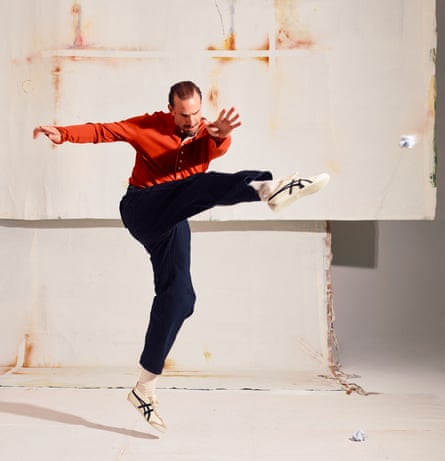
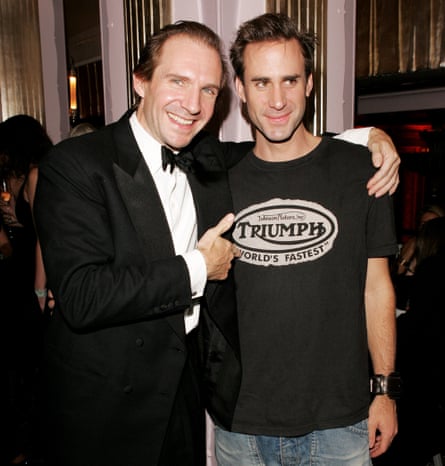
This creative inheritance has manifested in actors Ralph and Joseph, film directors Martha and Sophie, composer Magnus Fiennes, and Joseph’s twin, Jake, a prominent conservationist managing the vast Holkham Estate in Norfolk. Their adopted brother, Michael Emery, is an archaeologist, and their third cousin, Sir Ranulph Fiennes, is a renowned explorer. Joseph himself has contributed to National Geographic documentaries recreating his cousin’s adventurous expeditions.
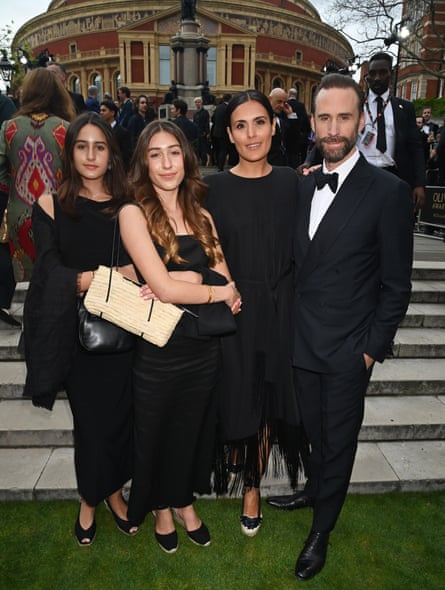
The Fiennes children experienced an itinerant upbringing, a necessity born from their parents’ "very precarious" financial situation. Fiennes vividly recalls accompanying his mother to collect the meager family allowance, highlighting the constant struggle to provide for seven children. Yet, amidst these challenges, his parents instilled in them "the value of nature." This fostered a childhood marked by "wild and adventure-filled" experiences, characterized by "muddy and messy" escapades, camping in woods, and a profound sense of liberation and freedom.
Navigating the Industry: Resilience and Artistic Integrity
Joseph Fiennes admitted that interviews are not his preferred mode of interaction, yet he navigated the conversation with a "straight-backed self-possession." This contrasts with his brother Ralph’s more reserved demeanor during a past interview, requiring coaxing to elicit responses. This inherent self-possession was forged through a childhood that, while rich in experience, was also marked by significant hardship.
His schooling was an extensive affair, attending 14 different institutions. He recounted instances of harsh discipline, even "horror beatings" by nuns in Ireland, for what seemed like minor infractions or simply for exhibiting youthful exuberance. These experiences, coupled with the transient nature of their family life, undoubtedly shaped his resilience.
The pivotal role in Shakespeare in Love thrust Fiennes into a new stratosphere of Hollywood, attracting the attention of then-powerful producer Harvey Weinstein. Weinstein, whose company Miramax produced the film, offered Fiennes a lucrative five-picture deal, a trajectory similar to that of Matt Damon after Good Will Hunting. However, Fiennes’s career took a different path. For years, he attributed this to a preference for theatre, but in 2023, he revealed the true reason: a confrontation with Weinstein.
Fiennes described being summoned to Weinstein’s hotel room, where he was presented with a contract and told he had to sign or face a Hollywood career blackout. "The way he explained it was a shock," Fiennes recalled, sensing the predatory intent behind Weinstein’s "bully" tactics. Drawing on an inner strength, possibly honed by past adversities, Fiennes refused the deal. While acknowledging that this decision likely impacted his career trajectory, he asserted, "I was very happy not to be in the family." This act of defiance underscored his commitment to artistic integrity over commercial compromise.
The Weight of Legacy and the Struggle for Authenticity
The passing of his mother at 55 has left an indelible mark on Fiennes. He reflects on his own current age with a sense of ongoing discovery and evolution, a stark contrast to the life cut short. "My mother is indelibly marked into my creative psyche. Not a moment goes by without her force," he stated, acknowledging her profound influence on his artistic sensibilities. His brother Ralph had previously spoken of their mother’s "emotional fragility" and the conflict between her maternal duties and her creative drive, a struggle that instilled a sense of responsibility in the children.
This theme of navigating complex family dynamics and personal struggles resonates in Fiennes’s current work. Dear England and Prisoner 951, he noted, both touch upon the often-unseen machinations of British governance. The case of Nazanin Zaghari-Ratcliffe, he explained, revealed a "ruthless self-interest and ineptitude" on the part of the government, rooted in a long-standing debt related to a failed arms deal. This highlights the complex interplay between national identity, the military-industrial complex, and the human cost of political decisions.
The Digital Dilemma: A Parent’s Battleground
Fiennes expressed profound concern over the pervasive influence of social media and digital devices on young minds. He views these platforms as a significant challenge for parents, likening the struggle to "fighting the fucking nightmare of tech companies and devices." He decried the exploitation of young people by corporations, particularly the targeting of young girls by cosmetic companies, which fuels an unhealthy obsession with appearance from an early age.
"As a parent, you’re not up against the influence of someone else talking to your child. You’re up against Zuckerberg’s team of scientists," he argued, emphasizing the immense power imbalance. His commitment to protecting his daughters from this digital onslaught is unwavering, with strict rules regarding screen time and device usage. The proliferation of vaping among young people also drew his ire, criticizing companies for their aggressive marketing strategies aimed at enticing children. He called for stronger government legislation to curb these practices, lamenting the perceived inaction on issues that directly impact the well-being of the younger generation.
Defining Englishness and Embracing the Human Condition
Fiennes grapples with his own sense of "Englishness," distinguishing between national pride and the more exclusionary form of nationalism. While critical of overt displays of patriotic fervor, he expresses "great pride" in the achievements of Britons across various fields, from sports to the arts, who represent "great themes of life and the human condition." He acknowledges that, by traditional perception, his generation might be considered more reserved, yet he asserts a conviction in his own "very strong views privately."
His perspective on playing complex or even villainous characters, such as his brother’s portrayal of Amon Göth in Schindler’s List, is rooted in the belief that understanding these darker aspects of humanity is crucial. "It’s important that we visit [those issues] in the most articulate way… in order to understand," he explained. He believes that such portrayals, while uncomfortable, are necessary for societal progress and self-reflection.
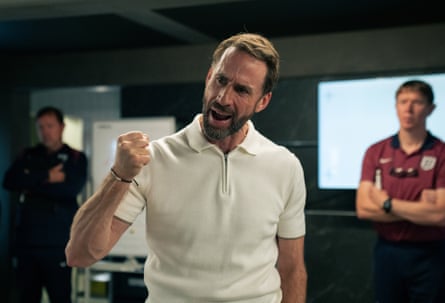
The adaptation of Dear England for the BBC, Fiennes suggests, intentionally highlights the detrimental impact of political rhetoric on athletes facing immense pressure. He pointed to the juxtaposition of politicians railing against players for taking the knee and the subsequent abuse faced by young Black players missing penalties, implying a direct link between political discourse and the psychological burden on these individuals. "You need support across the board, not just fans, not just other players and coaches, but government support," he insisted, underscoring the need for a more empathetic and supportive approach from leadership.
The Enduring Quest for Connection
Fiennes’s journey, from his formative years shaped by nature and family, through the trials of the entertainment industry, to his current role as a thoughtful commentator on societal issues, reveals a man deeply committed to understanding and articulating the human experience. His dedication to his craft, his unwavering principles, and his concern for the well-being of future generations paint a portrait of an artist who continues to evolve, driven by a profound desire to connect with himself, his family, and the world at large. As he navigates the complexities of modern life, Fiennes remains a compelling voice, one that continues to explore the critical junctures that define us, both as individuals and as a society.