One morning, Good Stab finds an old napikwan trapper sitting among his buffalo, undaunted by Good Stab’s hostility. After all, he’s lived in the Backbone longer than Good Stab, who realizes this trapper’s no ordinary napikwan. Not another Cat Man: The trapper smells only of earth and snow. Good Stab follows the trapper down a previously invisible mountain fold to a dugout shelter. Good Stab realizes his host is the creator and trickster demigod Napi. Napi calls him Bear Dreamer because Good Stab overwinters with bears, also Tender of the Dead. No, not Pikuni dead, but the living hide-hunters whom Good Stab imprisons until he needs another feed. And, because Good Stab has eaten so many napikwans, he’s begun to grow a napikwan’s beard!
What Good Stab must do, Napi explains, is to overwinter with him, not bears—that is, after Good Stab has hunted one more time.
When Good Stab leaves the dugout, he finds its entrance has disappeared into the bluff. He heads for his usual hunting grounds, torn by his dilemma: He can’t keep eating napikwans, nor can he revert to animals, or he’ll lose his Pikuni identity. But how can he eat Pikuni?
He finds a huge herd of slaughtered and semi-flayed buffalo. While tracking their napikwan killers, he discovers a band of White Clay People cooking poisoned buffalo meat. One has already devoured a raw piece and staggered off to die. Good Stab feeds on him. The rest of the White Clays pursue him and trap him in his buffalo-carcass hiding place. He claws his way out and tracks down the hide-hunters. He lurks in their dugout, kills two hunters who enter to rape a skinner boy, then dispatches the rest. With the blood of only one White Clay, he’s started becoming Indian again, undulled, strong!
He fights the urge to feed on slaughtered napikwan, and any more White Clay People. His attack on some wolf-hunters leaves him wounded, desperate for healing blood as he returns to the Backbone. He ends up near a too-familiar camp, his own Small Robes. He skirts it, but finds an isolated lodge in which an old woman has gone to die: Yellow-on-Top Woman, Tall Dog’s mother. He tells her how bravely Tall Dog died, then, as she’s sinking, drinks from her. Finishing, he realizes someone’s sitting vigil outside. It’s his father, Wolf Calf. Their inevitable meeting ends in reconciliation, but one shared puff from his father’s pipe makes Good Stab choke. His father gets him away from the camp and back to Napi, whose breath revives him.
Good Stab won’t cry in front of Three-Persons. And his pipe is empty.
The Absolution of Three-Persons, April 23, 1912
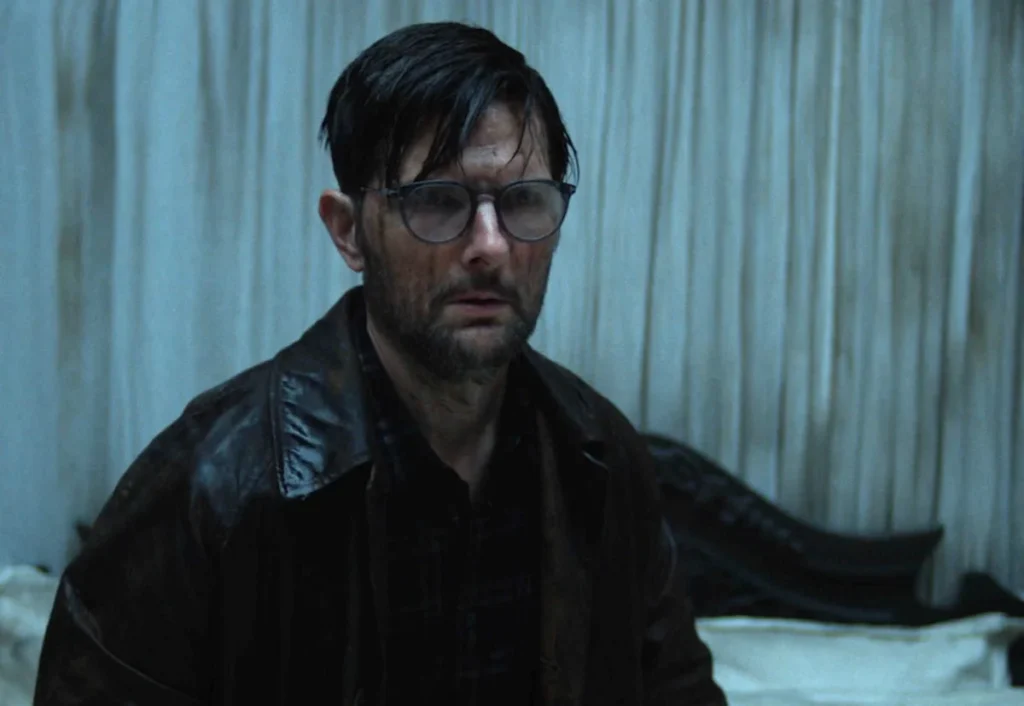
The morning after Good Stab’s confession, Frieda Zimmerman pays her weekly visit to Arthur, but refuses to step inside the church. She asks him to bring out the eggs Erna left him. Arthur fetches them to the porch, dropping one between pews along the way. Frieda holds the cloth-wrapped eggs while she describes the mystery of the milk her husband brought to church to soothe his chronically unsettled stomach. It was perfectly fresh when put in his flask, but when he took a sip, it was curdled.
She proceeds to drop eggs off the church stoop. Four break to reveal untainted contents, quickly lapped up by stray dogs. Frieda seems relieved. But a dog snatches the fifth egg from the air, then spits it out. Both yolk and whites are an oily black. "Nachzehrer," Frieda mutters. It’s a word he’d heard in his own mother’s folk tales: a creature that rises nightly from the grave to feed on the living, and goes on doing so until stopped.
Frieda rushes off as from a place "infested," and Arthur asks if he can still “subscribe to a secular understanding of Good Stab’s tale.” Is it not instead “a dark gospel?”
Arthur goes back through his log to retitle Good Stab’s portions. He also scratches his name off the front. In the church, the cat Cordelia laps up the dropped egg and mews for more, but there’s none left.
"All we have left here," Arthur concludes, "is rot and decay."
Historical Context and Thematic Resonance
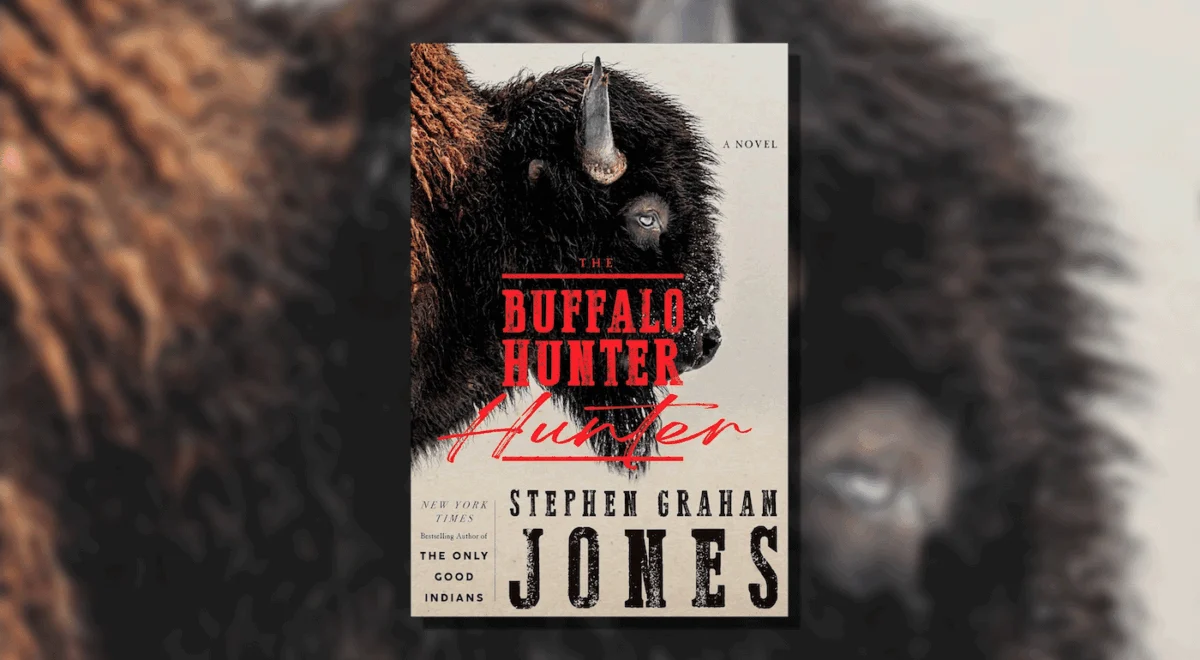
This installment of Reading the Weird delves into Chapters 12-13 of Stephen Graham Jones’s Buffalo Hunter Hunter, a work published in 2025 that masterfully weaves elements of cosmic horror, indigenous mythology, and visceral survival. The narrative plunges into the complex psyche of Good Stab, a character grappling with a supernatural hunger that threatens to consume his identity, and the parallel spiritual crisis of Pastor Arthur Three-Persons. The content warning for child rape and extreme violence underscores the brutal realism and dark themes explored within these chapters.
The Burden of the Nachzehrer and Identity Erosion
The central conflict for Good Stab in these chapters revolves around his escalating vampiric hunger and its profound impact on his sense of self. Napi, the Blackfeet demigod, confronts Good Stab with the stark reality of his condition. The growing napikwan beard is a literal manifestation of his consumption of non-Pikuni beings, a physical representation of his encroaching otherness. This mirrors the historical anxieties surrounding "taint in the blood," a concept deeply embedded in racist ideologies that sought to define and subjugate minority groups by associating them with inherent corruption or sub-humanity.
As Ruthanna points out, this theme is a recurring motif in weird fiction, from Lovecraft’s The Shadow Over Innsmouth to the exploration of ancestral horrors. Jones, however, subverts and complicates this trope by rooting it in Indigenous mythology and the specific cultural pressures faced by Native American communities. Good Stab’s desperation to cling to his Pikuni identity by avoiding the consumption of his own people highlights the immense psychological toll of such a curse. His dilemma—to become animal, napikwan, or lose himself entirely—is a powerful allegory for the historical pressures that threatened to erase Indigenous cultures and identities.
The narrative presents a chilling chronological progression:
- April 22, 1912 (Early): Good Stab witnesses a Pikuni boy’s vision quest and learns of his cousin’s violent death, a stark reminder of the ongoing trauma inflicted by settlers. This event fuels his grief and perhaps his burgeoning rage.
- Later on April 22, 1912: Good Stab encounters the mysterious trapper, who is revealed to be Napi. This meeting is pivotal, as Napi directly addresses Good Stab’s condition and offers a stark choice.
- Following Napi’s Revelation: Good Stab grapples with his identity crisis, torn between his hunger and his desire to remain Pikuni. He then discovers the slaughtered buffalo and the White Clay People, leading to violent confrontations and a temporary resurgence of his "Indian" self.
- The Return to the Backbone: Wounded and desperate, Good Stab seeks solace and healing, ultimately encountering his father, Wolf Calf. This reunion, though tinged with reconciliation, is fraught with the weight of his past actions and the inescapable nature of his curse.
- April 23, 1912: The narrative shifts to Pastor Arthur Three-Persons, whose spiritual crisis is mirrored by the physical decay and unsettling phenomena occurring around him. The curdled milk and the black egg are potent symbols of the unnatural forces at play.
Napi: The Trickster and the Mirror of Humanity
The introduction of Napi, the Blackfeet demigod, is a masterstroke of mythological integration. As described by Hugh A. Dempsey, Napi is a complex figure—a creator, a trickster, and a force unbound by conventional morality. He embodies both the strengths and weaknesses of humanity, amplified by supernatural power. His appearance to Good Stab is not one of divine judgment, but of a pragmatic, albeit unsettling, intervention. Napi’s concern for the bears and the grass highlights his connection to the natural world, a stark contrast to Good Stab’s internal struggle.
Napi’s pronouncements carry the weight of an impending historical inevitability: the loss of buffalo herds and ancestral lands. This historical backdrop—the systematic destruction of Indigenous ways of life during the late 19th and early 20th centuries—is intrinsically linked to Good Stab’s personal tragedy. The demigod’s seemingly casual demeanor, juxtaposed with the dire pronouncements, underscores the capricious nature of fate and the forces that shape individual lives.
Pastor Arthur’s Crisis of Faith and the Unraveling of Reality
Parallel to Good Stab’s existential battle, Pastor Arthur Three-Persons experiences a crisis of faith, triggered by increasingly undeniable supernatural occurrences. The curdled milk and the inexplicably spoiled eggs are not mere inconveniences; they are irrefutable signs that his "secular understanding" is no longer tenable. Ruthanna’s observation that "food starts going bad" signifies a profound disruption of natural order, directly impacting the pastor’s world.
Arthur’s re-titling of Good Stab’s narrative and the removal of his own name suggest a dawning realization that he is not merely an observer but potentially entangled in the unfolding events. His labeling of Good Stab’s confession as a "dark gospel" hints at a desperate search for meaning, perhaps even a twisted form of salvation, within the unfolding horror. The "degenerate Dutch" element, as mentioned in the text, adds a layer of historical prejudice that Jones masterfully subverts by highlighting the horrific actions of the hide-hunters, including the rape of one of their own boys, thereby reversing the narrative of perceived savagery.
The Broader Impact: Race Science and Historical Truth
The commentary provided by Ruthanna brings crucial context to the thematic exploration of "taint in the blood." She connects the narrative’s concerns to the racist pseudoscience of the 19th century, which sought to define individuals and entire groups through biological determinism. The "measurement and definition" of race, as she notes, created a "brutal cage" that predestined capacities and appetites based on skull shape and blood content.
Jones appears to be dissecting this historical framework with surgical precision. Good Stab’s struggle with his identity is not merely a supernatural curse but a reflection of how historical and social forces can attempt to redefine an individual’s essence. The narrative suggests that, regardless of personal intentions or actions, the past—and the prejudices it engenders—will inevitably resurface, much like words showing through transparent paper. The ending implies that hidden "taints," whether biological, historical, or metaphorical, will ultimately be revealed, forcing characters and readers alike to confront uncomfortable truths.
The implications of these chapters extend beyond individual character arcs. They serve as a potent commentary on the enduring legacy of colonialism, the complexities of cultural identity, and the ways in which historical traumas continue to manifest in contemporary narratives. By weaving together Indigenous folklore, horror tropes, and sharp social critique, Stephen Graham Jones offers a profound and unsettling exploration of what it means to be human in the face of overwhelming, and deeply ingrained, darkness. The continued exploration of these themes in subsequent chapters promises to further illuminate the intricate tapestry of horror, identity, and historical reckoning that defines Buffalo Hunter Hunter.