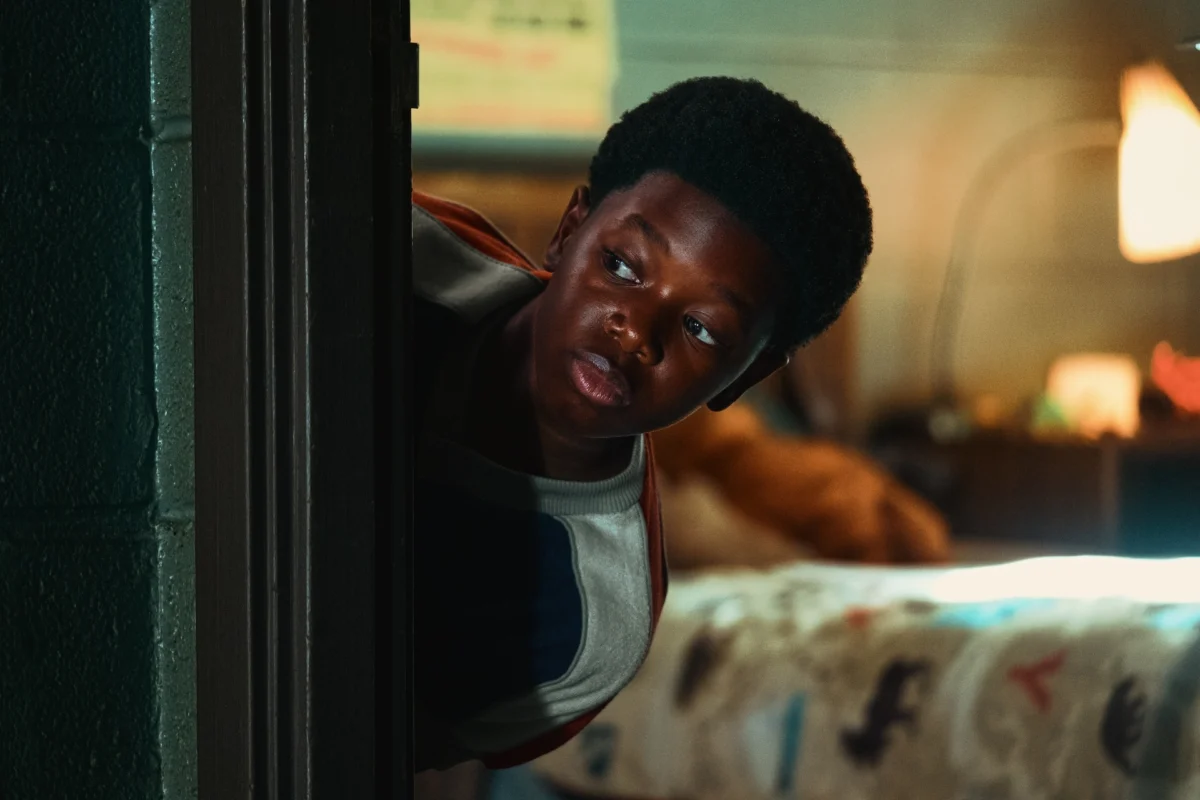
The sixth episode of Euphoria’s third season, titled Stand Still and See, has provided a definitive shift in the narrative arc of the series by humanizing its primary antagonist, Alamo Brown. Portrayed by veteran actor Adewale Akinnuoye-Agbaje, Alamo Brown has loomed over the season as a formidable and often enigmatic figure within the criminal underworld that now entangles the show’s protagonist, Rue Bennett. By pivoting the focus toward a meticulously crafted flashback sequence, the episode offers a grim examination of how early domestic betrayal and maternal manipulation forged the hardened businessman and kingpin viewers have come to know. This development marks a significant departure from the show’s traditional high school-centric drama, leaning further into the gritty, neo-noir territory that has defined the series’ post-time-jump era.
The Genesis of a Villain: The Preston Deception
The installment opens with a visceral dive into the past, introducing a young Alamo Brown, played by Ca’Ron Jaden Coleman. The narrative centers on his relationship with his mother, known as Mama Brown, portrayed by the critically acclaimed Danielle Deadwyler. The flashback establishes a household defined by a veneer of stability that is ultimately revealed to be a calculated performance. Central to this sequence is the character of Preston, played by Kwame Patterson, a man whose physical appearance is defined by severe chemical burns sustained in a workplace accident.
The relationship between Mama Brown and Preston is initially presented as a genuine courtship born of shared hardship. Preston, having recently received a substantial financial settlement from his former employer as compensation for his injuries, represents a ticket to a better life for the Brown family. For young Alamo, Preston is more than a financial benefactor; he is a paternal figure whom the boy grows to respect and love. The tragedy of the episode peaks during a sequence at the beach, where Preston, hopeful and planning a future, intends to propose to Mama Brown.
The emotional pivot occurs upon their return from the vacation. The family arrives at an empty home, with all their possessions and Preston’s wealth seemingly vanished. Mama Brown convinces Alamo that they must flee, claiming there is nothing left to build on. However, the illusion of victimhood is shattered when they arrive at the home of Alamo’s biological father. There, the young boy recognizes the very items stolen from their previous residence. The realization is immediate and devastating: his parents had coordinated a "long con" against Preston, a man who had offered them nothing but kindness and security. This foundational trauma—seeing his mother ruthlessly exploit a vulnerable man—serves as the psychological bedrock for Alamo’s adult persona.
Psychological Implications and the Aversion to Women
The revelation of Mama Brown’s treachery provides the necessary context for Alamo’s behavior in the current Euphoria timeline. Adewale Akinnuoye-Agbaje has noted that this specific betrayal by the primary female figure in his life instilled a deep-seated "aversion to women." This psychological scarring dictates the operational structure of his criminal enterprise. Unlike many of his contemporaries in the drug trade, Alamo’s organization is almost exclusively male-dominated.
Akinnuoye-Agbaje highlighted the significance of Rue Bennett’s (Zendaya) role within this context. Rue is the first woman Alamo has seen fit to employ in a capacity other than as a stripper. This suggests that Alamo sees a reflection of his own pragmatism or perhaps a shared brokenness in Rue that transcends his general distrust of women. This dynamic adds a new layer of tension to Rue’s survival, as she navigates an environment where the boss’s respect is precarious and rooted in deep-seated trauma.
The episode also clarifies the animosity between Alamo and Laurie, the soft-spoken but lethal drug dealer played by Martha Kelly. It is revealed that Alamo was instrumental in Laurie’s entry into the business, acting as a mentor or benefactor. However, his resentment stems from her eventual independence. In Alamo’s worldview, a woman "breaking free" and challenging his authority is not just a business rivalry; it is a personal affront that mirrors his mother’s perceived abandonment and manipulation. His aggressive pursuit of the money stolen from the Silver Slipper by Laurie’s crew is fueled as much by this psychological grudge as it is by financial loss.
Cast Insights and Character Depth
Adewale Akinnuoye-Agbaje, known for his roles in Lost and Oz, has expressed that the complexity of the character was the primary draw for joining the HBO series. In a series of statements regarding the role, the actor emphasized that he does not view Alamo through a binary lens of "hero" or "villain." Instead, he approaches the character as a human being reacting to a series of specific, often tragic, circumstances.

"I think particularly what drew me as an actor was the opportunity to unfold this character because we do get a chance to delve into his backstory, which you don’t always get with a villain," Akinnuoye-Agbaje stated. He noted that the narrative allows for layers, texture, and nuance, which are essential for preventing the character from becoming a caricature of a "kingpin." By showing "the making of the man," the series invites the audience to understand the logic behind his cruelty, even if they do not sympathize with it.
The casting of Danielle Deadwyler as Mama Brown further elevates the episode’s impact. Following her heralded performance in Till, Deadwyler brings a chilling pragmatism to the role of a mother who views her child’s emotional development as secondary to financial survival. The chemistry between Deadwyler and Patterson makes the eventual betrayal of Preston feel like a visceral blow to the audience, reinforcing the show’s theme that the most dangerous people are often those closest to us.
Contextualizing Season 3: A Narrative Shift
Season 3 of Euphoria has been characterized by a significant shift in tone and scope. Following the massive success of the first two seasons, which focused heavily on the internal lives of teenagers in East Highland, the third season has expanded into the adult world of organized crime and systemic failure. This shift was necessitated by both the aging of the cast and the narrative trajectory of Rue’s addiction, which has moved from the classroom to the dangerous fringes of society.
The series continues to be a juggernaut for HBO. According to Nielsen data and HBO’s internal metrics, Euphoria remains the network’s second most-watched series of the modern era, trailing only Game of Thrones. The long production delay between the second and third seasons, attributed to the busy schedules of its breakout stars and the passing of actor Angus Cloud (Fezco), created immense pressure for the show to evolve. By introducing characters like Alamo Brown and providing them with the same psychological depth once reserved for the core teenage cast, showrunner Sam Levinson is attempting to mature the series alongside its audience.
Analysis of Broader Implications
The introduction of Alamo’s backstory serves as a commentary on the cyclical nature of trauma, a recurring theme in Euphoria. Much like the show’s exploration of Nate Jacobs’ (Jacob Elordi) relationship with his father, or Rue’s struggle with the grief of losing her own father, Alamo is presented as a victim of a generational cycle. His misogyny is not an inherent trait but a defense mechanism developed in response to maternal deception.
From a structural standpoint, the focus on the "villain’s origin story" in Episode 6 suggests that the conflict between Alamo, Laurie, and Rue is reaching a boiling point. By establishing Alamo’s history of being conned, the writers have raised the stakes for Rue’s own deceptions. If Alamo discovers that Rue is not the loyal soldier he believes her to be, his reaction will likely be informed by the ghost of Preston—a man who was "taken for everything" because he dared to trust.
Furthermore, the episode highlights the economic desperation that often underpins the show’s criminal elements. The character of Preston, a man discarded by his workplace after a life-altering injury, represents the "forgotten" class that is easily exploited by predators like Mama Brown. This socio-economic subtext adds a layer of realism to the show’s often heightened aesthetic, grounding the drama in the harsh realities of American industrial life.
As Season 3 continues to unfold on HBO and Max, the character of Alamo Brown is set to remain a pivotal force. The exploration of his past in Stand Still and See has successfully transformed him from a generic threat into a complex, tragic figure whose shadow looms large over the future of every character in the series. Viewers can expect the fallout from his past to continue influencing his decisions as he seeks to maintain his grip on both his business and his psychological defenses.