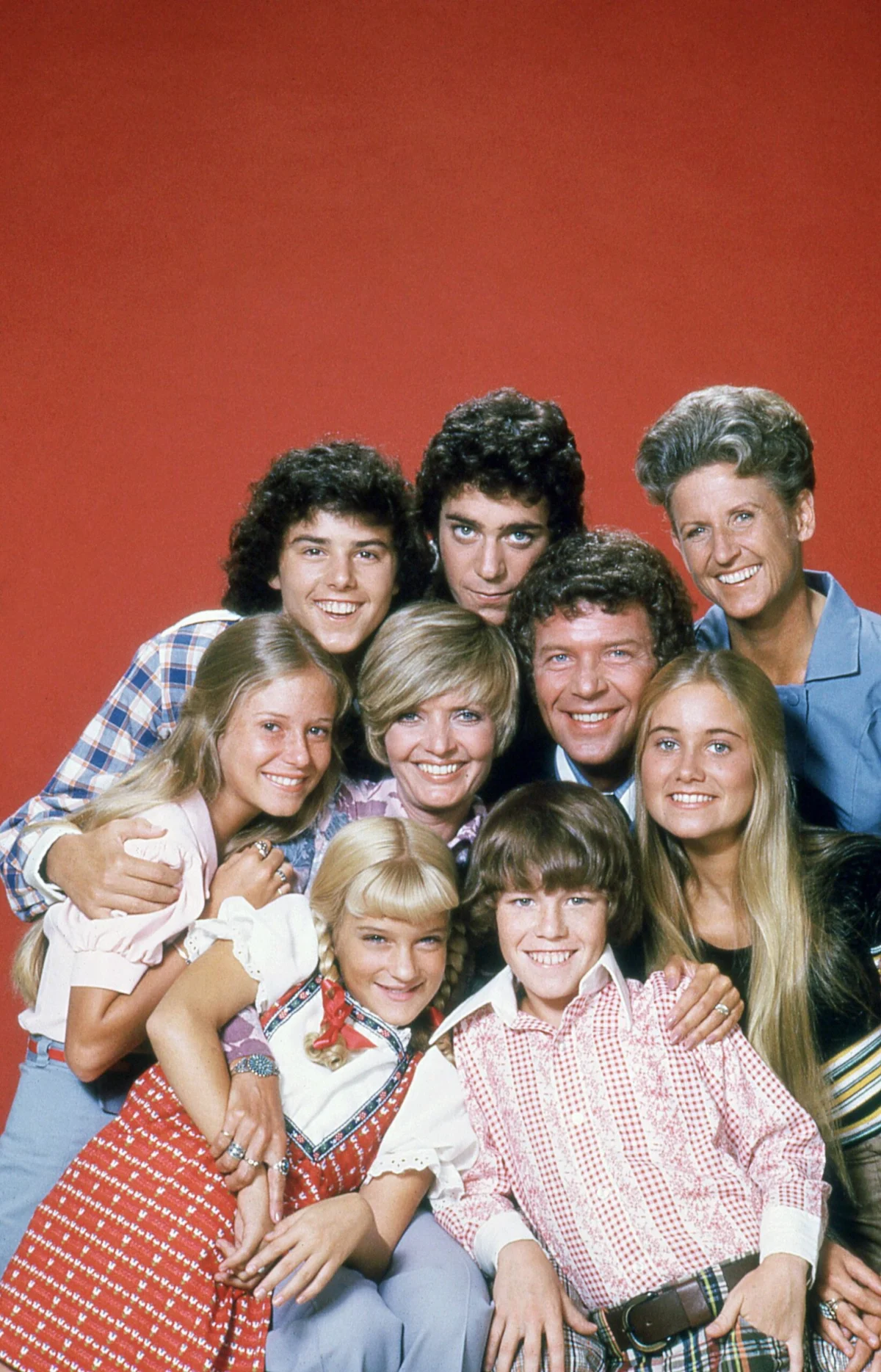
Eve Plumb, the actress who became a household name portraying the middle sister Jan Brady on the iconic sitcom The Brady Bunch, has provided a candid look into the financial realities of classic television stardom. In her recently released memoir, Happiness Included: Jan Brady and Beyond, which debuted on April 28, Plumb addresses a long-standing misconception regarding the wealth of child stars from the "Golden Age" of television syndication. Despite the show’s ubiquitous presence on global airwaves for over half a century, Plumb revealed that the cast receives virtually no financial compensation for the constant rebroadcasting of the series.
The revelation has sparked a broader conversation about the evolution of actor contracts, the history of residuals in Hollywood, and the disparity between the cultural impact of a television program and the financial security of its performers. Plumb’s memoir offers a "brutally honest" assessment of her current relationship with the show’s earnings, noting that the financial windfall many fans assume exists is a myth.
The Reality of Residuals in the 1970s
In the introduction to her memoir, Plumb directly addresses the public’s assumptions about her wealth. "If I had a dime for every rerun episode, I’d pay off the national deficit," she wrote. "I don’t." This sentiment was further elaborated upon during an April interview with PauseRewind and a subsequent appearance on WGN News in May. Plumb explained that the structure of television contracts during the late 1960s and early 1970s was vastly different from the lucrative deals negotiated by modern television ensembles.
According to Plumb, the standard Screen Actors Guild (SAG) contracts of the era were designed for a media landscape that did not yet include cable television, home video, or digital streaming. "We don’t make residuals," she told KOMO News, clarifying that the show’s continued popularity might actually be bolstered by its low cost to broadcasters. She speculated that the show has remained on the air for over 40 years specifically because networks and local stations do not have to pay the cast for reruns.
The contractual limitations of the time were rigid. Plumb noted that the original agreements typically allowed for only ten "runs" or airings of each episode. Once those ten airings were completed—usually within the first few years of syndication—the actors’ rights to further payment were exhausted. In the pre-cable era, the concept of a show running perpetually for 50 years was not factored into the legal frameworks of the industry.
Comparative Earnings and the Cost of Child Stardom
The financial narrative of The Brady Bunch is further illuminated by the writings of Barry Williams, who played the eldest brother, Greg Brady. In his 1992 memoir, Growing Up Brady: I Was a Teenage Greg, Williams detailed the specific salaries earned by the child actors during the show’s original production run from 1969 to 1974.
Williams reported that salaries for the young cast members were modest by today’s standards. By the fifth and final season of the show, the highest-earning child actor received approximately $1,100 per week. Over a standard 22-episode season, this amounted to a gross income of roughly $24,200. When adjusted for inflation, $24,200 in 1974 is equivalent to approximately $155,000 in 2024. While this appears to be a significant sum for a teenager, Williams emphasized that the net income was much lower after accounting for agent commissions (typically 10%), taxes, and personal expenses.
Furthermore, Williams pointed out that many of the child actors were expected to contribute to their family’s household expenses. "It was enough to indulge in toys, but hardly enough to carry you through the slow periods that inevitably followed," Williams noted. The lack of ongoing residual income meant that once the show ended and the initial syndication payments dried up, the actors had to find new sources of income immediately to maintain their livelihoods.
The History of Syndication and the 1960 Strike
To understand why the cast of The Brady Bunch was excluded from the long-term profits of their work, it is necessary to examine the history of the Screen Actors Guild and the 1960 strike led by Ronald Reagan. This strike was a pivotal moment in Hollywood history, as it established the concept of residuals for television actors. However, the initial rules were limited.

In the 1960s, residuals were viewed as a form of "re-use fee" rather than a share in the perpetual profits of a show. The industry standard was a "sliding scale" where actors were paid a percentage of their original salary for the first few reruns, with the payments decreasing until they stopped entirely after a set number of airings. It wasn’t until later negotiations in the 1970s and 1980s that SAG-AFTRA secured more robust, ongoing residual structures for its members.
The Brady Bunch fell into a transitional period. While the actors benefited from the initial 1960 residual rules, they were not protected by the more expansive agreements that would later benefit the casts of shows like Friends or Seinfeld. For comparison, the lead actors of Friends reportedly earn upwards of $20 million per year each in residuals due to the highly sophisticated syndication and streaming deals negotiated in the 1990s and 2000s.
The Cultural Impact vs. Financial Return
The Brady Bunch aired for 117 episodes over five seasons. While it was never a top-ten hit during its original run on ABC, it became a cultural phenomenon in the mid-1970s when it entered daily syndication. For generations of viewers, the Brady family represented the idealized American suburban experience.
The show’s enduring legacy includes numerous spin-offs, such as The Brady Bunch Hour, The Brady Brides, and the 1990s dramatic reboot The Bradys, as well as several television movies and two successful theatrical parody films. Despite this massive brand expansion, the original "Brady kids"—Eve Plumb, Barry Williams, Maureen McCormick (Marcia), Christopher Knight (Peter), Susan Olsen (Cindy), and Mike Lookinland (Bobby)—remained tied to their original 1960s-era contracts for the source material.
Plumb’s memoir, Happiness Included: Jan Brady and Beyond, serves as a reflection on this dichotomy. She discusses the challenge of being forever associated with the "Jan Brady" character—often defined by the "Marcia, Marcia, Marcia" trope of sibling rivalry—while navigating a career that required her to find work as an adult actress and artist without the cushion of a television fortune.
Industry Implications and Modern Parallels
The issues raised by Plumb are not merely historical footnotes; they remain at the center of labor disputes in modern Hollywood. During the 2023 SAG-AFTRA strike, one of the primary points of contention was the "streaming residual." Actors argued that the transition from traditional broadcast syndication to streaming platforms like Netflix and Paramount+ had effectively gutted their residual income, echoing the same contractual "blind spots" that affected the Brady cast in the 1970s.
In the current era, actors often receive "buyouts" for streaming content, which, like the ten-run cap of the 1970s, limits their ability to profit from a show that becomes a long-term hit. Plumb’s revelation serves as a cautionary tale for modern performers about how rapidly evolving technology can render existing contract structures obsolete.
Life After the Bunch
Despite the lack of residual wealth, Eve Plumb has maintained a prolific career. Following The Brady Bunch, she took on "grittier" roles to distance herself from her child-star image, most notably in the 1976 television movie Dawn: Portrait of a Teenage Runaway. She has also found significant success as a painter, with her artwork being featured in galleries across the United States for over two decades.
The surviving cast members of The Brady Bunch have remained close, reuniting for various projects, including the 2019 HGTV series A Very Brady Renovation, where they restored the original house used for exterior shots of the show. While these reunions provide appearance fees, they are distinct from the passive residual income that many assume supports the cast.
Chronology of The Brady Bunch Financial Milestones
- 1969: The Brady Bunch premieres on ABC; child actors start at base union rates.
- 1974: The show is canceled after five seasons; Barry Williams reaches a peak salary of $1,100 per week.
- 1975: The show enters daily syndication, becoming a massive hit with younger audiences.
- 1970s-1980s: The cast receives residuals for the first ten reruns of each episode; payments cease thereafter.
- 1992: Barry Williams publishes Growing Up Brady, revealing the modest nature of the cast’s earnings.
- 2019: The cast reunites for A Very Brady Renovation, capitalizing on the show’s 50th anniversary.
- 2024: Eve Plumb releases Happiness Included: Jan Brady and Beyond, confirming the absence of modern residuals from the original series.
Eve Plumb’s memoir provides a necessary correction to the Hollywood mythos. It highlights a period in television history where the stars of a show could be globally recognized and yet financially disconnected from the long-term success of their own work. As The Brady Bunch continues to stream on platforms like Paramount+ and Pluto TV, Plumb’s insights remind audiences that the "happily ever after" of classic television is often a matter of cultural legacy rather than bank balances.