Narrative Framework and Character Dynamics
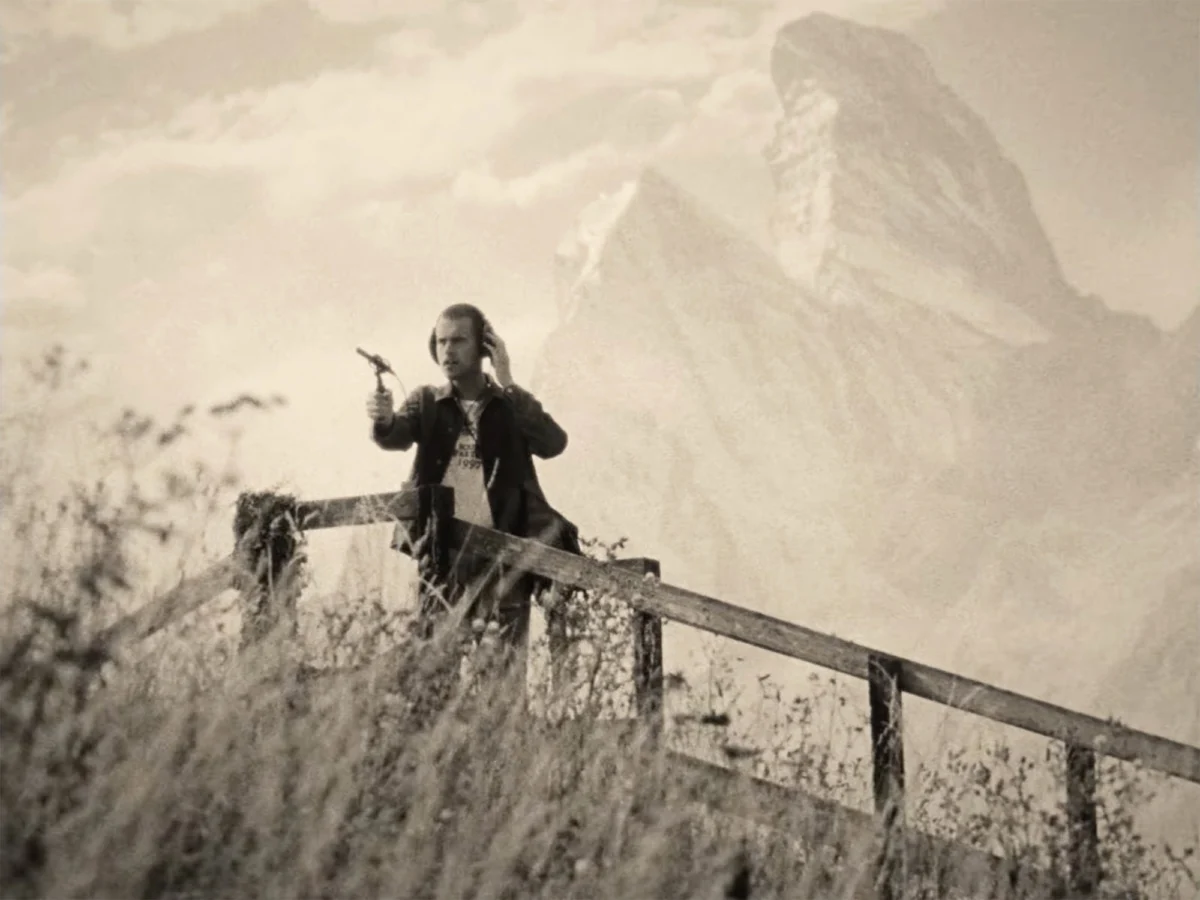
At the heart of The Peril at Pincer Point is Jim Baitte, portrayed by Jack Redmayne. Jim is introduced as an "inert" and somewhat directionless sound recordist struggling to establish his professional credibility. His career hit a nadir while working under the tutelage of P.W. Griffin, a fictional, tyrannical B-movie director known for his demanding nature and "lauded" yet abrasive creative process. Griffin, accusing Jim of lacking both artistic vision and the "creative courage" necessary for high-level filmmaking, dispatches him to the desolate, fog-shrouded island of Pincer Point.
The mission is ostensibly simple: Jim must capture a sound of such visceral power that it can salvage the underwhelming finale of Griffin’s latest horror feature. However, upon arrival, the narrative shifts from a workplace comedy into a spectral mystery. Jim becomes entangled in the local lore of the island, specifically a prophecy concerning a ghostly sea captain who harvests the souls of ambitious youths to supplement his eternal crew. The film explores whether Jim’s obsession with recording the "perfect sound"—a ghost ship of legend—will lead to his professional salvation or his literal soul’s forfeiture.
The supporting cast includes Alyth Ross, Os Leanse, Mike Mackenzie, Dashiell Upton, Jason Hogan, Mat Wright, Noah Stratton-Twine, Isobel Laidler, and Oliver Woolf. This ensemble portrays a collection of "bizarre locals" who serve as both obstacles and guides in Jim’s surreal descent into the island’s mythology.

Chronology of Production and Festival Success
The trajectory of The Peril at Pincer Point is a testament to the viability of ultra-low-budget filmmaking in the mid-2020s. Directors Jake Kuhn and Noah Stratton-Twine, who previously collaborated on the project Two Big Feet and various short films, began the project as an "inside joke" that eventually evolved into a full-scale feature production. According to the directors, the film was "made for pennies," relying on the ingenuity of the crew and the atmospheric natural locations of the UK coastline to provide production value that would otherwise cost millions in a studio environment.
The film’s timeline reached a critical milestone in early 2026 when it was accepted into the SXSW Film Festival. SXSW has long been a kingmaker for independent cinema, serving as the launchpad for films like Tiny Furniture and Shiva Baby. For The Peril at Pincer Point to win the NEON Auteur Award is a significant indicator of its quality. The award, sponsored by the distributor NEON—the same company behind the North American release of Parasite and Triangle of Sadness—specifically recognizes filmmakers with a singular, uncompromising vision.
Following its success in Austin, Texas, the film is scheduled to make its UK premiere at Fright Fest in August 2026. Fright Fest is widely considered the UK’s premiere event for horror and fantasy cinema, suggesting that while the film is categorized as a comedy, its "offbeat and surrealist" elements contain enough genre-bending DNA to appeal to horror enthusiasts.
Visual Style and Technical Craftsmanship
The trailer highlights a distinct visual language that has drawn immediate comparisons to Robert Eggers’ The Lighthouse (2019) and the more recent Rose of Nevada. Cinematographer Murray Zev Cohen utilizes a vintage visual style, characterized by high-contrast monochrome or desaturated palettes and a tight aspect ratio that evokes the feeling of early 20th-century maritime photography. This "vintage" look is not merely an aesthetic choice but a narrative tool intended to immerse the audience in the "spectral" and timeless nature of Pincer Point.

The use of sound is also central to the film’s identity, both as a plot device and a technical achievement. Given that the protagonist is a sound designer, the film places an unusual emphasis on the auditory experience. The "crustaceous" sounds of the island—the clicking of shells, the roar of the surf, and the groaning of ancient timber—are layered to create a sensory environment that mirrors Jim’s increasing paranoia. This focus on "sonic storytelling" is one of the primary reasons the film was singled out for the Auteur Award, as it demonstrates a level of technical intentionality rarely seen in microbudget productions.
The Economic Reality of Microbudget Cinema
The production of The Peril at Pincer Point serves as a case study for the "indie spirit" in an era where mid-budget films are increasingly rare. In their official statement, Kuhn and Stratton-Twine emphasized that the film was built on "doubloons" and "pennies." This approach reflects a growing trend in the industry where filmmakers bypass traditional gatekeepers by utilizing high-quality, consumer-grade digital cameras and leveraging social media for grassroots promotion.
Industry analysts suggest that the success of such "made-for-nothing" films is a reaction to the saturation of high-budget, formulaic franchise content. Audiences and festival juries are increasingly gravitating toward "hodgepodge curios"—films that take significant creative risks because they have very little financial capital to lose. By winning the NEON Auteur Award, The Peril at Pincer Point has effectively bridged the gap between "DIY hobbyism" and professional prestige, proving that a compelling narrative and a strong visual identity can outweigh a lack of traditional funding.
Official Responses and Director Statements
In a joint statement following the trailer’s release, directors Noah Stratton-Twine and Jake Kuhn reflected on the surreal nature of their film’s journey. "What started as an inside joke has extrapolated into both bamboozling means and our wildest dreams," they remarked. The directors credited the success of the film to the collaborative effort of their small crew, stating, "This ‘hodgepodge curio’ has changed our lives, all made with the indie spirit that however few doubloons in your pocket… We made this film for pennies, and it’s changed our lives. Thanks to everyone who helped make it happen."

The reception from the SXSW jury was equally enthusiastic. In their citation for the Auteur Award, the jury noted the film’s "fearless commitment to its own internal logic" and its ability to create a "vivid, tactile world" on a shoestring budget. This sentiment has been echoed by early reviewers who attended the festival, many of whom praised the film for its unique blend of "British dry wit and Lovecraftian dread."
Broader Implications and Future Prospects
The emergence of The Peril at Pincer Point suggests a potential resurgence of "Regional Gothic" cinema in the UK. By focusing on remote coastal locations and local fables, Kuhn and Stratton-Twine have tapped into a rich tradition of British folk horror and nautical mythology, but have updated it with a modern, self-aware comedic sensibility.
The film’s success also has implications for the "Auteur" label. In 2026, being an "auteur" is increasingly defined not just by directing, but by the ability to wear multiple hats—writing, producing, and even acting—out of necessity. Kuhn and Stratton-Twine’s involvement in every facet of the production, from the script to the final edit, reinforces the idea that the future of independent cinema lies in the hands of multi-hyphenate creators who can navigate the technical and logistical challenges of low-budget filmmaking.
As of July 2026, The Peril at Pincer Point does not yet have a wide theatrical release date. However, the momentum gained from the SXSW win and the upcoming Fright Fest screening is expected to lead to a distribution deal, likely with a boutique label specializing in arthouse or genre-defying content. For now, the filmmakers are encouraging audiences to follow their official social media channels for updates on limited screenings and potential streaming availability. The trailer remains the primary touchstone for what is being hailed as the most "unique microbudget film" of the year, a nautical odyssey that proves the most powerful stories often come from the most unlikely depths.