Horror is widely recognized as a universal phenomenon, with every culture on Earth cultivating its own distinct lineage of tales of terror. These narratives are invariably colored and flavored by the distinct socio-historical experiences, generational traumas, and folklore of the populations that produce them. While structural elements of dread and suspense often transcend geographic borders, the vantage points, thematic approaches, and linguistic frameworks of international authors introduce profound nuances and complexities to the genre. By engaging with literature translated from diverse global languages, readers are afforded the opportunity to transcend domestic literary conventions and confront psychological and visceral landscapes previously unimagined.
To illuminate the expanding boundaries of speculative fiction and dark literature, this overview examines seven recent books in translation that demonstrate the vast range and endless possibilities of contemporary horror.
The Evolution and Market Impact of International Horror

In recent years, the global publishing market has witnessed a notable surge in demand for translated fiction, driven in large part by speculative genres such as horror, weird fiction, and magical realism. According to industry metrics from organizations tracking translation publishing trends, works translated into English have seen a steady upward trajectory in both publication volume and critical acclaim. This commercial and literary shift reflects a broader readership appetite for narratives that bypass traditional Anglo-American tropes in favor of indigenous mythologies, localized political allegories, and distinct stylistic approaches from Latin America, Europe, and Asia.
Publishing experts note that translation acts as a critical bridge, allowing domestic markets to access stories rooted in specific regional histories—such as post-dictatorship trauma in the Caribbean or the industrial surrealism of Eastern Europe. Rather than diluting the impact of the original prose, skilled translators work to preserve the cadence, idiomatic expressions, and unsettling atmospheres that define regional horror traditions. The resulting works challenge the homogeneity of the mainstream horror market, proving that fear is not only universal but infinitely adaptable.
Cosmic Dread and Machinery: Thousands of Eyes by Maximiliano Barrientos
Among the most conceptually jarring contributions to contemporary cosmic horror is Maximiliano Barrientos’s novel Thousands of Eyes, translated expertly from Spanish by Thomas Bunstead. Set against the stark and expansive backdrop of Bolivia, the narrative unfolds across a sweeping timeline stretching from the turbulent political landscape of the 1970s into a speculative, post-apocalyptic future.

The novel employs a tripartite narrative structure, utilizing three separate narrators who recount their respective roles in a protracted conflict against a speed-worshipping car cult. Barrientos constructs a deeply unsettling world where conventional biology intersects with industrial surrealism: spark plugs sprout organically from flora, human brains are preserved in jars to endure as conscious entities, and ritual sacrifices are executed via jumper cables or catastrophic high-speed collisions with colossal celestial trees. At its core, however, Thousands of Eyes remains anchored in human grief and historical trauma, anchored symbolically by a thousand-eyed ghost fish that utilizes physical and spiritual wounds to incubate itself. The novel’s relentless momentum is further amplified by a cacophonous background soundtrack of roaring engines and black metal albums, establishing Barrientos as a visionary voice in South American speculative fiction.
Demonic Possession and Post-Dictatorship Trauma: Asmodeus by Rita Indiana
Exploring the volatile intersection of bodily decay, subcultural rebellion, and historical memory, Rita Indiana’s Asmodeus—translated from Spanish by Achy Obejas—presents a riotous and uncompromising reimagining of demonic possession.
The plot centers on Asmodeus, an ancient entity inhabiting the increasingly decrepit physical vessel of an aging rock star named Rudy. Weary of the monotony of hosting a deteriorating body, the demon decides to take an unauthorized vacation, executing a high-speed transit route through a diverse series of hosts. This cavalcade of temporary vessels includes the occultist daughter of a former torturer, a queer goth woman, heavy metal musicians, hardened criminals, and other subterranean figures emerging into the light in the precarious aftermath of a brutal national dictatorship.

Indiana navigates this frantic pinball trajectory through marginalized subcultures with the acerbic wit and striking visual poetry that characterized her earlier acclaimed work, Tentacle. While Asmodeus adopts a significantly darker tone, it delivers a razor-sharp critique of power dynamics, societal decay, and the lingering psychological scars left in the wake of systemic violence.
Mundane Violence and Suburban Realism: Don’t Leave Her Alone by Desirée de Fez
Shifting away from the supernatural toward the chilling realm of psychological realism, Spanish author Desirée de Fez presents a suffocating domestic nightmare in Don’t Leave Her Alone, translated by Lizzie Davis. The narrative unfolds through three intersecting strands focusing on a mother and her two daughters, each harboring complex personal grievances, concealed secrets, and deep-seated anxieties that converge in a sequence of unnerving events on Christmas Eve.
As the narrative ticks down to a bloody and inevitable climax, the novel offers a harrowing examination of the psychological dynamics binding Diana, a woman desperately striving for outward normalcy; Alba, whose codependency threatens to consume her; and their matriarch, Carmen. While the novel ultimately culminates in visceral, grotesque violence, its most disturbing element lies in its meticulous dissection of daily life. De Fez constructs a suburban realist nightmare where the true horror predates the supernatural or physical bloodshed, manifesting instead in the quiet, corrosive violence of interpersonal interactions and the crushing mundanity of domestic entrapment.

High-Gothic Purity and Psychological Deterioration: The Eye of Goliath by Diego Muzzio
Drawing upon high-gothic sensibilities and the atmospheric dread characteristic of classic 1960s horror cinema, Diego Muzzio’s The Eye of Goliath, translated from Spanish by Rahul Bery, offers a disorienting reinterpretation of classic psychological duality.
Set within a Scottish sanitarium dedicated to treating the psychological casualties and trauma victims of World War I, the novel introduces a mysterious visitor named Stevenson. Stevenson arrives with a compelling account seeking treatment for David Bradley, an engineer whose severe, inexplicable physical scars and compulsive, tic-like behavior of "swimming" until loss of consciousness have reduced him to a shadow of his former intellectual brilliance.
Bradley’s descent is charted through his own journal entries, documenting his transition from a rational, scientifically minded engineer to a fractured, psychotic individual. His journey leads him through a Kafkaesque landscape of rigid institutional bureaucracy, oppressive prisons, and infernal imagery, ultimately terminating at a foreboding lighthouse known as The Eye of Goliath, situated in a remote coastal region grimly classified as "Hell." Muzzio’s unyielding prose delivers a high-pulp, high-art masterpiece that ranks among the most unsettling contributions to modern strange fiction.

Claustrophobic Alien Alienation: Walking Practice by Dolki Min
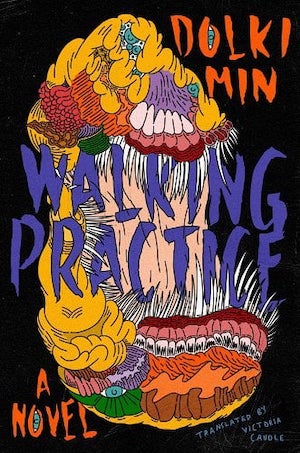
Approaching bodily autonomy and alienation from an entirely non-human perspective, Dolki Min’s Walking Practice, translated from Korean by Victoria Caudle, reinvents the subgenre of body horror. The novel follows a stranded extraterrestrial entity navigating contemporary human society, focusing acutely on the immense, exhausting concentration required of the narrator to maintain a stable human silhouette every second of every day.
This perpetual maintenance induces a state of hyper-awareness regarding the physical shell, rendering ordinary bodily functions intensely claustrophobic and grotesque. Min details how the narrator’s sweat congeals into a sticky membrane, forcing the creature to physically peel itself away from household surfaces. Operating concurrently as an apex predator seeking human prey to ensure its eventual survival and extraction from Earth, the alien narrator punctuates its survivalist struggle with acerbic, darkly comedic observations on human behavior. The resulting text is profoundly disorienting, offering a wholly original perspective on identity, embodiment, and survival.
Intimate Generational Curses: A Sunny Place for Shady People by Mariana Enriquez
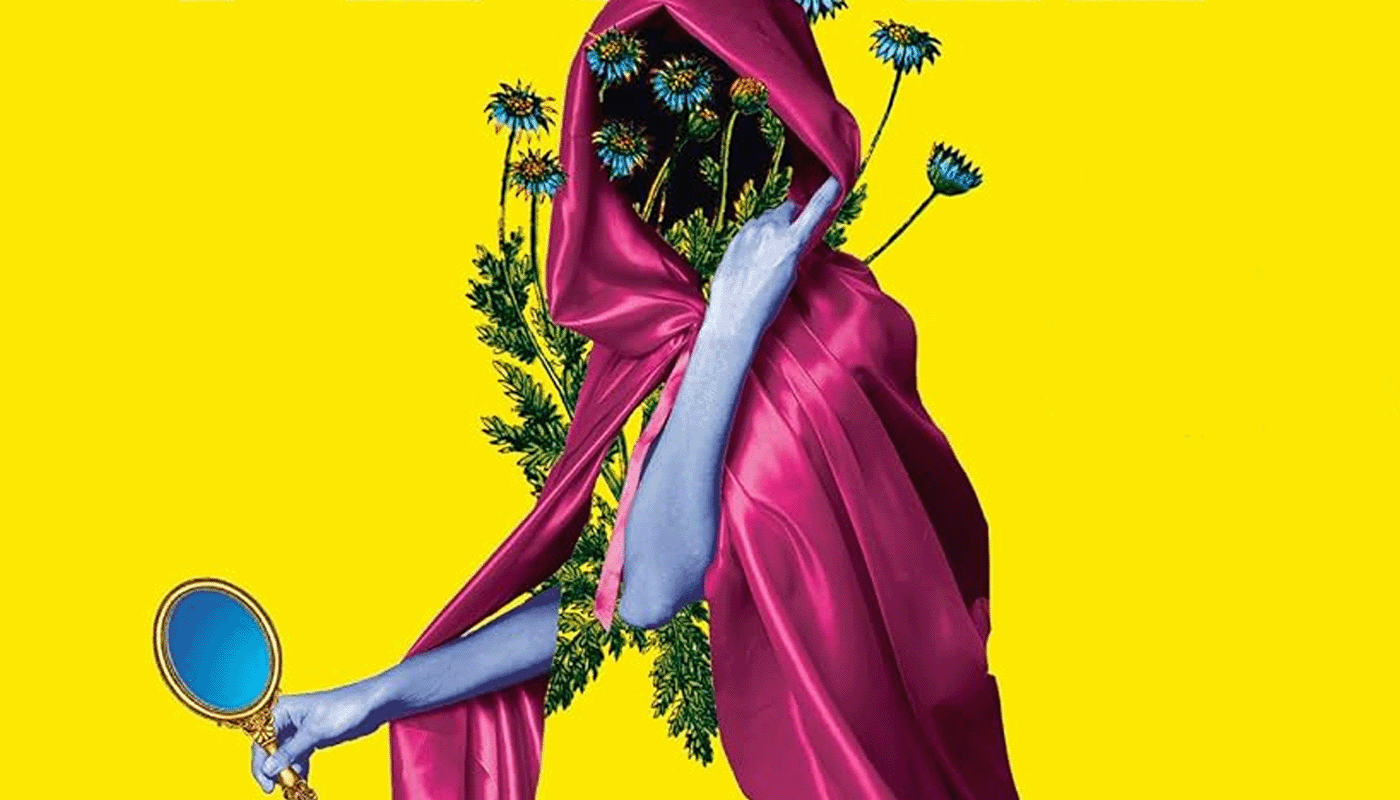
Renowned for embedding visceral terror within the gritty sociopolitical realities of contemporary Argentina, Mariana Enriquez returns with A Sunny Place for Shady People, translated from Spanish by Megan McDowell. Enriquez’s signature style relies heavily on an acute sense of intimacy, ensuring that even the most bizarre fantastical elements remain grounded in deeply personal human stakes.
The collection traverses a spectrum of dark scenarios, ranging from a generational curse that systematically erases the facial features of women to an unnerving exploration of romantic and platonic relationships with ghosts. Other narratives expose the fragile, decaying infrastructure of pleasant suburban facades as neighborhood environments are quietly overrun by spectral manifestations. Within this collection—highlighted by standout stories such as "Julie" and "The Refrigerator Cemetery"—Enriquez maintains a consistent focus on the domestic and the psychological. Each story functions as an intimate confession, whispering threats in darkened rooms to maximize their lingering psychological impact.
Industrial Satire and Mundane Horror: This’ll Make Things a Little Easier by Attila Veres
Concluding this survey of translated dark fiction is Attila Veres’s collection This’ll Make Things a Little Easier, showcasing a unique mastery of conceptual audacity and dark satire. Veres possesses a rare ability to ground absurd, surreal premises in the weary routines of everyday life, blending vivid horrors with a distinctly comedic exasperation.

The collection features narratives ranging from a nightmarish satire of the international publishing industry to a piece of corporate horror wherein a man’s identity is systematically stripped away to transform him into the compliant brand mouthpiece for a soft drink conglomerate. In another tale, two individuals pass the time waiting to be attacked by aquatic monsters on a desolate beach; rather than panicking, the bored young narrators express greater immediate annoyance regarding local sea urchins than the needle-toothed horrors emerging from the surf. Throughout the collection, Veres establishes a pervasive mundanity around terrifying events—such as receiving a severed tooth and soiled currency in the mail with mild irritation—only to pivot seamlessly into darker, more harrowing territory, cementing his status as a major voice in contemporary Hungarian speculative fiction.
Broader Implications for the Publishing Industry
The growing prominence of these translated works underscores a fundamental shift in the global literary ecosystem. As publishing houses continue to invest in translation grants and international scouting, readers gain unprecedented access to how fear is conceptualized across diverse cultural frameworks. Whether examining the historical ghosts of South America, the industrial surrealism of Eastern Europe, or the somatic anxieties of East Asian fiction, horror in translation proves that while cultural specificities shape our nightmares, the desire to confront the unknown remains a universal human endeavor.