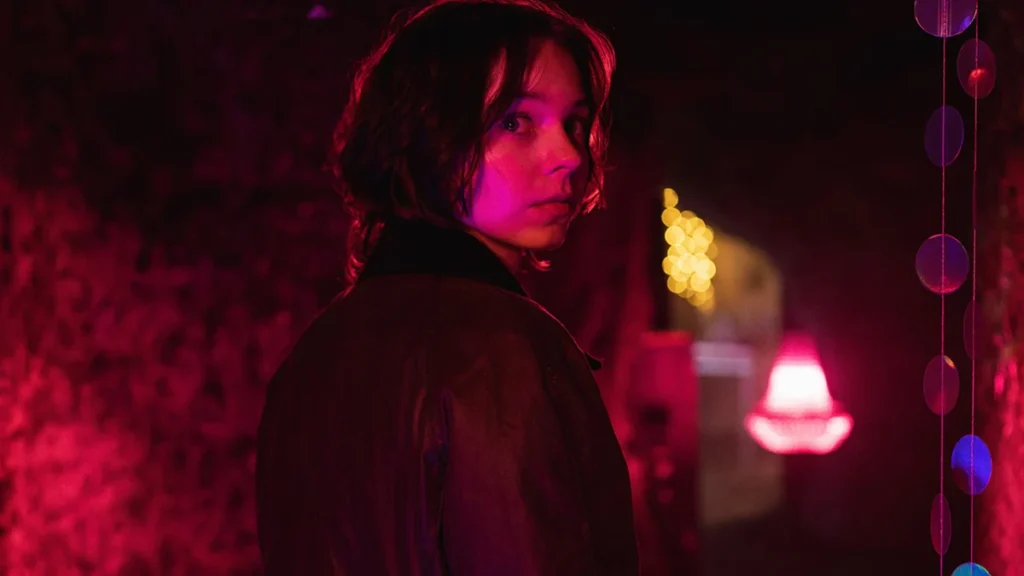
The landscape of modern cinematic fantasy is undergoing a radical reimagining as director Greta Gerwig prepares to bring C.S. Lewis’s beloved literary universe to the screen through a distinctly unconventional lens. Recent promotional materials unveiled by Empire Magazine have provided the global audience with its first official glimpse into Narnia: The Magicians Nephew, confirming months of industry speculation regarding a stylistic overhaul. Rather than initiating the new multi-picture franchise with the chronological familiarity of The Lion, the Witch and the Wardrobe—the 1950 text that cemented the series in popular culture—Gerwig has chosen to adapt the 1955 prequel, The Magician’s Nephew. This foundational narrative decision sets the stage for a sprawling, music-infused fantasy epic scheduled for a theatrical release on February 12, 2027, followed by a digital streaming debut on Netflix on April 2, 2027.
The emergence of these initial promotional images has immediately polarized the literary and cinematic communities. Featuring high-profile casting, including Emma Mackey as the formidable sorceress Jadis and Daniel Craig as the eccentric Uncle Andrew Ketterley, the production showcases an aesthetic deeply indebted to 1970s glam-rock, disco culture, and classic rock iconography. While studio executives and certain critics have praised the ambitious stylistic departure, long-standing purists of C.S. Lewis’s theological and pastoral fantasy have voiced significant reservations. As the entertainment industry analyzes the implications of Gerwig’s creative choices, the discourse surrounding the upcoming film reflects a broader tension between faithful literary adaptation and auteur-driven reinvention in contemporary franchise filmmaking.
Deconstructing the Chronological Shift and Structural Redesign
The decision to bypass The Lion, the Witch and the Wardrobe in favor of The Magician’s Nephew represents a fundamental restructuring of the Narnia cinematic timeline. Published fifth in the original seven-book series, The Magician’s Nephew functions chronologically as the genesis story of the entire Narnian cosmos, detailing the creation of the world by the great lion Aslan and charting the accidental arrival of human visitors from late-Victorian London. By commencing her cinematic journey here, Gerwig establishes an explicit origin story for Jadis, the individual who eventually ascends to tyrannical power as the White Witch in subsequent chronicles.
However, the adaptation introduces significant chronological and narrative deviations from the source text. Most notably, Gerwig has shifted the baseline timeline of the human characters forward by over half a century. While the original novels anchor the framing device in the historical context of late-nineteenth-century Britain and World War II, the new cinematic framework repositions the contemporary entry point toward the late 1990s and early 2000s. Consequently, when the narrative eventually converges upon the events of The Lion, the Witch and the Wardrobe, the Pevensie children will no longer be depicted as World War Two London evacuees escaping the Blitz. This temporal displacement fundamentally alters the socio-historical subtext that characterized the original books, modernizing the human protagonists’ entry point into the magical wardrobe and transforming how subsequent generations will consume the narrative arc.
A Visual and Auditory Tapestry Rooted in Classic Rock
The most striking departure from prior iterations—most notably the well-received 2005 Walden Media and Walt Disney Pictures film adaptation directed by Andrew Adamson—lies in the visual and sonic palette constructed by Gerwig and her design teams. In interviews accompanying the Empire Magazine reveal, Gerwig explicitly described her conceptual framework for the universe as a "rock opera," intended to evoke a sense of scale, kinetic energy, and emotional resonance.
Clarifying that the project is not a traditional musical wherein characters break into spontaneous song, Gerwig emphasized that the project draws heavy thematic and aesthetic inspiration from the formative music of her own upbringing. She cited legendary rock architects such as David Bowie, Paul McCartney, David Gilmour, Pete Townshend, Jimmy Page, and Robert Plant as existential touchstones that informed her creative process. According to the director, this musical philosophy aligns directly with C.S. Lewis’s own textual descriptions of Narnia’s creation, wherein the world is quite literally sung into existence by Aslan. By interpreting the divine song of creation through the lens of 1960s and 1970s rock and roll, Gerwig posits that the universe itself possesses the wild, transcendent qualities of a classic rock composition.
First Look Analysis: Exploring Charn and Reimagining Iconic Characters
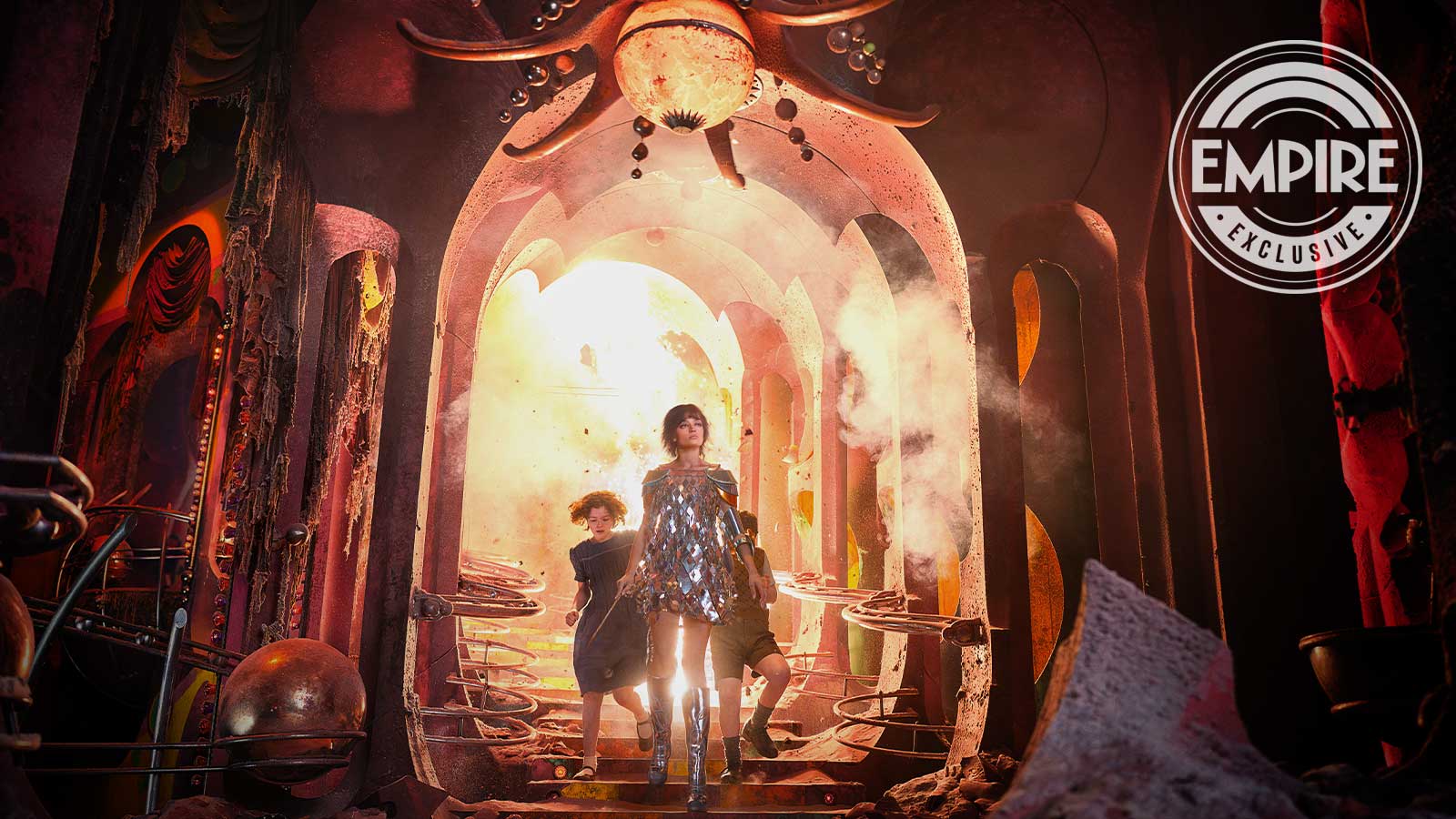
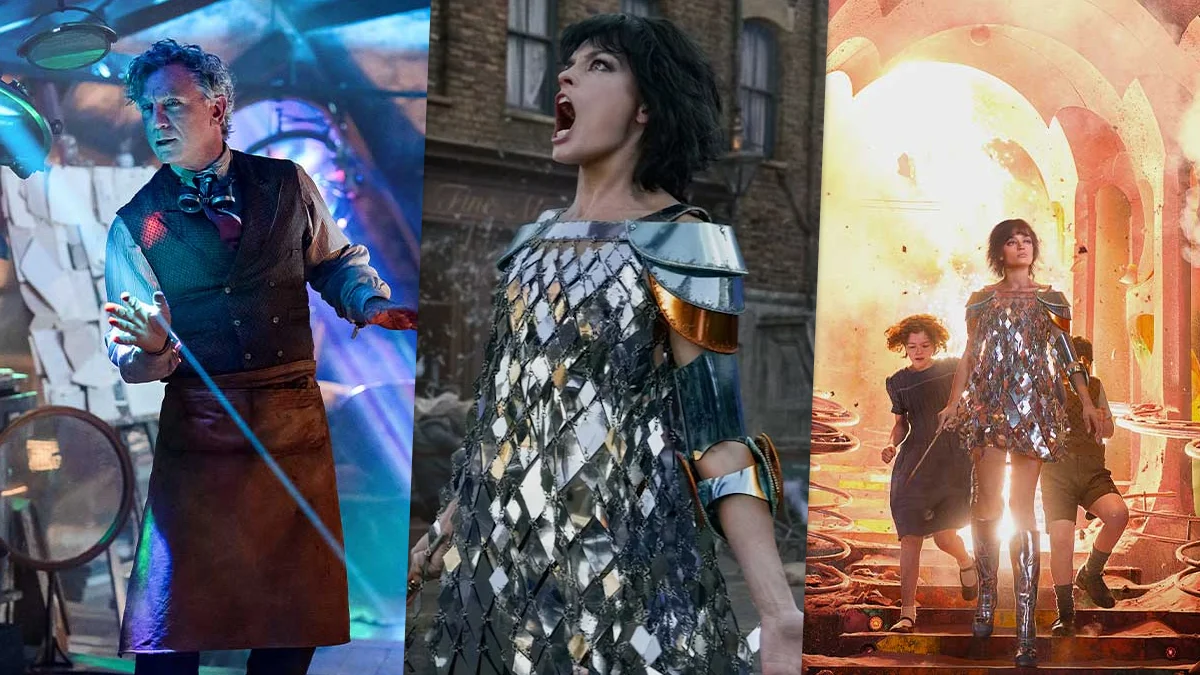
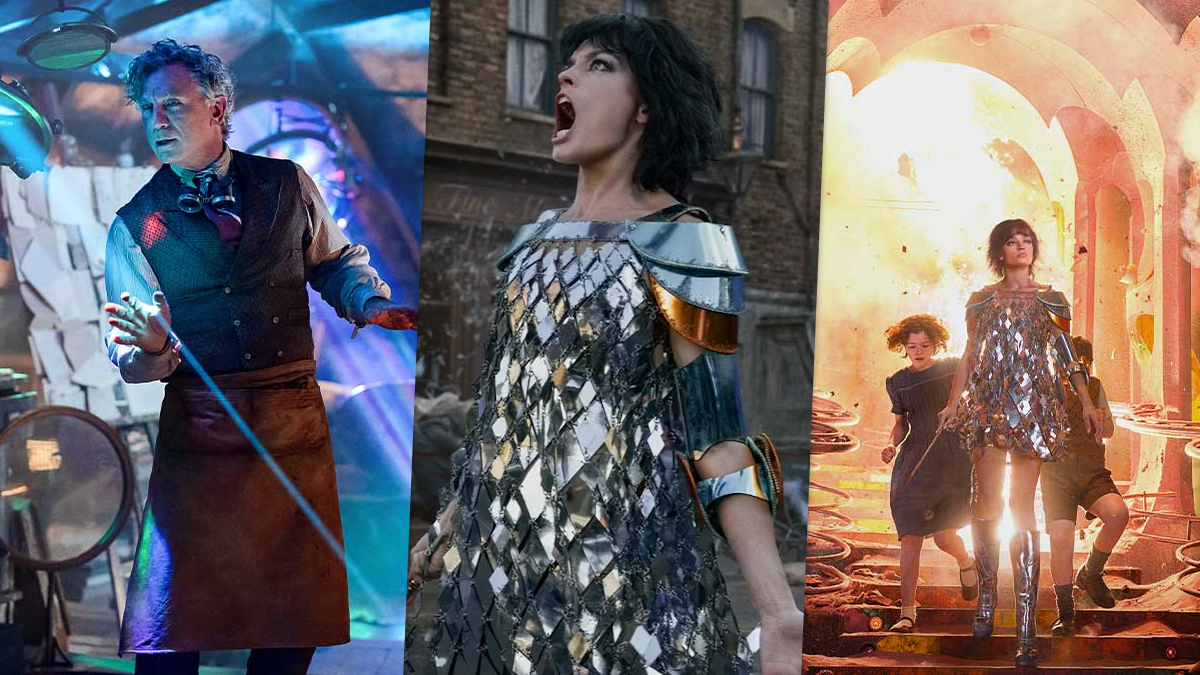
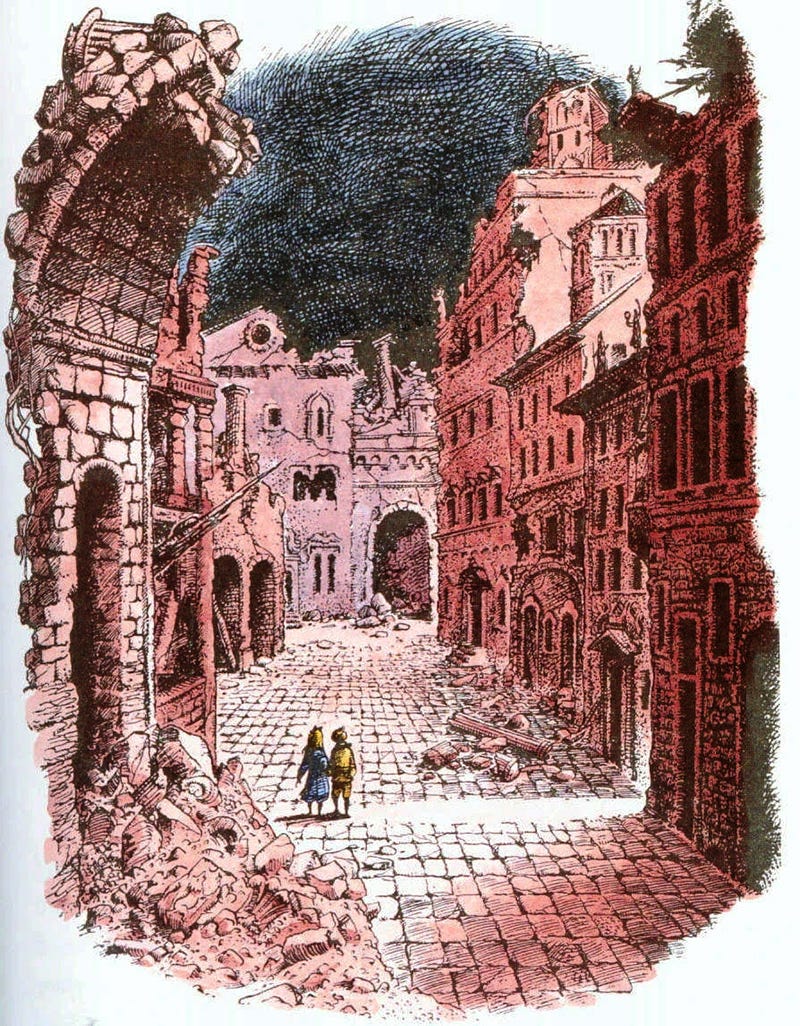
The newly released promotional stills offer a detailed look at several key environments and principal cast members, beginning with a visualization of the dying world of Charn. In C.S. Lewis’s text, Charn is depicted as a vast, silent, and desolate metropolis bathed in the eerie light of a dying, deep-red sun—the ancient home of Jadis, whose deployment of the deplorable word annihilated her civilization. No prior live-action adaptation has ever attempted to visualize Charn, making Gerwig’s depiction a historic milestone for the cinematic franchise. The newly revealed production still features Emma Mackey’s Jadis positioned centrally, flanked by child actors David McKenna as Digory Kirke and Beatrice Campbell as Polly Plummer, standing amidst a landscape that merges architectural decay with vibrant, stylized lighting.
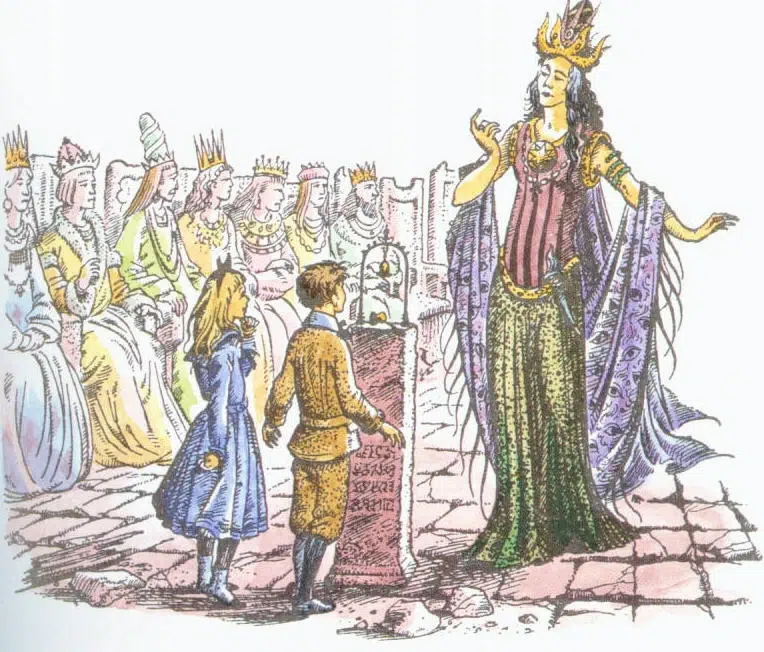
Jadis’s visual redesign marks the most radical departure from Pauline Baynes’s iconic original illustrations. While Baynes depicted the queen in classical, regal garments accompanied by a golden crown, Mackey’s Jadis sports a disco-infused, glam-rock gown that immediately evokes the fashion sensibilities of David Bowie during his Ziggy Stardust era. This aesthetic carries over into the architectural and character design of other figures, such as Daniel Craig’s portrayal of Uncle Andrew Ketterley. Craig described his character to trade publications as the "stupidest magician in the world who actually made magic," a performance housed within an exquisitely detailed, steampunk-influenced wizarding study that contrasts sharply with the austere Victorian study described in the literary canon.
The Thematic Debate: Textual Fidelity Versus Modern Adaptation
The unveiling of these design choices has reignited a perennial debate within fantasy fandom regarding the boundaries of adaptation. Critics of Gerwig’s approach argue that the serene, pastoral, and deeply spiritual tone of C.S. Lewis’s writing has been overshadowed by an overly stylized, hyper-modern aesthetic. Purists point out that Lewis’s text describes the creation of Narnia as a slow, quiet, and reverent phenomenon beginning with a distant, beautiful voice before evolving into a wild tune—a description that many argue aligns poorly with the loud, counter-cultural iconography of glam rock.
Conversely, industry analysts and defenders of the film note that contemporary fantasy cinema frequently relies on distinct, high-concept stylistic signatures to capture mainstream audiences in a crowded media market. They draw parallels to successful modern reinventions such as Jon M. Chu’s adaptation of Wicked, arguing that bold visual world-building is essential for translating literary fantasies into visually arresting cinematic spectacles for younger demographics. Furthermore, supporters emphasize that interpreting the divine song of creation through a rock-and-roll framework provides an emotional accessibility that resonates with modern viewers, even if it diverges from traditional interpretations of the author’s Christian allegories.
Audience Reception and Social Media Discourse
Public reaction across social platforms has demonstrated a sharp ideological divide among consumers. Long-term literary enthusiasts have expressed dismay over the stylistic evolution of core characters, with many taking to digital networks to criticize the abandonment of traditional costume designs in favor of contemporary fashion-forward aesthetics. Prominent online commentators and fandom historians have argued that the modernization strips away the timeless, mythic quality that defines the original texts, suggesting that the resulting film risks alienating audiences seeking a direct translation of the source material.
At the same time, a significant contingent of film enthusiasts and critics has championed Gerwig’s daring vision, praising the production for avoiding the generic aesthetic traps that frequently plague modern fantasy blockbusters. Commentators have highlighted that introducing a distinct auteur perspective is precisely what major intellectual properties require to remain relevant to contemporary audiences. The discourse highlights the inherent challenges faced by filmmakers adapting culturally entrenched literature, where balancing innovative artistic expression against the expectations of a dedicated fanbase remains a high-stakes balancing act.
Broader Industry Implications and Franchise Outlook
The commercial and critical performance of Narnia: The Magician’s Nephew will carry substantial weight for Netflix’s broader strategy regarding major literary acquisitions. Having secured the rights to develop films and television series across the entirety of C.S. Lewis’s seven-book canon, the streaming giant is positioning this project as a cornerstone of its tentpole theatrical and streaming slate. The hybrid release model—featuring an exclusive theatrical window beginning on February 12, 2027, prior to a global streaming rollout on April 2, 2027—underscores Netflix’s commitment to eventizing high-budget fantasy cinema.
As the industry looks toward the release date, the immediate implications of Gerwig’s creative choices will continue to be a focal point for box-office forecasters and cultural critics alike. Whether the gamble on a glam-rock-infused, chronologically inverted Narnia succeeds in captivating a new generation of viewers while satisfying skeptical traditionalists will determine the trajectory of the franchise for years to come. For now, the first look has successfully accomplished its primary promotional objective: generating intense global discourse and ensuring that the return to Narnia remains one of the most anticipated cinematic events of the decade.