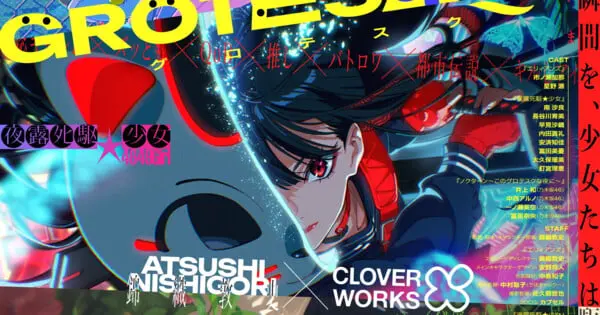
The recent U.S. premiere of the anthology feature film GROTESQQQUE at New York’s Japan Society marked a significant milestone for experimental animation distribution in the United States. Directed by Atsushi Nishigori, the film serves as a compilation of three distinct segments, each exploring disparate genres ranging from body-horror comedy to high-octane action and post-apocalyptic drama. The event, held at the historic Japan Society headquarters, provided a rare platform for Nishigori to discuss the philosophy behind the project, which he defined as a collection of "things I like," specifically curated to showcase the creative breadth of contemporary Japanese animation.
Project Genesis and Creative Philosophy
The production of GROTESQQQUE represents a trend in the Japanese animation industry toward anthology-style storytelling, which allows directors to bypass the narrative constraints of a feature-length film to experiment with visual aesthetics and thematic density. During the post-screening Q&A, Nishigori addressed the inherent challenge of maintaining audience engagement across vastly different tonal shifts. He framed the project as a "three-course meal," suggesting that the intention was not necessarily to create a singular, unified plot, but rather to provide a comprehensive sensory experience. By leveraging the flexibility of the anthology format, the production team was able to integrate diverse elements—including mecha, otaku culture, and hyperpop aesthetics—into a single exhibition.
Segment Analysis and Structural Breakdown
The film is structured into three primary segments, each characterized by a distinct directorial vision and aesthetic approach. The opening segment, "A(E)liens," serves as the project’s introduction to its thematic core. It centers on the character Eli, utilizing a vibrant, hyperpop-influenced art style to explore themes of social integration and the experience of the "outsider." While the narrative touches upon tropes of discrimination, it primarily functions as a vehicle for character-driven comedy and visual experimentation.
The second segment, "Yoroshiku Girl" (also stylized as "4649 Girl"), marks a departure from Nishigori’s direct oversight, with Takahiro Miura assuming the role of episode director. This portion of the film is defined by its relentless pacing and high-frequency action sequences. From a technical perspective, the animation quality is significant, characterized by fluid movement and intricate character design. However, analysts note that the narrative development in this segment is secondary to the visual spectacle, positioning it as a stylistic contrast to the film’s more introspective moments.
The final segment, "Nocturne: Nuit Grotesque," serves as the film’s tonal anchor. By pivoting to a post-apocalyptic vampire drama, the segment shifts the audience’s focus from the frenetic energy of the previous two acts to a more subdued, philosophical exploration of mortality. Accompanied by a classical score rather than the J-pop influences found elsewhere in the film, "Nocturne" addresses complex metaphysical questions regarding the persistence of the soul after death. This segment has been noted for its thematic maturity, drawing comparisons to contemplative works such as "Girls’ Last Tour."
The Evolution of the Japanese Anthology Film
The release of GROTESQQQUE occurs within a historical context of Japanese anthology films that have sought to redefine the boundaries of the medium. Projects like "Robot Carnival" (1987) and "Memories" (1995) set a precedent for multi-director collaborations that prioritize technical prowess over singular narrative continuity.
The current resurgence of this format is largely driven by advancements in digital production, which allow for a higher level of detail in individual shorts than was previously possible under the time and budget constraints of the late 20th century. By analyzing the production history of GROTESQQQUE, it becomes evident that the project benefited from the maturation of specialized animation studios, allowing for the high-quality rendering seen in "Yoroshiku Girl" and the nuanced, atmospheric lighting present in "Nocturne."
Technical and Industry Implications
From an industry standpoint, the premiere at the Japan Society underscores the growing demand for experimental and niche animation in Western markets. The Japan Society, an organization dedicated to deepening the mutual understanding between the United States and Japan, has become a primary venue for such events. By showcasing works that do not fit into the standard episodic television model, the society facilitates a dialogue regarding the evolution of Japanese artistic expression.
Data regarding the reception of these films suggest that Western audiences are increasingly responsive to projects that favor aesthetic innovation over linear storytelling. The "disjointed" nature of the film, as noted by critics, is frequently viewed not as a flaw, but as a deliberate artistic choice intended to challenge viewer expectations. The inclusion of the "Nocturne" cast in the stylistic palette of the "A(E)liens" segment during the end credits serves as a meta-commentary on this disjointedness, effectively acknowledging the disparate nature of the source material while binding it together through a final, unified visual signature.
Reception and Critical Analysis
The critical response to GROTESQQQUE has centered on its inconsistency, a trait often expected and even encouraged in anthology formats. While some viewers may struggle with the rapid transition between the hyperactive action of the second act and the solemnity of the third, the consensus among industry observers is that the film succeeds as a showcase for animation talent.
The film’s "stuffed" feeling, as described by early viewers, reflects the density of the content provided. By balancing extreme, high-energy sequences with quieter, more thoughtful narratives, Nishigori manages to cater to a broad spectrum of viewer preferences. This versatility is essential for the commercial viability of anthology features in the modern era, as it allows studios to test various styles without the financial risk of a full-length feature committed to a single, potentially divisive concept.
Broader Impact on Future Projects
Looking forward, the success of GROTESQQQUE may influence how studios approach future collaborative projects. If this model proves financially and critically sustainable, it is likely that more directors will utilize the anthology format to pitch unconventional ideas to major production committees. The emphasis on "things I like" as a creative guiding principle suggests a shift toward creator-led projects, where the personal vision of the director is prioritized over broad-market appeal.
Furthermore, the integration of distinct musical styles—ranging from the hyperpop of the opening act to the classical arrangements of the finale—highlights the role of sound design in shaping the emotional trajectory of experimental films. As animation continues to evolve, the lessons learned from the structural risks taken in GROTESQQQUE will likely inform the development of more complex, multi-layered features that do not adhere to traditional three-act narrative structures.
In conclusion, GROTESQQQUE stands as a testament to the current creative state of the Japanese animation industry. By refusing to conform to the expectations of a single genre, the film provides a diverse experience that reflects the varied interests of its creator. Whether through the lens of body-horror comedy, high-stakes action, or existential drama, the project manages to capture the zeitgeist of modern otaku culture while remaining accessible to those unfamiliar with the more niche aspects of the genre. As it continues its limited release, the film will undoubtedly serve as a case study for future experimental animation projects, illustrating the potential for creative freedom within the anthology format.