When acclaimed filmmaker Guillermo del Toro settles in for a cinematic experience, his ritual is as unique as his cinematic vision: he procures three seats. "I’m an expansive fellow," he explains, his presence filling a comfortable portion of a London hotel’s library sofa. "Between the popcorn and my elbows and my girth, I need more than one seat. But I also like the feeling of being in company and yet alone. Everyone says how great the cinema is as a collective experience, and I agree. At the same time, I enjoy it the most when it’s not packed. I like being semi-alone." These extra seats, it seems, are not merely for physical comfort but also serve a more spectral purpose, reflecting a lifelong fascination with the paranormal.
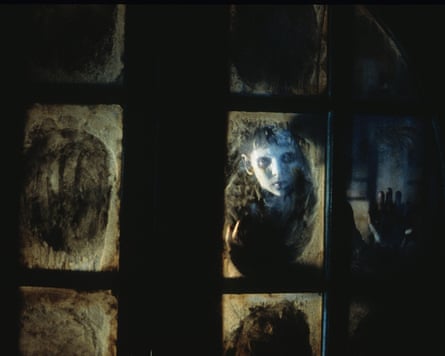
Del Toro’s engagement with the supernatural is not a recent development; it dates back to his childhood in Guadalajara, Mexico. At the tender age of eleven, he reported his first encounter with a spectral presence in his family home. He firmly believes this was his late uncle, who, before his passing, had promised the young horror enthusiast he would communicate from the afterlife. This early brush with the otherworldly directly inspired the character of Santi, the sighing ghost-boy in his critically acclaimed 2001 film, The Devil’s Backbone, a chilling narrative set against the backdrop of the Spanish Civil War. This profound connection to the spectral realm has continued throughout his career. Decades later, while scouting locations in New Zealand for The Hobbit, a project he co-wrote, del Toro experienced what he described as a "cacophonous uproar of a murder in full swing," an auditory hallucination that filled his hotel room with an unsettling, surround-sound intensity. More recently, during the filming of Frankenstein two years ago in an early 19th-century hotel in Aberdeen, Scotland, he reported an "oppressive vibe," a palpable sense of unease that he shared with his substantial online following of over two million people. His current pursuit? Acquiring a haunted house in the United Kingdom, a venture he jokingly refers to as seeking a property via "Frightmove."

The Ethereal Allure of England
For del Toro, England holds a special significance, a "magical land" that resonates deeply with his fascination for the spectral. "Anyone who knows me knows I’m a sceptic," he asserts, meticulously dissecting a piece of his full English breakfast. Despite his rationalist leanings, he acknowledges the profound impact of experiences that transcend ordinary perception. "But there are experiences that are so outsized they can dislocate your sense of self." He places similar paradigm-shifting events, such as a UFO sighting at the age of 14, witnessed by a friend, into this category. These moments, he explains, create "a crack" in one’s worldview, allowing "the mystery of the universe" to rush in, akin to the expanded perception brought on by psilocybin mushrooms.
His wife, Kim Morgan, a co-writer on his 2021 noir thriller Nightmare Alley, starring Bradley Cooper and Cate Blanchett, need not fear sharing their home with ectoplasmic entities. The contemplated haunted house is intended solely for his "collection." Del Toro elaborates on his unconventional living arrangements: "Right now, I have a house for all my stuff and another house for family. Every morning, I come in and say hello to my silicone figures and spend the day there. Then I go back home." The prospect of inhabiting a genuinely haunted dwelling doesn’t faze him; he anticipates the initial fear but is confident he will eventually acclimatize.
A Reverential Nod to British Horror
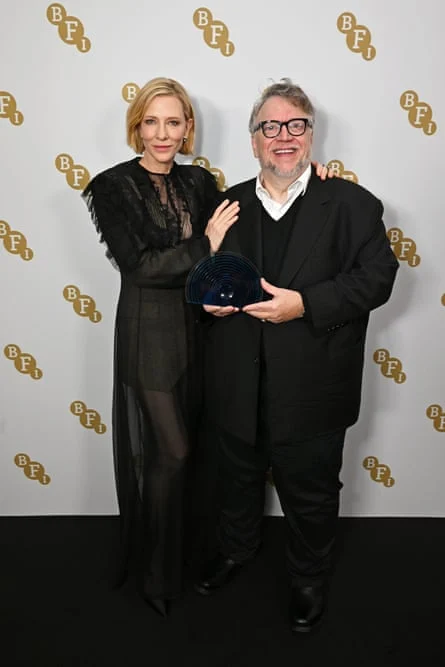
Del Toro’s current presence in the UK is multifaceted, extending beyond his personal pursuit of spectral residences. He is being honored with a BFI Fellowship, an accolade that holds particular weight for him, given the profound and enduring influence of British cinema on his artistic trajectory. His formative years were shaped by the visionary works of filmmakers such as Powell and Pressburger, and the audacious Ken Russell, whom he "idolized growing up." The potent legacy of Hammer Film Productions, particularly the iconic Frankenstein films directed by Terence Fisher, has also been a significant wellspring of inspiration.
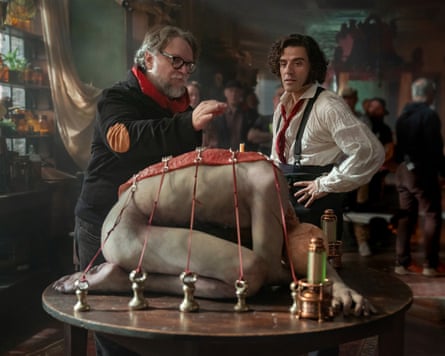
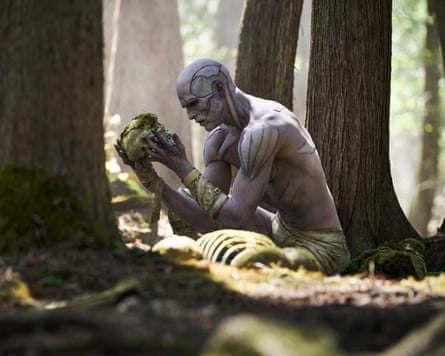
This reverence for Fisher’s work directly informed del Toro’s own 2025 adaptation of Mary Shelley’s seminal novel. The film, which garnered an Oscar nomination for Jacob Elordi’s portrayal of the Creature—a woebegone yet strikingly alluring figure in skimpy bandages—drew heavily from the aesthetic and thematic nuances of Fisher’s oeuvre. Del Toro specifically recalls The Curse of Frankenstein (1957) and The Monster from Hell (1960) as having particularly memorable Creature interpretations, noting, "The 1974 Hammer film Frankenstein and the Monster from Hell had the worst makeup but the most delicate Creature. As the movie progressed, the Creature became more of an innocent and the Baron more of a pure villain." This observation highlights his appreciation for how narrative and character development can imbue even seemingly monstrous figures with profound innocence and pathos.
Monsters, Misunderstood and Mirrored
Throughout his career, del Toro has consistently portrayed monsters not as purely malevolent entities but as complex beings capable of tenderness alongside immense violence. This nuanced depiction, he suggests, mirrors the human condition itself, explaining his deep identification with these creatures. In contrast, he finds superheroes to be somewhat alien to his sensibilities. His distinctive approach has resonated with a diverse range of artists, including Taylor Swift. A devoted admirer of The Shape of Water, del Toro’s Academy Award-winning romantic reimagining of The Creature from the Black Lagoon, Swift delved into his filmography during the pandemic. She expressed being "dazzled" by The Devil’s Backbone and Pan’s Labyrinth, a film that masterfully interweaves the brutal reality of post-Civil War Spain with a fantastical, perilous wonderland. The influence of del Toro’s thematic preoccupations with dual realities and monstrous self-perception is evident in Swift’s hit song "Anti-Hero," where she adopts the persona of "a monster on the hill… slowly lurching toward your favorite city."
The BFI Fellowship places del Toro in distinguished company, alongside cinematic titans such as Martin Scorsese, David Lean, Akira Kurosawa, and Orson Welles. It is noteworthy, however, that only a select few previous BFI fellows, including David Cronenberg and Tim Burton, have predominantly explored the genres of horror and fantasy. Del Toro, from his teenage years, never doubted the artistic scope and profound potential of these genres. He recalls running a film society in Guadalajara, where he even sourced a print of Michael Powell’s controversial 1960 serial-killer classic, Peeping Tom, from the BFI. "I was the projectionist, the ticket seller and the debate master," he reminisces. "I would introduce the movie then project it and be back afterwards for the Q&A. I was only young but I was already a film critic on the radio."
Early Triumphs and Artistic Integrity
His early ventures into filmmaking, such as his 1992 debut, the scuzzy-elegant, emotionally resonant vampire horror Cronos, which is receiving a re-release this month, faced a cinematic landscape less receptive to genre films. "It was very unfashionable," he admits. "You read about ‘elevated horror’ now but when I was preparing Cronos, somebody told me: ‘Beware. You may be pegged as a genre filmmaker.’ It was like a dire warning." Despite this perceived risk, del Toro’s unique voice and unwavering commitment to his artistic vision have largely been met with critical acclaim, with only a few notable exceptions like the lukewarm reception to his robots-versus-monsters spectacle Pacific Rim (2013) and his Gothic romance Crimson Peak (2015). He remains resolutely detached from critical reviews, stating, "I avoid them studiously, good or bad," though he acknowledges the occasional, unavoidable encounter with public opinion that can feel like a form of "stalking."
He has, however, navigated significant professional challenges. A particularly arduous period involved his first American film, the 1997 giant-bug horror Mimic, where he clashed with producer Bob Weinstein. Weinstein, who was later stripped of his BFI Fellowship, along with his brother Harvey, attempted to have del Toro fired from the project. "The Weinsteins almost destroyed me," del Toro confesses, his characteristic sparkle momentarily dimming. "I was on the verge of being unbankable and unhirable. But I would have died for Mimic. I have always made it a point to never make a movie I don’t absolutely adore. I’ve been offered a lot of work for hire and I’ve refused it." This staunch adherence to artistic integrity, even at significant personal cost, has defined his career. This principle extended to his refusal of major franchise films, including entries in the X-Men and Fantastic Four series, as well as The Chronicles of Narnia. He famously passed on directing Harry Potter and the Prisoner of Azkaban, instead recommending his friend Alfonso Cuarón, who subsequently directed the film to critical acclaim. Del Toro even humorously suggested he would only consider directing a Harry Potter film if he could kill off one of the young protagonists.
The Unmade and the Future
The conversation often drifts to the projects del Toro has not brought to fruition, including ambitious endeavors such as a gritty Jabba the Hutt origin story envisioned in the vein of The Godfather, and a Broadway musical adaptation of Pan’s Labyrinth with a score by the celebrated songwriter Paul Williams. Despite having penned over 40 screenplays, his directorial filmography comprises 13 films. Unrealized projects like his adaptations of The Count of Monte Cristo and H.P. Lovecraft’s At the Mountains of Madness have languished in development for decades. "But I still have hope," he insists.
Having dedicated a significant portion of his career to bringing Frankenstein to the screen, del Toro now finds himself at a creative juncture. He is currently immersed in a stop-motion animated adaptation of Kazuo Ishiguro’s novel, The Buried Giant, a post-Arthurian tale featuring roaming ogres. He aims to push the boundaries of the medium, emphasizing that the film will be "R-rated" and devoid of songs, catering to a mature audience. His vision for animating "inefficient" micro-gestures, the natural fidgets and stumbles of human behavior, promises a new level of realism in stop-motion animation, a philosophy evident in his critically lauded 2022 stop-motion adaptation of Pinocchio, set against the backdrop of Mussolini’s Italy.
Reflection and the Enduring Mystery of Cinema
With Frankenstein now behind him, del Toro describes a sense of "serenity" rather than emptiness. "All pain comes from desire," he muses, suggesting a contentment found in simply existing. He is currently exploring the theme of regret, contemplating the questions that arise when one feels life is nearing its conclusion. This introspection is partly informed by his complex relationship with his own father, whom he has described as a "mystery," even to himself. His father’s remarkable lottery win in 1969, a sum equivalent to the entire budget of the original Planet of the Apes, serves as a striking anecdote about a man who "had everything" yet remained restless, seemingly pursuing something "unnameable."
Del Toro believes he is now reaching a point where he can articulate his own driving forces. He acknowledges that art, while perhaps incapable of enacting sweeping societal change, possesses the profound ability to "correct each other’s lives by small degrees." He cites the emotional resonance of Powell and Pressburger’s Black Narcissus and the technical mastery of David Fincher’s Zodiac as examples of cinema’s ineffable power. "There is a mystery to cinema," he concludes, his eyes regaining their familiar sparkle. "I hope it never goes away."