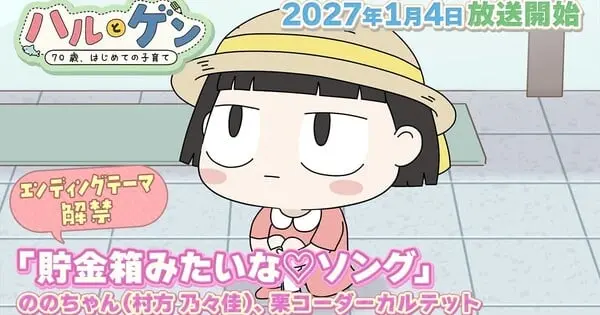
The upcoming short-format television anime adaptation of Yuka Ōshima’s poignant manga series, Haru to Gen ~70-sai, Hajimete Kosodate~ (Haru and Gen: Raising a Child for the First Time at 70), has reached a critical promotional milestone. On Wednesday, the production committee unveiled a new teaser trailer that offers audiences a glimpse into the series’ emotional tone, while simultaneously confirming the ending theme song and key details regarding the project’s musical direction. The series, which explores themes of generational disconnect and the redemptive power of family, is set to make its broadcast debut on January 4, 2026, on TV Kanagawa (tvk) at 9:55 p.m.
The Musical Backdrop of a Heartwarming Tale
The newly released teaser highlights the ending theme song, "Chokin-bako Mitai na Song" (A Piggy Bank-Like Song), performed by Nono-chan, the stage name for the young talent Nonoka Murakata. The track features instrumental contributions from the acclaimed Kuricorder Quartet, known for their unique arrangements and whimsical musical style. The lyrics were penned by Reo Rinozuka, with composition handled by Masaki Kurihara.
The production of the music is being overseen by industry veterans Makoto Kimura of BLUE RIGHTS and Naho Fujisawa of Nippon Columbia. This collaboration suggests a deliberate effort by the production team to pair the series’ delicate narrative—which navigates the complexities of elderly care and childhood development—with a soundtrack that evokes both nostalgia and innocence.
Narrative Context: An Unexpected Second Act
The story of Haru to Gen centers on Gen, a 70-year-old man whose life has been defined by isolation and professional distance. Having been divorced for years and effectively estranged from his wife and daughter, Gen’s world is upended following the death of his daughter. Suddenly, he is thrust into the role of a primary caregiver for his three-year-old granddaughter, Haru.
The manga, which debuted on Kadokawa’s TATESC Comic platform in December 2022, has garnered attention for its raw portrayal of the "first-time" experience of raising a child at an advanced age. Unlike typical family-oriented stories, this narrative does not shy away from the physical and emotional exhaustion inherent in such a responsibility, nor does it ignore the regret Gen feels for the familial bonds he failed to nurture in his youth. The transition from webcomic to short-format anime reflects a growing trend in the Japanese animation industry to adapt intimate, character-driven dramas that resonate with older demographics who may find the domestic struggles of the protagonist relatable.
Production and Creative Leadership
The adaptation is helmed by director Kōdai Satō, whose previous work includes the experimental and character-focused Tom to Jerry Gokko. Satō is working within a collaborative framework involving IMAGICA Infos and Imageworks Studio, with Studio Nanahoshi providing additional support.
The technical team is rounded out by several industry veterans aimed at grounding the series in a realistic atmosphere. Taeko Miura, recognized for her work on Kanagawa Elves, is serving as the sound director. The soundscape is further enhanced by the effects work of Maki Takuma, while the series’ score is being composed by bermei.inazawa, whose credits include the fantasy-drama Potion, Waga Mi o Tasukeru. Executive production is being managed by Kazuya Takahashi, who brings significant experience from his work on projects like Love and Lies.

Chronology of Development
The trajectory of the Haru to Gen project provides insight into the current pace of manga-to-anime production cycles in Japan:
- December 2022: Yuka Ōshima launches the original manga series on Kadokawa’s vertical-scrolling webcomic label, TATESC Comic.
- March 2024: Kadokawa publishes the first compiled volume of the manga, signaling commercial viability and positive reception.
- September 2026: The official announcement of the short-format television anime adaptation is made, setting expectations for a late-year release.
- November 2026: The production team releases the second teaser promotional video and confirms the full musical staff and ending theme artist.
- January 4, 2027: Scheduled premiere on TV Kanagawa (tvk).
The Implications of Vertical-Scrolling Adaptations
The rise of the TATESC Comic format, which is specifically designed for mobile devices, represents a shift in how source material is being sourced for the animation industry. Haru to Gen is a prime example of a "vertical-scrolling" success story moving into the broadcast space.
Industry analysts observe that by adapting these types of titles, studios are able to tap into existing fanbases that consume media primarily on smartphones. The short-format nature of the anime—typically running between five to ten minutes per episode—is a strategic choice. It allows for a more faithful adaptation of the pacing found in the original webcomic, which is characterized by smaller, episodic emotional beats rather than long-form, complex plot arcs. This format is also more cost-effective and allows production committees to greenlight more niche, high-concept stories that might not sustain a traditional 24-minute broadcast slot.
Market Positioning and Audience Expectations
The decision to air the series on TV Kanagawa, a regional network with a history of airing experimental or indie-adjacent programming, suggests that the producers are targeting a mature audience rather than a mass-market demographic. The subject matter—grief, aging, and late-in-life parenting—positions the anime as a "slice-of-life" drama that relies heavily on character development.
The involvement of Nono-chan (Nonoka Murakata) as the singer for the ending theme is a calculated move to bridge the gap between the generations depicted in the show. As a young performer, her involvement mirrors the dynamic between the elderly Gen and the young Haru, potentially drawing in viewers who are interested in the intergenerational chemistry.
Official Stance and Future Outlook
While specific details regarding the total episode count have yet to be disclosed, the production committee has indicated that the series will focus on the initial stages of Gen’s transition into a guardian role. The teaser video emphasizes the visual contrast between Gen’s stark, lonely apartment and the vibrant, chaotic presence of three-year-old Haru.
As the January 2027 premiere date approaches, anticipation is building among fans of the original webcomic. The series is expected to serve as a bellwether for how effectively vertical-scrolling, full-color manga can be translated into traditional animation without losing the stylistic identity that made them popular on mobile platforms. With a solid creative team in place and a clear emotional hook, Haru to Gen aims to offer a poignant start to the new year for viewers seeking narratives that prioritize character growth and the complexities of the human experience.
For the production companies involved—including Kadokawa and their subsidiaries—the success of this series is critical for validating the TATESC Comic label as a legitimate incubator for anime content. By investing in stories that move beyond standard fantasy or action tropes, these companies are diversifying their portfolios and responding to a growing demand for grounded, relatable, and emotionally resonant storytelling in the Japanese animation market.